7.4 - Ventilation
- 1
What ventilation is
- 2
The muscles involved in breathing
- 3
The process of inspiration
- 4
The process of expiration
What is ventilation?
Ventilation, or breathing, is the constant movement of air into and out of the lungs. It consists of inspiration (breathing in) and expiration (breathing out).
It allows air to enter and leave the lungs, providing the body with oxygen and removing carbon dioxide.
Muscles involved in ventilation
The ribcage is made up of bones called ribs that enclose the thorax - the cavity where the lungs are located (thoracic cavity).
In mammals, ventilation is controlled by specific muscles. When the muscles attached to the ribcage contract and relax, they move the ribs to change the volume of the thoracic cavity. This affects the pressure in the lungs and controls ventilation.
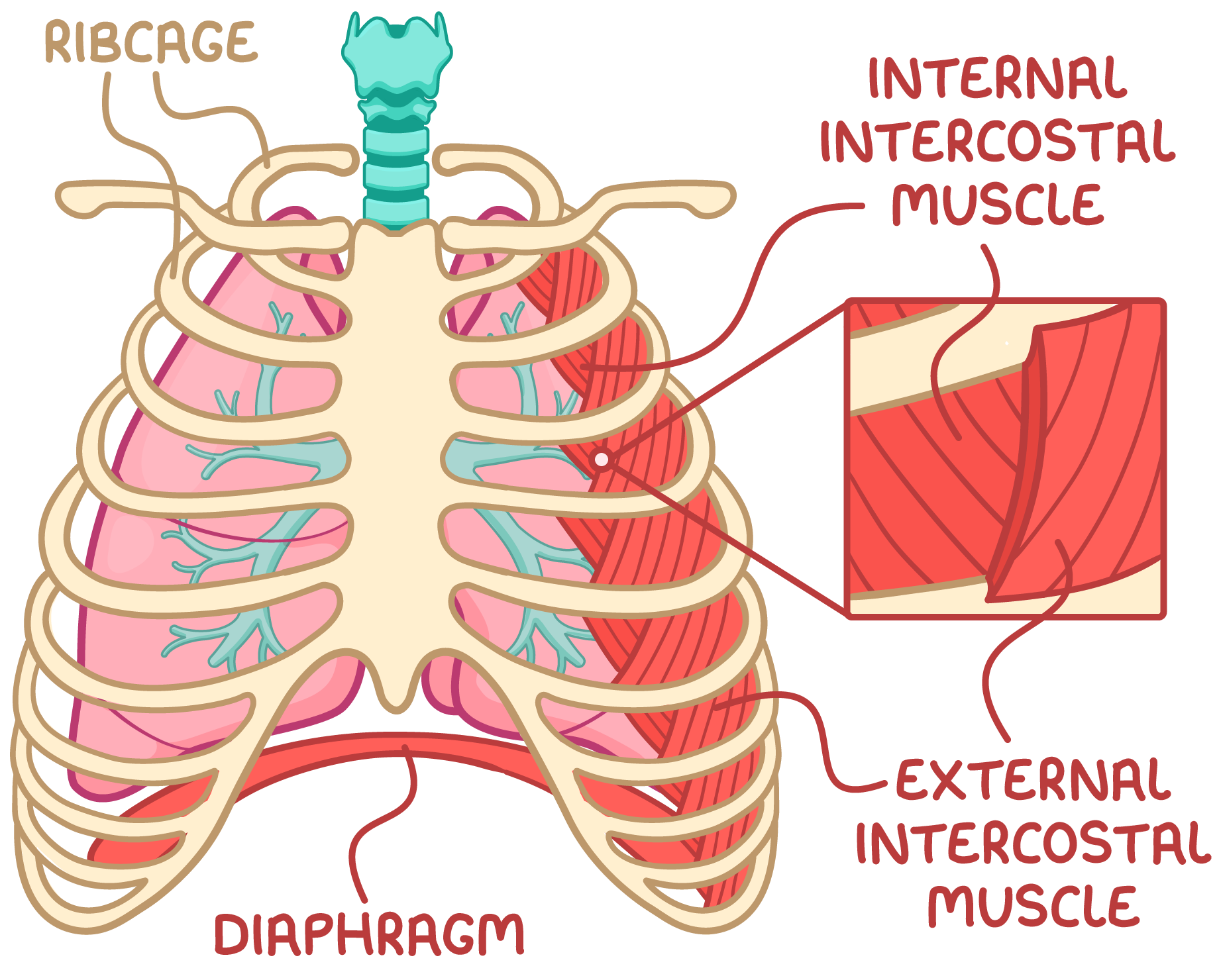
There are three sets of muscles that act on the ribcage:
- The diaphragm - This is a sheet of muscle that moves the ribcage up and out when it contracts.
- The external intercostal muscles - These are found between the ribs and pull the ribcage up and out when they contract.
- The internal intercostal muscles - These are found between the ribs but pull the ribcage down and in when they contract.
The external and internal intercostal muscles have opposite effects on the ribcage.
The external muscles expand the ribcage during inspiration, while the internal muscles shrink it during expiration.
Inspiration
Inspiration is an active process requiring energy for muscle contraction.
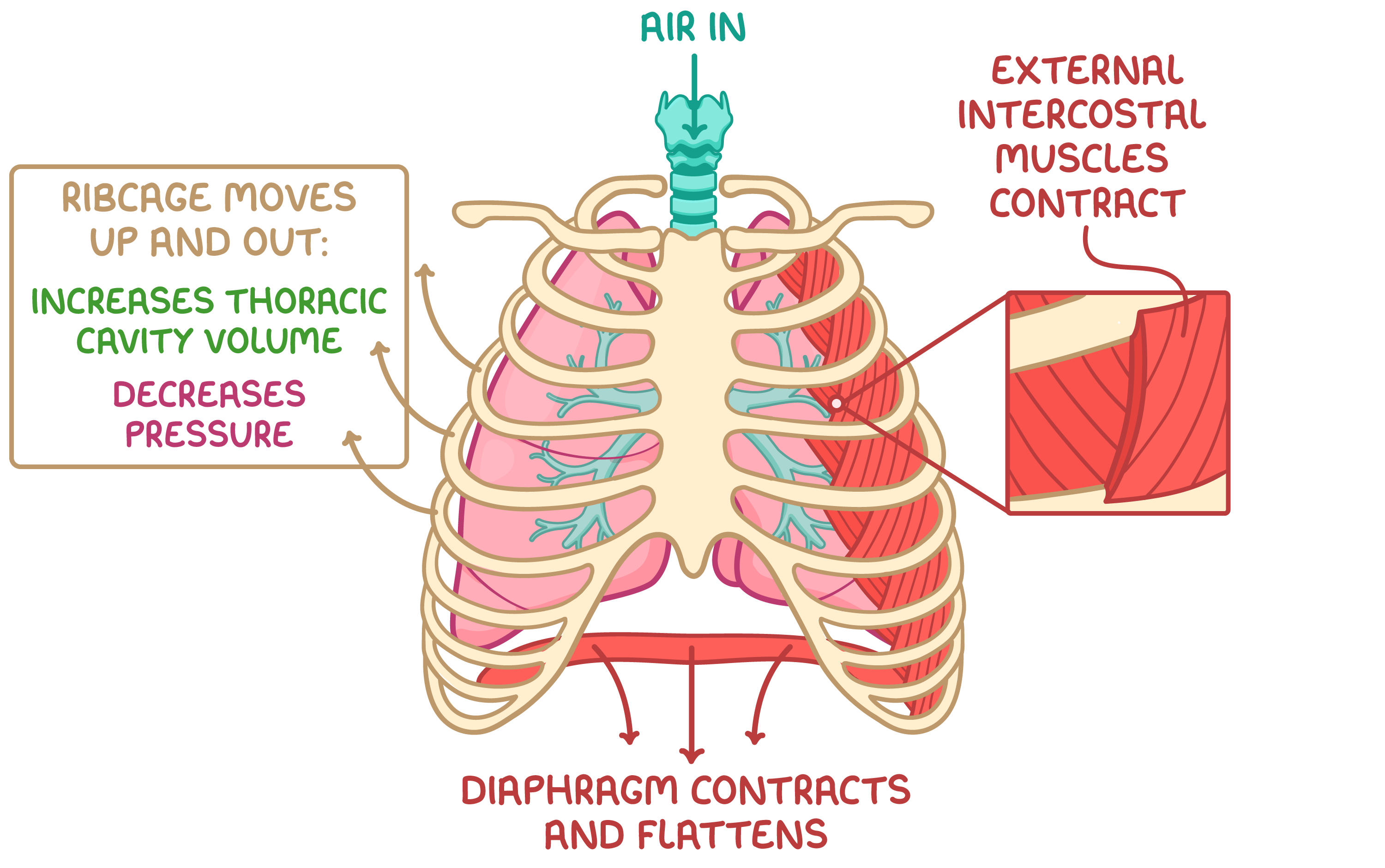
During inspiration:
- The external intercostal muscles contract while the internal intercostal muscles relax, moving the ribcage up and out.
- The volume of the thoracic cavity increases.
- The diaphragm contracts and flattens, further increasing the volume of the thoracic cavity.
- The lung pressure decreases below atmospheric pressure.
- Air flows into the lungs down the pressure gradient.
Expiration
Normal expiration at rest is a passive process so it does not require energy.
However, expiration can be forced by contracting the internal intercostal muscles to actively pull the ribcage down and in, forcing more air out.
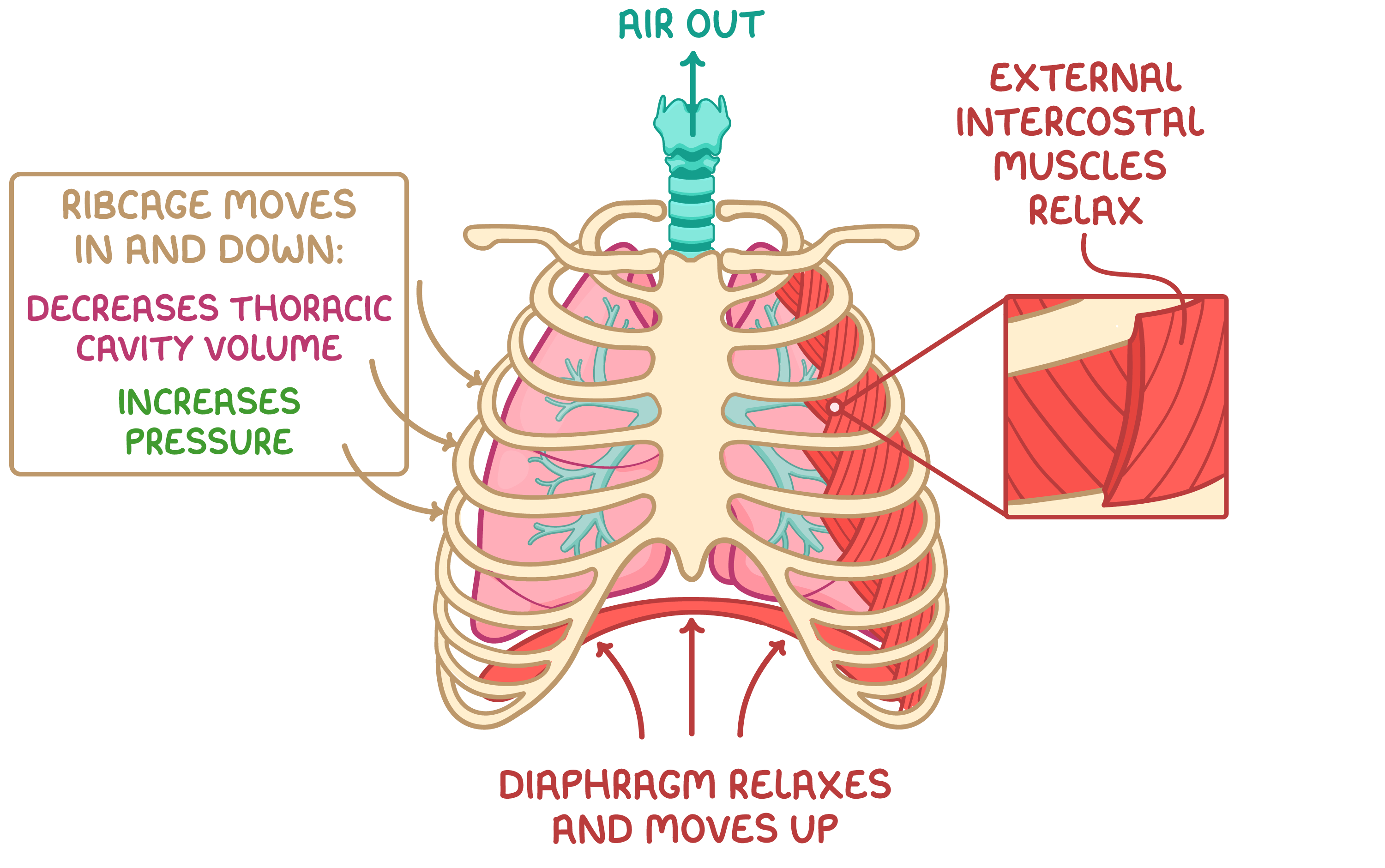
During expiration:
- The external intercostal muscles relax, moving the ribcage down and in.
- The volume of the thoracic cavity decreases.
- The diaphragm relaxes and unflattens, further decreasing the volume of the thoracic cavity.
- The lung pressure increases above atmospheric pressure.
- Air is forced out of the lungs down the pressure gradient.
Elastic fibres in the alveoli also shrink and recoil back to their original shape when the thoracic cavity volume decreases.
This increases the pulmonary pressure and helps to push air out of the lungs.