2.1 - Nucleic Acids: DNA & RNA
- 1
The structure of nucleotides
- 2
The reactions that synthesise and breakdown nucleic acids
- 3
The role and structures of DNA and RNA
- 4
The similarities and differences between DNA and RNA
Nucleotide structure
Nucleotides are the building blocks of nucleic acids such as DNA and RNA. Nucleotides are monomers and can join together to form dimers (dinucleotides) and polymers (polynucleotides).
A nucleic acid is the functional molecule made of one or more polynucleotide chains.

Nucleotides are made up of three components:
- A pentose sugar - Contains 5 carbon atoms.
- A nitrogenous base - Contains carbon and nitrogen.
- A phosphate group - Contains phosphate.
Polynucleotides
Nucleotides are joined together via condensation reactions to form a polynucleotide. The phosphate group of one nucleotide forms a covalent bond with the sugar of another. This forms a phosphodiester bond.
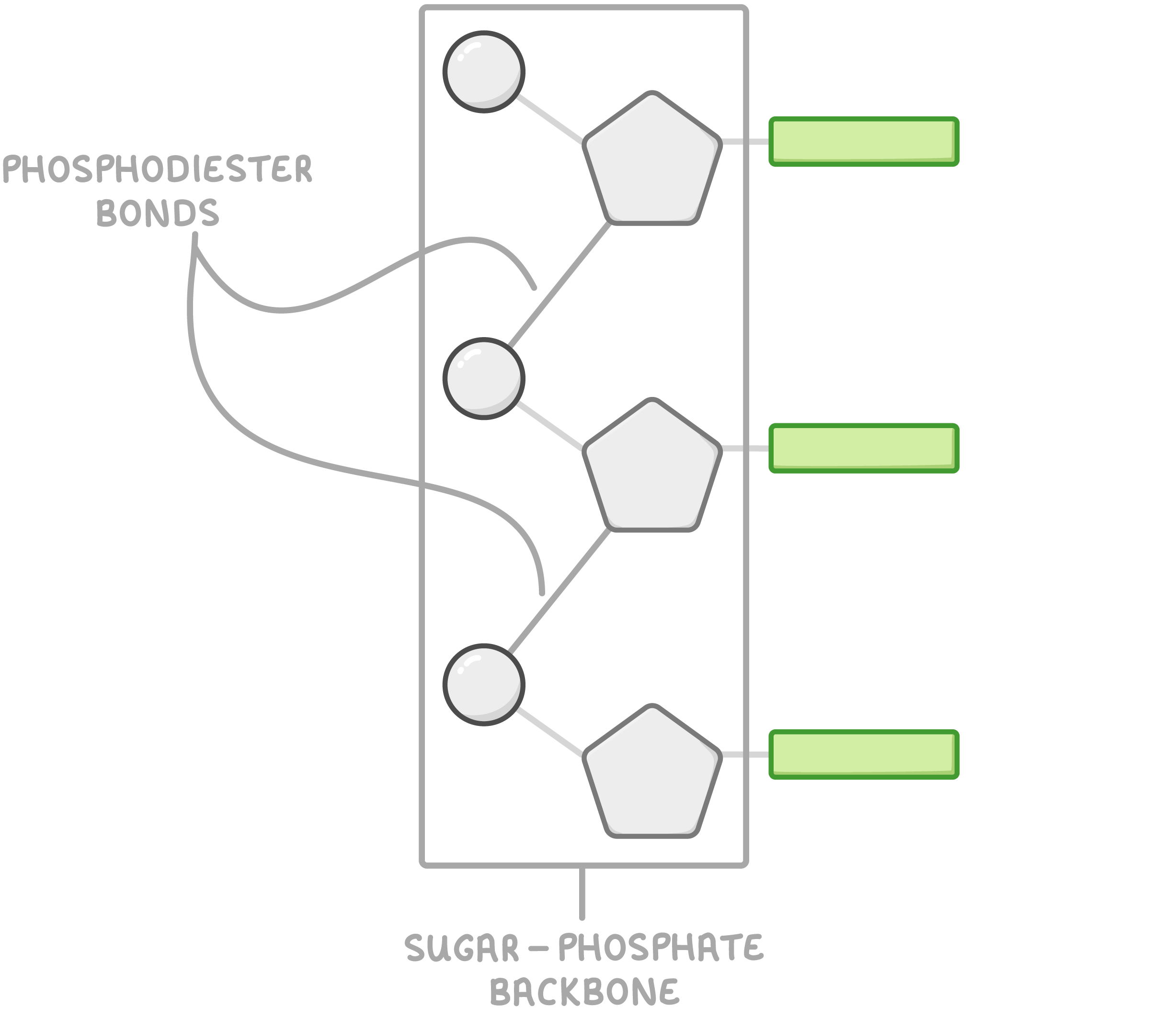
Many nucleotides can join in this way to create a chain of phosphates and sugars known as the sugar-phosphate backbone.
Phosphodiester bonds can be broken via hydrolysis reactions, releasing the nucleotide monomers.
DNA
Deoxyribonucleic acid (DNA) is a type of nucleic acid that contains the instructions needed to make proteins.
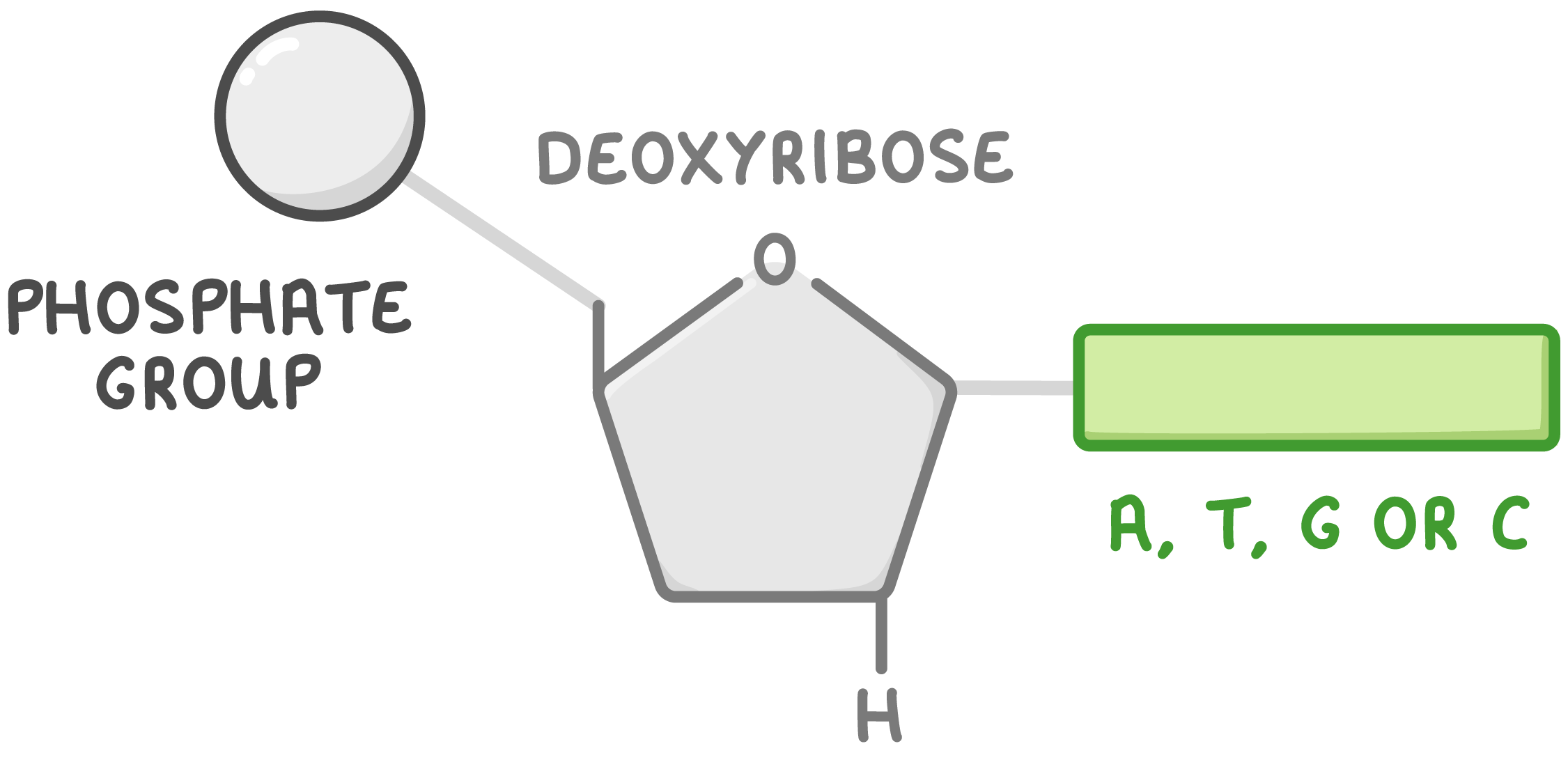
Each DNA nucleotide is made up of three components:
- Deoxyribose - A pentose sugar.
- A, T, G, or C base - Adenine, thymine, guanine, or cytosine.
- A phosphate group
DNA structure
In 1953, two scientists, James Watson and Francis Crick were credited with working out the structure of DNA.
With the help of other scientists like Rosalind Franklin, they found that DNA is made up of two polynucleotide strands wound around each other to form a double helix.
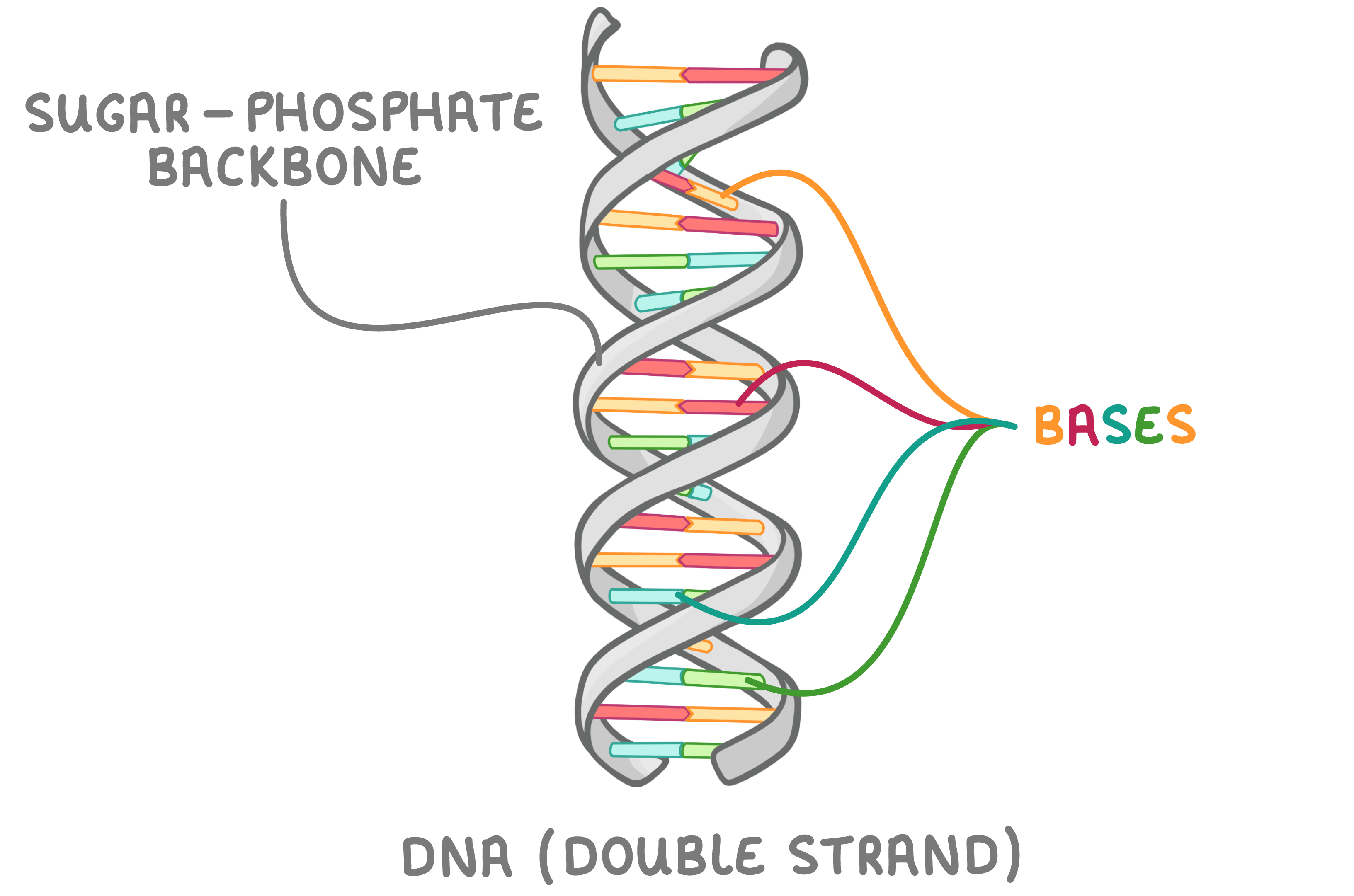
The following features allow DNA to pass genetic information from one generation to another:
- Sugar-phosphate backbone - This protects coding bases on the inside of the helix.
- Double stranded - This allows strands to act as templates in DNA replication.
- Large molecule - It stores lots of information.
- Double helix - This makes the molecule compact.
- Complementary base pairing - This allows accurate DNA replication.
- Weak hydrogen bonds - This allows strands to separate in DNA replication.
Purines and pyrimidines
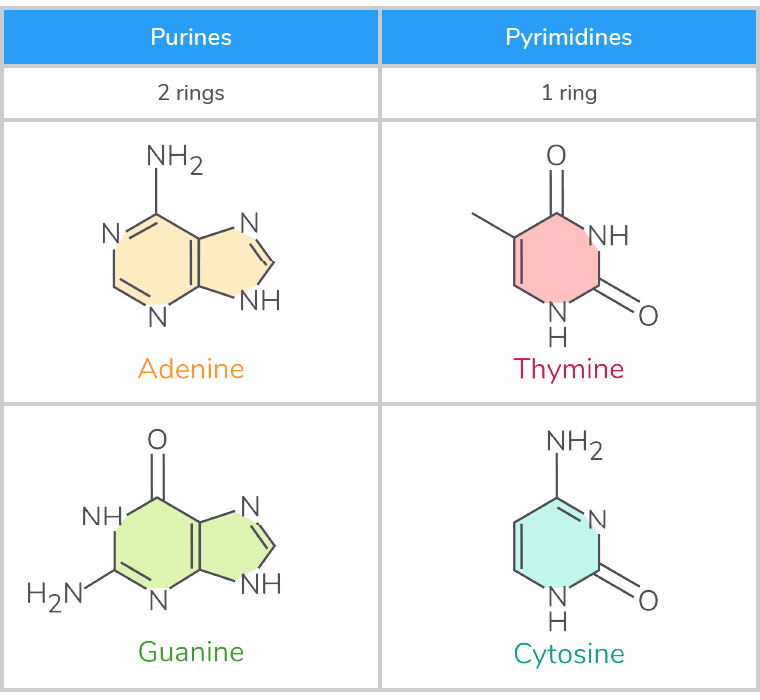
There are four nitrogenous bases found in DNA: adenine (A), guanine (G), thymine (T), and cytosine (C). These bases can be grouped into two categories: purines and pyrimidines.
Differences between purines and pyrimidines:
- Purines - These are larger bases that contain two carbon ring structures (A and G).
- Pyrimidines - These are smaller bases that contain one carbon ring structure (T and C).
Complementary base pairing
The two DNA strands are held together via hydrogen bonding between bases.
Each base only joins with one other specific base:
- Adenine pairs with thymine via 2 hydrogen bonds.
- Cytosine pairs with guanine via 3 hydrogen bonds.
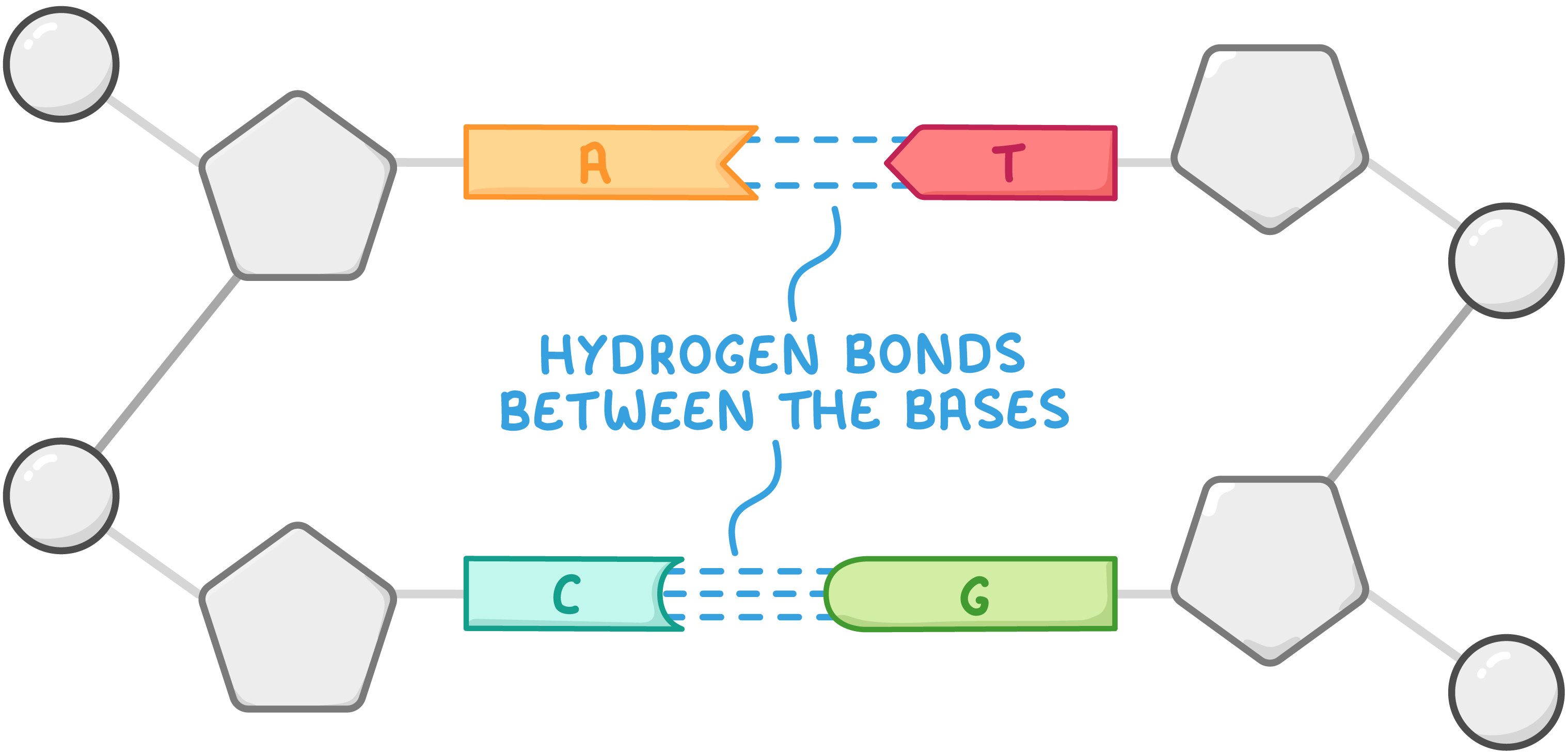
This is known as complementary base pairing.
A smaller pyrimidine base always binds to a larger purine base. This arrangement maintains a constant distance between the two sugar-phosphate backbones.
RNA
Ribonucleic acid (RNA) is a type of nucleic acid that uses information from DNA to synthesise proteins.
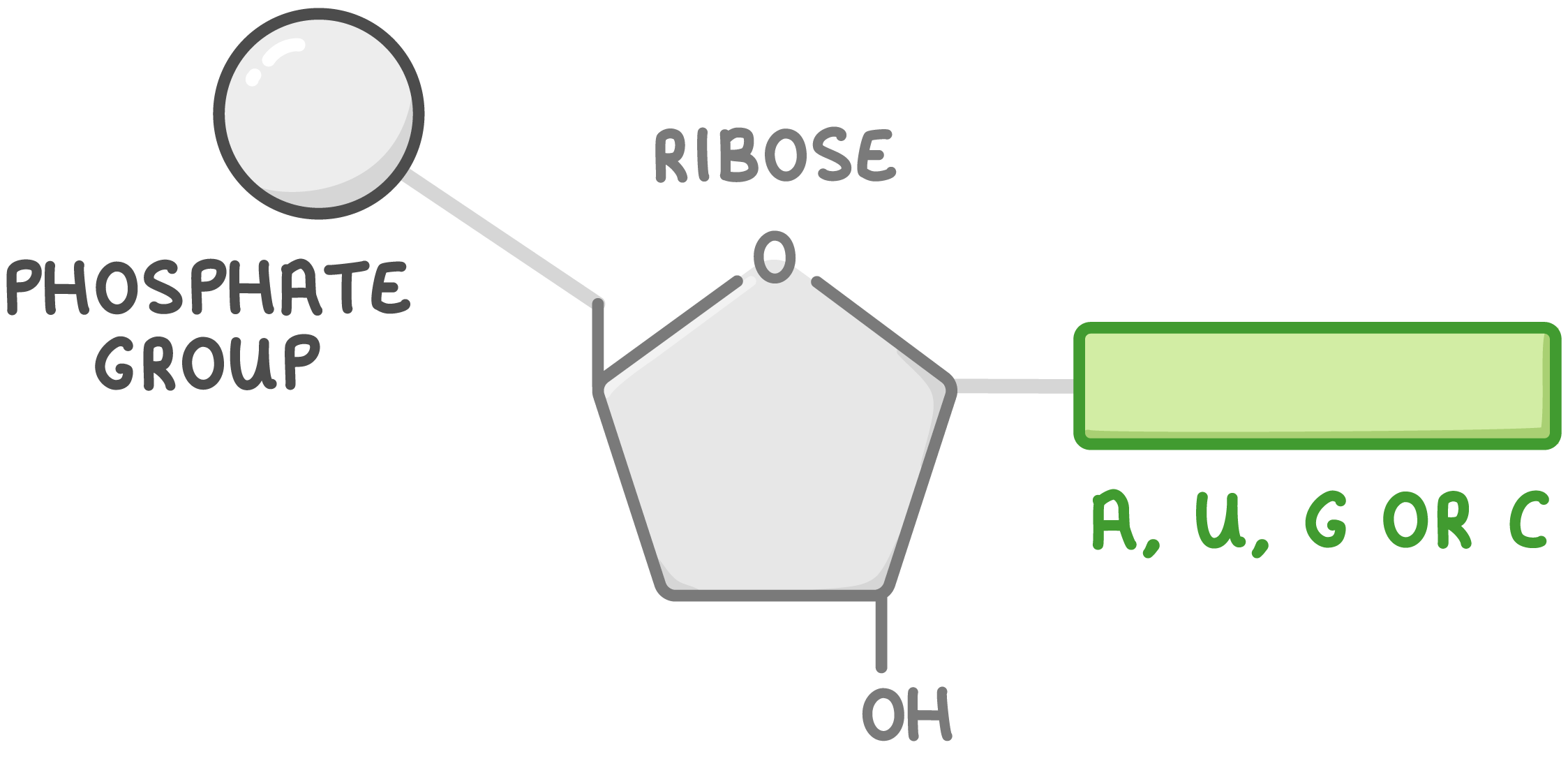
Each RNA nucleotide is made up of three components:
- Ribose - A pentose sugar.
- A, U, G, or C base - Adenine, uracil, guanine, or cytosine.
- A phosphate group
RNA structure
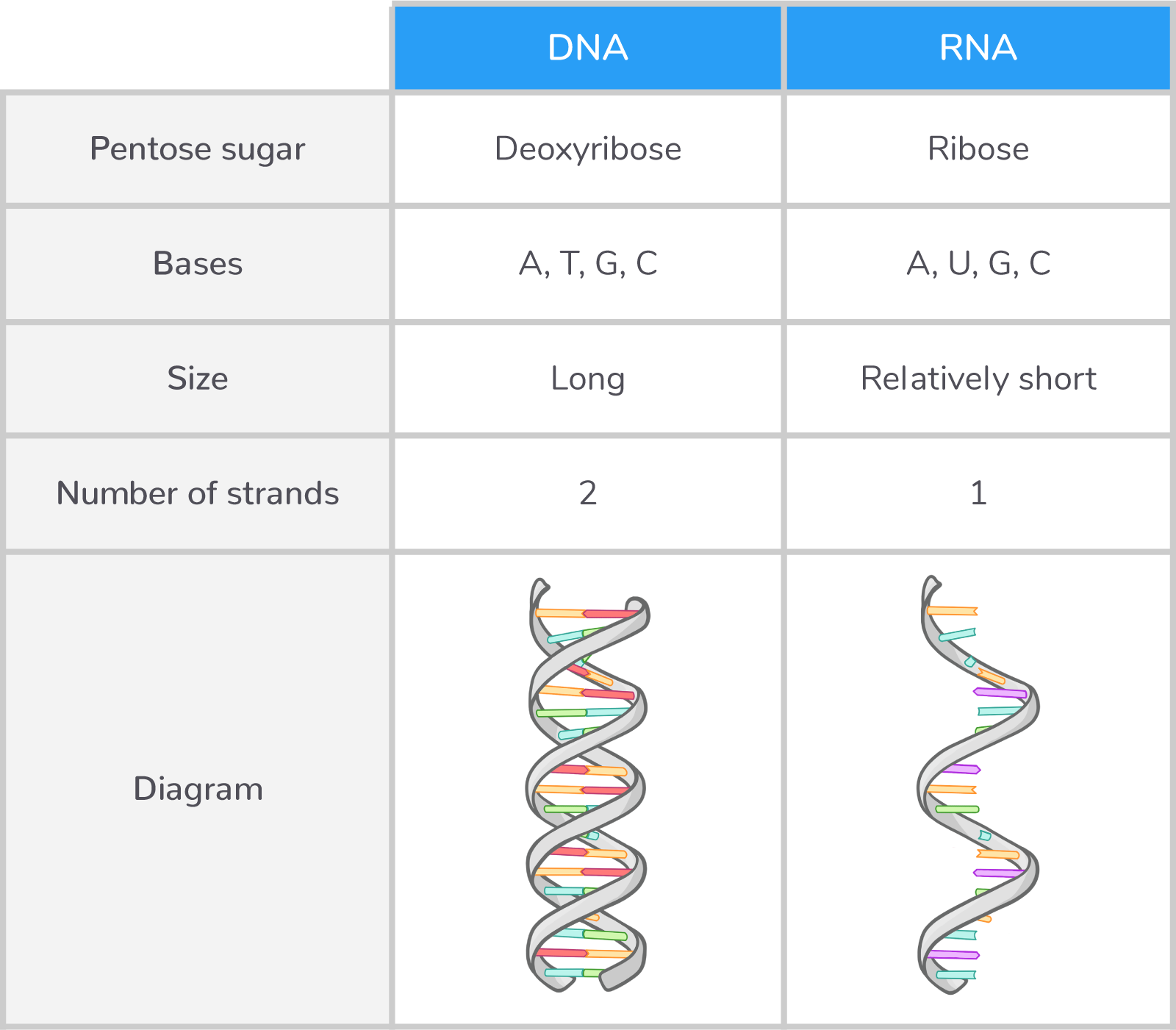
Unlike DNA, RNA nucleotides contain the sugar ribose rather than deoxyribose. They also contain the base uracil in place of thymine (uracil pairs with adenine).
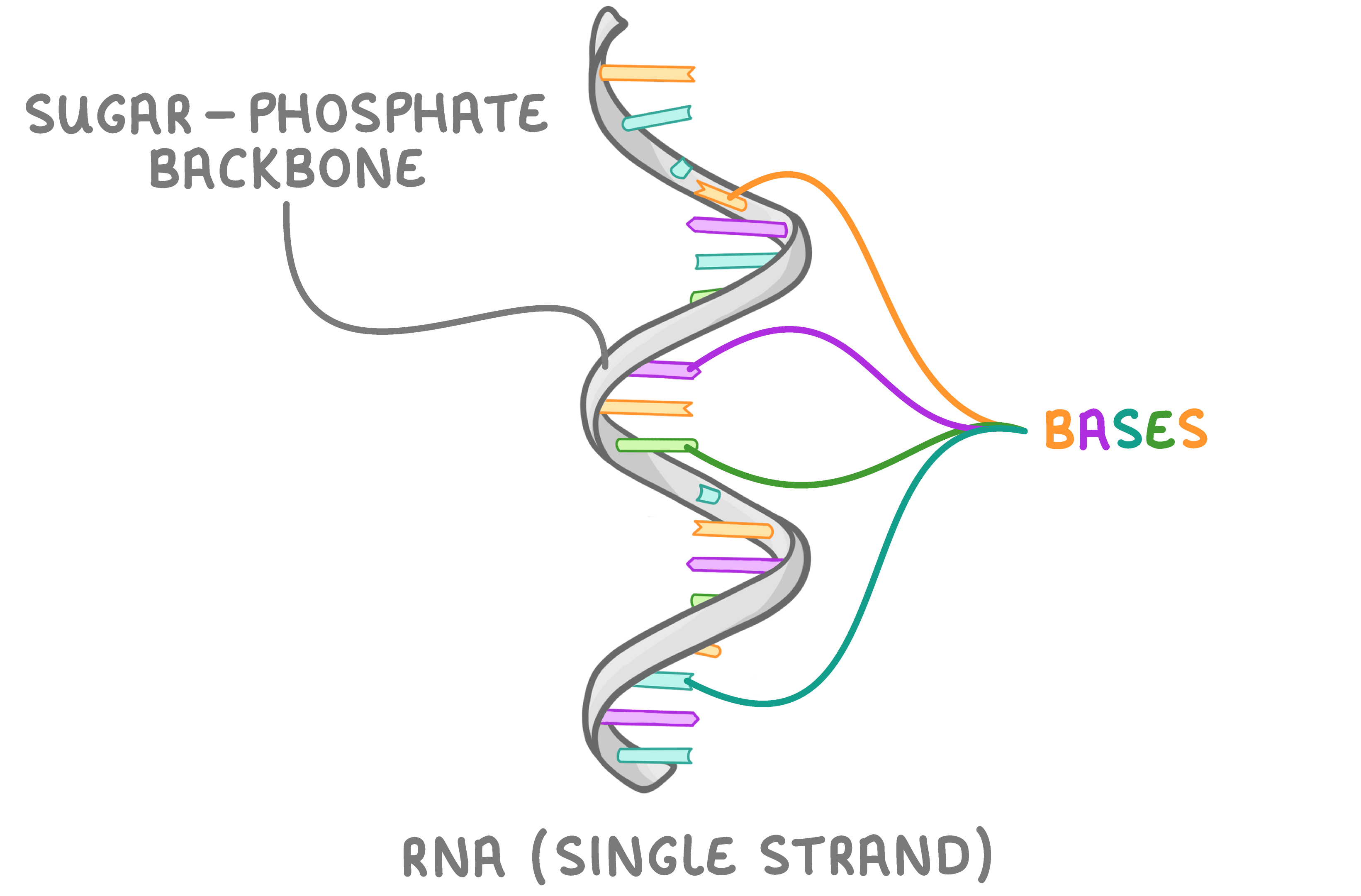
RNA is a single stranded molecule made up of just one polynucleotide strand. These strands are much shorter than DNA strands.
Comparing DNA and RNA