2.2 - DNA Replication
- 1
The process of DNA replication
- 2
The Meselson-Stahl experiment
DNA replication
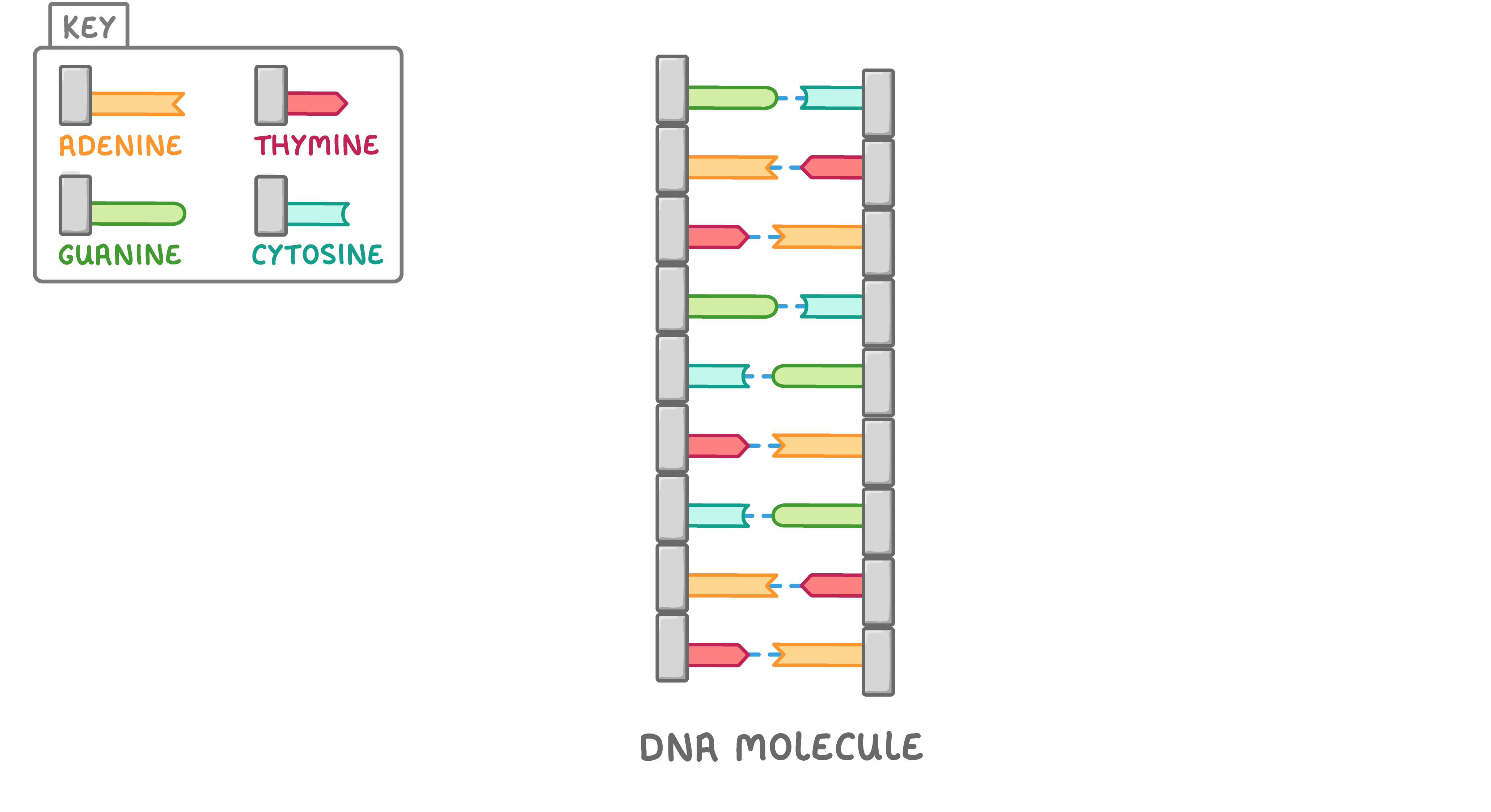
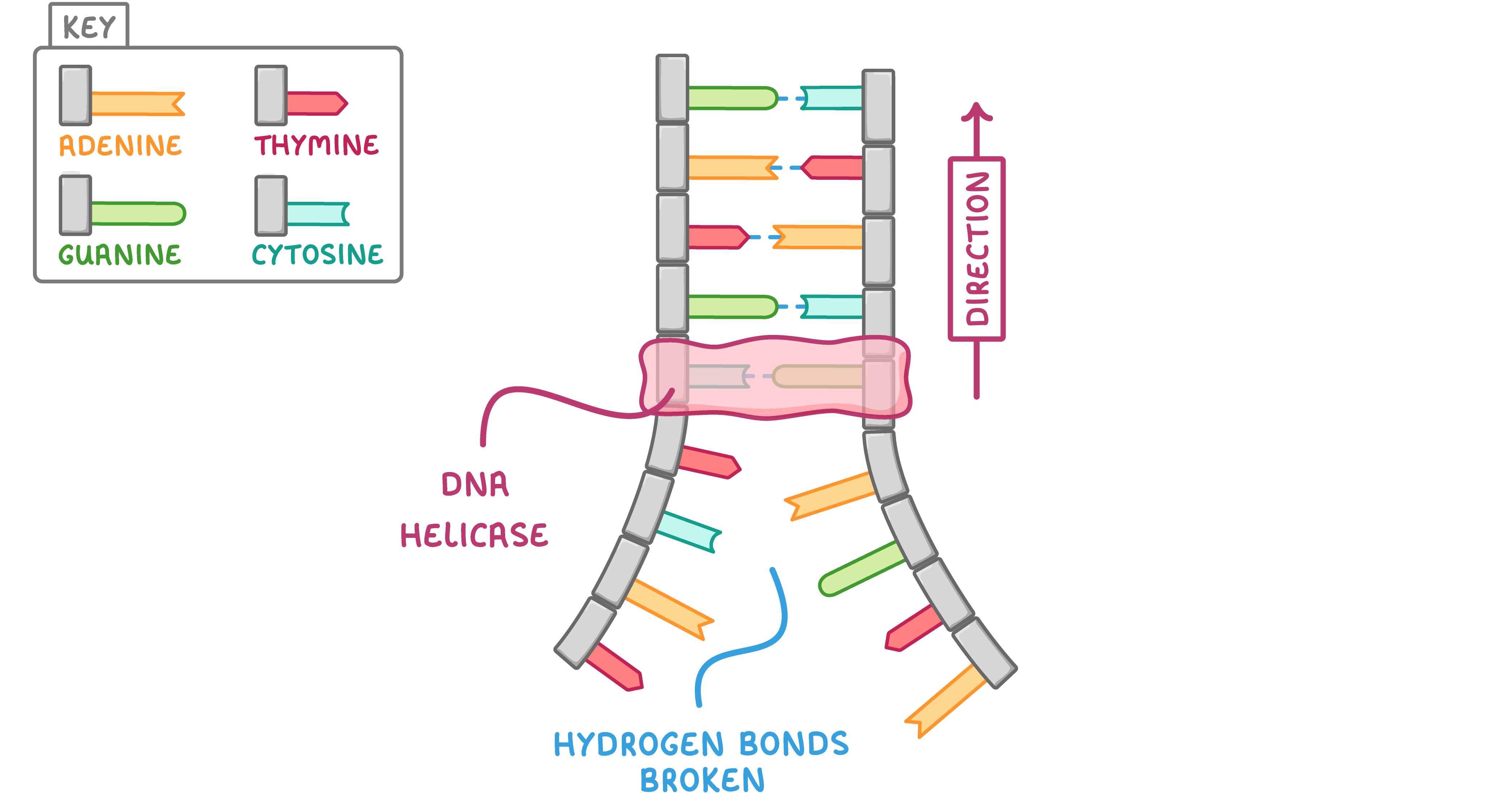
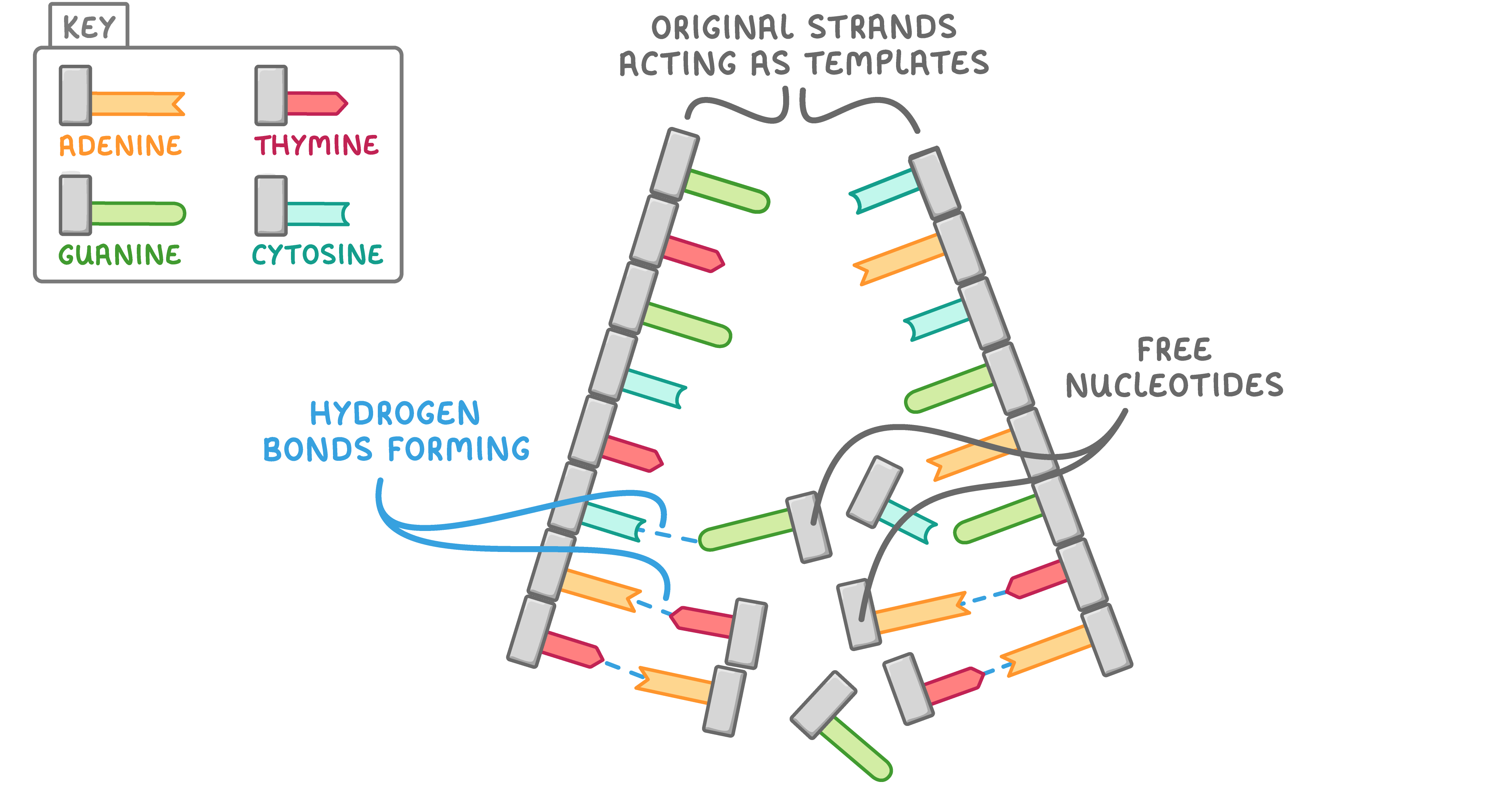
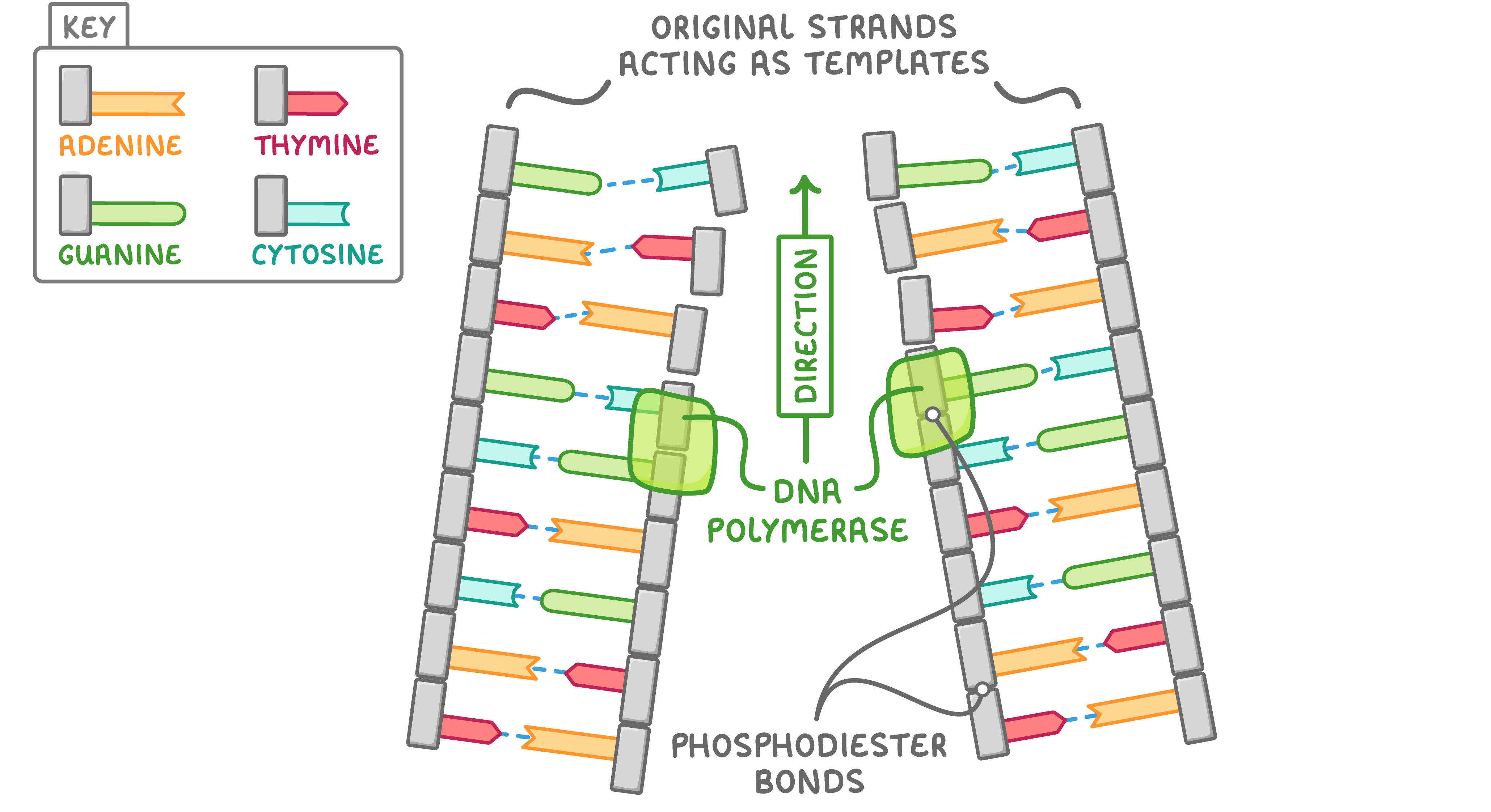
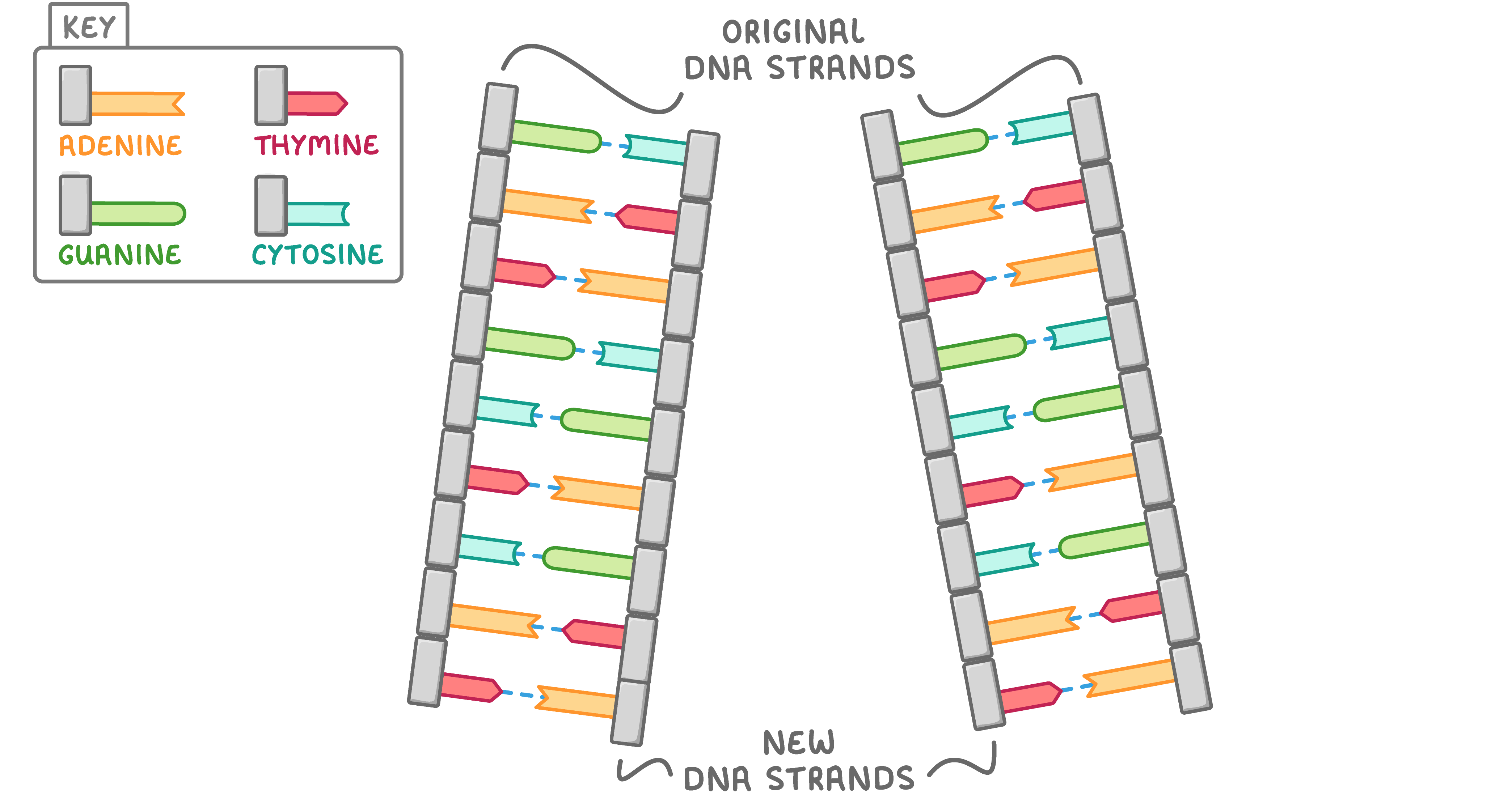
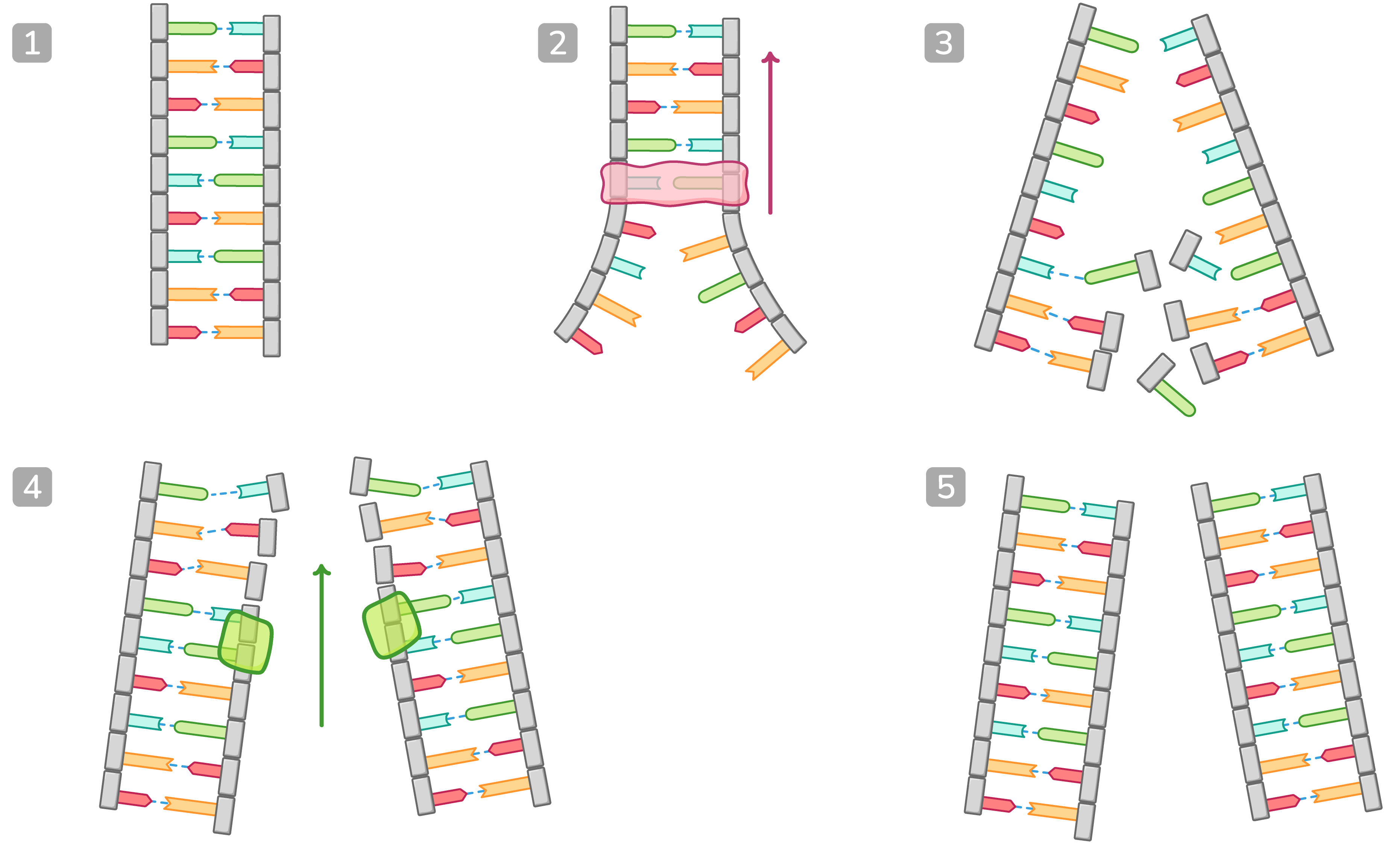
DNA is copied via a process known as semi-conservative replication.
This produces DNA molecules consisting of one original DNA strand and one newly synthesised DNA strand.
Image 1 of 6: 1. A DNA molecule ready to be replicated.
The Meselson-Stahl experiment
After DNA's structure was discovered, a few theories were proposed to explain how DNA might replicate itself during cell division.
The two main models that were proposed were:
- Conservative replication
- The original DNA molecule stays intact while a completely new copy is built.
- After a single replication one molecule has two original strands, and the other has two new strands.
- Semi-conservative replication
- The original DNA splits, and each strand acts as a template for a new strand.
- After a single replication each molecule has one original strand and one new strand.
The experiment
Meselson and Stahl designed an experiment to find out which DNA replication model was correct.
Their experimental design was based on three main principles:
- DNA contains nitrogen.
- Two different nitrogen isotopes can be used to mark DNA strands and track them during replication:
- (which is lighter).
- (which is heavier).
- Bacteria use nitrogen from their surroundings to build new DNA molecules.
The experimental process:
- Bacteria were grown in a medium containing , so all their DNA is ‘heavy’.
- The bacteria were transferred to a medium with for one round of replication, so the lighter nitrogen was incorporated into any new DNA strands they made.
- The DNA was extracted and centrifuged.
- Steps 2-3 were repeated for another round of replication.
- The distribution of heavy and light DNA was analysed to track how the DNA was replicating:
- The heavier bands sink lower in the test tube.
- The intermediate bands, made of DNA with one heavy strand and one light strand, are in the middle of the test tube.
- The lighter bands are higher up in the test tube.
The results
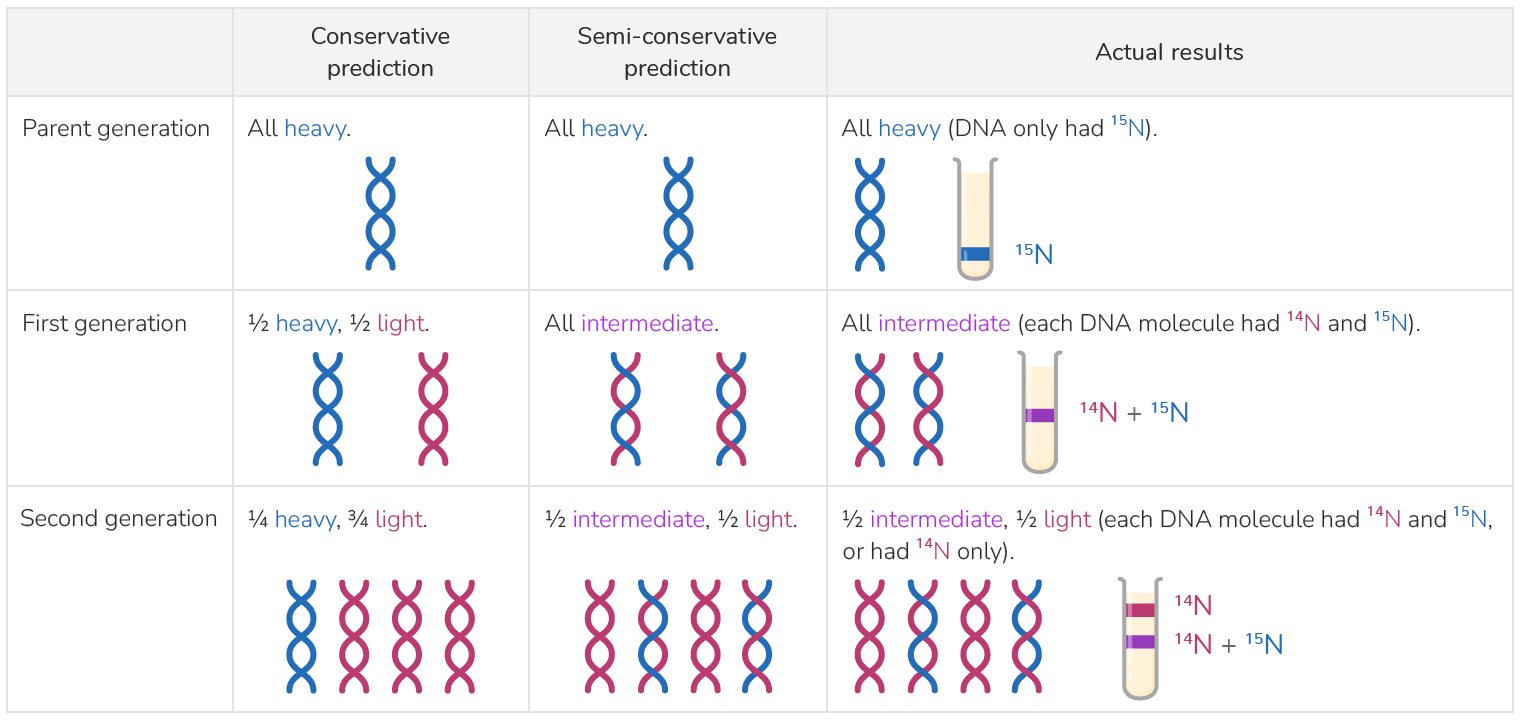
The experiment showed that DNA replicates through a semi-conservative process.
In the first replication:
- The original, heavy DNA strands separate.
- Each heavy strand acts as a template for a new complementary strand.
- New, light strands form alongside the original strands.
- Each resulting DNA molecule consists of one old, heavy strand and one new, light strand.
In the second replication:
- Both original strands and the two new strands act as templates.
- New, light strands form alongside all four templates.
- Half the resulting molecules have one, original heavy strand and one new light strand.
- The other half are completely made of light strands.