4.3 - Osmosis
- 1
The definition of water potential
- 2
The process of osmosis
- 3
Factors affecting the rate of osmosis
Solutions and water potential
In order to understand osmosis, we first need to understand what solutions are and what the term water potential means.
Solutions are mixtures made up of a solute (e.g. glucose), dissolved in a solvent (e.g. water).
Water potential (Ψ) is the pressure exerted by water molecules on the membrane (or container) surrounding a solution. It is measured in kiloPascals (kPa).
High and low water potential:
- High water potential - This means the solution has a high water concentration (so not very much solute dissolved in it).
- Low water potential - This means the solution has a low water concentration (so lots of solute dissolved in it).
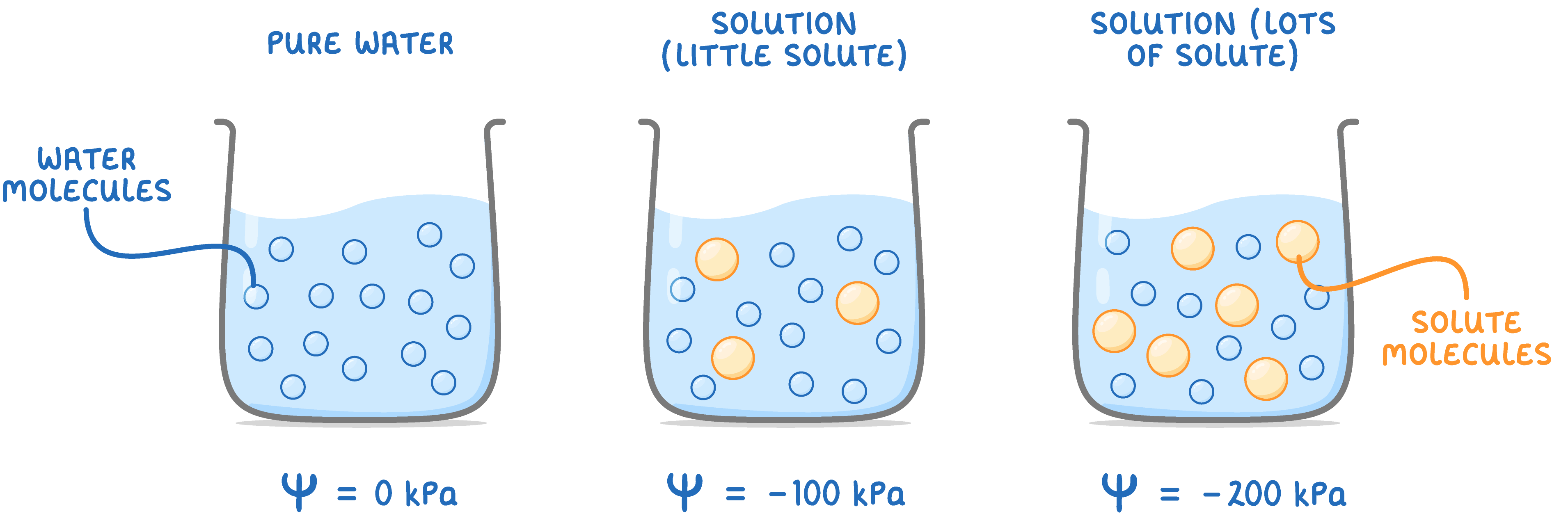
Pure water has a water potential of 0 kPa, and the value decreases (becomes more negative) as more solute is added.
Osmosis
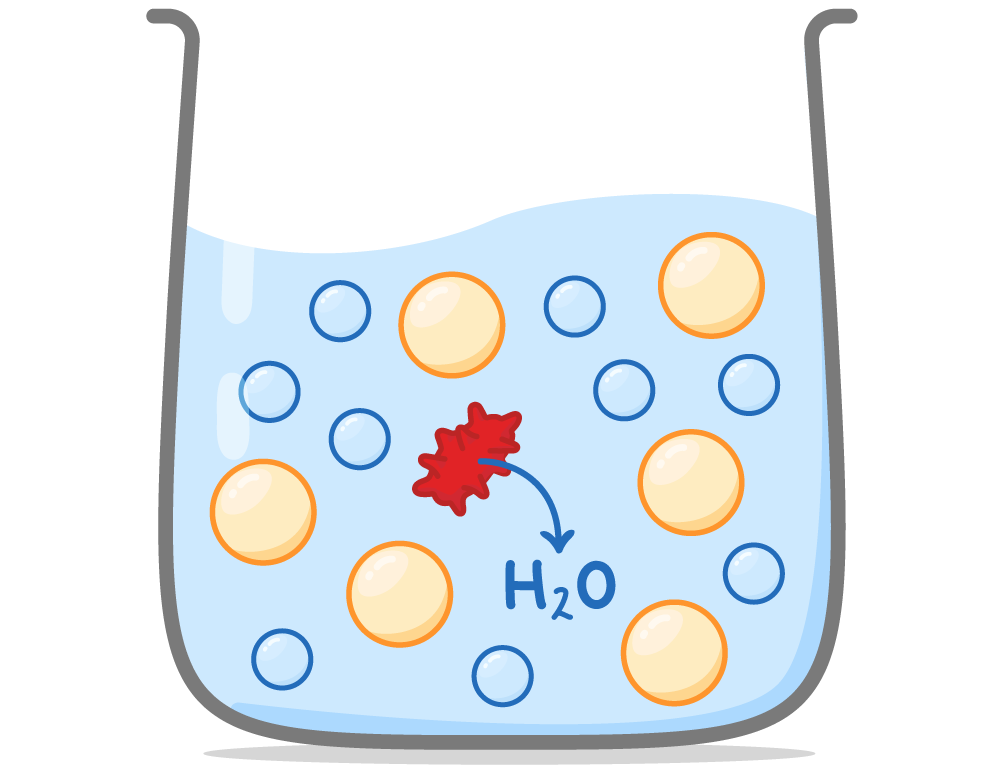
Osmosis is the diffusion of water molecules across a partially permeable membrane from an area of higher water potential to an area of lower water potential.
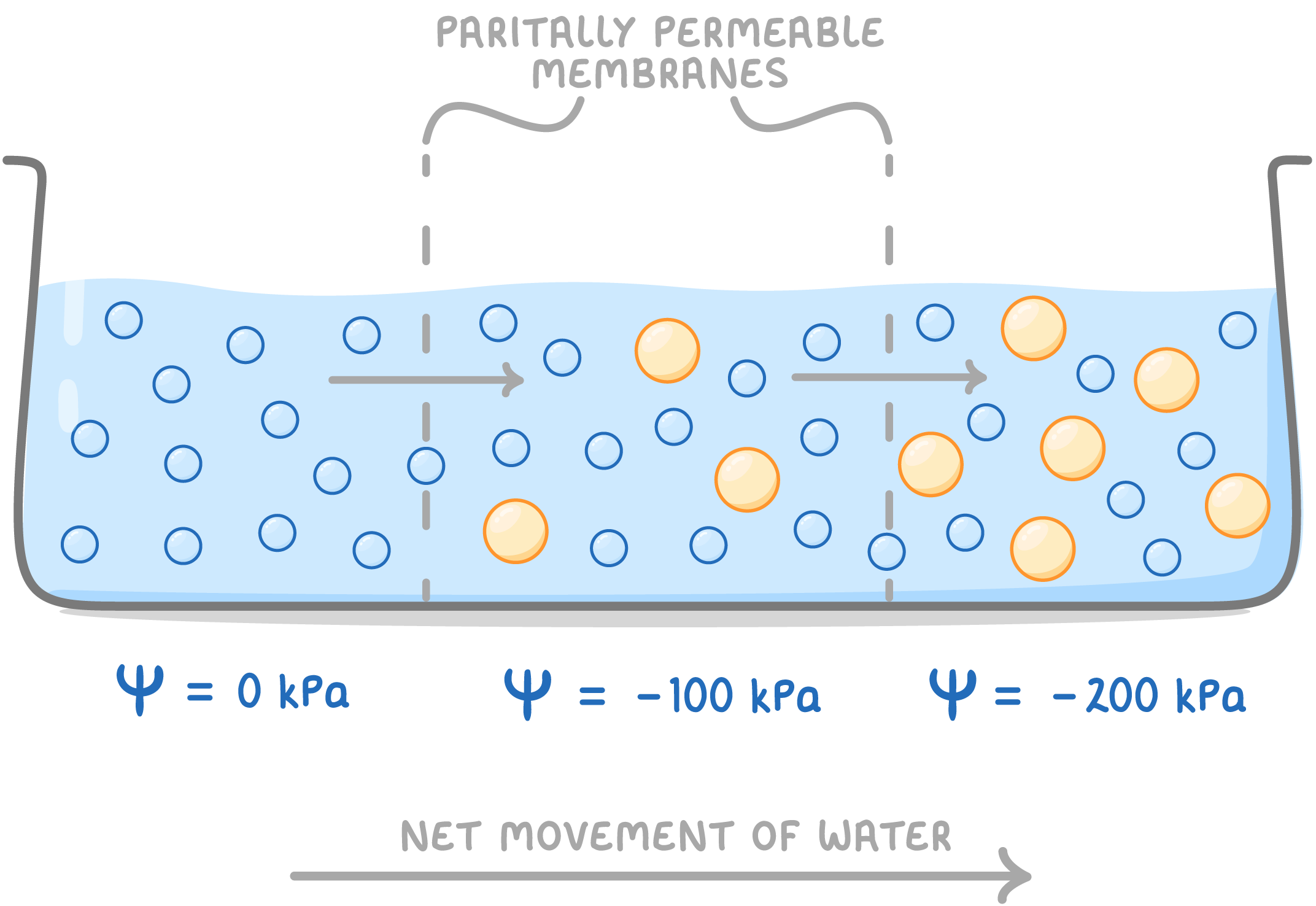
Water molecules are small and can diffuse directly through the cell membrane, whereas large solute molecules cannot.
Water molecules diffuse down a water potential gradient until the water potential is equal on both sides of the membrane (equilibrium).
Osmosis in animal cells
When animal cells are placed in solutions, water may move into or out of the cells depending on the water potential of the solution.

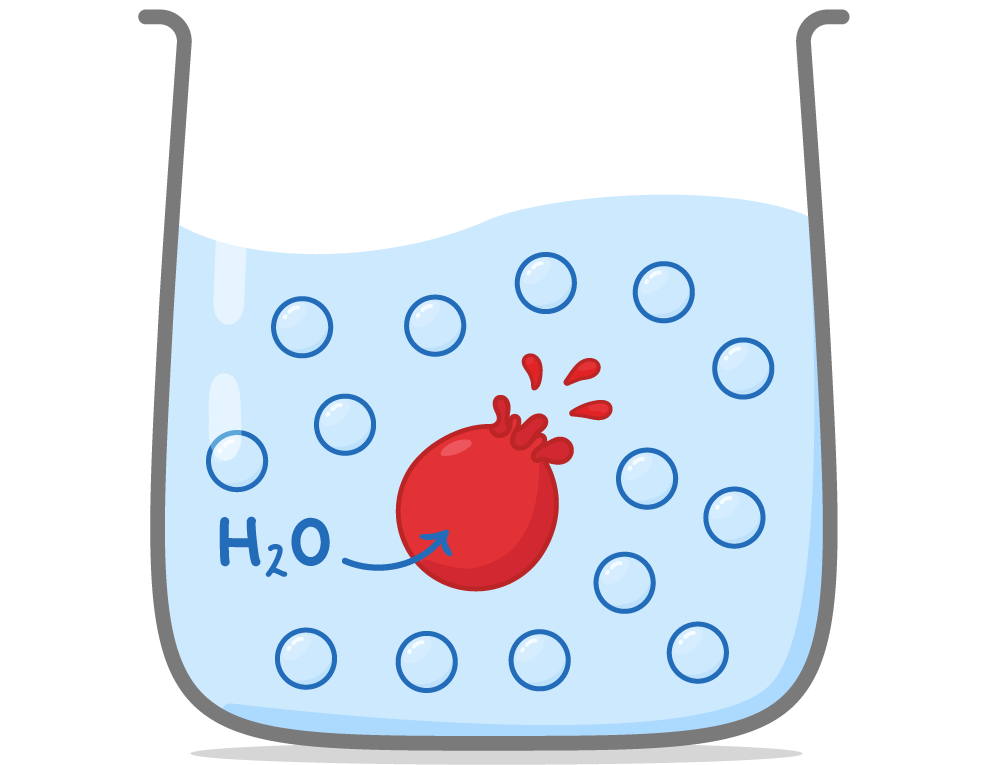
Hypotonic solutions:
- A hypotonic solution has a higher water potential than the cell.
- Water molecules move into the cell.
- The cell swells and bursts.
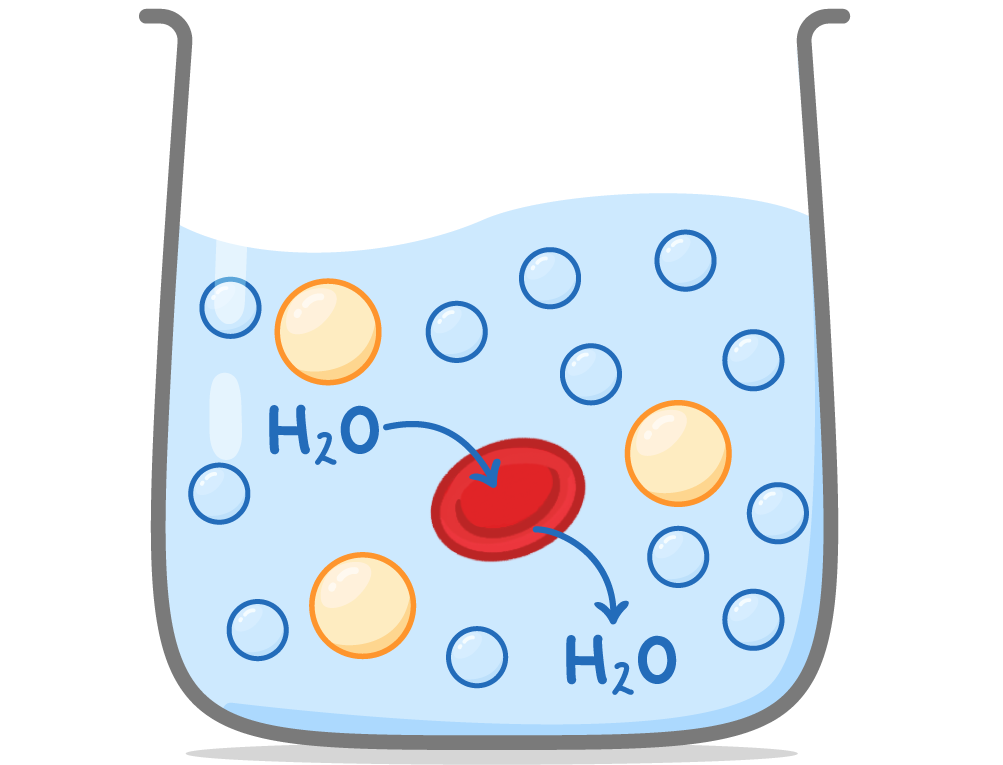
Isotonic solutions:
- An isotonic solution has the same water potential as the cell.
- There is no net movement of water into or out of the cell.
- The cell stays the same size.
Hypertonic solutions:
- A hypertonic solution has a lower water potential than the cell.
- Water molecules move out of the cell.
- The cell shrinks.
Osmosis in plant cells
Unlike animal cells, plant cells do not burst due to the presence of a cell wall.
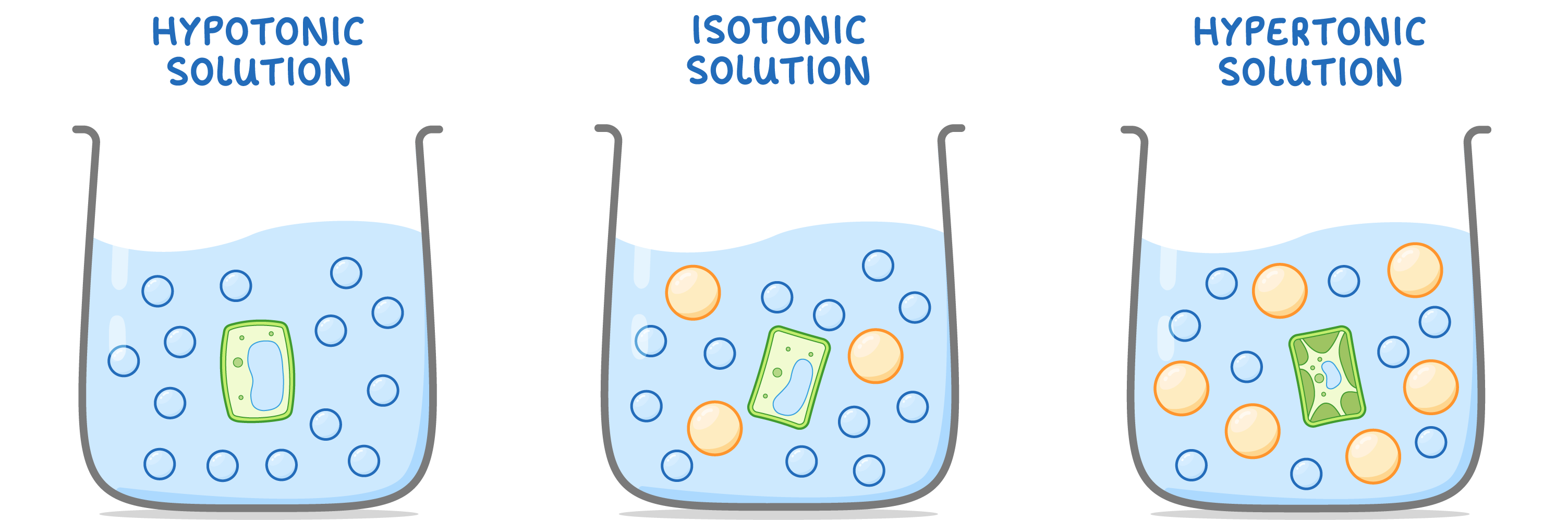
Hypotonic solutions:
- A hypotonic solution has a higher water potential than the cell.
- Water molecules move into the cell.
- The cell swells and becomes turgid.

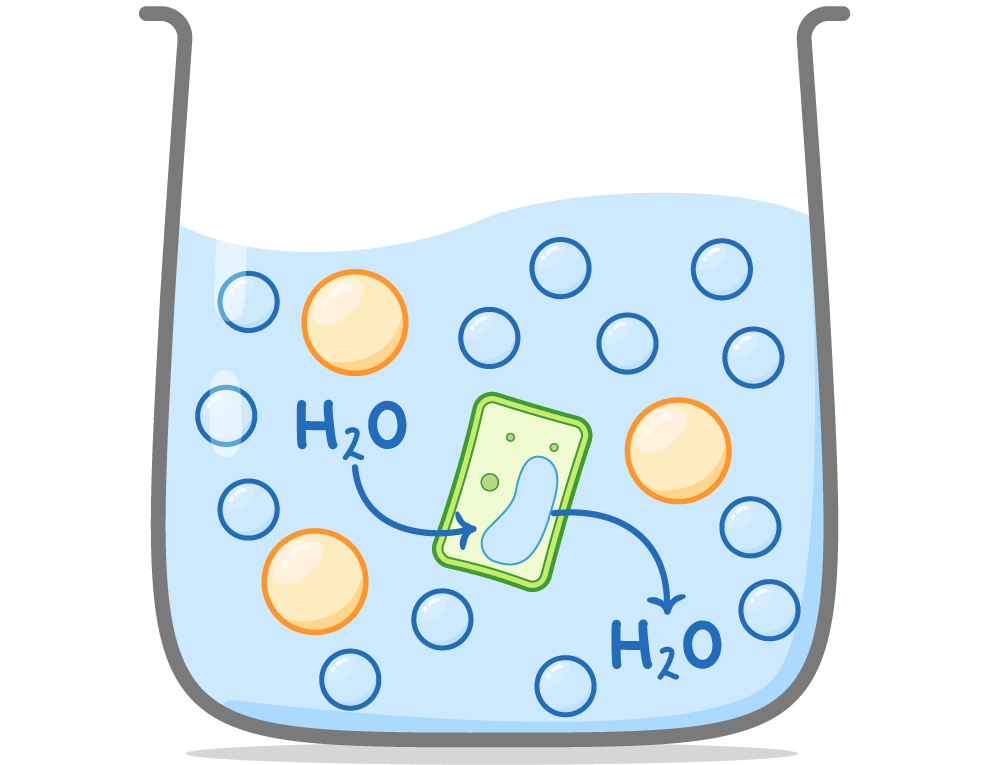
Isotonic solutions:
- An isotonic solution has the same water potential as the cell.
- There is no net movement of water into or out of the cell.
- The cell stays the same size.
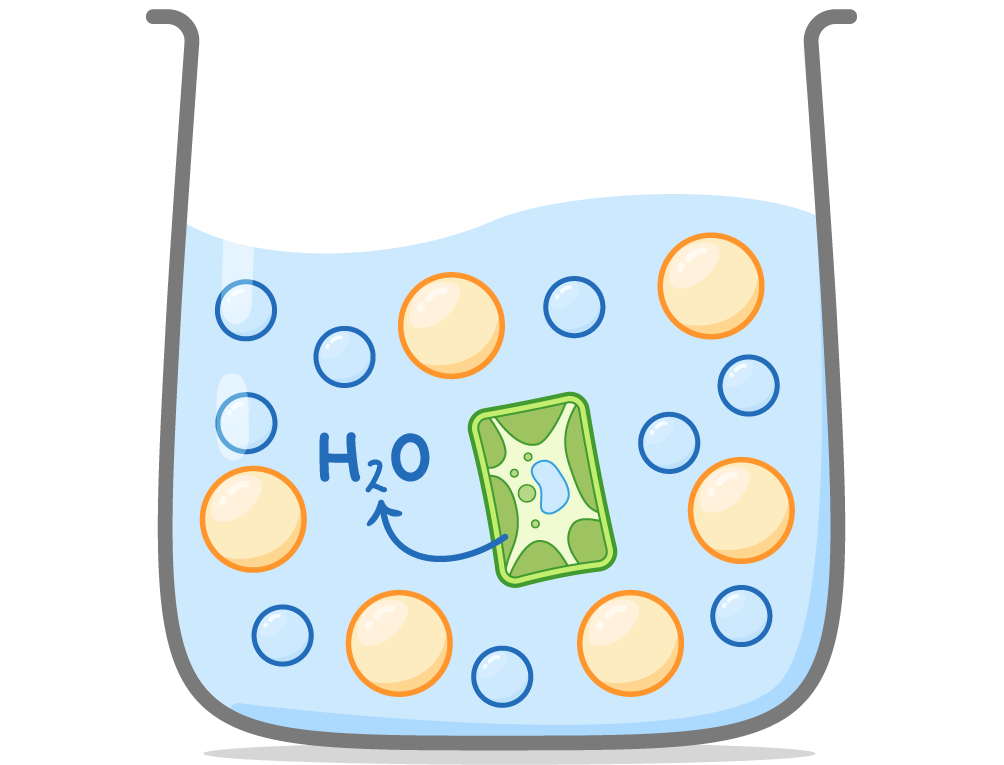
Hypertonic solutions:
- A hypertonic solution has a lower water potential than the cell.
- Water molecules move out of the cell.
- The cell shrinks and becomes plasmolysed.
Factors affecting the rate of osmosis
There are four key factors that affect the rate of osmosis:
- Temperature - At higher temperatures, water molecules have more kinetic energy and diffuse faster.
- Water potential gradient - The steeper the gradient, the faster the rate of osmosis.
- Thickness of membrane - Water molecules travel shorter distances through thin exchange surfaces, so diffuse faster.
- Surface area - Larger surface areas mean more water molecules can cross the membrane at once, making osmosis faster.