3.2 - Eukaryotic Cell Structure: Plant, Algal & Fungal Cells
- 1
The structure of plant cells
- 2
The functions of their cell parts
- 3
The structure of algal and fungal cells
Plant cells
The diagram below shows all the organelles found in a typical plant cell. In this lesson, we'll explain the structure and function of cell walls, chloroplasts and vacuoles.

Plant cells contain the same parts as animal cells. However, they also contain additional organelles such as the cell wall, permanent vacuole and chloroplasts.
Cell wall
The cell wall surrounds plant cells to provide a rigid structure.
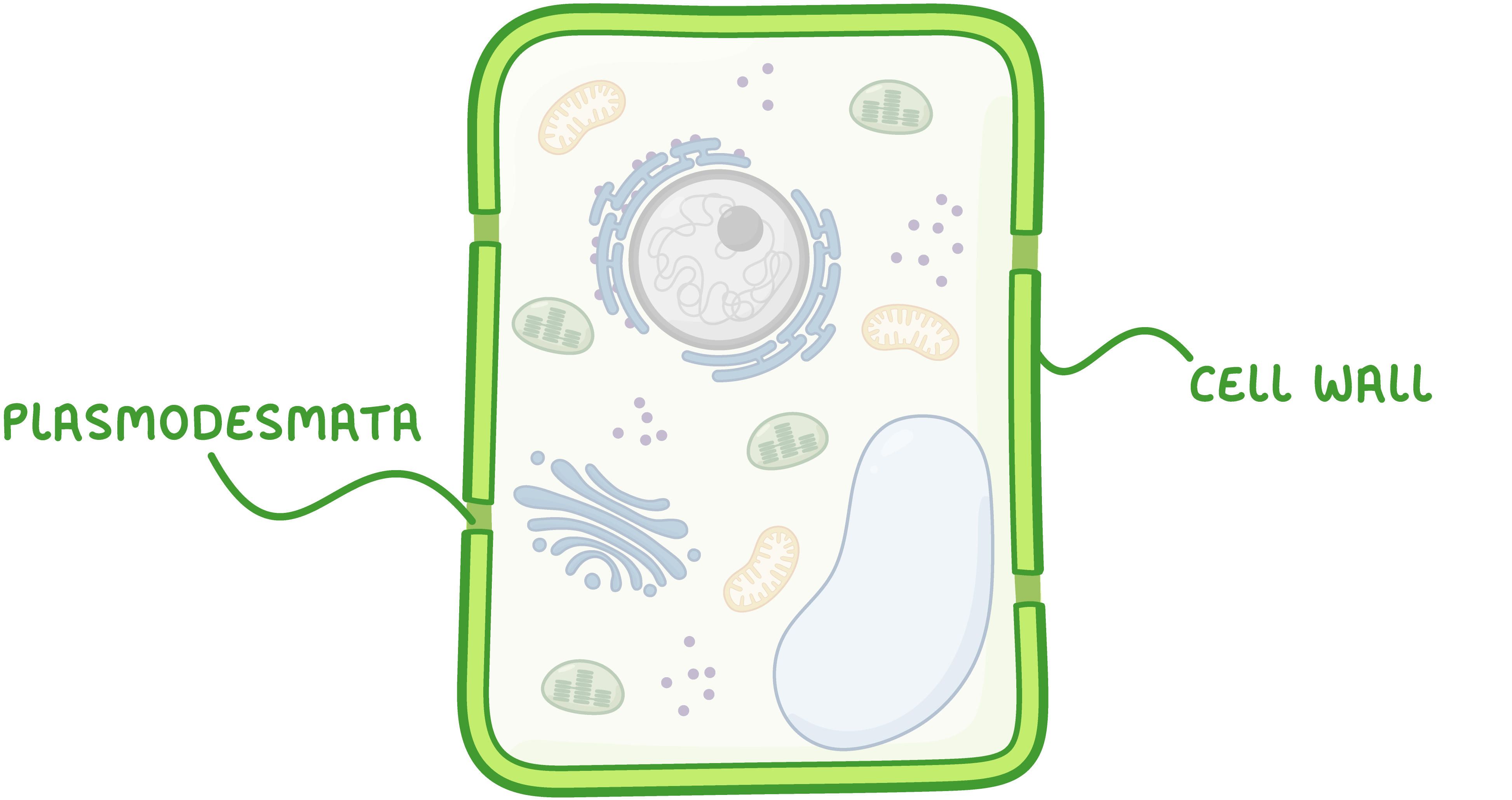
Structure:
- Made up of cellulose.
- Contains channels (gaps) known as plasmodesmata (or plasmodesma if just one).
Functions:
- Supports the cell - Contents of the cell press against the cell wall to make it rigid.
- Prevents the cell from bursting - The cell wall can withstand high osmotic pressure.
- Allows exchange of substances between cells - Plasmodesmata connects neighbouring cells.
Chloroplasts
Chloroplasts are found in the green parts of plants such as the leaves and stems.
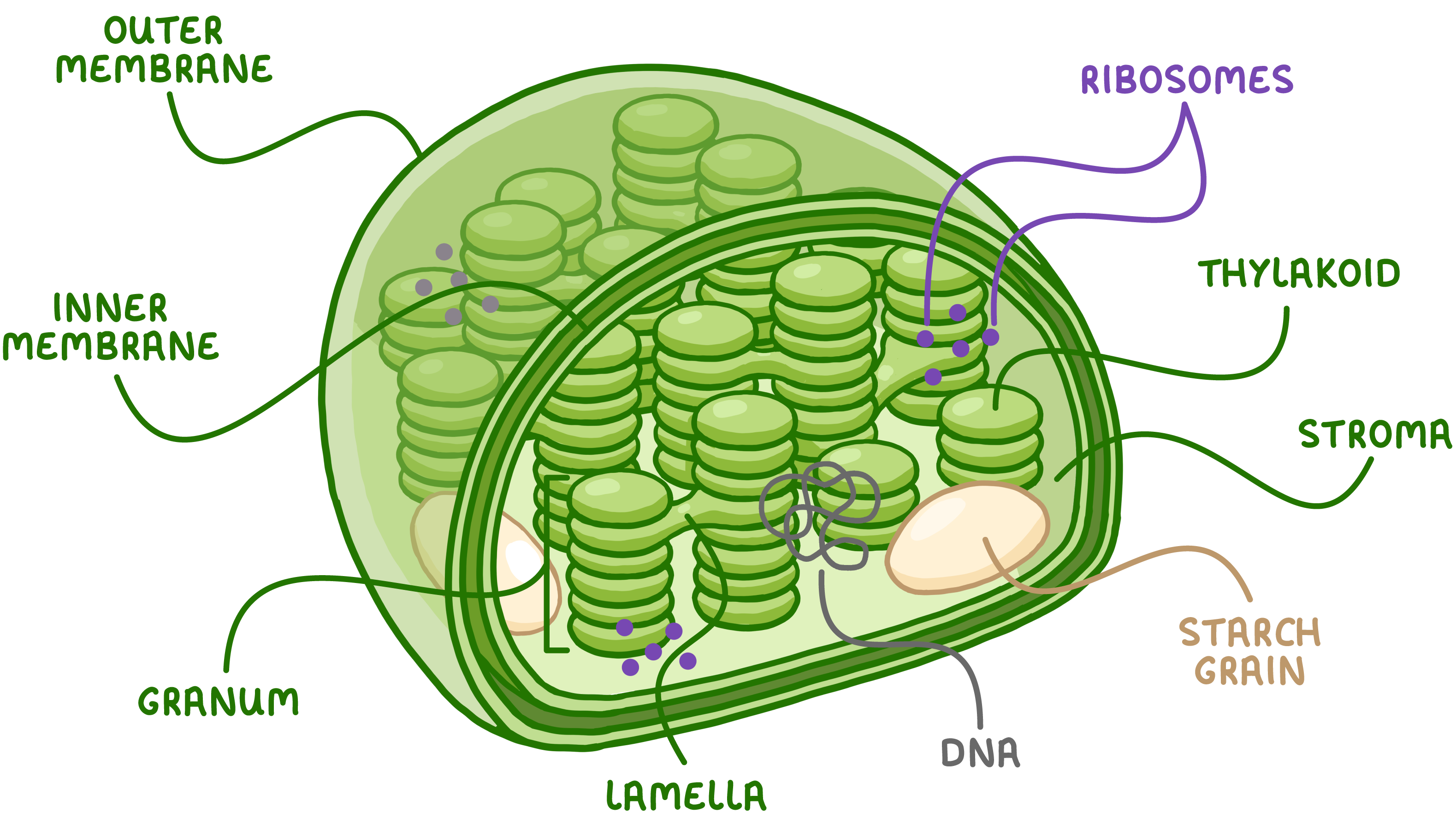
Structure:
- Contain fluid-filled sacs known as thylakoids which are stacked up to form grana.
- Surrounded by a double membrane, enclosing a fluid known as stroma.
- Contain their own DNA and ribosomes.
Function:
- Site of photosynthesis - These reactions take place in the grana and stroma.
Vacuole
Plant cells typically have a large, central, permanent vacuole.
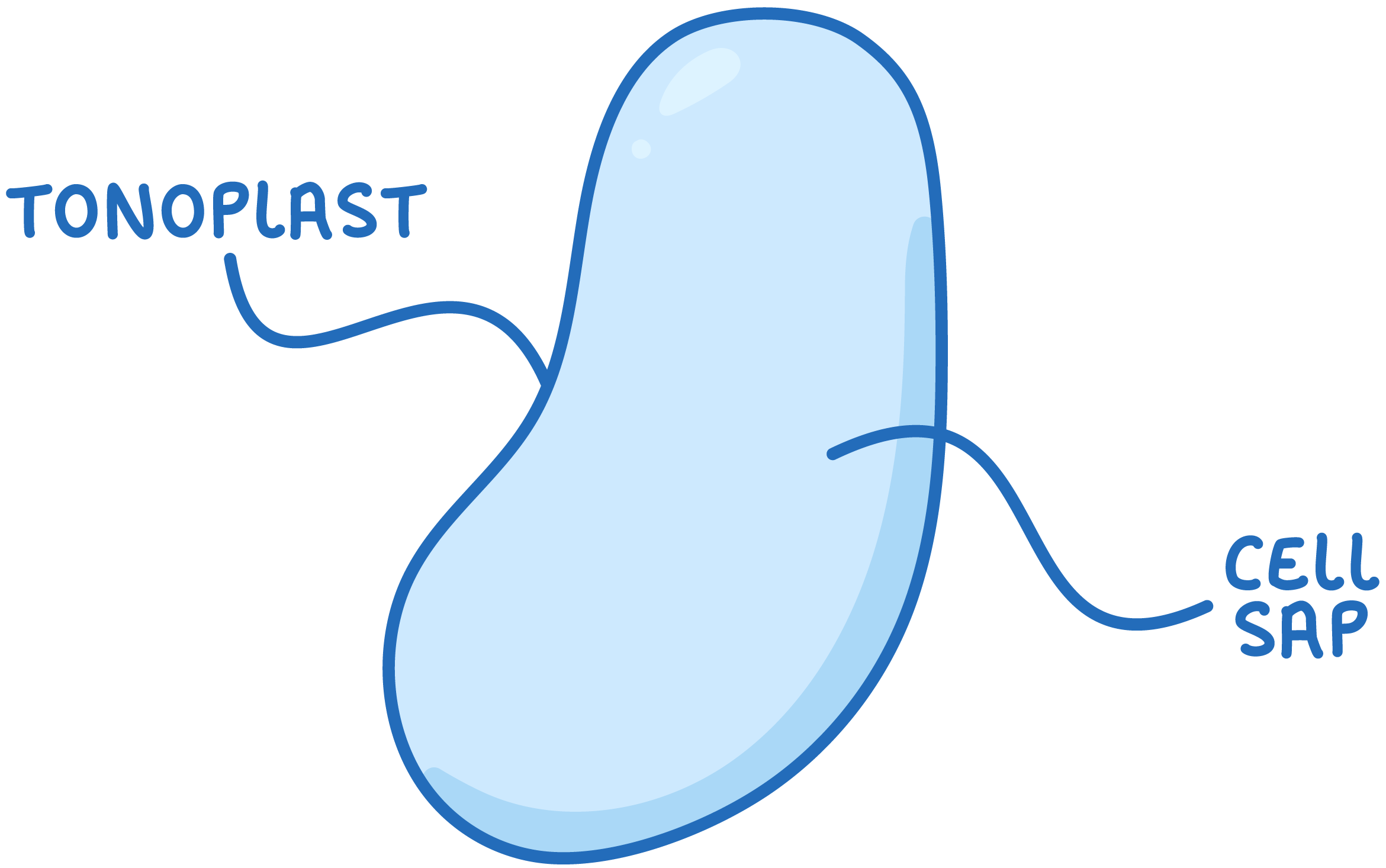
Structure:
- Contains cell sap (solution of salts and sugars, among other substances).
- Surrounded by a selectively permeable membrane known as a tonoplast.
Function:
- Helps to maintain pressure within the cell, which keeps the cell rigid and stops the plant from wilting.
Algal and fungal cells
Algal and fungal cells can be unicellular or multicellular.
Algal cells:
- Contain the same organelles as plant cells.
- Contain chloroplasts with different shapes to those found in plant cells.
Fungal cells:
- Contain most of the organelles found in plant cells.
- Do not contain chloroplasts.
- Contain cell walls made up of chitin rather than cellulose.