3.3 - Cell Specialisation & Organisation
- 1
The organisation of cells into tissues, organs, and organ systems
- 2
Examples of the structures and functions of different tissues
Key terms
- Specialised cells - These are cells with certain features that allow them to carry out a particular function.
- Tissue - This is a group of similar cells working together to carry out a particular function.
- Organ - This is a group of tissues working together to carry out a particular function.
- Organ system - This is a group of organs working together to carry out a particular function.
Levels of organisation
The organisation of cells in living organisms can be summarised as follows:
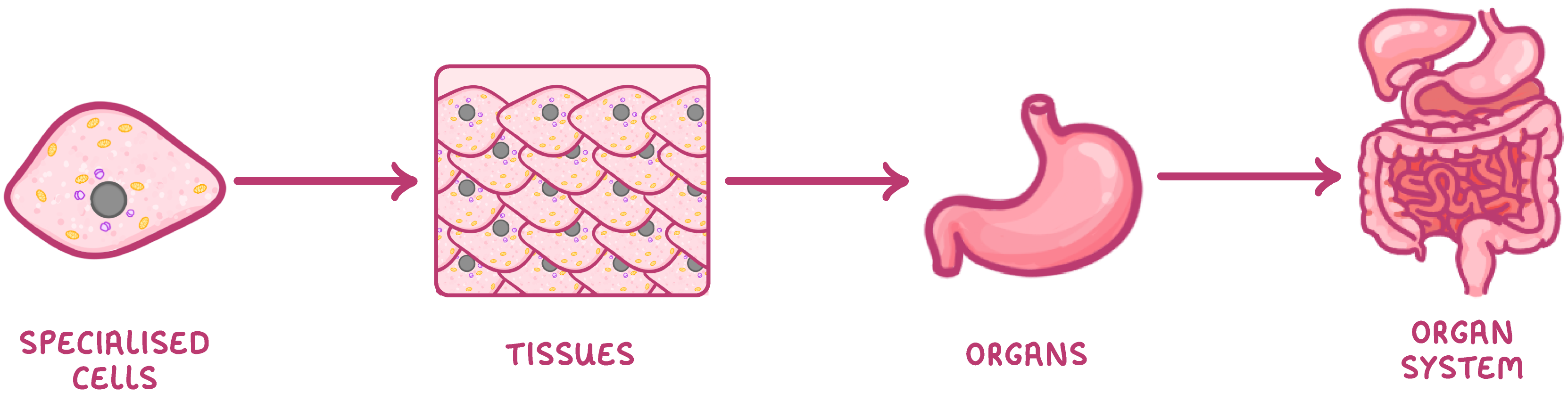
Examples of these levels include:
- Specialised cells - Erythrocytes, neutrophils, and palisade cells.
- Tissues - Epithelium, cartilage, and xylem tissue.
- Organs - Stomach, pancreas, and leaf.
- Organ systems - Cardiovascular system, digestive system, and root system.
Examples of animal tissues
You need to know about the following types of animal tissues.
Squamous epithelium
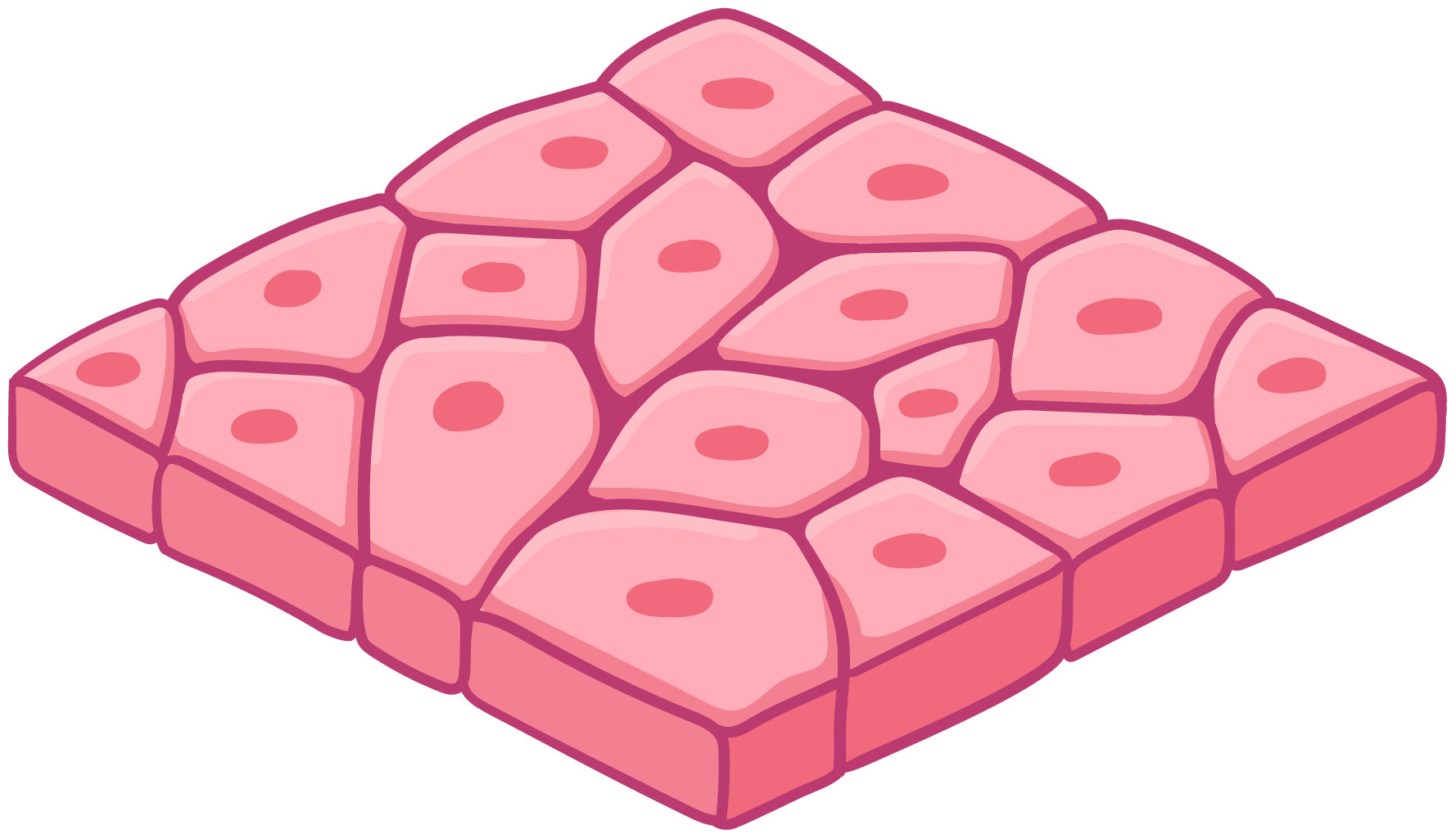
Squamous epithelium tissue provides a thin lining for many organs such as the lungs.
This tissue is made up of a single layer of squamous epithelial cells. Due to being only one cell thick, gases can quickly diffuse through the tissue.
Ciliated epithelium
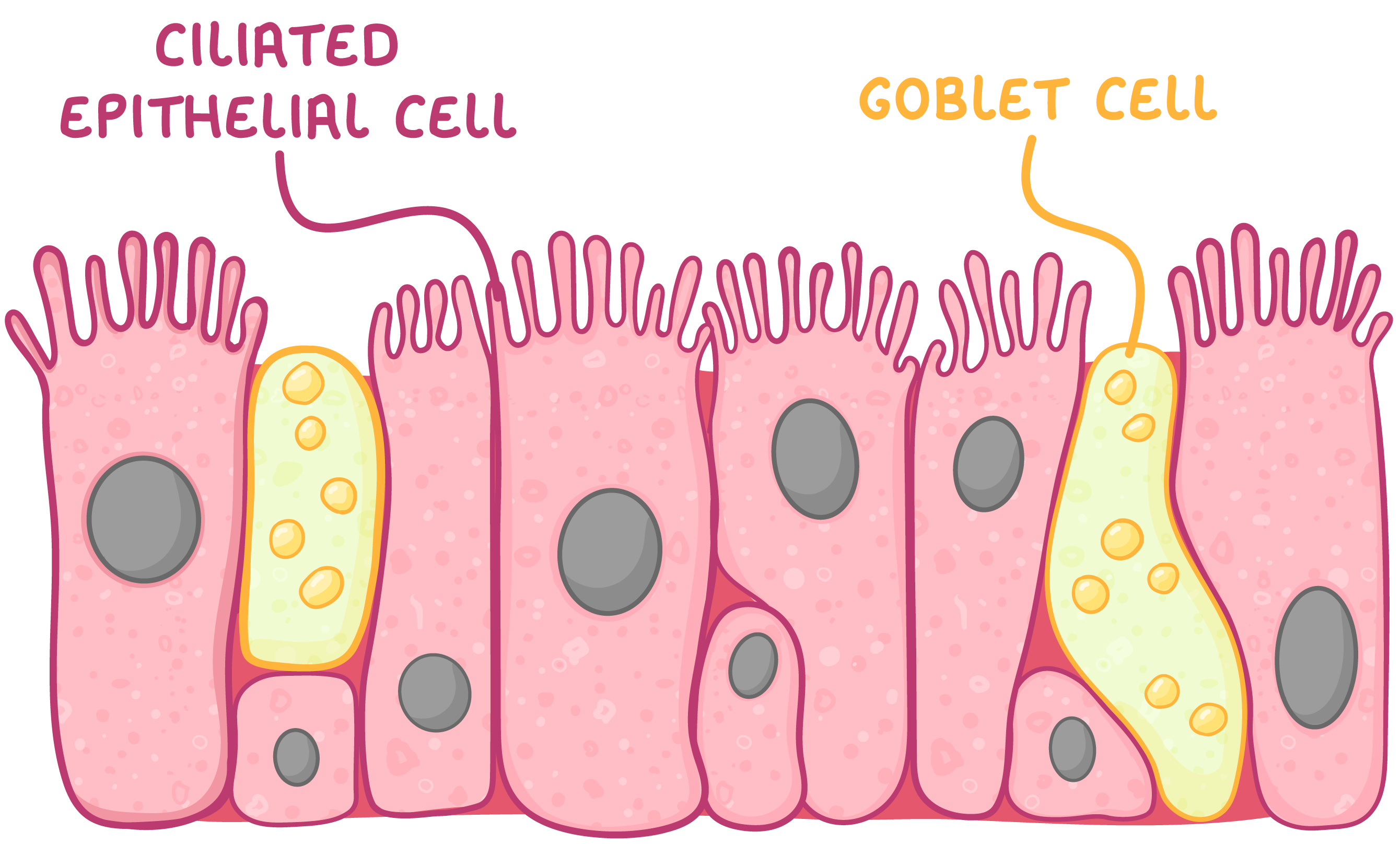
Ciliated epithelium tissue lines organs such as the trachea where it can sweep mucus away from the lungs.
This tissue is made up of ciliated epithelial cells and goblet cells. The goblet cells release mucus to trap pathogens, whilst the ciliated epithelial cells use cilia to sweep the mucus away.
Cartilage
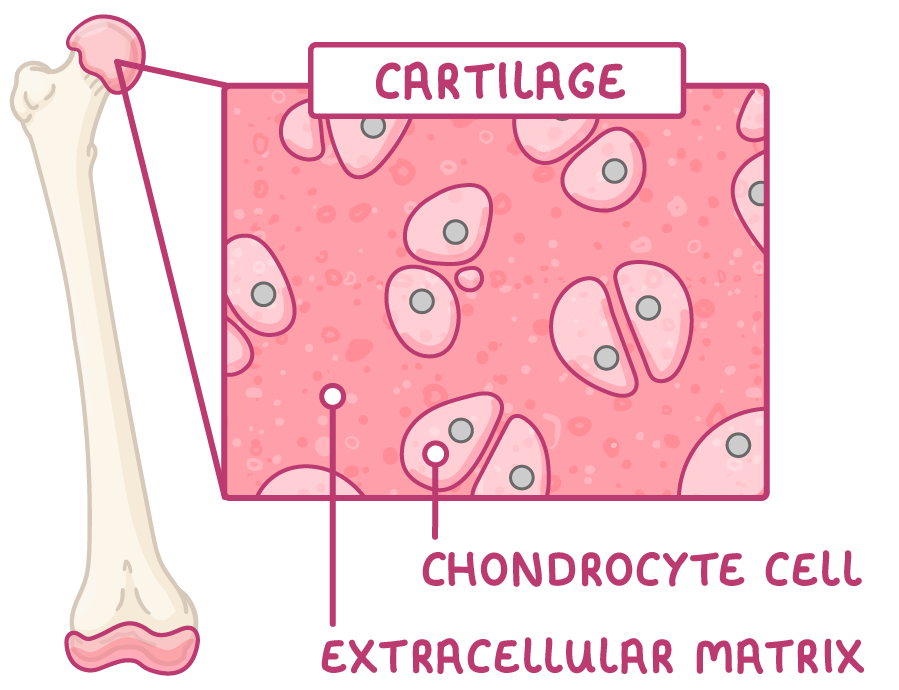
Cartilage is a type of connective tissue that acts as a cushion between bones and also provides support to organs such as the ears and nose.
This tissue is made up of chondrocyte cells fixed within an extracellular matrix.
Muscle
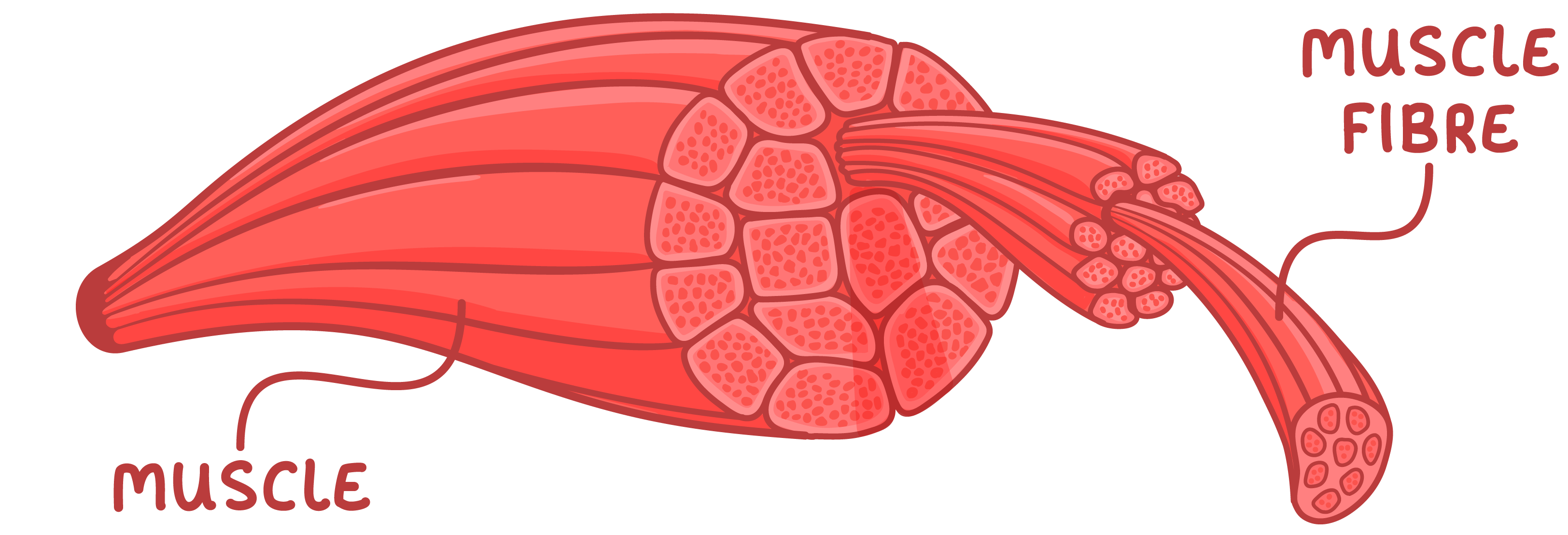
Muscle tissue is made up of muscle fibres (bundles of elongated cells). These fibres contract (shorten) and relax to move different parts of the body.
There are three types of muscle tissue:
- Smooth - Found in the walls of organs.
- Cardiac - Found in the heart.
- Skeletal - Found attached to bones.
Examples of plant tissues
You need to know about the following types of plant tissues.
Xylem
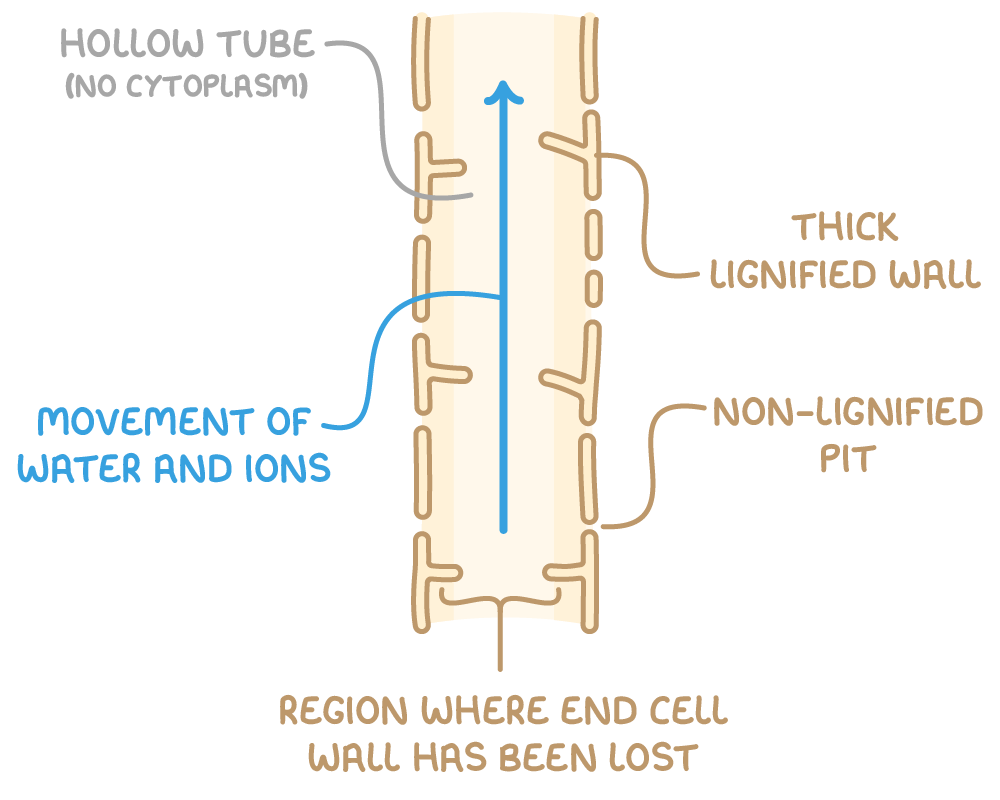
Xylem tissue is responsible for the transport of water and minerals within plants.
It is made up of dead xylem vessel cells which have no end walls and no organelles. This forms a continuous column through which water can flow. The walls of these cells are strengthened by a waterproof material known as lignin.
Phloem
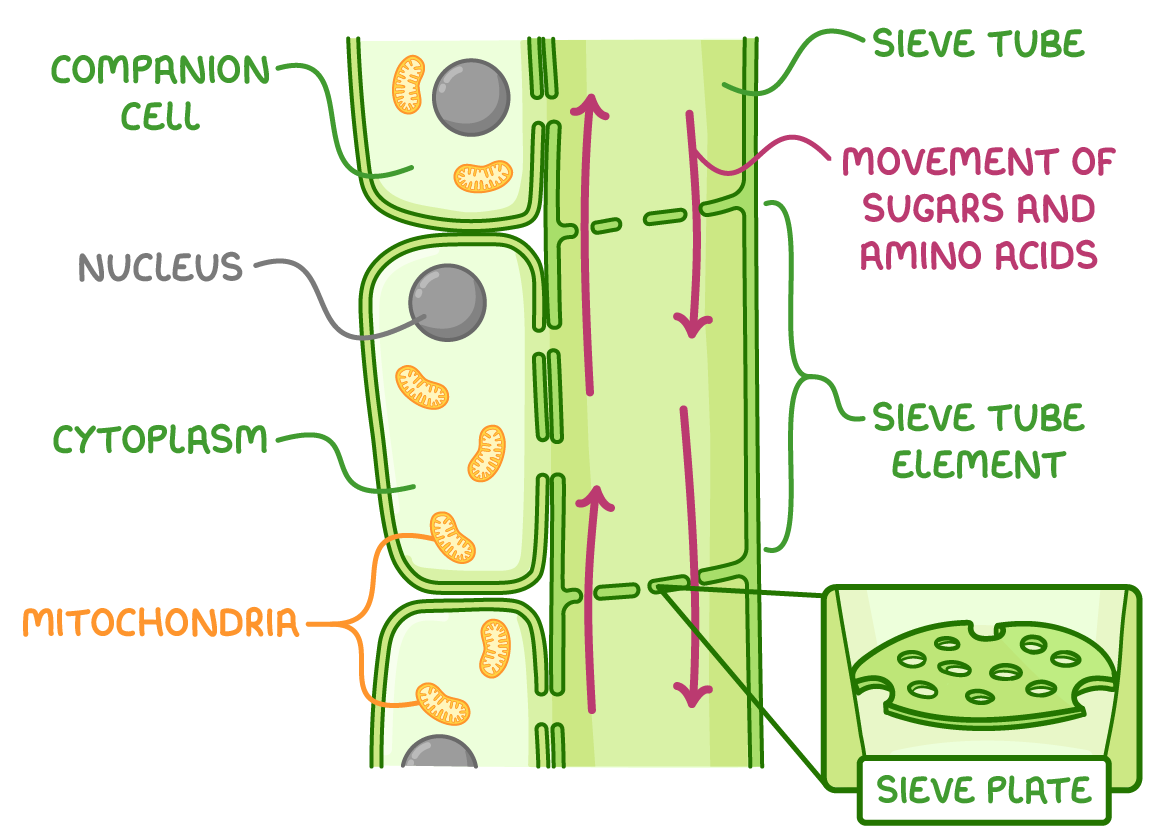
Phloem tissue is responsible for the transport of sugars and amino acids within plants.
It is made up of columns of sieve tube elements and companion cells.
The sieve tube element cells are separated by sieve plates with holes so that sugars can pass through. Sieve tube elements contain very few organelles, allowing sugars to flow easily.
Companion cells contain many mitochondria to release energy.