6.8 - Digestion
- 1
Physical and chemical digestion
- 2
The structure of the human digestive system
Physical and chemical digestion
The human digestive system breaks down food so that it can be absorbed into the body.
The digestive system breaks down food in two main ways:
- Physical digestion - The break down of large food pieces into smaller ones to increase the surface area for chemical digestion.
- Chemical digestion - Enzymes catalyse hydrolysis reactions that break bonds in large insoluble molecules to form smaller soluble molecules.
Structure of the human digestive system
The human digestive system consists of the alimentary canal, which is the pathway food takes through the body, and some associated accessory glands. These are shown in the image below.
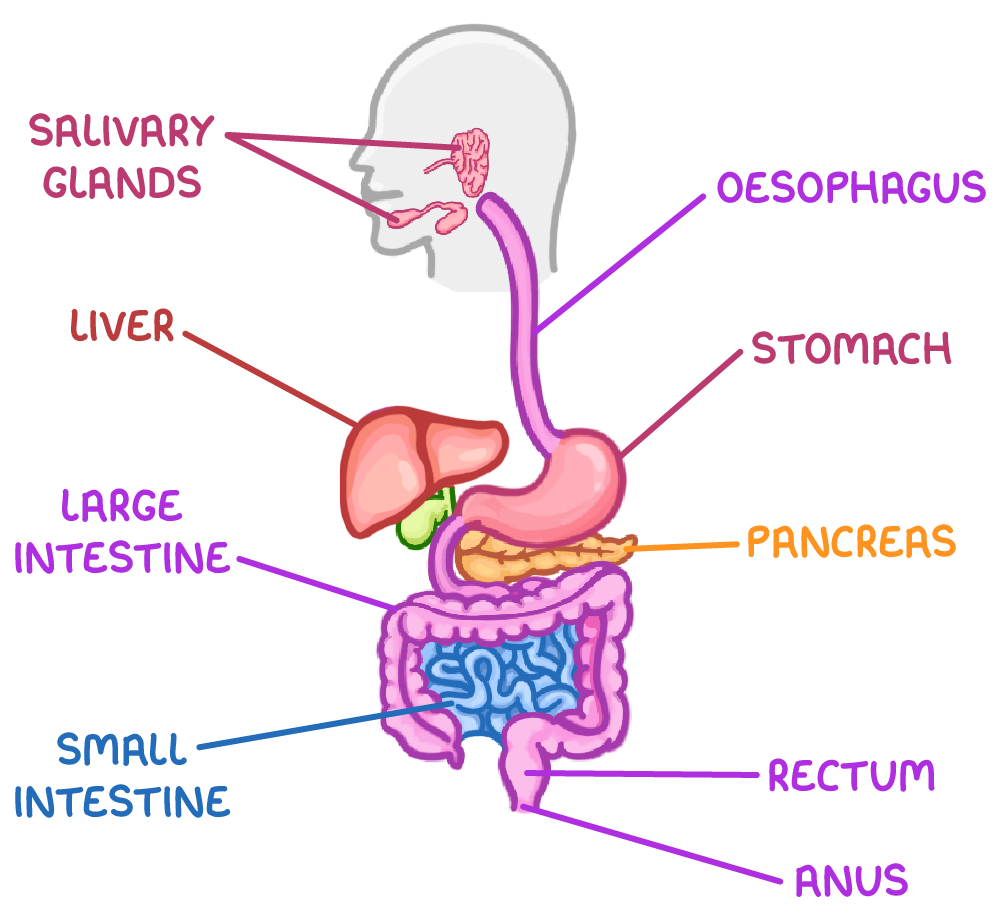
The key components involved in digestion include:
- Salivary glands - These secrete saliva containing amylase.
- Oesophagus - This transports food to the stomach.
- Stomach - This digests food (especially proteins) and produces acid to destroy pathogens.
- Liver - This produces bile salts to aid lipid digestion.
- Pancreas - This secretes pancreatic juice containing enzymes (proteases, lipases, and amylases).
- Small intestine - This has three parts (you only need to know the last part, the ileum) that are the site of further digestion and absorption.
- Large intestine - This absorbs water and stores waste.
- Rectum - This stores faeces before removal via egestion through the anus.
Food travels through the alimentary canal in the following order:
Mouth ➔ oesophagus ➔ stomach ➔ small intestine ➔ large intestine ➔ rectum ➔ anus
6.9 - Digestive EnzymesNext up
How were these notes?