6.9 - Digestive Enzymes
- 1
What digestive enzymes are
- 2
The roles of enzymes in digesting carbohydrates
- 3
The roles of enzymes in digesting lipids
- 4
The roles of enzymes in digesting proteins
What digestive enzymes are
Digestive enzymes are involved in chemical digestion. This is where enzymes catalyse hydrolysis reactions that break bonds in large insoluble food molecules to form smaller soluble molecules, which can be absorbed into the bloodstream.
There are three main types of digestive enzymes:
- Carbohydrases
- Lipases
- Proteases
The roles of enzymes in digesting carbohydrates
Carbohydrases break down large carbohydrates into smaller polysaccharides, disaccharides, and monosaccharides.
Carbohydrases are produced by the salivary glands, the pancreas, and the epithelial cells lining the ileum.
For instance, starch digestion occurs as follows:
- Salivary amylase breaks down starch into the disaccharide maltose in the mouth.
- Acid in stomach denatures salivary amylase.
- Pancreatic amylase continues starch digestion in small intestine.
- The epithelial cells in the ileum lining produce maltase to break down maltose into α-glucose monomers.
Other disaccharides are hydrolysed by specific disaccharidase enzymes:
- Sucrose is hydrolysed to glucose and fructose by sucrase.
- Lactose is hydrolysed to glucose and galactose by lactase.
Some membrane-bound disaccharidases, like maltase, are bound to epithelial cells that line the ileum.
The roles of enzymes in digesting lipids
Lipases break down lipids into fatty acids and monoglycerides. Lipases are produced by the pancreas and act in the small intestine.
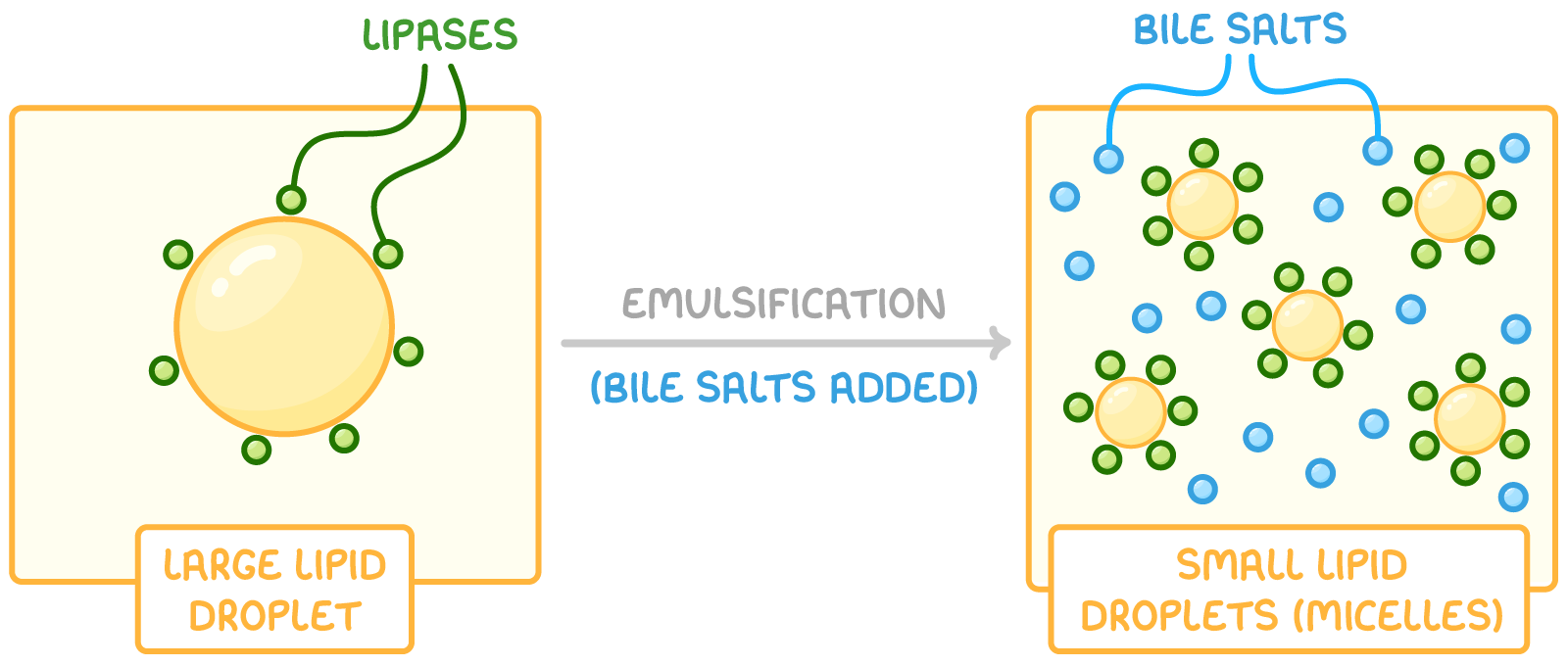
The digestion of lipids occurs as follows:
- Bile salts emulsify lipids into tiny droplets called micelles, increasing the surface area of the lipids.
- Pancreatic lipase breaks down micelles into fatty acids and monoglycerides.
The roles of enzymes in digesting proteins
Proteases (peptidases) break down proteins, polypeptides, or dipeptides into smaller units and eventually into amino acids.
Some proteases are produced by and act in the stomach. Other proteases are produced by the pancreas and the epithelial cells lining the ileum and act in the small intestine.
There are three types of protease that achieve this:
- Endopeptidases - These hydrolyse internal peptide bonds in the middle of proteins to form shorter polypeptides, increasing the number of ends for other proteases to work on.
- Exopeptidases - These hydrolyse peptide bonds at the ends of polypeptides to remove terminal amino acids or dipeptides.
- Dipeptidases - These break down any remaining dipeptides into amino acids.