1.4 - Terminal Velocity
- 1
Understanding friction and drag forces
- 2
Factors influencing drag force
- 3
The concept of terminal velocity
- 4
Calculating terminal velocity for a skydiver
- 5
Conducting an experiment to measure terminal velocity
Understanding friction and drag forces
Friction is a force that opposes the movement between two surfaces in contact. It comes in two forms:
- Contact friction – occurs between solid surfaces
- Fluid friction or drag – occurs between a solid object and a fluid (like water or air)
Drag, specifically, works against the direction of an object’s motion. Important characteristics of drag include:
- It increases as the object's speed increases.
- It is affected by the thickness of the fluid and the shape and size of the object.
- Drag cannot cause an object to start moving or increase its speed.
Terminal velocity
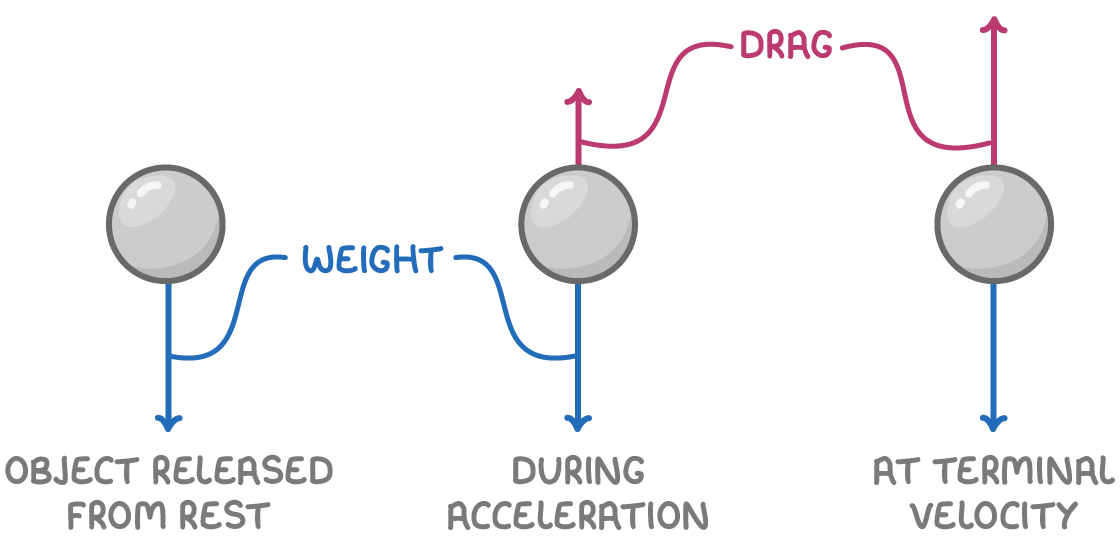
Terminal velocity is achieved when an object’s driving force and the opposing drag force balance each other out, resulting in a constant speed.
This occurs in three stages:
- The object accelerates from a standstill due to a constant driving force.
- As the object speeds up, drag force increases, slowing the acceleration.
- The driving force and drag force become equal, leading to a constant speed, known as the terminal velocity.
Skydivers
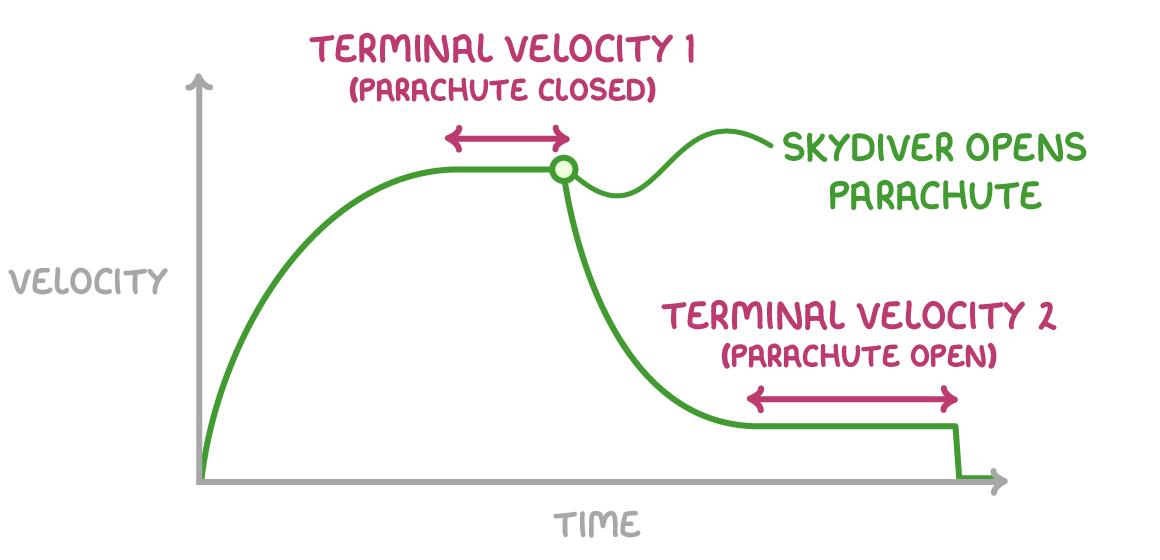
For skydivers, gravity acts as the driving force, while air resistance is the drag force.
- Initially, a skydiver accelerates due to their weight.
- As they fall faster, air resistance increases, reducing the net force and acceleration.
- Eventually, the weight is equal to the drag force, and the skydiver reaches terminal velocity.
- Deploying the parachute significantly increases air resistance, allowing for a controlled and safe descent by lowering the terminal velocity of the skydiver.
Investigating terminal velocity
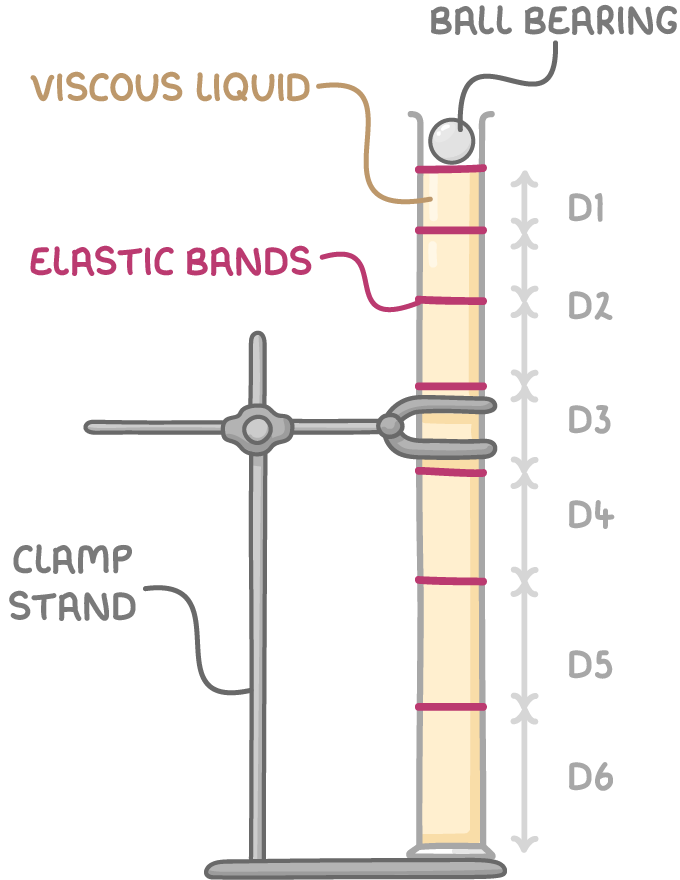
You can measure the terminal velocity of a ball bearing in a viscous liquid through this simple experiment:
- Fill a clear, vertical tube with a viscous liquid like syrup or oil.
- Drop a ball bearing into the tube and use a stopwatch to time its fall between marked intervals.
- Record the time it takes for the ball bearing to travel between these marks, and calculate the average velocity.
- Carry out several trials for accuracy and average the results. Create a velocity-time graph using your data.
- The point where the velocity levels off on the graph indicates the terminal velocity of the ball bearing in the liquid.