14.4 - Damped Oscillations
- 1
How energy is lost from oscillating systems due to damping forces
- 2
Different levels of damping and their effects on amplitude
- 3
The impact of damping on resonance
- 4
Examples of deliberately damping systems
Energy loss in oscillating systems
In practice, any oscillating system loses energy to its surroundings, usually due to frictional damping forces like air resistance. This energy loss causes the amplitude of the oscillations to decrease over time.
Causes of damping
- Frictional forces
- Air resistance
- Internal energy losses
Deliberately damping systems
Many systems are deliberately damped to prevent excessive oscillations or to minimise the effects of resonance:
- Car suspension systems use shock absorbers to damp oscillations.
- Moving coil meters have critical damping to prevent needle oscillation.
Different damping levels
The degree of damping can vary:
Light damping
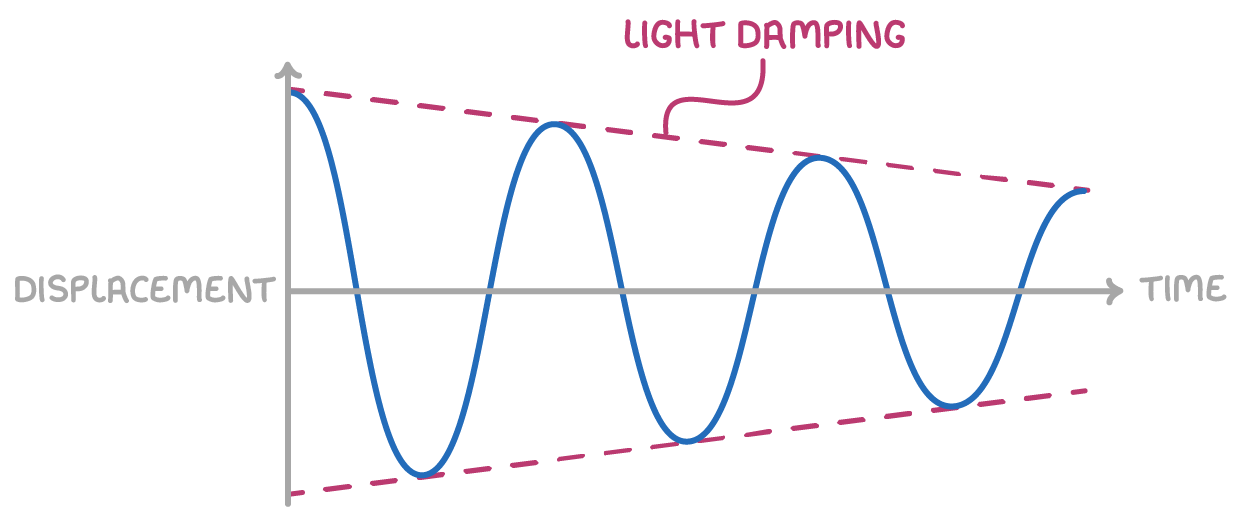
- Small damping force reduces the amplitude of oscillation gradually over time.
Critical damping
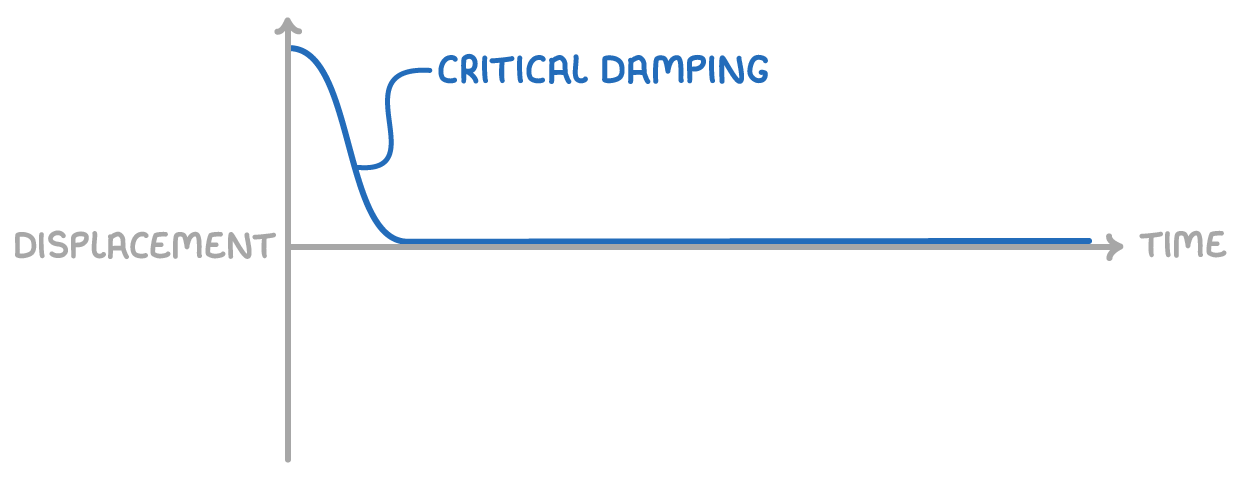
- Stops oscillations rapidly without oscillating.
Heavy damping
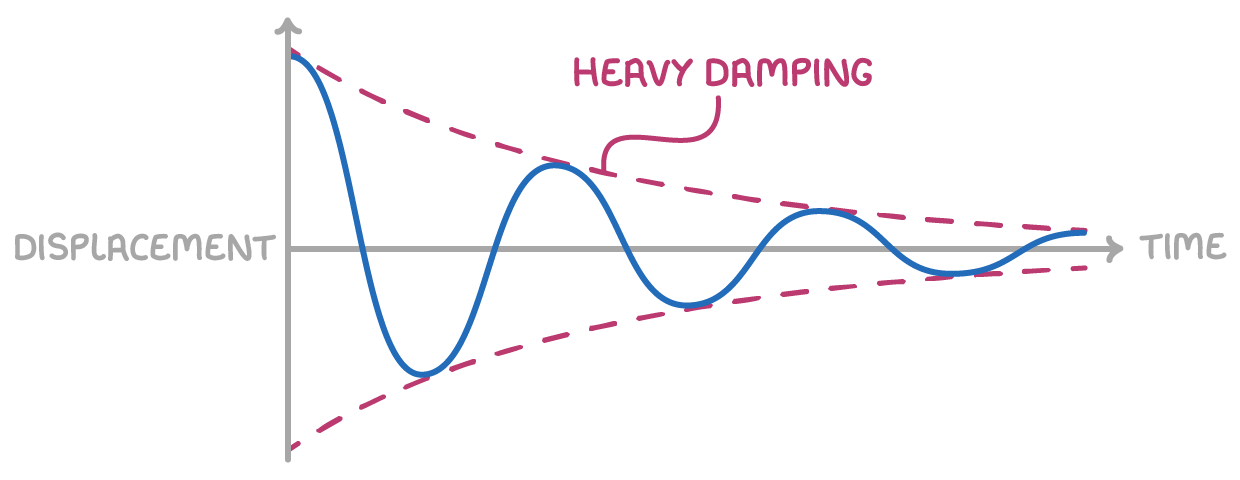
- Reduces the amplitude of oscillations more rapidly than light damping.
Overdamping
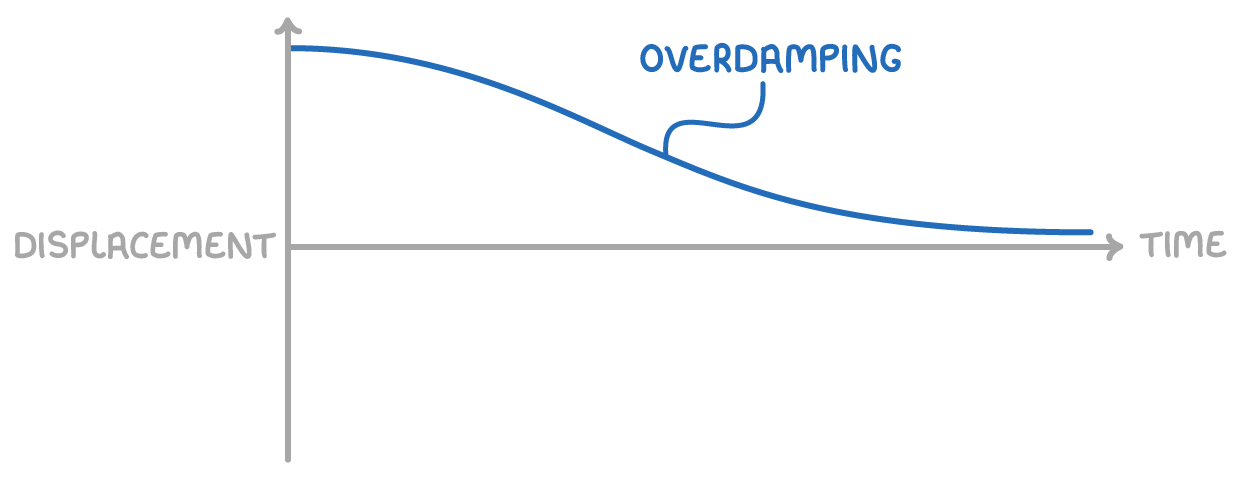
- Critical damping reduces the amplitude to zero gradually without oscillating.
Effect of damping on resonance
Damping a resonating system reduces the amplitude of oscillation.
This results in a flatter amplitude against driving frequency graph.
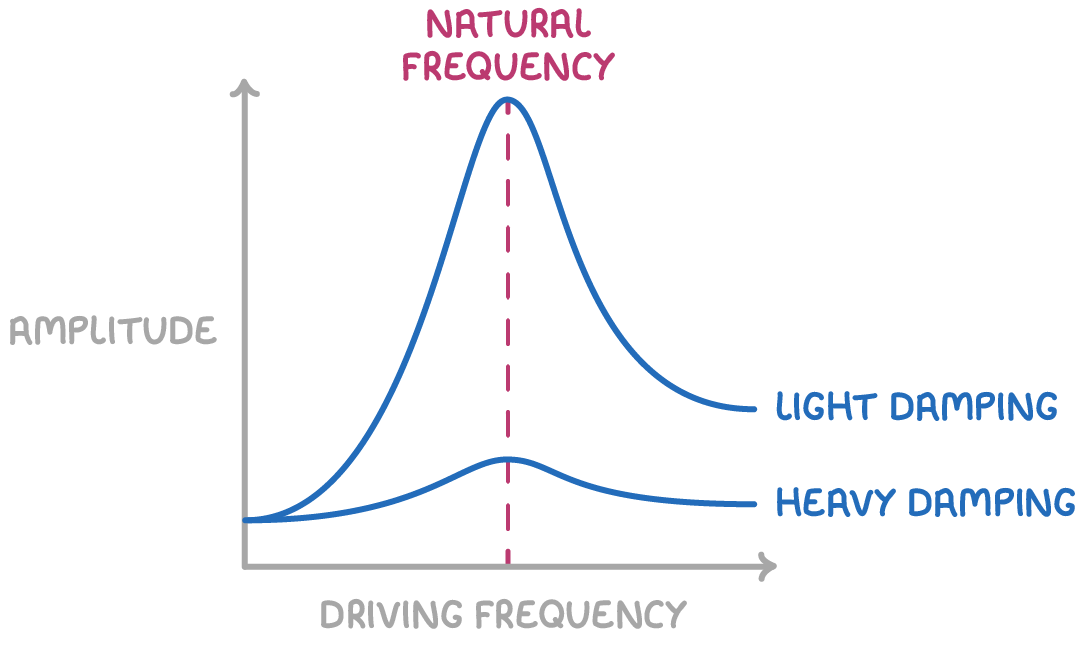
- Light damping - Very sharp, tall resonance peak, highly sensitive to driving frequency.
- Heavy damping - Lower, flatter peak, less sensitive to driving frequency.