11.5 - Structural Isomers
- 1
What structural isomers are
- 2
The three types of structural isomer: chain, positional, and functional group
- 3
How to determine if a compound is primary, secondary or tertiary
Types of structural isomer
Structural isomers are compounds that share the same molecular formula but have their atoms connected together in different ways.
There are several types of structural isomers, including:
- Chain isomers - Differ in the length of their carbon chain (e.g. straight vs branched).
- Positional isomers - Vary in the location of their functional group.
- Functional group isomers - Contain different functional groups.
Chain isomers differ in carbon chain length
Chain isomers are structural isomers that have carbon chains of different lengths. They can be either straight-chain or branched-chain molecules.
For example, butane and methylpropane are chain isomers - both have the molecular formula C_4_H_10_ but different carbon chain structures:
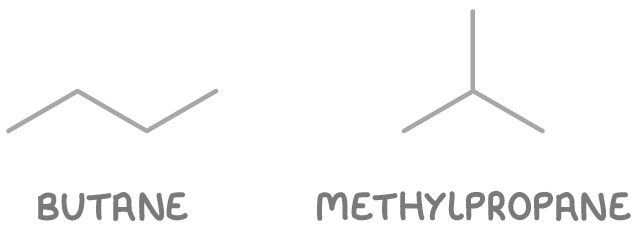
- Butane has a straight chain of 4 carbon atoms.
- Methylpropane has a branched 3-carbon chain with a 1-carbon alkyl substituent.
Positional isomers have functional groups in different locations
Positional isomers are structural isomers where the position of the functional group differs between isomers.
For example, chloropentane (C5H11Cl) has three positional isomers:

- In 1-chloropentane, the chlorine is on the first carbon.
- In 2-chloropentane, the chlorine is on the second carbon.
- In 3-chloropentane, the chlorine is on the third carbon.
Note: 4-chloropentane and 5-chloropentane mirror 2-chloropentane and 1-chloropentane due to the symmetry of the pentane chain, so they aren't distinct isomers.
Primary, secondary and tertiary compounds
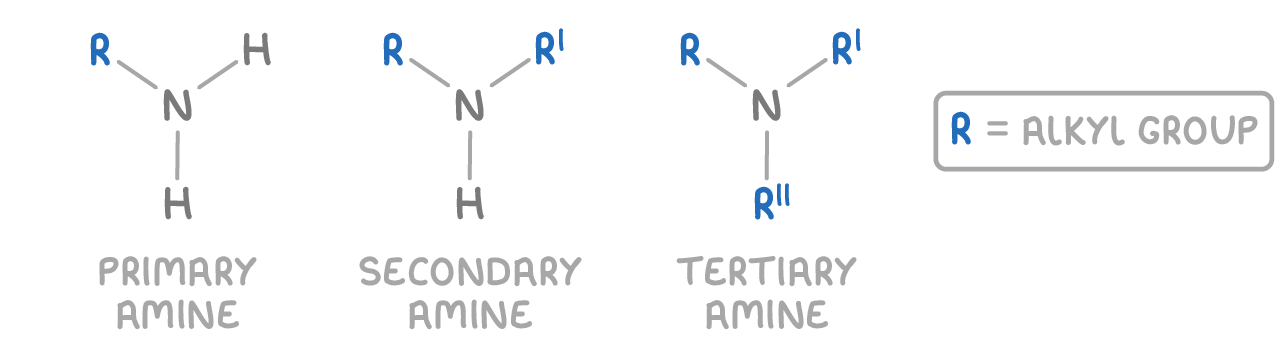
The position of a functional group can affect the chemical properties of a molecule. Halogenoalkanes, alcohols and amines can be classified as primary, secondary or tertiary based on the type of carbon or nitrogen atom the functional group is attached to.
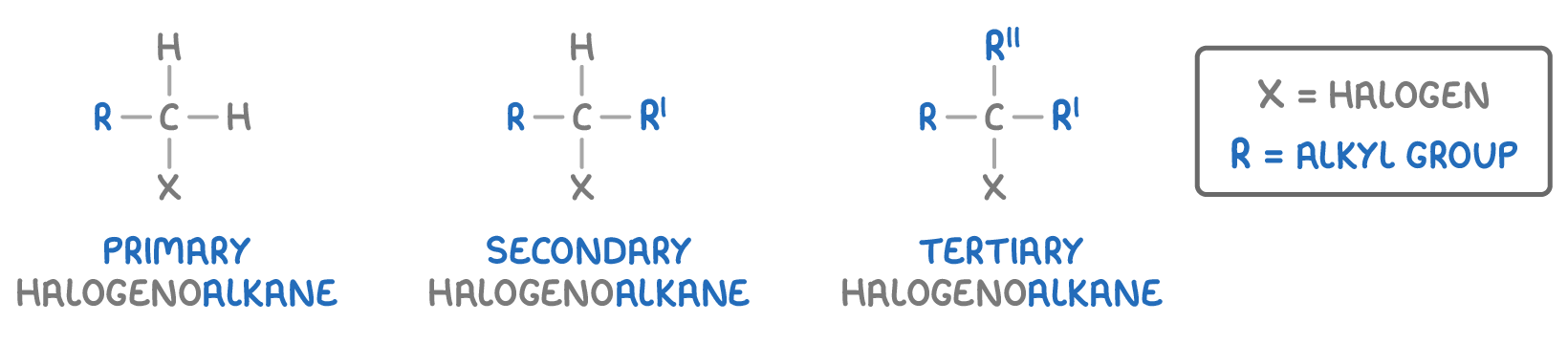
Halogenoalkanes:
- Primary - The halogen is attached to a carbon atom connected to only one alkyl group (or no alkyl groups).
- Secondary - The halogen is attached to a carbon atom connected to two alkyl groups.
- Tertiary - The halogen is attached to a carbon atom connected to three alkyl groups.
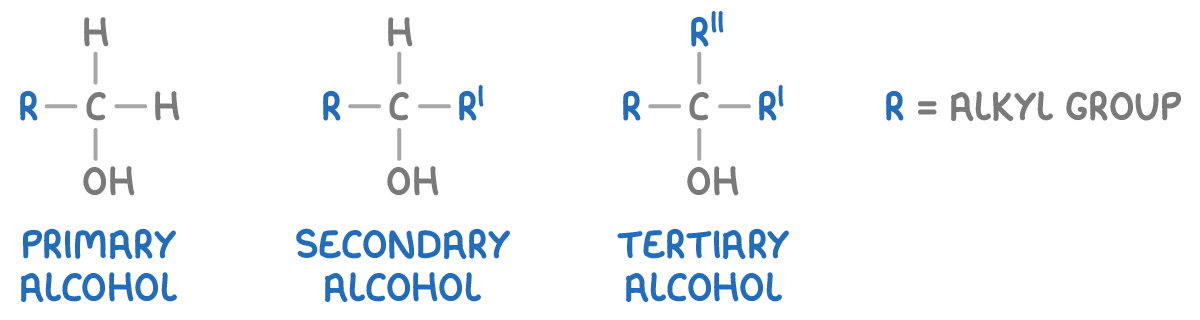
Alcohols:
- Primary - The -OH group is attached to a carbon atom that is bonded to only one alkyl group (or no alkyl groups).
- Secondary - The -OH group is attached to a carbon atom that is bonded to two alkyl groups.
- Tertiary - The -OH group is attached to a carbon atom that is bonded to three alkyl groups.
Amines:
- Primary - The nitrogen atom is bonded to one alkyl group (or no alkyl groups) and two hydrogen atoms.
- Secondary - The nitrogen atom is bonded to two alkyl groups and one hydrogen atom.
When naming secondary amines, the letter 'N' is used to indicate the alkyl group attached to the nitrogen atom, e.g., N-methylpropan-1-amine.
- Tertiary - The nitrogen atom is bonded to three alkyl groups.
When naming tertiary amines, the letter 'N' is used twice to indicate the two alkyl groups attached to the nitrogen atom, e.g., N,N-dimethylpropan-1-amine.
Functional group isomers contain different functional groups
Functional group isomers are structural isomers that have their atoms arranged to give different functional groups.
Some examples of functional group isomers include:
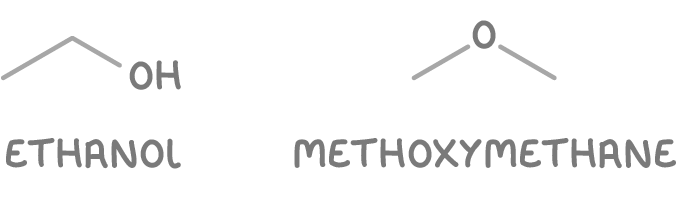
- Alcohols and ethers - both have the formula C_n_H_2n+2_O
For example, ethanol (alcohol) and methoxymethane (ether) are isomers with formula C_2_H_6_O.
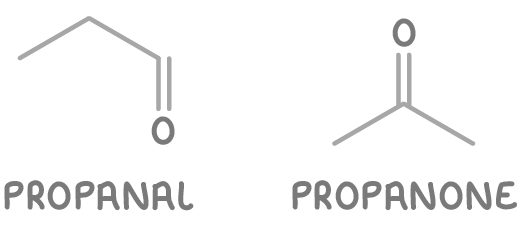
2. Aldehydes and ketones - both have the formula C_n_H_2n_O
For example, propanal (aldehyde) and propanone (ketone) are isomers with formula C_3_H_6_O.
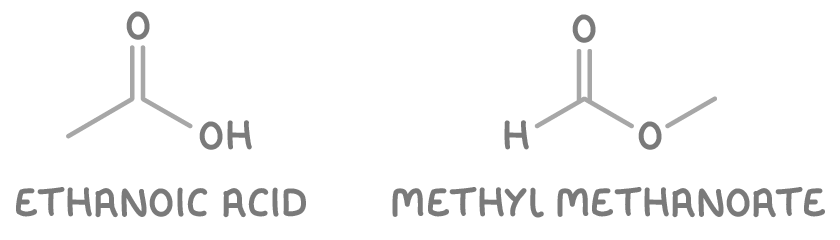
3. Carboxylic acids and esters - both have the general formula C_n_H_2n_O_2_
For example, ethanoic acid (carboxylic acid) and methyl methanoate (ester) are isomers with formula C_2_H_4_O_2_.