14.2 - Fossil Fuels
- 1
What fossil fuels are and their role in energy production
- 2
The greenhouse effect and global warming
- 3
Greenhouse gas emissions from different fuels
- 4
Specific energy and composition of common fuels
Fossil fuels are non-renewable energy sources
Fossil fuels, such as crude oil, coal, and natural gas, are non-renewable resources that are crucial to the global energy landscape. These fuels are extensively used to generate electricity in power stations and to power internal combustion engines in vehicles.
As the world's energy demand continues to rise, the consumption of fossil fuels also increases. Governments worldwide are enacting policies and legislation to reduce fossil fuel use and promote renewable energy sources. However, the transition to clean energy is expected to take several decades.
Crude oil is a complex mixture containing mainly:
- Hydrocarbons.
- Organic compounds with nitrogen, sulfur, and oxygen.
Burning fossil fuels contributes to the greenhouse effect
A significant consequence of burning fossil fuels is the release of large amounts of carbon dioxide (CO2) into the atmosphere. CO2 is a greenhouse gas that traps heat energy within the Earth's atmosphere, a phenomenon known as the greenhouse effect.
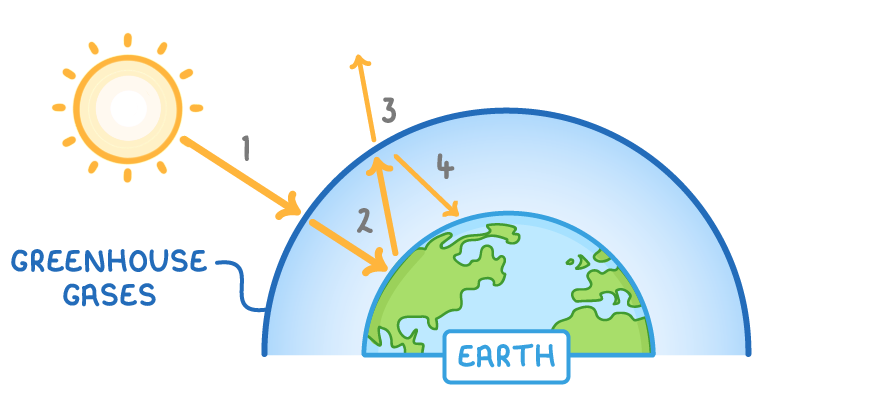
The steps of the greenhouse effect are:
- Solar radiation passes through the atmosphere and reaches the Earth's surface.
- The Earth absorbs some of this energy and radiates it back as infrared radiation (heat).
- Greenhouse gases in the atmosphere, such as CO2, absorb some of this infrared radiation.
- The absorbed energy is re-emitted in all directions, including back towards the Earth's surface, causing average global temperatures to increase.
Although CO2 comprises only about 0.04% of the atmosphere, its rising concentration significantly amplifies the greenhouse effect. Other notable greenhouse gases that contribute to this phenomenon include methane and water vapour.
The greenhouse effect leads to global warming
The greenhouse effect is causing average temperatures worldwide to rise, a phenomenon known as global warming. The scientific community widely agrees that the primary driver of global warming is the increasing levels of greenhouse gases, particularly CO2 and, to a lesser extent, methane.
The impacts of global warming are far-reaching and include:
- Rising sea levels due to melting polar ice caps and glaciers.
- More frequent and intense extreme weather events, such as hurricanes, droughts, and heatwaves.
- Shifting climate patterns that affect agriculture and ecosystems.
- Ocean acidification as more CO2 dissolves in seawater, impacting marine life.
Greenhouse gas emissions vary by fuel source
When fossil fuels are burned, they release different amounts of carbon dioxide per unit of energy produced. The amount of CO2 released is determined by the chemical composition of the fuel and the efficiency of the combustion process.
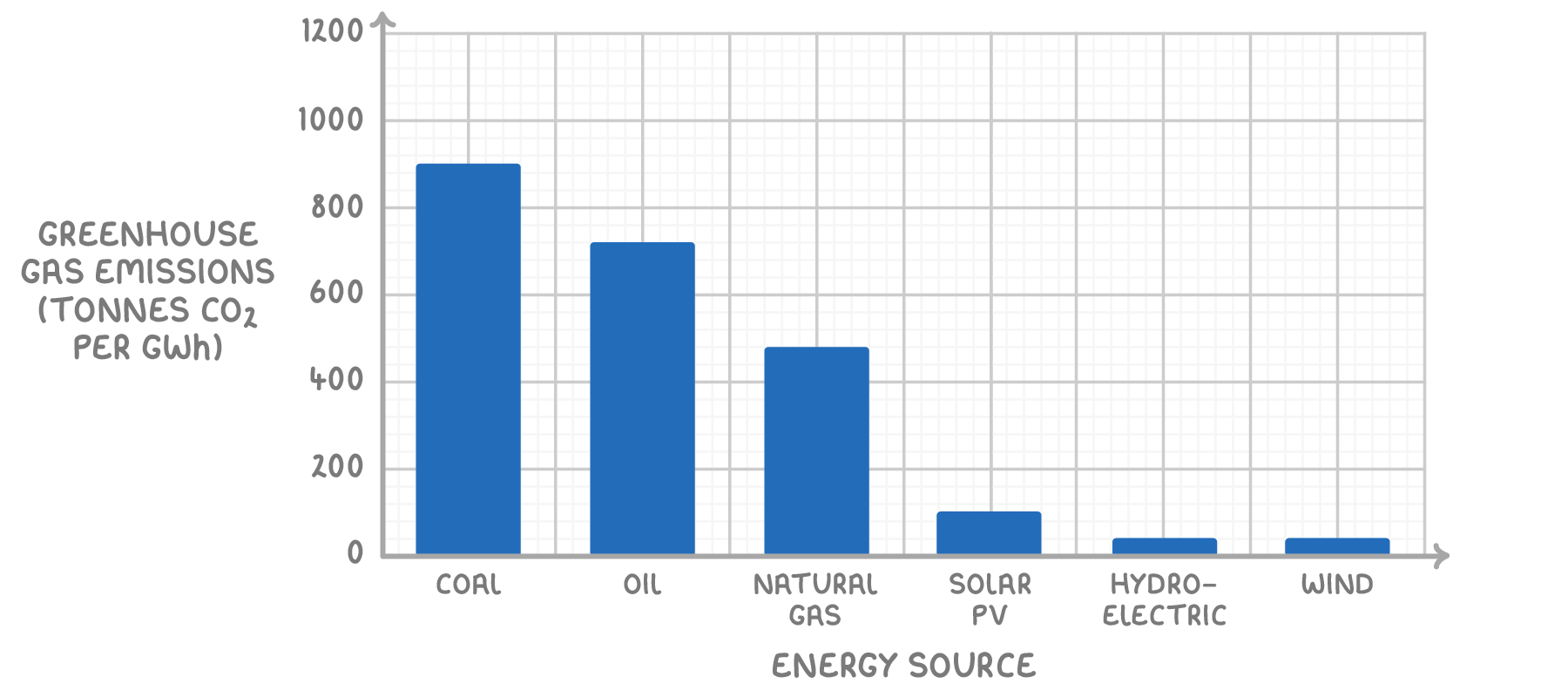
Among fossil fuels, coal releases the highest amount of CO2 per unit of energy, followed by oil and natural gas. This is because coal has a higher carbon content relative to its energy output compared to the other fossil fuels. Renewable energy sources, such as solar, wind, and hydroelectric power, have significantly lower lifecycle greenhouse gas emissions compared to fossil fuels.
Specific energy and composition of common fuels
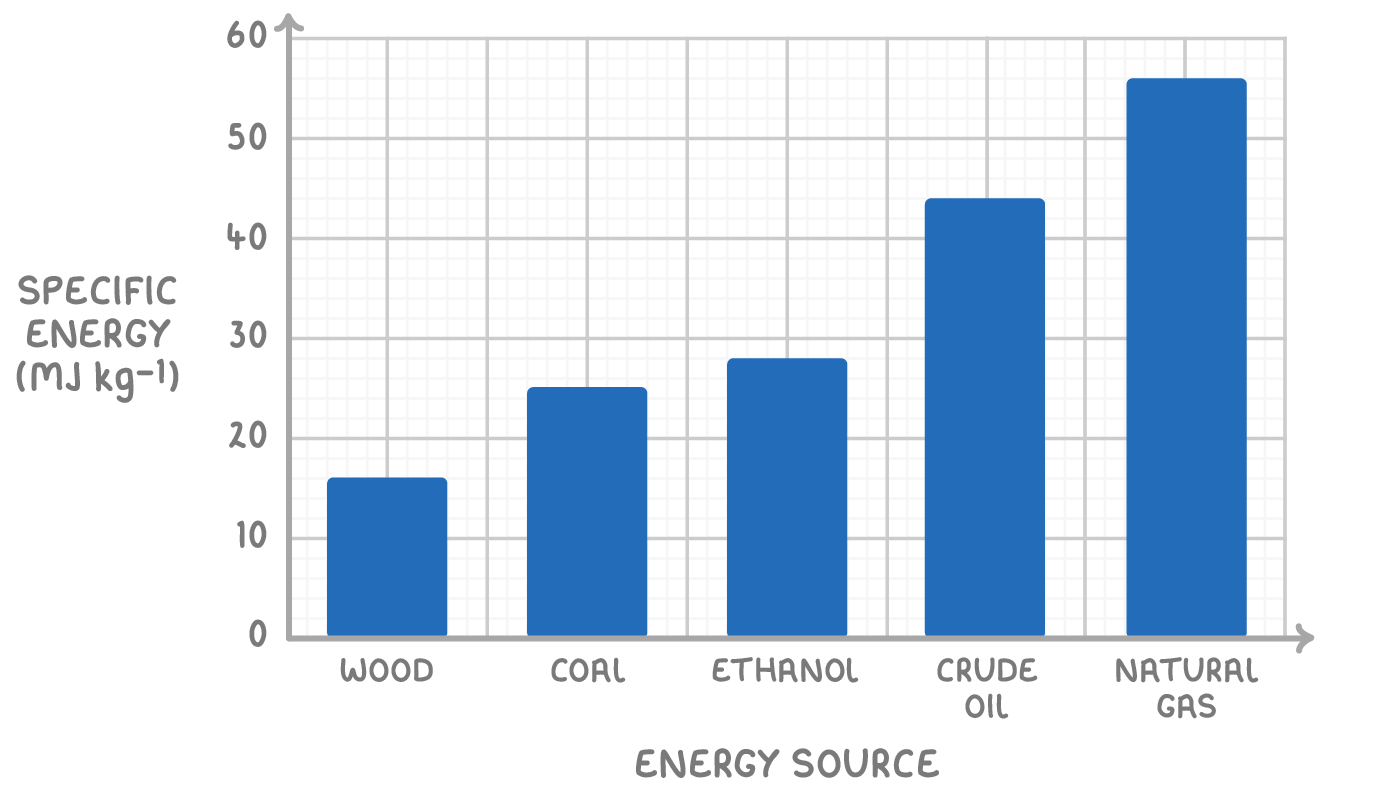
The choice of fuel used in daily life is influenced by factors such as a nation's economic development and the availability of natural resources. Each fuel has a different specific energy, which is the amount of heat energy released per unit mass of the fuel. Among common fuels, wood has the lowest specific energy (see graph below).
Common fuels also differ in composition, with varying chain lengths of the hydrocarbons present.
Generally, longer hydrocarbon chains are more prone to incomplete combustion because:
- Larger hydrocarbons have more electrons and a greater surface area, resulting in stronger London dispersion forces between molecules.
- Stronger LDFs make it harder for the molecules to vaporise and mix thoroughly with oxygen for complete combustion.
Incomplete combustion produces toxic carbon monoxide and/or soot and releases less energy per unit mass compared to complete combustion.