7.4 - Covalent Network Structures
- 1
What covalent network structures are
- 2
The structure and properties of diamond, graphite, graphene, and fullerenes
- 3
The structure and properties of silicon and silicon dioxide
Covalent network structures
Some elements can form extensive interconnecting networks of covalently bonded atoms known as covalent network structures.
- These structures involve huge lattices extending in three dimensions.
- Carbon and silicon, which are in the same group of the periodic table, are both capable of forming covalent network structures due to their small atomic size and ability to form multiple covalent bonds per atom.
- In carbon, each atom can form 4 covalent bonds, allowing the formation of various allotropes with different structures. The different structural forms of an element in the same state are called allotropes.
There are 4 allotropes of carbon you need to know about:
- Diamond, graphite, and graphene, which have giant lattice structures.
- Buckminsterfullerene, which has a simple molecular structure.
The most common example of a silicon covalent network structure is silicon dioxide (SiO2), also known as silica, which forms a three-dimensional network of silicon and oxygen atoms.
Diamond allotrope
Bonding and structure:
Each carbon atom forms 4 very strong covalent bonds with others in a tetrahedral arrangement.
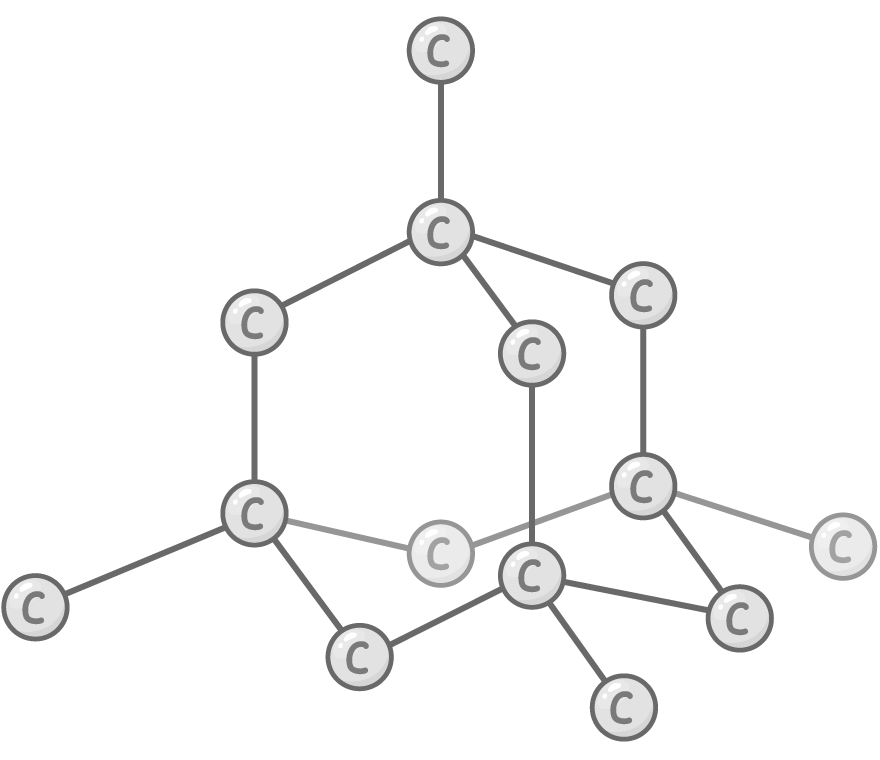
Properties:
- Extremely hard - Extensive network of strong covalent bonds not easily broken.
- Very high melting point - Huge amount of energy needed to break enough bonds to melt diamond.
- Good thermal conductor - Strong interatomic bonds transmit heat through vibrations.
- Electrical insulator - All outer electrons tied up in localised bonds so no free electrons to carry charge.
- Insoluble - Covalent bonds too strong to be broken by solvation.
Graphite allotrope
Bonding and structure:
- Each carbon atom forms 3 strong covalent bonds in a planar hexagonal pattern, with each carbon contributing 1 delocalised electron.
- Multiple stacked layers of hexagonal carbon arrays with weak intermolecular forces between layers.
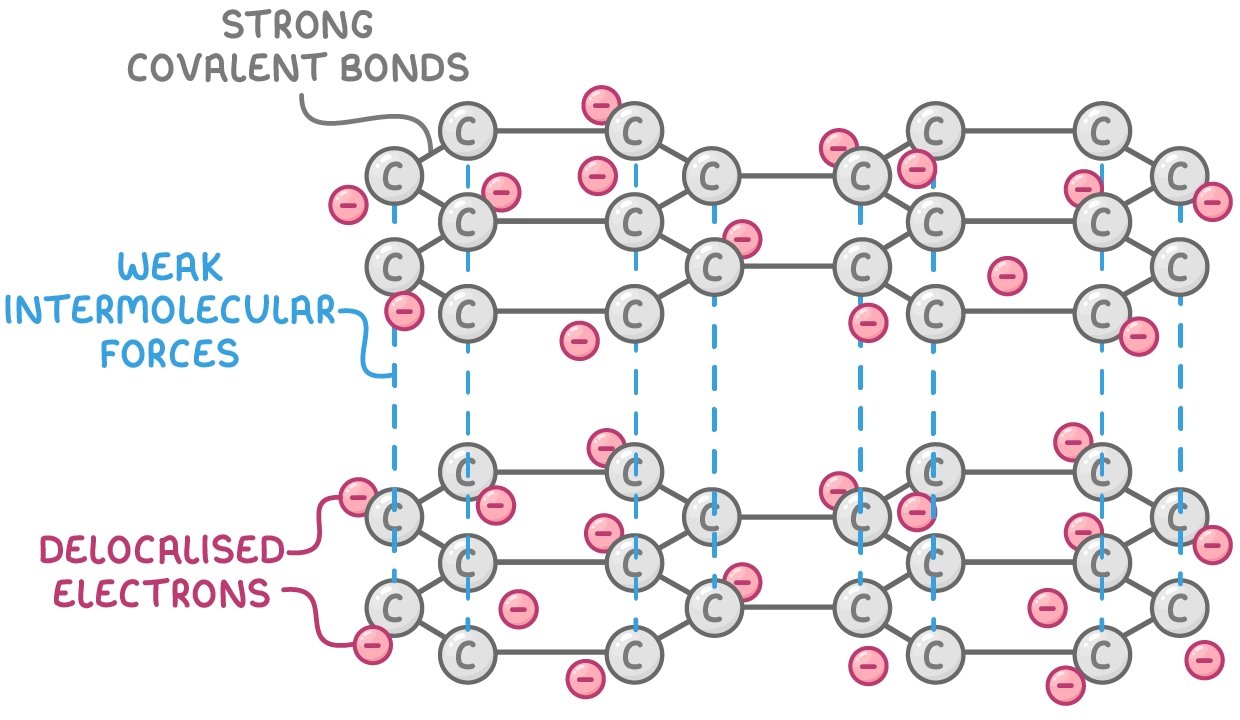
Properties:
- Soft and slippery - Weak intermolecular forces let sheets slide over each other.
- Conducts electricity along layers - Delocalised electrons move through the 2D lattice carrying electrical charge.
- Lower density than diamond - Weak intermolecular forces lead to increased separation between layers.
- High sublimation temperature but lower melting point than diamond - Covalent bonds within each layer are very strong but the weaker intermolecular forces between layers means graphite melts at a lower temperature.
Graphene allotrope
Bonding and structure:
Graphene consists of a single layer of carbon atoms interconnected through strong planar covalent bonds in a hexagonal pattern, with each carbon contributing 1 delocalised electron. This essentially forms a one-atom thick slice of graphite.
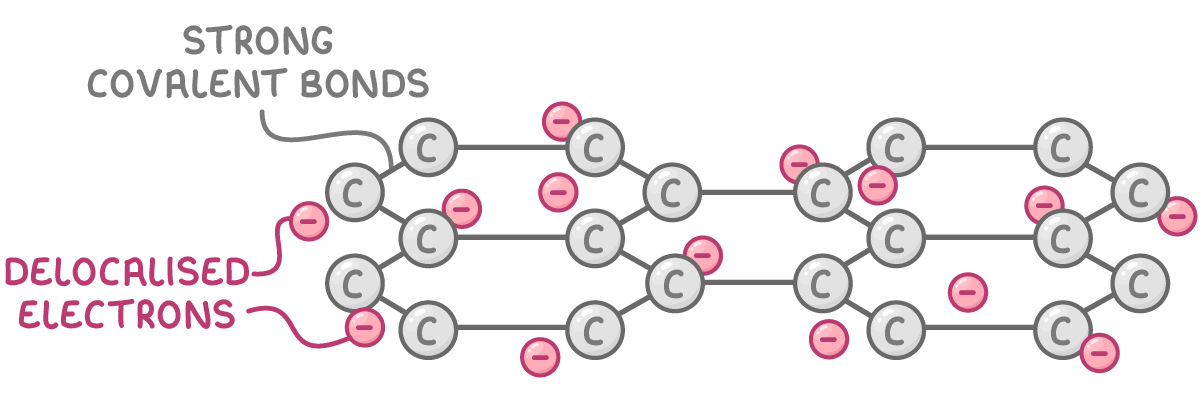
Properties:
- Excellent electrical and thermal conductivity - Delocalised electrons move through the 2D lattice transporting heat and charge.
- Very strong - Extensive network of covalent bonds not easily broken.
- Transparent and extremely lightweight - A single layer of atoms light and thin enough to transmit visible light.
Buckminsterfullerene allotrope
Fullerenes are spherical or tubular molecules of carbon atoms arranged in pentagonal and hexagonal rings. The first fullerene to be discovered was Buckminsterfullerene (C_60_).
Bonding and structure:
- Buckminsterfullerene (C_60_) has a spherical structure made up of 20 hexagons and 12 pentagons.
- Each carbon atom forms 3 strong covalent bonds, with each carbon contributing 1 delocalised electron.
- Buckminsterfullerene has a simple molecular structure with weak intermolecular forces between spheres.
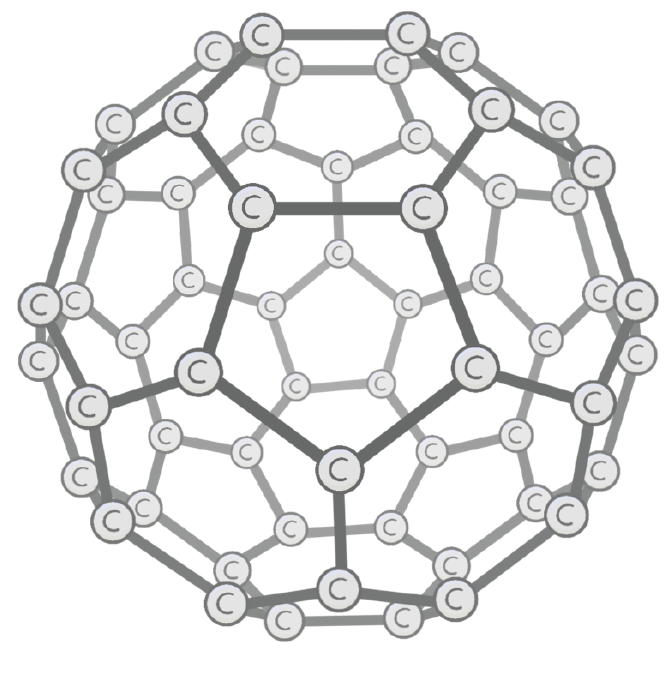
Properties:
- Low sublimation point - Weak intermolecular forces mean less energy is required to directly sublimate from a solid to a gas.
- Relatively soft - Little energy needed to overcome the weak intermolecular forces.
- Poor electrical conductivity - Reduced electron delocalisation compared to graphite limits conductivity.
- Slightly soluble - The spherical shape allows some solubility in certain solvents.
- More reactive - Areas of relatively high electron density allow electrophilic reactions.
The weak intermolecular forces between the molecules result in these different properties compared to other allotropes.
Silicon
Bonding and structure:
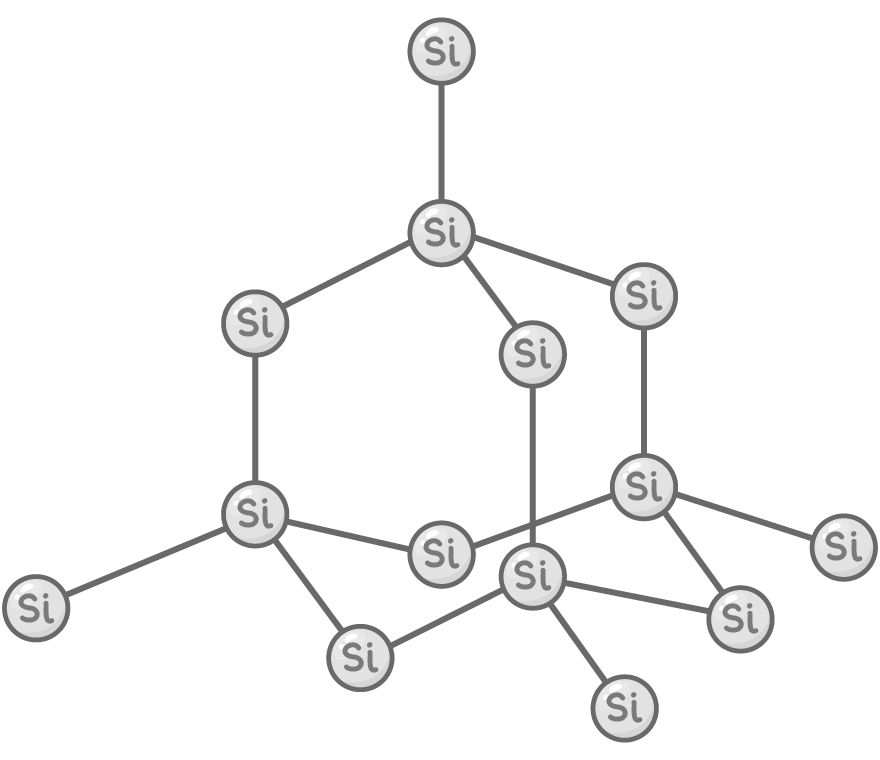
- Each silicon atom forms 4 strong covalent bonds with others in a tetrahedral arrangement, similar to diamond.
- However, silicon has a larger atomic radius than carbon, resulting in weaker silicon-silicon bonds compared to carbon-carbon bonds. This leads to a more open tetrahedral network structure.
Properties:
- High melting point, but lower than diamond - The covalent bonds between silicon atoms are strong, but not as strong as those between carbon atoms. As a result, less energy is required to break the bonds in silicon.
- Relatively hard, but less hard than diamond - The more open structure of silicon is not as rigid as the tightly packed structure of diamond.
- Insoluble - The covalent bonds in silicon are too strong to be broken by solvation.
Silicon dioxide
Bonding and structure:
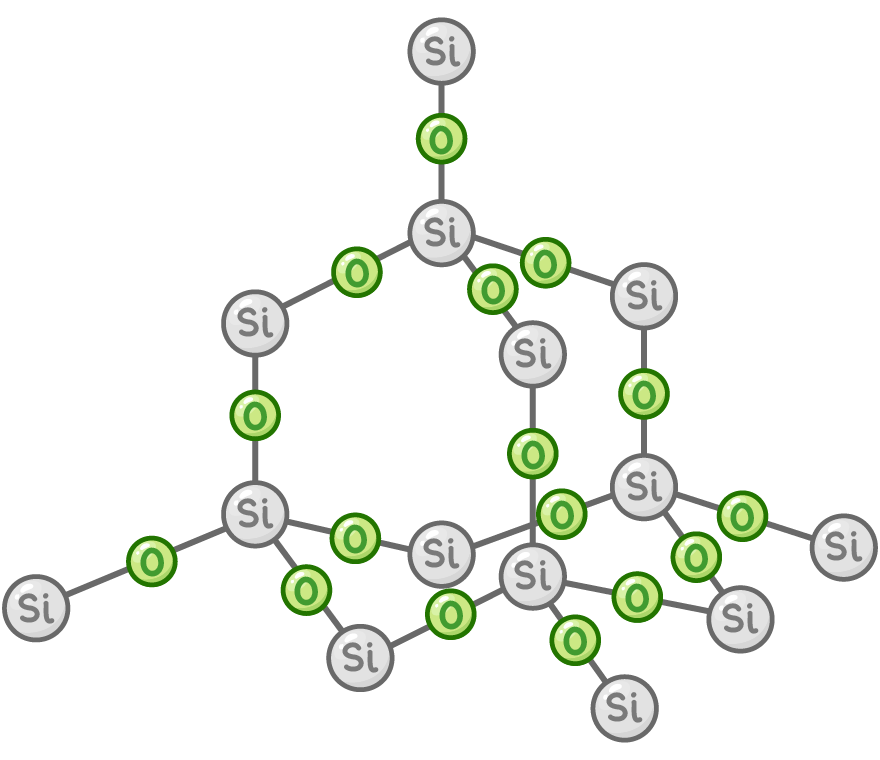
- Each silicon atom is covalently bonded to 4 oxygen atoms in a tetrahedral arrangement.
- Each oxygen atom forms 2 covalent bonds, one with each of two silicon atoms. This results in an extensive 3D network.
Properties:
- High melting point - The strong covalent bonds between silicon and oxygen require a lot of energy to break.
- Hard - The rigid 3D network of silicon dioxide resists deformation.
- Insoluble - The covalent bonds in silicon dioxide are too strong to be broken by solvation.