3.4 - Electric Fields
Electric fields and field lines
- An electric field is created around any electrically charged object.
- It's the region around the object where another charge feels a force.
- The closer to the object, the stronger the field.
Field lines
Electric fields are represented using field lines. Field lines:
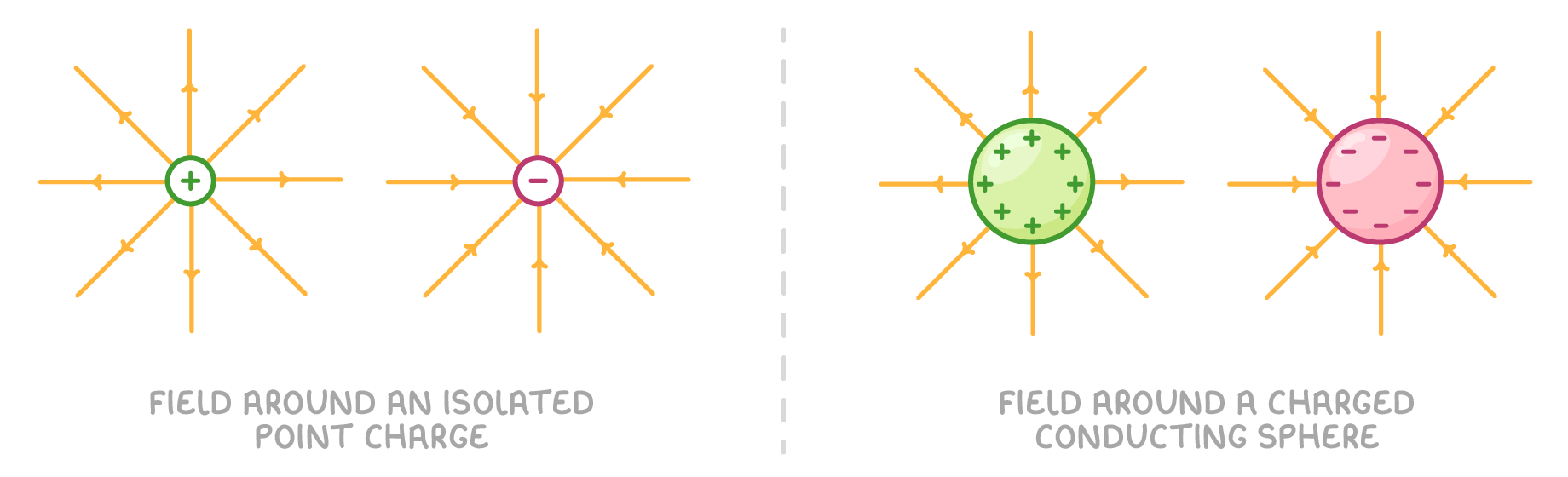
- Point from positive to negative (the direction of the force on a positive charge)
- Meet the surface of the charged object at a right angle
- Have arrows showing the field direction
- Show field strength by their spacing - the closer the lines, the stronger the field
Field patterns to recognise
- An isolated point charge
- A charged conducting sphere (which has the same field pattern as a point charge)
Force on a charge from interacting fields
- When a charged object is placed in the electric field of another charged object, it feels a force.
- The electric fields of the two objects interact, producing an electrostatic force on each object.
Attraction and repulsion
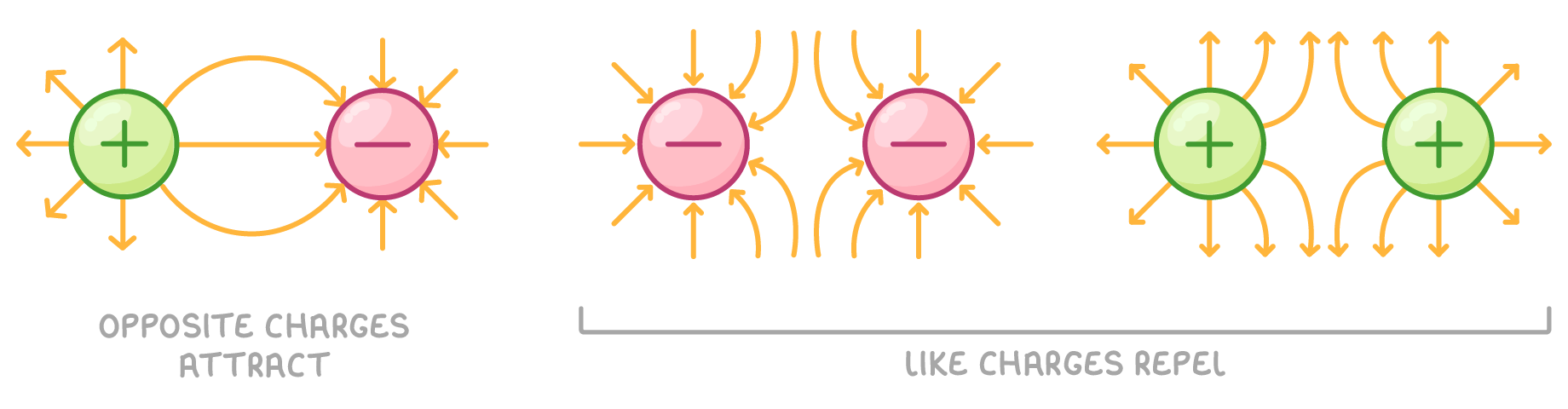
- Opposite charges attract - The field lines between them point in the same direction and join up, pulling the objects together.
- Like charges repel - The field lines point in opposite directions and push against each other, forcing the objects apart.
Size of the force
- The size of the force depends on the strength of the field at that point.
- Increasing the distance between the charged objects weakens the field, making the force smaller.
The uniform field between parallel plates
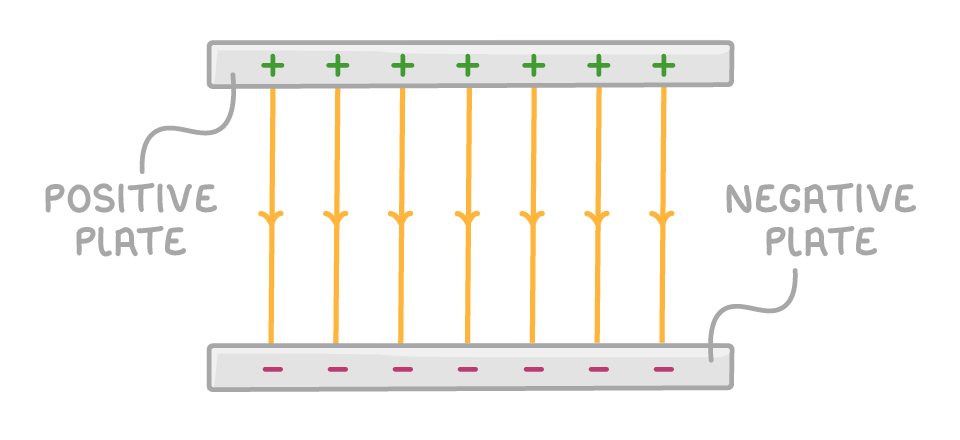
- The electric field between two oppositely charged parallel plates is uniform: its strength and direction are the same everywhere between the plates.
- A uniform field is drawn as parallel, evenly spaced field lines running from the positive plate to the negative plate.
- A charged particle placed in a uniform field feels a constant force everywhere between the plates.
Field patterns between two point charges
Two opposite charges
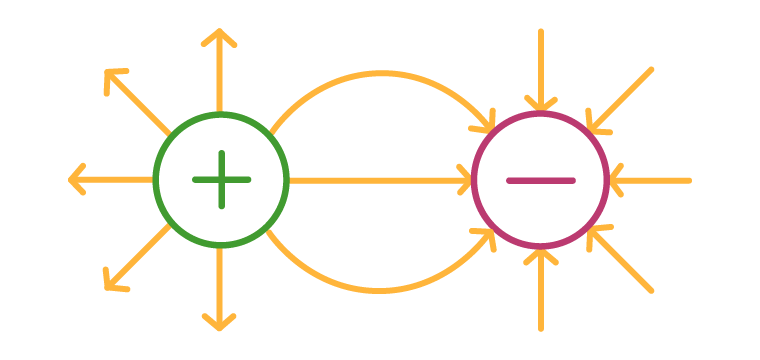
- Field lines run from the positive charge to the negative charge, curving across the gap.
- Lines leave and enter the charges at right angles to their surfaces.
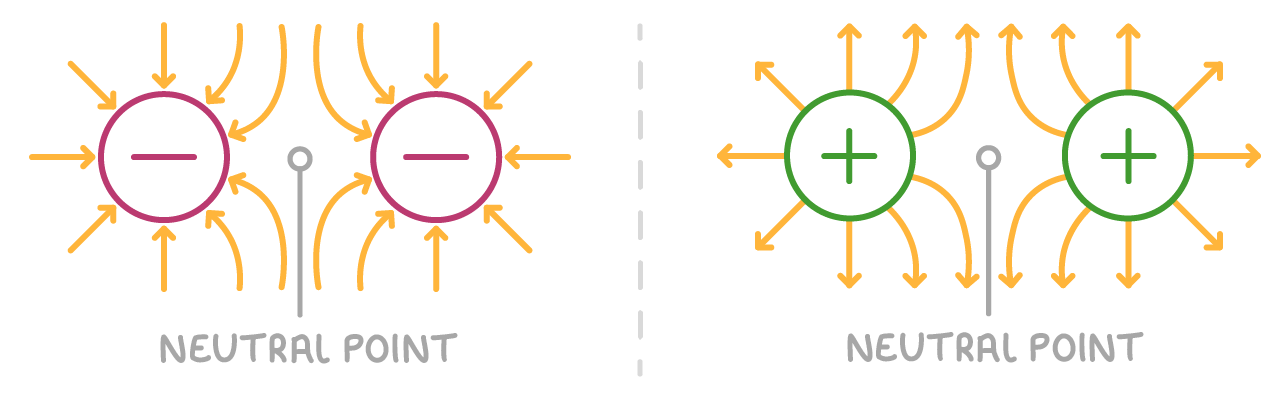
Two like charges
- Field lines bend away from each other and do not join up across the gap.
- Midway between two equal like charges, the fields cancel out and the resultant field is zero. This point is called the neutral point.
TermDefinition
Electric fieldThe region around a charged object where another charge feels a force.
Uniform fieldA field that has the same strength and direction everywhere, shown by parallel field lines that are equally spaced.
Neutral pointA point where two or more fields cancel each other out, so the resultant field there is zero.