5.9 - UV Light
Fluorescence and fluorescent lamps
Fluorescence is a property of certain chemicals: they absorb ultraviolet (UV) radiation and then emit visible light.
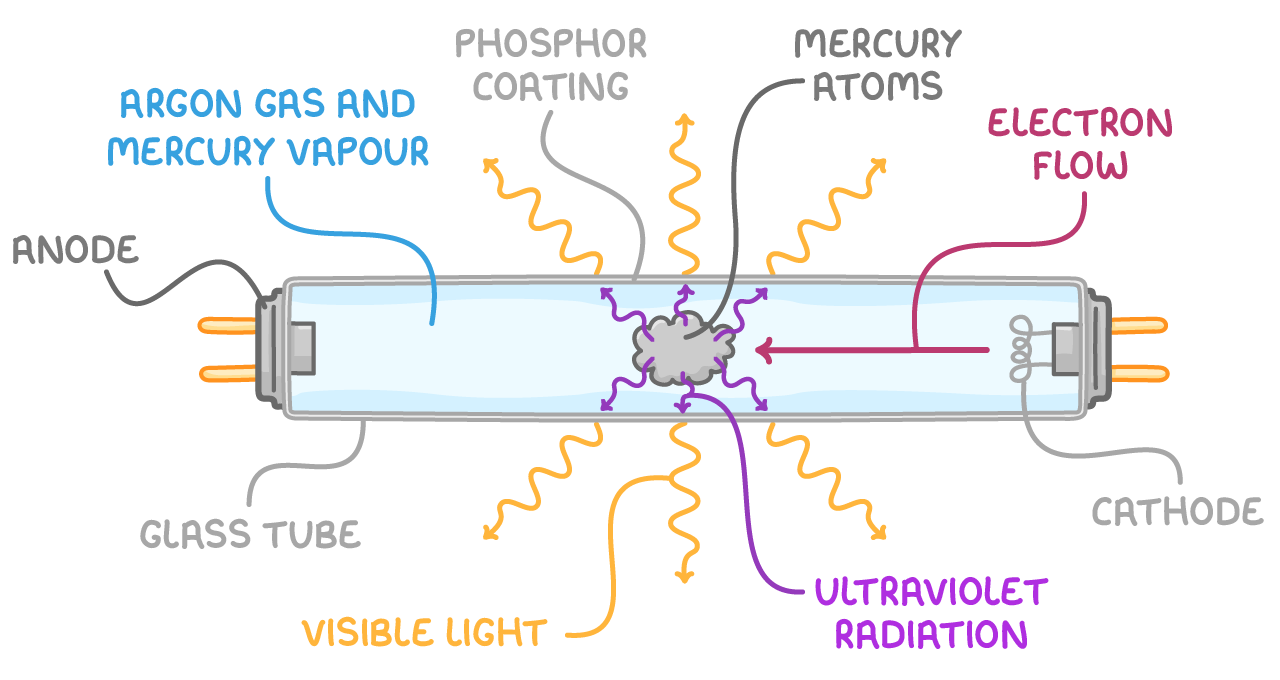
How a fluorescent lamp works
- The lamp generates UV radiation inside the tube.
- A layer of phosphor coats the inside of the glass. It absorbs the UV and re-emits it as visible light.
- Fluorescent lamps are energy-efficient, so they suit places needing light for long periods, such as classrooms, offices, and hospitals.
UV security marking and forgery detection
Some inks glow under UV light but are invisible in ordinary light, making UV useful for security marking.
Security marking
- A security pen can write details such as a postcode on valuable property.
- The mark can't be seen in normal light, but shows up under a UV lamp to help identify stolen property.
Detecting forgeries
Genuine bank notes and passports carry special markings that only appear under UV light to help detect fakes.
UV from the Sun and suntans
- Ultraviolet radiation from the Sun or UV lamps in tanning salons gives people a suntan.
- The skin produces a brown pigment called melanin in response to UV.
- Melanin absorbs UV, helping to shield deeper skin cells from damage.
TermDefinition
FluorescenceA property of certain chemicals where they absorb ultraviolet radiation and emit visible light.
MelaninA brown pigment produced by the skin that absorbs ultraviolet radiation to protect deeper cells.