3.19 - Loudspeakers & Microphones
How a loudspeaker works
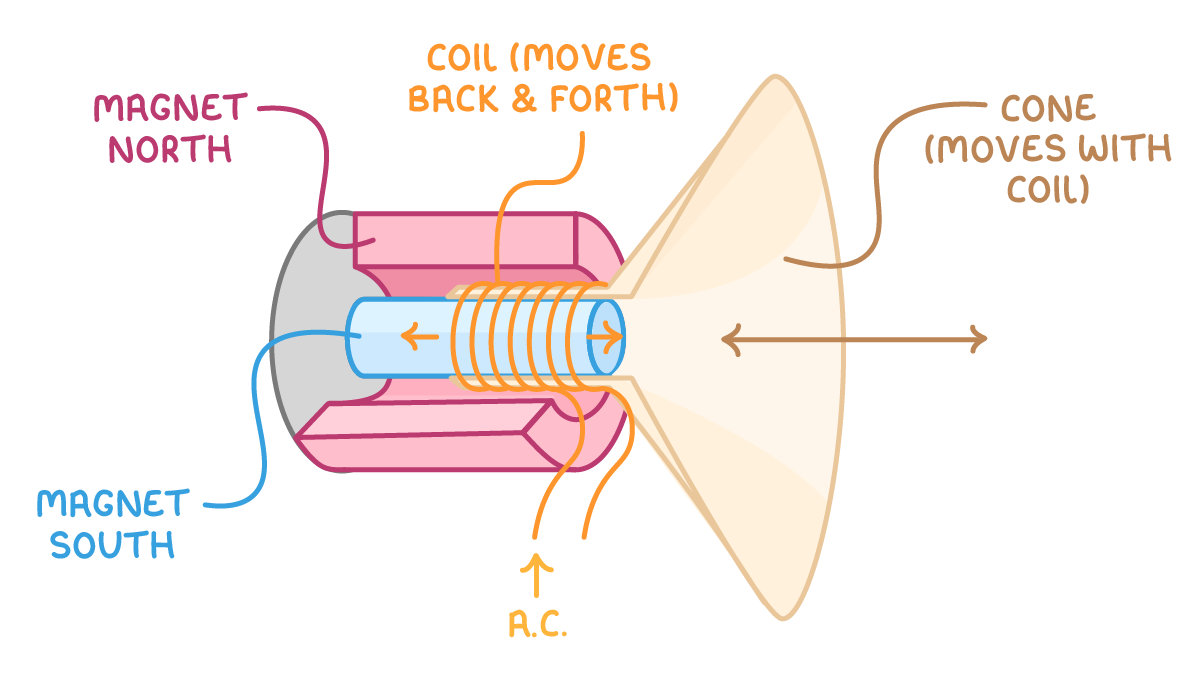
A loudspeaker uses the motor effect to turn an electrical signal into sound. (Headphones work in exactly the same way.)
The structure and how it moves
- A coil of wire is wrapped around the base of a cone and sits in the field of a permanent magnet.
- An alternating current passes through the coil.
- The current in the magnetic field experiences a force, pushing the coil one way.
- When the current reverses, the direction of the force reverses, pulling the coil back the other way.
- As the current keeps alternating, the coil and the cone attached to it move back and forth.
Producing the sound
- The vibrating cone makes the surrounding air vibrate, creating pressure variations that travel out as a sound wave.
- The frequency of the sound matches the frequency of the alternating current.
- A larger current creates a larger force, making the cone move further and producing a louder sound.
How a microphone works
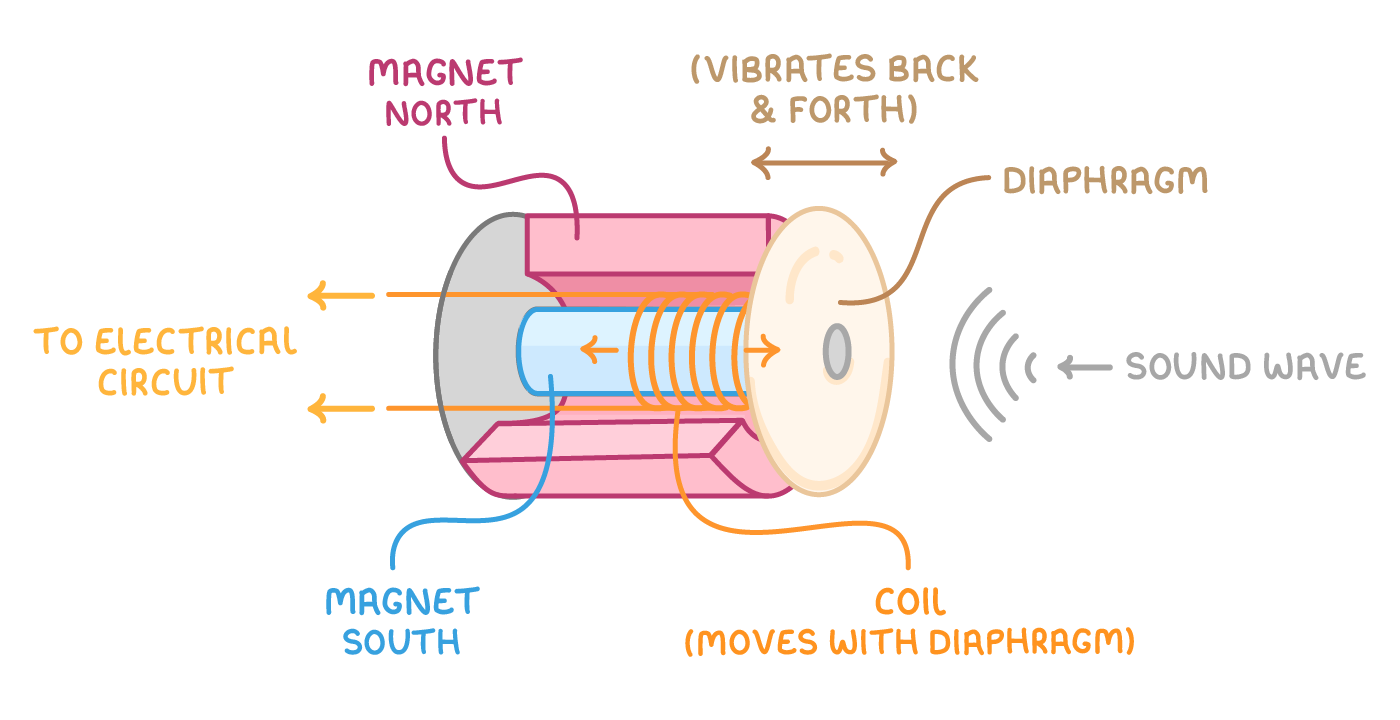
A microphone works as a loudspeaker in reverse, using the generator effect (electromagnetic induction) to turn sound into an electrical signal.
The structure and how it moves
- A flexible diaphragm is attached to a coil of wire that sits in the field of a permanent magnet.
- When a sound wave hits the diaphragm, the pressure variations make it vibrate back and forth, moving the coil through the magnetic field.
- Moving the coil relative to the field induces a potential difference across it, driving a varying current through the circuit.
The current follows the sound wave
- The frequency of the current matches the frequency of the sound wave.
- A louder sound moves the diaphragm further, inducing a larger current.
TermDefinition
LoudspeakerA device that uses the motor effect to convert an electrical signal into a sound wave.
MicrophoneA device that uses the generator effect to convert a sound wave into an electrical signal.
DiaphragmA flexible membrane in a microphone that vibrates when sound waves hit it.
Key points to remember
How were these notes?