3.6 - Components
Light-dependent resistors (LDRs)
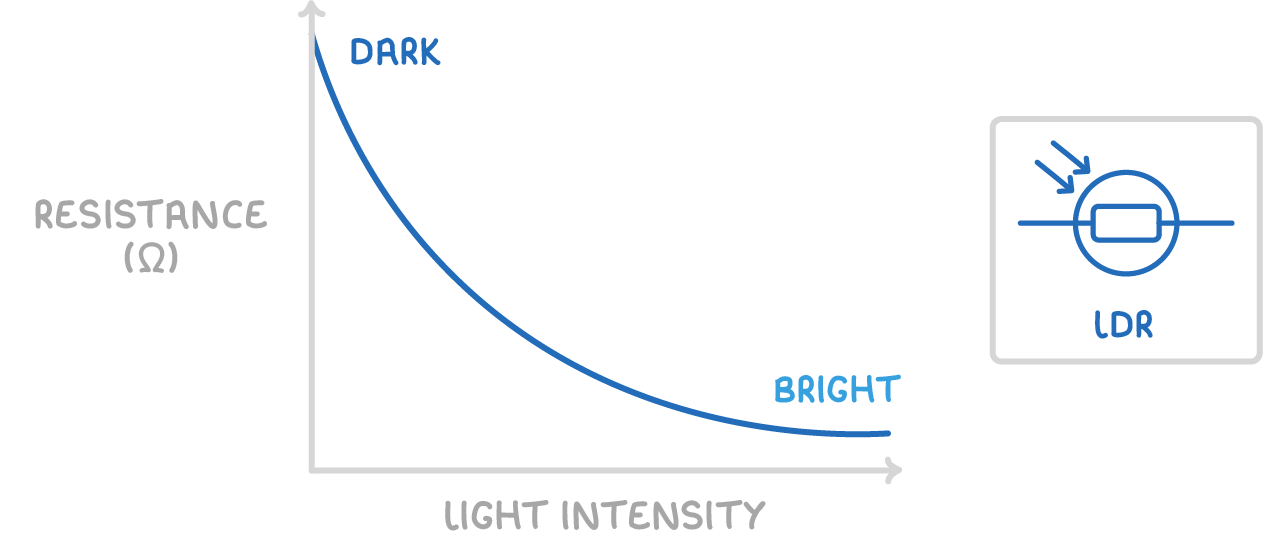
- A light-dependent resistor (LDR) is a resistor whose resistance depends on the intensity of light falling on it.
- In darkness, its resistance is highest.
- As the light gets brighter, its resistance falls.
- Common applications: automatic night lights, outdoor lighting, and burglar detectors.
Thermistors
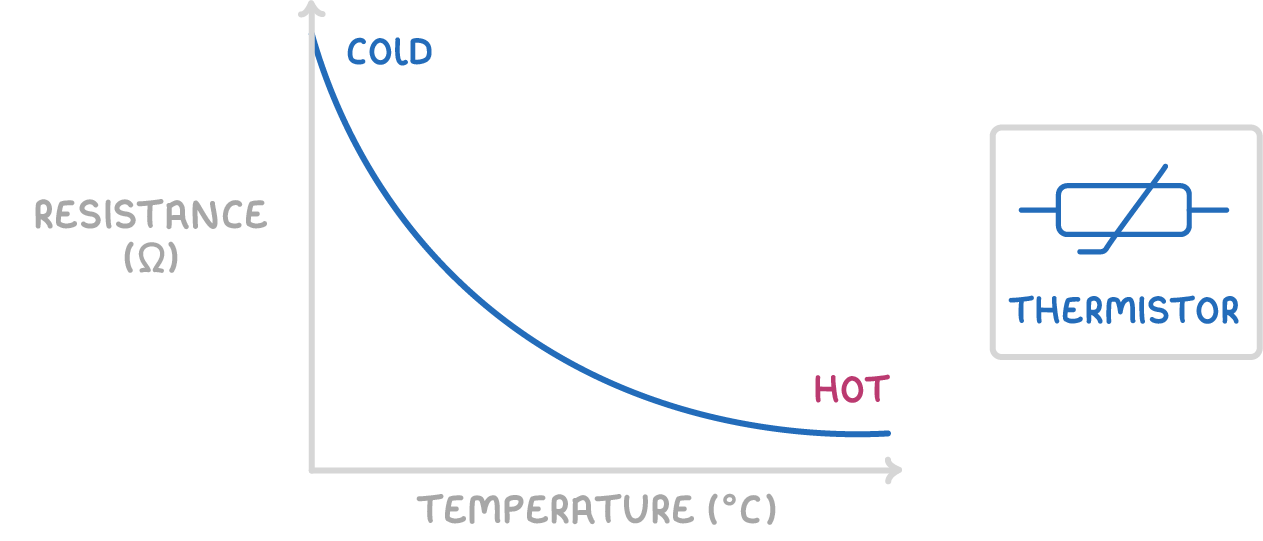
- A thermistor is a resistor whose resistance depends on temperature.
- In cold conditions, its resistance is high.
- As the temperature rises, its resistance falls.
- Because resistance falls as temperature rises, it's called a negative temperature coefficient (NTC) thermistor.
- Common applications: car engine temperature sensors, thermostats, irons, and fire alarms.
Sensing circuits with LDRs and thermistors
- An LDR or thermistor can be used in a sensing circuit to control another component as surroundings change.
- The supply's potential difference is shared between components based on their resistances: the larger a component's resistance, the larger its share of the potential difference.
Example - Thermistor controlling a fan
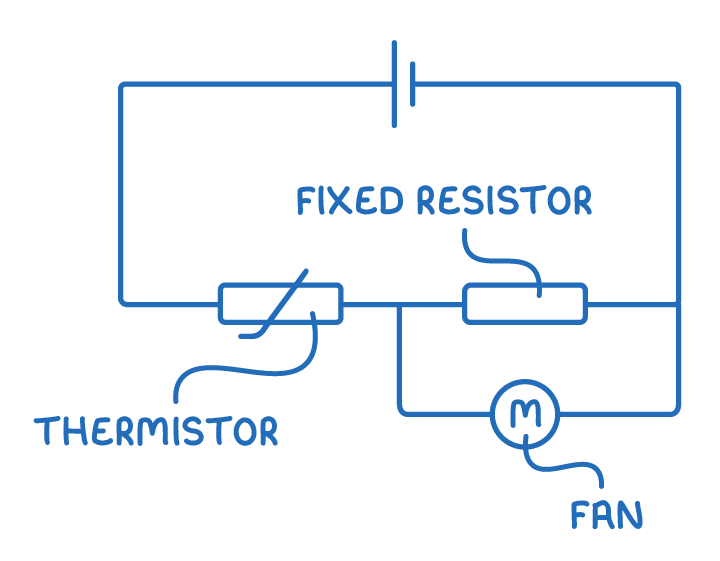
- The thermistor is in series with a fan, with a fixed resistor connected in parallel with the fan.
- As the temperature rises, the thermistor's resistance falls, so it takes a smaller share of the supply potential difference.
- The potential difference across the fan therefore rises, making the fan turn faster.
Example - Bulb across an LDR
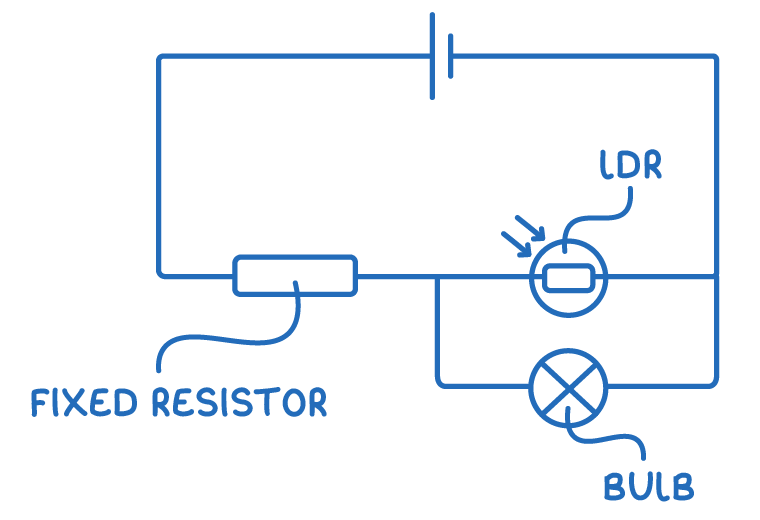
- A bulb connected in parallel across an LDR shares the LDR's potential difference.
- In the dark, the LDR's resistance is high, so the potential difference across it is high and the bulb shines brightly.
- The bulb gets brighter as the surroundings get darker.
Diodes
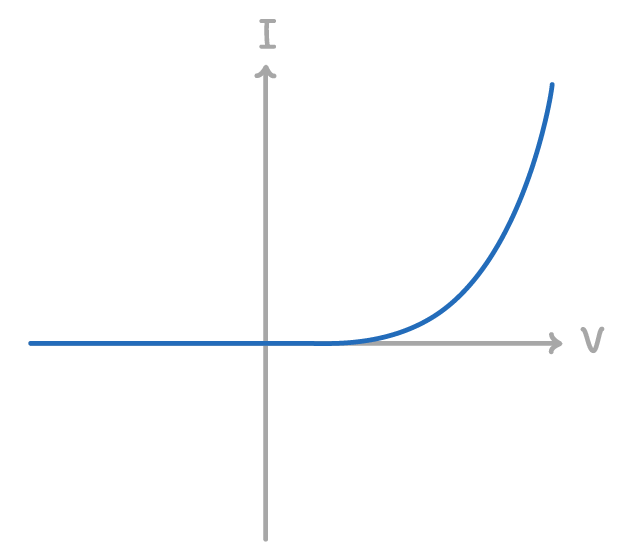
- A diode is a component, usually made from a semiconductor such as silicon, that lets current flow freely in one direction only.
- In the reverse direction it has a very high resistance, so almost no current flows.
Forward and reverse bias
- Forward bias - The direction in which current can flow.
- Reverse bias - The direction in which the diode has high resistance and does not conduct.
- A diode doesn't conduct until the forward voltage reaches a specific threshold value.
Uses
- Used in electronic circuits, such as radio receivers.
- Used to turn alternating current (ac) into direct current (dc).
TermDefinition
Light-dependent resistor (LDR)A resistor whose resistance decreases as the intensity of light falling on it increases.
ThermistorA resistor whose resistance decreases as its temperature increases.
DiodeA component that lets current flow through it in one direction only.
Forward biasThe direction of potential difference in which a diode allows current to flow.
Reverse biasThe direction of potential difference in which a diode has a very high resistance and does not conduct.
Key points to remember
How were these notes?