8.6 - Geothermal Power
How geothermal power works
- Geothermal power uses the thermal energy of hot rocks deep underground.
- Much of this energy comes from the slow decay of radioactive elements (such as uranium) deep inside the Earth.
- It's only practical where hot rocks lie fairly near the surface, such as in volcanic regions.
Generating electricity
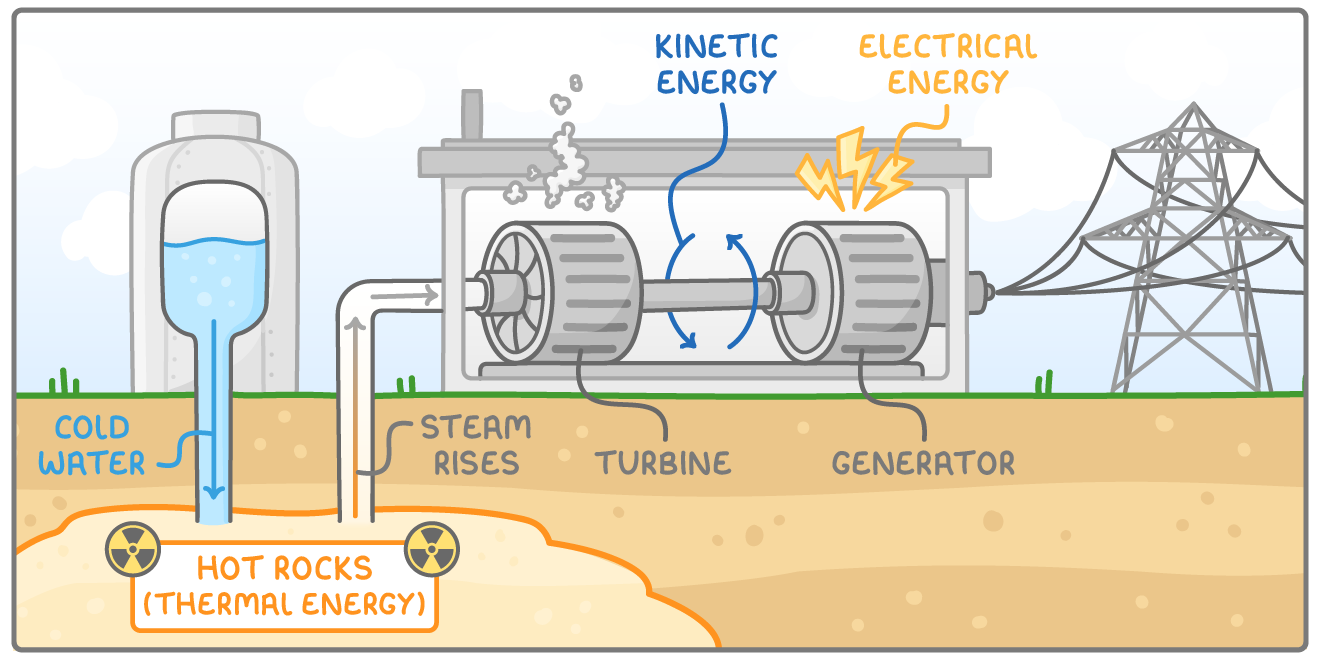
- Water is pumped down pipes to the hot rocks, where it heats up and returns to the surface as steam.
- The steam turns a turbine, which drives a generator to produce electricity.
- Thermal energy from the rock is transferred to the turbine as kinetic energy, then carried away electrically.
Heating buildings directly
Hot water brought up from underground can also be piped straight into buildings for heating, without generating electricity.
Reliability, environment and drawbacks of geothermal
- Geothermal is a very reliable energy source because the hot rocks supply energy constantly, regardless of the weather.
- Once built, there are no fuel costs.
Environmental impact
- Geothermal does very little damage to the environment.
- It can release some carbon dioxide trapped underground, but far less than a fossil-fuel power station.
- It produces no polluting waste from burning fuel.
Drawbacks
- Few suitable locations - It only works where hot rocks are close enough to the surface to reach.
- High build cost - Drilling down several kilometres and building the plant is expensive compared with the energy it produces.
TermDefinition
Geothermal powerAn energy resource that uses the thermal energy of hot rocks deep underground.
Key points to remember
How were these notes?