1.9 - Atmospheric Pressure
Atmospheric pressure
- The atmosphere is the thin layer of air surrounding the Earth, stretching up roughly 100 km.
- Air molecules collide with surfaces and exert a force on them. Atmospheric pressure is this force per unit area, and it acts in all directions.
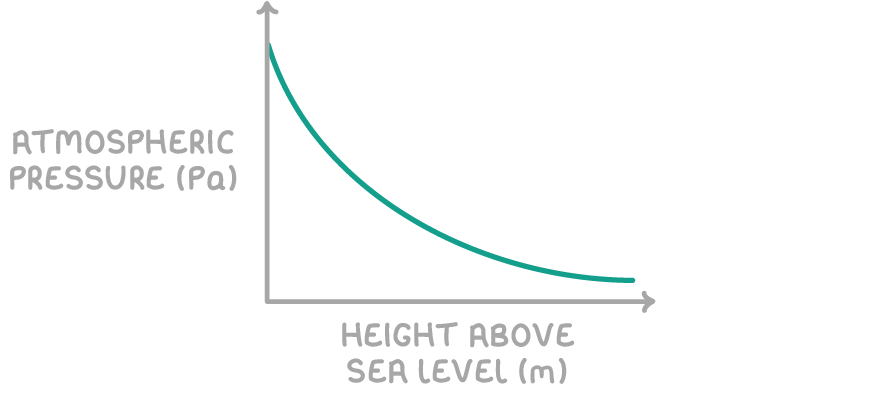
Atmospheric pressure decreases as altitude increases
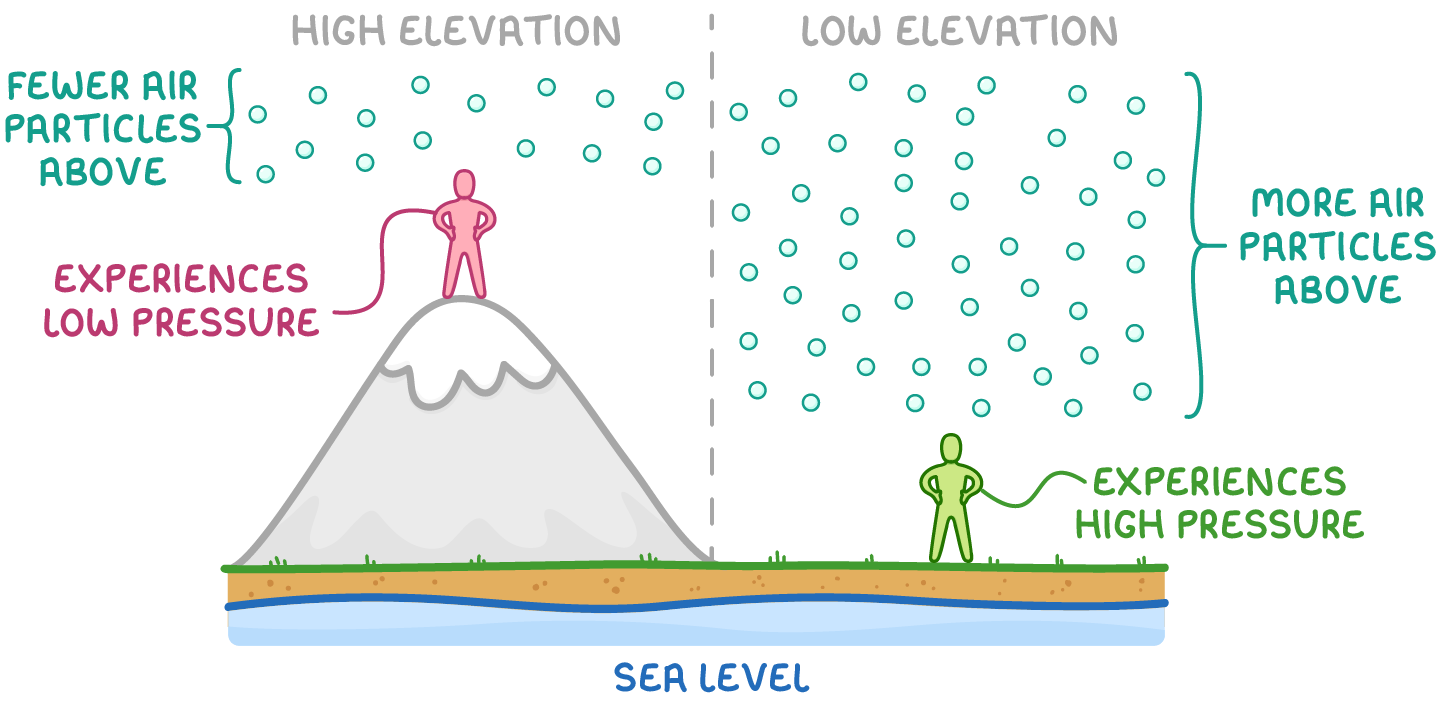
Altitude is height above sea level. As altitude increases, atmospheric pressure decreases for two reasons:
- Fewer collisions - Higher up, the atmosphere is less dense, so fewer air molecules collide with a surface each second.
- Less air above - Higher up, there's less air above the surface, so the weight of air pressing down is smaller.
At sea level, atmospheric pressure is around 100,000 Pa, but at the top of Mount Everest (about 8,800 m above sea level) it's only around 33,000 Pa.
Atmospheric density
- The density of the atmosphere is highest at sea level because the weight of the air above compresses the air below it.
- Higher density means more air molecules in a given volume, leading to more collisions with surfaces each second and therefore a greater pressure.
The pressure-height graph is curved
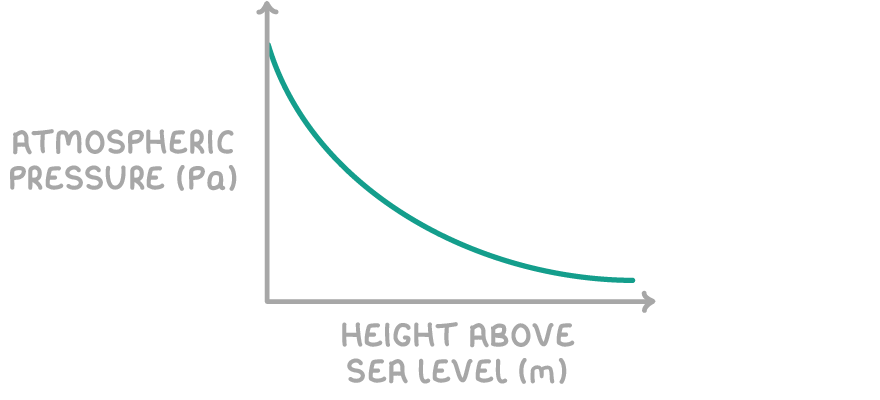
- A graph of atmospheric pressure against height is a curve, not a straight line.
- This is because atmospheric pressure depends on the density of the atmosphere, which decreases with height rather than staying constant.
TermDefinition
AtmosphereThe layer of gas surrounding a planet or star, such as the thin layer of air around the Earth.
Atmospheric pressureThe force per unit area exerted by air molecules colliding with surfaces.
AltitudeHeight above sea level.
Key points to remember
How were these notes?