2.3 - Components
Light-dependent resistors (LDRs)
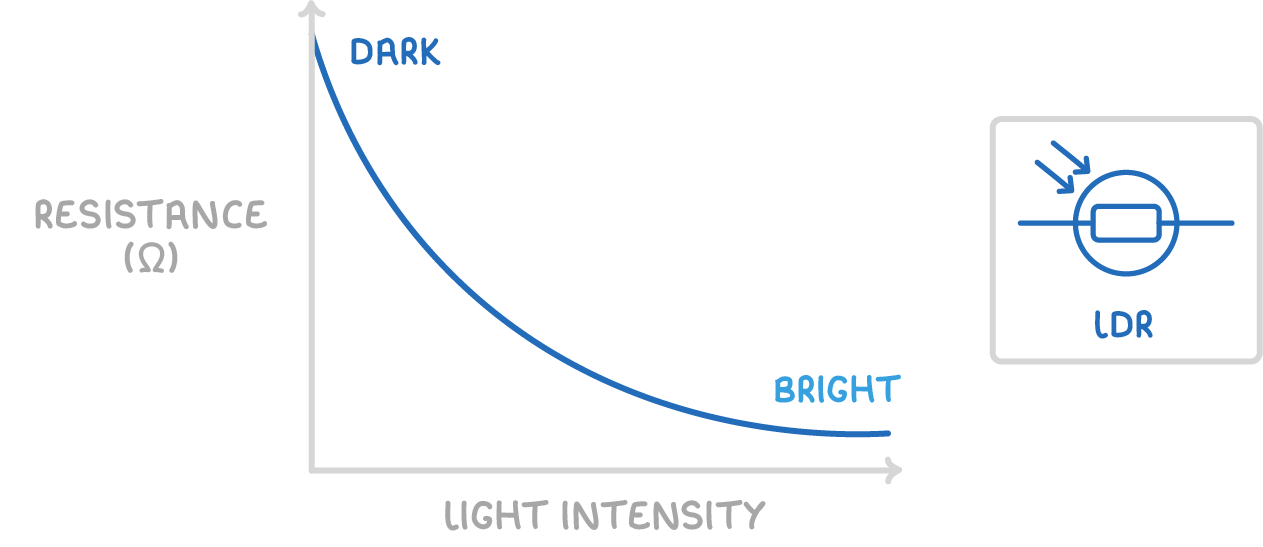
- A light-dependent resistor (LDR) is a resistor whose resistance depends on the intensity of light falling on it.
- In darkness, its resistance is highest.
- As the light gets brighter, its resistance falls.
- Common applications: automatic night lights, outdoor lighting, and burglar detectors.
Thermistors
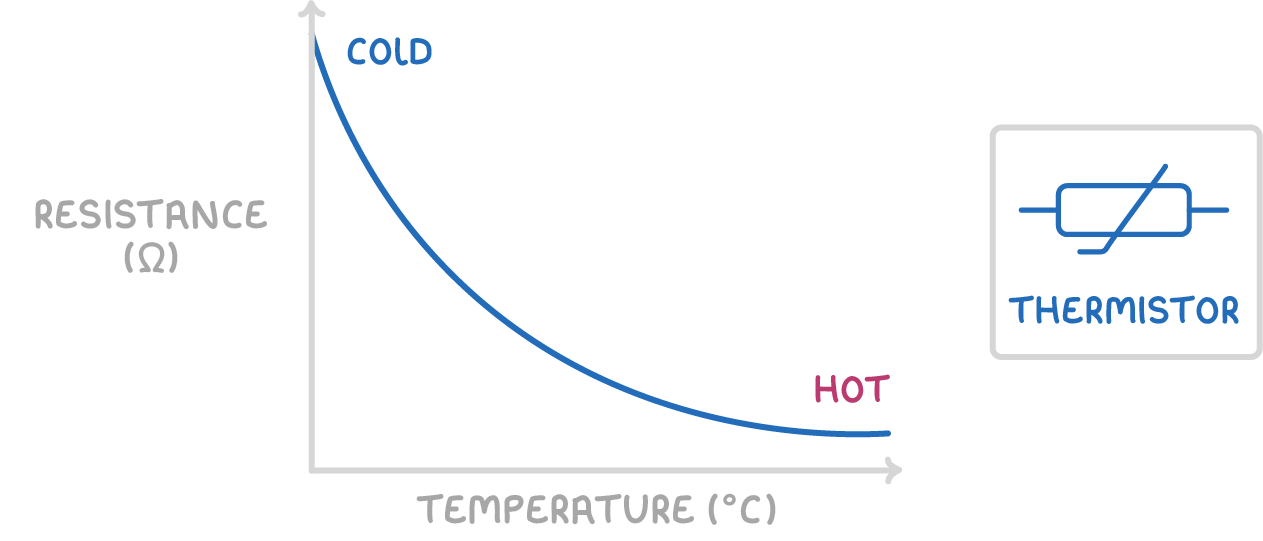
- A thermistor is a resistor whose resistance depends on temperature.
- In cold conditions, its resistance is high.
- As the temperature rises, its resistance falls.
- Because resistance falls as temperature rises, it's called a negative temperature coefficient (NTC) thermistor.
- Common applications: car engine temperature sensors, thermostats, irons, and fire alarms.
Light-emitting diodes (LEDs)
- A light-emitting diode (LED) is a diode that emits light when a current flows through it in the forward direction.
- Like any diode, it only lets current flow one way, so it only lights up when connected the right way round.
- LEDs indicate the presence of a current in a circuit, so they're often used in appliances to show they're switched on.
Advantages and uses
- Uses: energy-saving lighting, traffic lights, screens, and remote controls.
- Unlike filament bulbs, LEDs have no filament to burn out.
- They use a much smaller current than traditional filament lamps.
TermDefinition
Light-dependent resistor (LDR)A resistor whose resistance decreases as the intensity of light falling on it increases.
ThermistorA resistor whose resistance decreases as its temperature increases.
Light-emitting diode (LED)A diode that emits light when current flows through it in the forward direction.