3.6 - UV Light
Fluorescence and fluorescent lamps
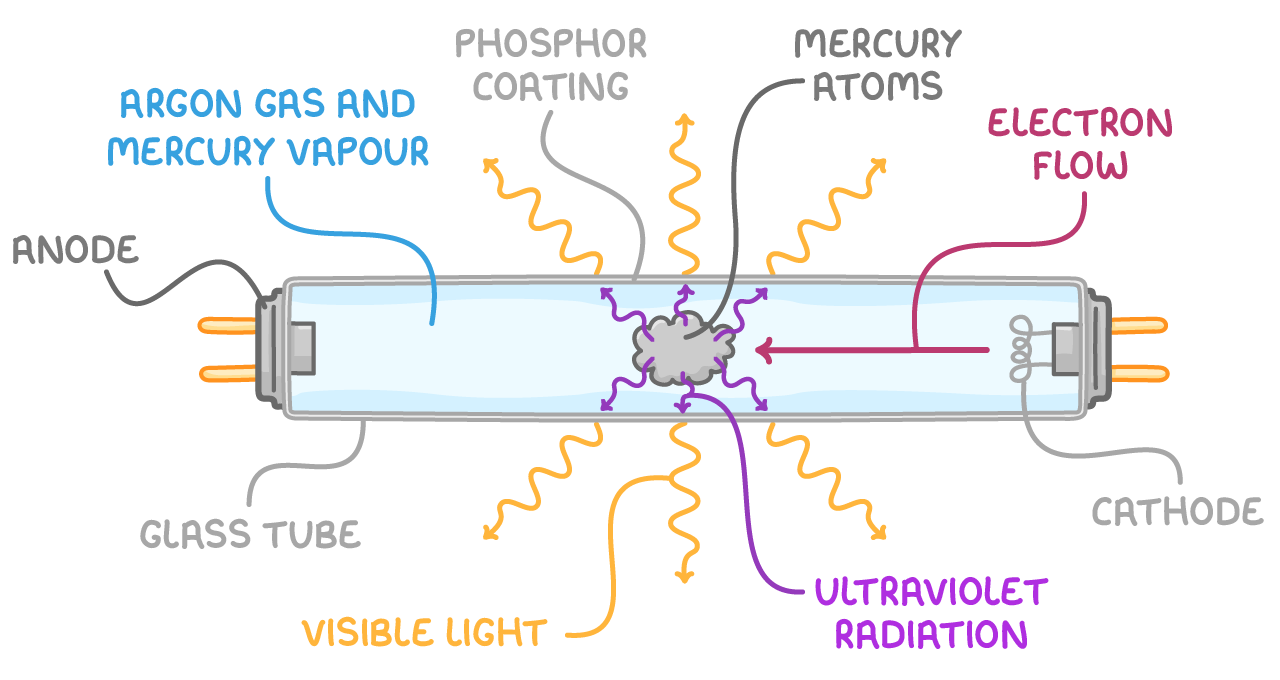
Fluorescence is a property of certain chemicals: they absorb ultraviolet (UV) radiation and then emit visible light.
How a fluorescent lamp works
- The lamp generates UV radiation inside the tube.
- A layer of phosphor coats the inside of the glass. It absorbs the UV and re-emits it as visible light.
- Fluorescent lamps are energy-efficient, so they suit places needing light for long periods, such as classrooms, offices, and hospitals.
Dangers of ultraviolet radiation
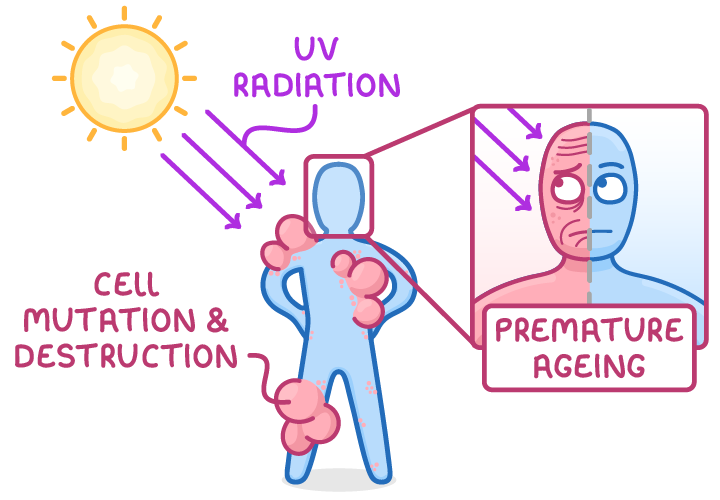
- UV damages the surface cells of the skin and can cause premature ageing.
- Some UV is ionising - it carries enough energy to knock electrons off atoms.
- This can disrupt the DNA in skin cells, causing mutation and leading to skin cancer.
- UV can also harm the eyes, causing eye conditions and even blindness.
Reducing the risk
- Wear sunscreen with UV filters in strong sunlight.
- Limit the time spent in strong sunlight.
TermDefinition
FluorescenceA property of certain chemicals where they absorb ultraviolet radiation and emit visible light.
Ionising radiationRadiation that has enough energy to knock electrons out of atoms, turning them into ions.