Wave Properties - exam practice
Wave Properties
Question 1 of 8
This question is about wave properties.
Label the diagram below to show the wavelength.
This is a transverse wave.
Describe one similarity and a difference between longitudinal and transverse waves.
Give an example of a transverse wave.
State the equation linking wave speed, frequency and wavelength
Calculate the wavelength of a wave that has a speed of 2 m/s and a frequency of 4 Hz.
A student is investigating the properties of waves.
Define the term time period of a wave.
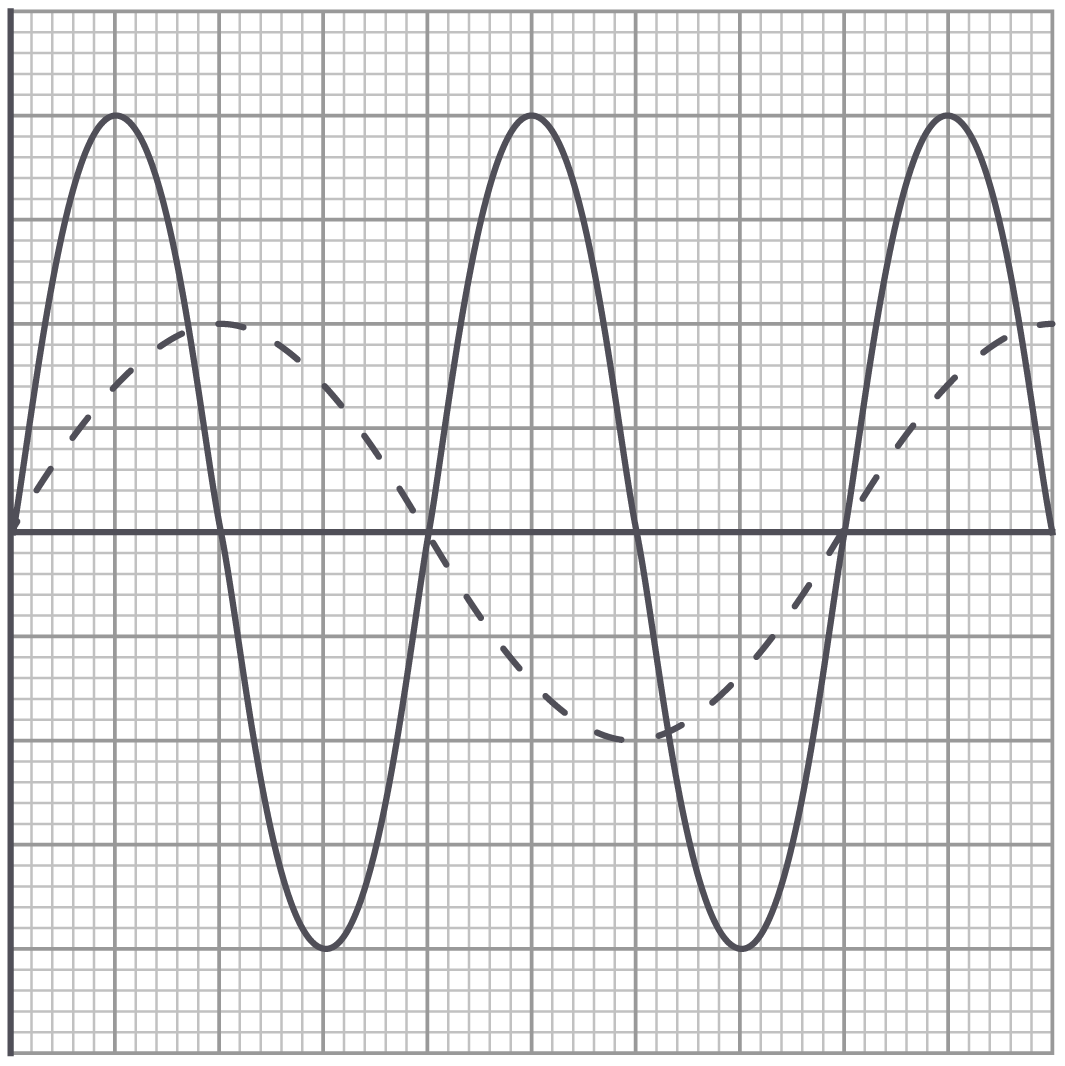
State the time period of the wave below.
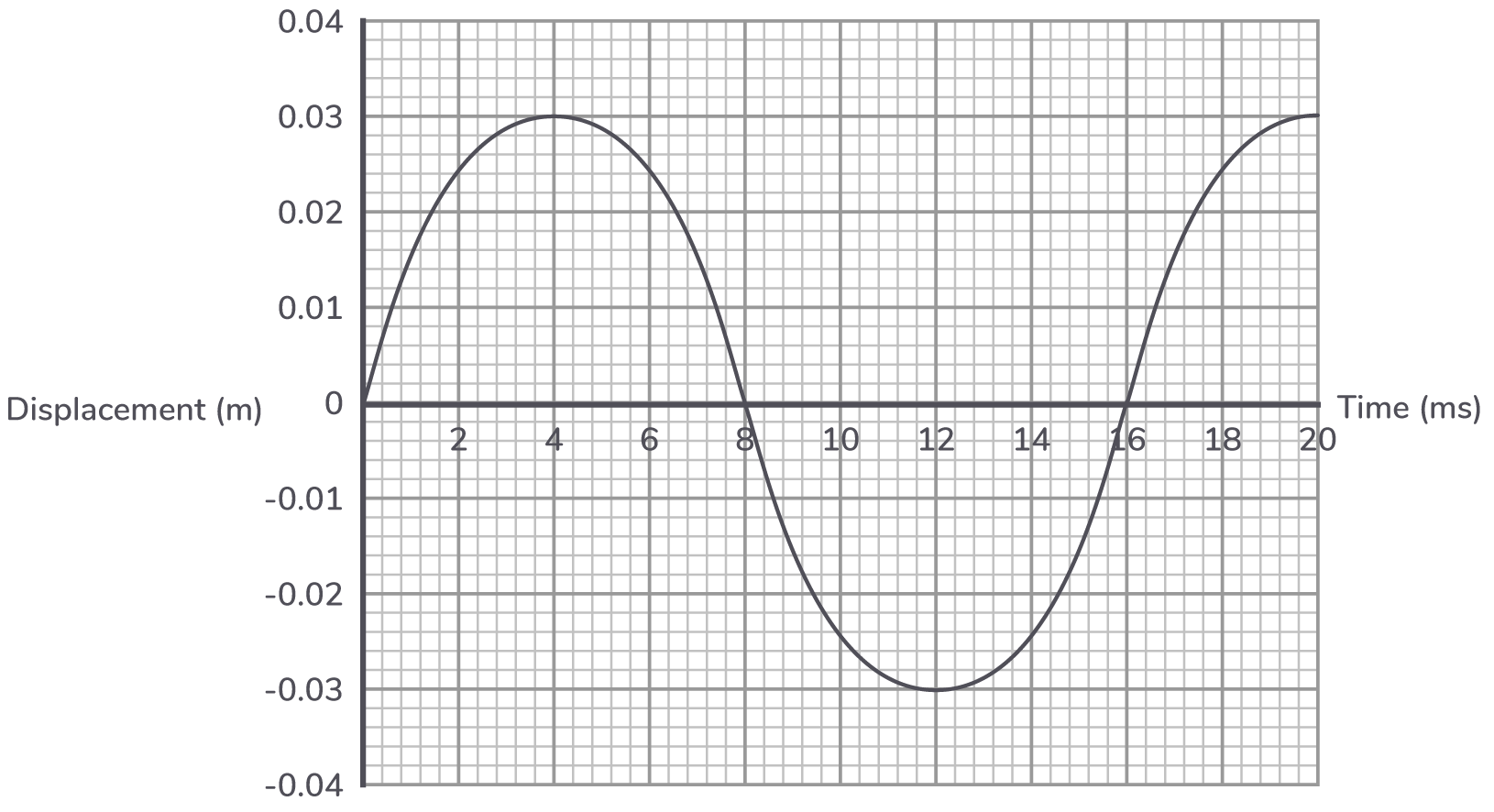
State the equation linking time period and frequency.
Calculate the frequency of the waveform. Give your answer to 2 significant figures.
On the trace below, sketch a wave which is twice the frequency and half the amplitude.
This question is about transverse and longitudinal waves.
Sketch a labelled diagram of a longitudinal wave.
Describe the movement of particles in a longitudinal wave relative to the direction of energy transfer.
Give and example of a longitudinal wave.
The student is using a wave which has a speed of 330 m/s and a frequency of 4.5 kHz.
Calculate the wavelength of the wave.
A student is investigating the speed of waves.
The diagram below shows the apparatus that the student uses.
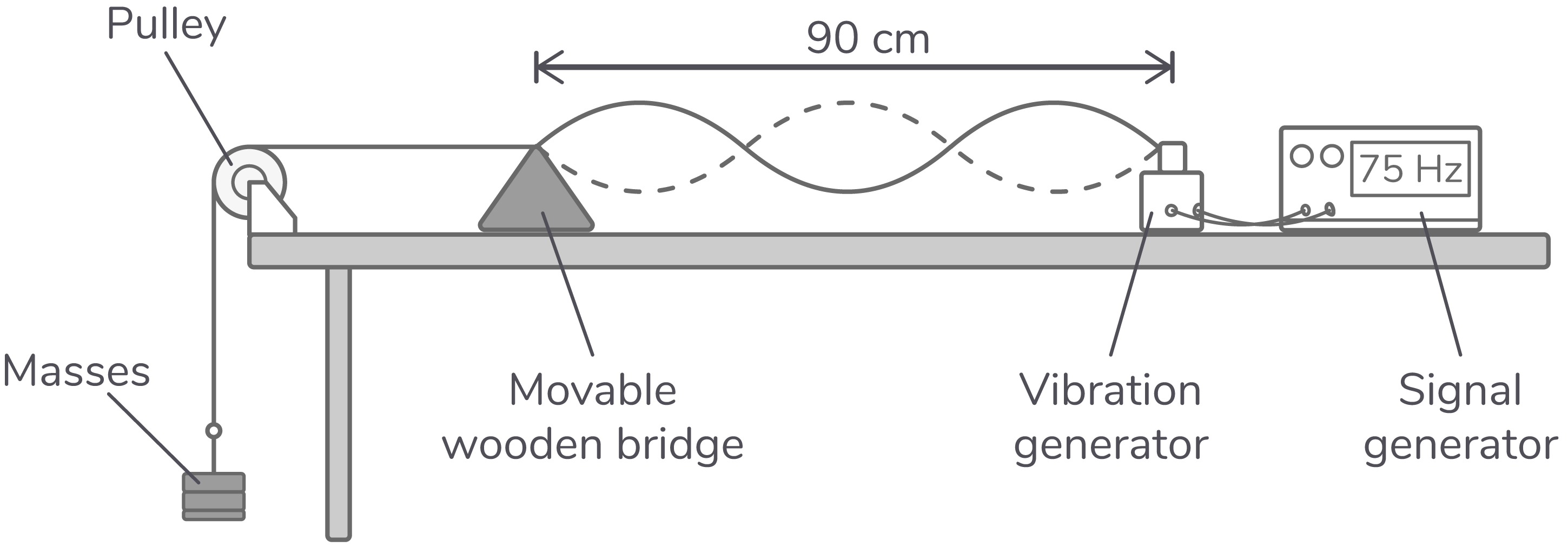
State the name of the measuring instrument the student should use to measure the wavelength.
Calculate the wavelength of the wave in the diagram.
State the equation linking wave speed, frequency and wavelength.
The signal generator is set to 75 Hz.
Calculate the speed of the wave.
The student increases the frequency output of the signal generator and decreases the amplitude.
The student moves the wooden bridge until 3 peaks are seen again.
Describe how the observed pattern will be different to the one in the diagram.
This question is about waves.
Which arrow represents the wavelength?
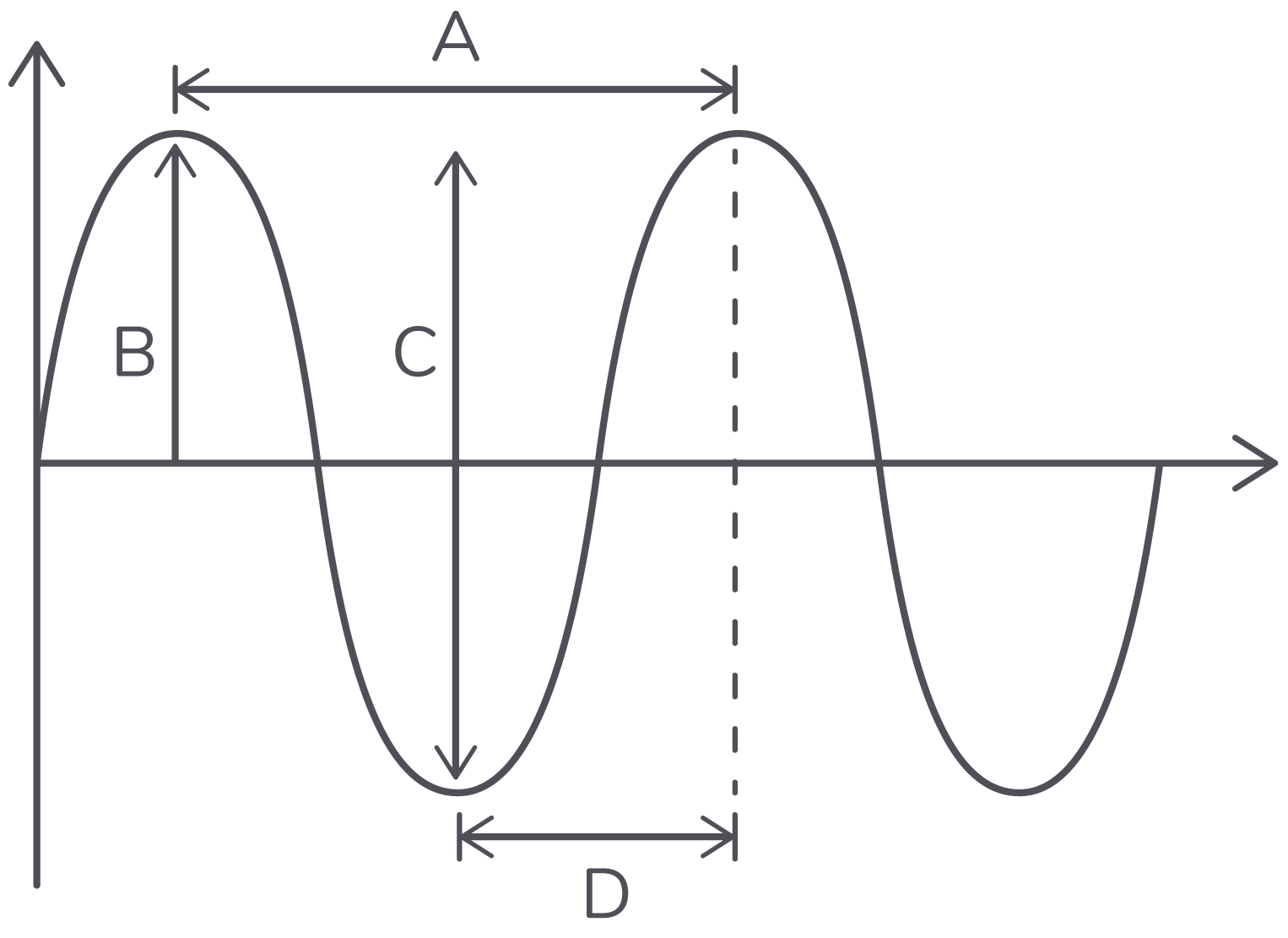
Which arrow represents the amplitude of the wave?
Complete the sentence.
Transverse waves have..
what is the definition of frequency?
A student holds a ball that contains a buzzer which emits a sound at 500 Hz. The speed of sound in air is 330 m/s.
Calculate the wavelength of the sound produced.
The student throws the ball to a friend who catches the ball.
The students each hear a slightly different sound.
Explain how the sound heard by student A is different to the sound heard by student B.
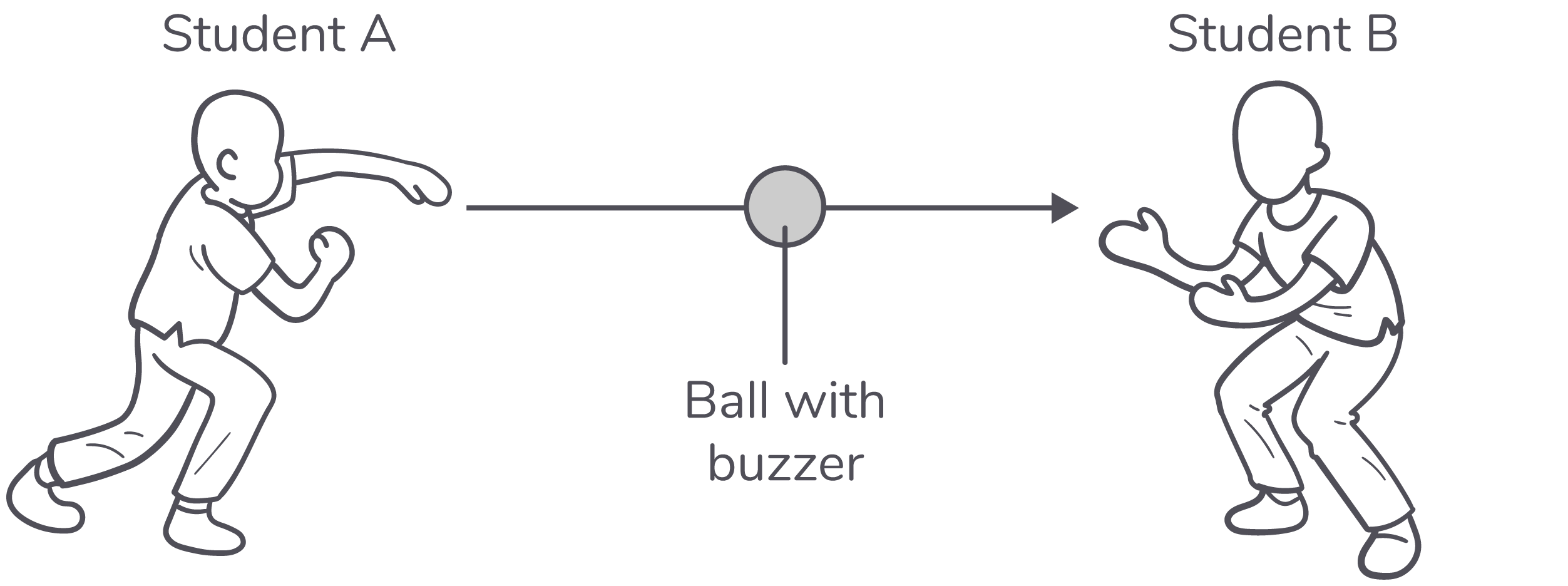
The diagram below shows the sound heard by each student.
Explain which waveform each student hears and describe the differences.
This question is about water waves.
As waves pass the buoy, it oscillates.
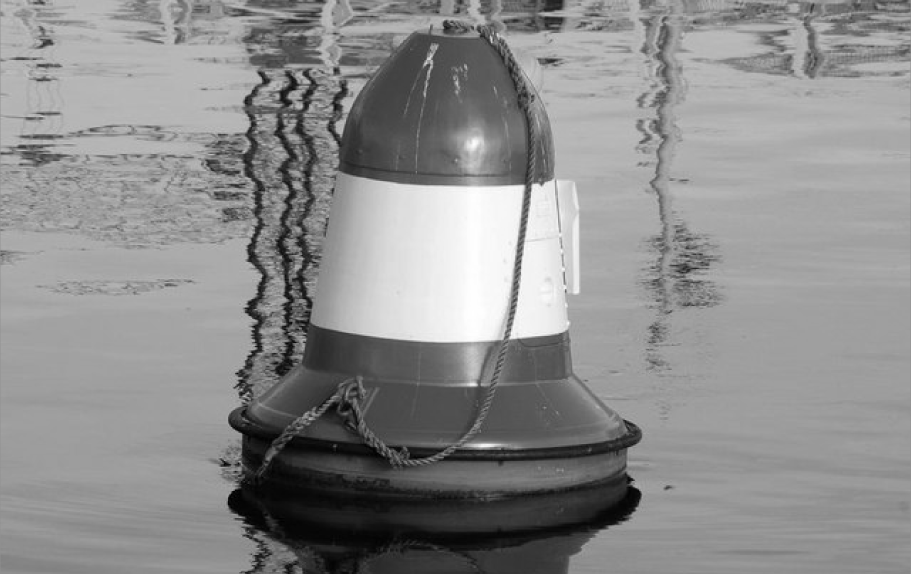
Describe the movement of the buoy as the water passes it.
The buoy moves up and down 15 times per minute.
Calculate the time period of the waves.
Calculate the frequency of oscillation.
Describe how transverse waves differ to longitudinal waves.
A student is investigating the speed of sound in air.
The student's method is below.
- Student B measures out a distance of 100 m using a trundle wheel.
- Student A claps two wooden blocks together above their head.
- Student B is stood at the 100 m mark in direct line of sight.
- Student B starts a timer when they see the blocks touch and stops the timer when they hear the sound.
- The experiment is repeated a further 3 times.
- The students take an average of the time readings.
The students records their data in a table.
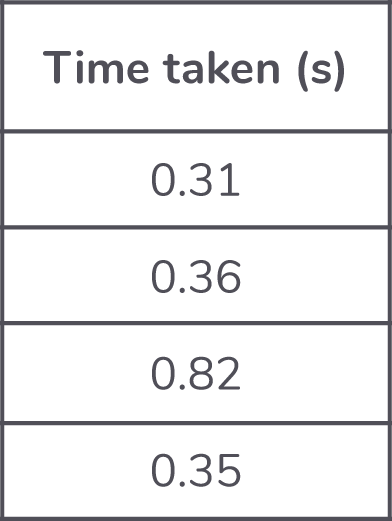
Calculate the average time for the sound to travel 100 m.
Calculate the speed of sound using the student's results.
The accepted value for the speed of sound in air is 330 m/s.
Explain why the student's value is different to this value.
Describe how the student could reduce the uncertainty in their experiment but use the same equipment.