3.7 - Infrasound
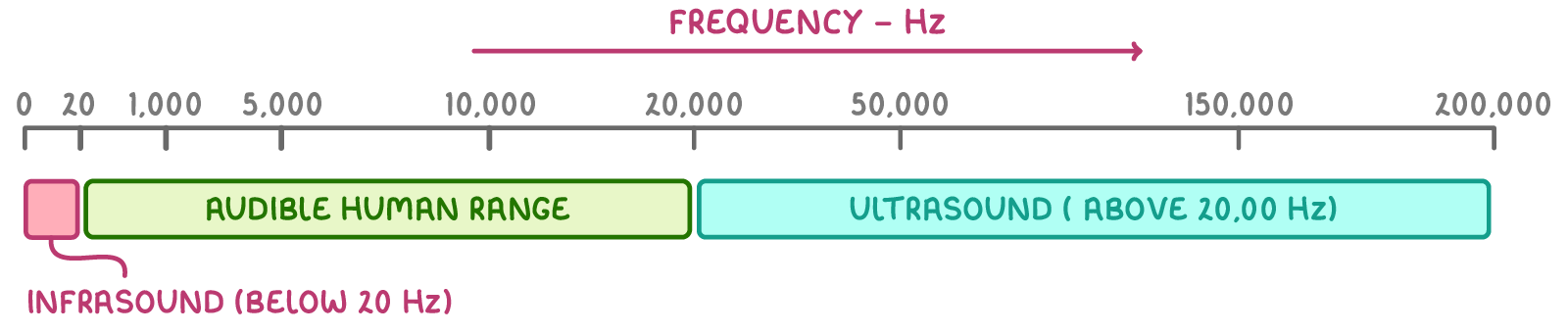
Infrasound is sound below 20 Hz
- Humans can hear sound across a range of frequencies from about 20 Hz up to 20,000 Hz.
- Infrasound is sound with a frequency below 20 Hz.
- Infrasound sits at the opposite end of the frequency range to ultrasound, which is sound above 20,000 Hz.
Uses and natural sources of infrasound
Animal communication
- Some animals (such as elephants and whales) communicate using infrasound calls that travel over long distances.
- Detecting this infrasound allows scientists to track these animals for conservation purposes.
Monitoring natural events
- Natural events such as erupting volcanoes, avalanches, and earthquakes produce infrasound.
- Monitoring this infrasound helps scientists predict events, such as whether a volcano is about to erupt.
Exploring the Earth's structure
- Earthquakes produce waves with frequencies below 20 Hz that travel through the layers of the Earth.
- Because these waves pass deep through the planet, they can be used to explore the internal structure of the Earth.
TermDefinition
InfrasoundSound with a frequency below 20 Hz.
UltrasoundSound with a frequency higher than 20,000 Hz, which is above the limit of human hearing.
Key points to remember
How were these notes?