2.7 - Conduction
Conduction transfers energy through vibrating particles
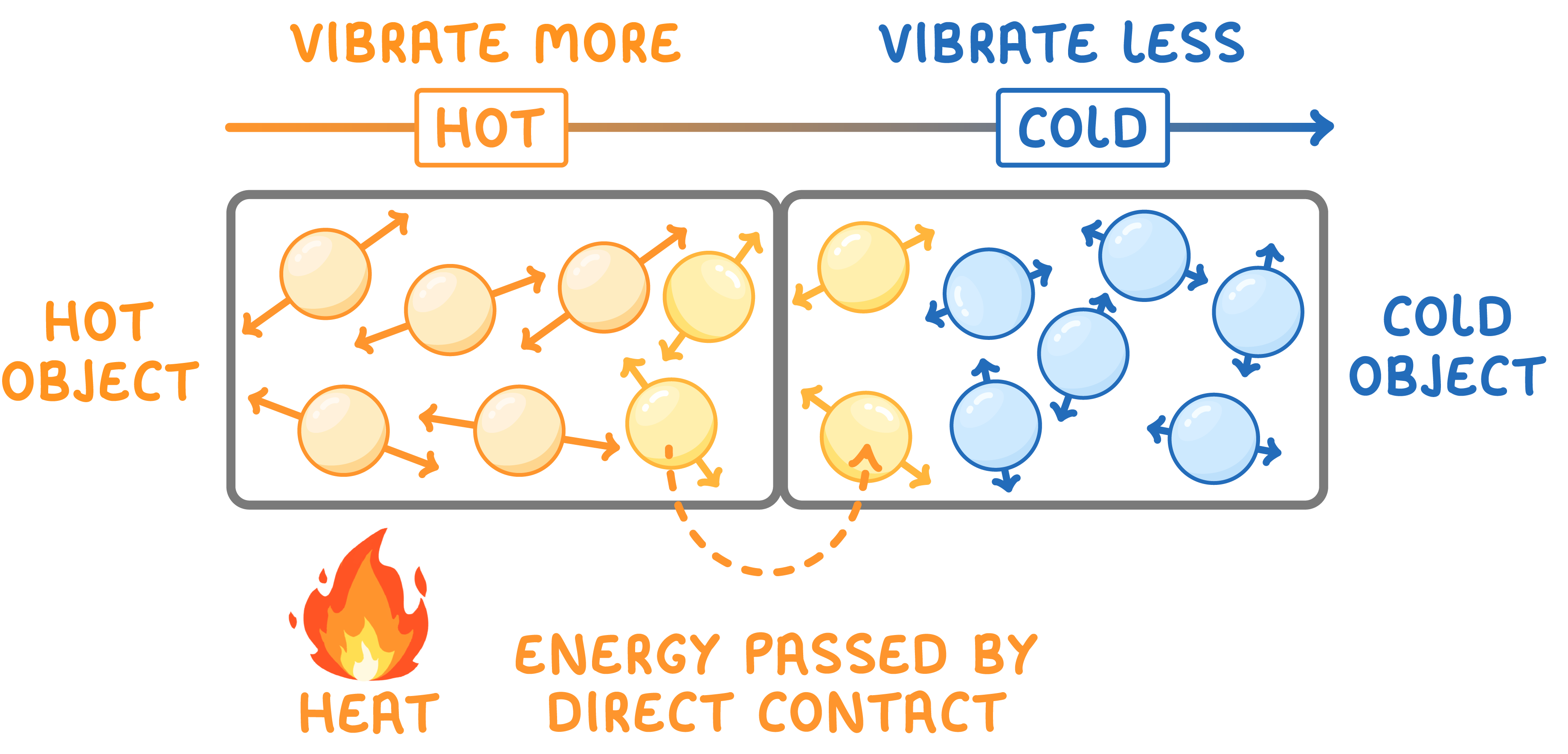
- Conduction is the way energy spreads through a material when its particles pass energy from one to the next.
- It's the main way energy is transferred by heating through solids.
How it works
- Heating one part of an object transfers energy to the kinetic energy stores of its particles, so the particles in the heated part vibrate faster.
- As they vibrate, they collide with their neighbours and pass some energy on. Those particles then vibrate faster too.
- The process carries on through the object until energy has spread to the other side, raising its temperature.
Good and bad conductors
- Thermal conductivity describes how quickly a material transfers energy this way.
- A material with high thermal conductivity transfers energy quickly and is a good thermal conductor (such as metals).
- A material with low thermal conductivity transfers energy slowly and is called a thermal insulator (such as gases, most liquids, plastic, and wood).
TermDefinition
ConductionThe transfer of energy through a material as its particles vibrate and collide with their neighbours.
Thermal conductivityA measure of how quickly a material transfers energy by conduction.
Key points to remember
How were these notes?