Radioactivity - exam practice
Radioactivity
Question 1 of 4
This question is about radioactive decay.
Which of the following is not a source of background radiation?
Uranium-235 is an isotope of uranium.
State what is meant by the term isotope.
Uranium has an atomic number of 92.
Calculate the number of neutrons in Uranium-235.
What is an alpha particle made from?
Which of the following is the most penetrating?
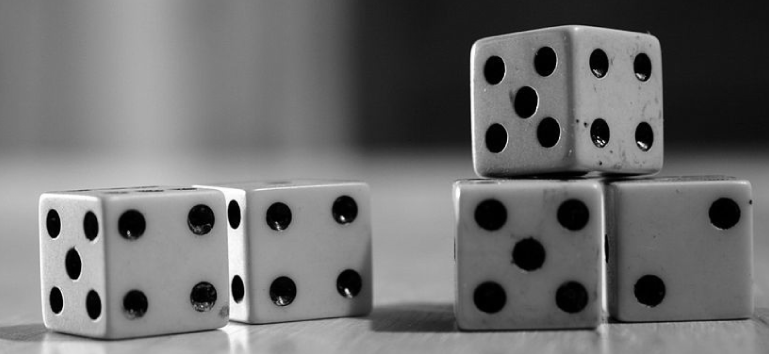
Dice can be used to model radioactive decay.
Explain what is meant by the random nature of radioactive decay.
Explain what is meant by the term half-life.
The student's method is below.
- Roll 50 dice.
- Remove any dice that land with a 1 face up.
- Record the number of dice remaining.
- Roll the remaining dice and repeat steps 2 and 3 until all dice have been removed.
The student plotted a graph of roll number vs number of dice remaining.
Use the graph to identify the half-life of the dice.
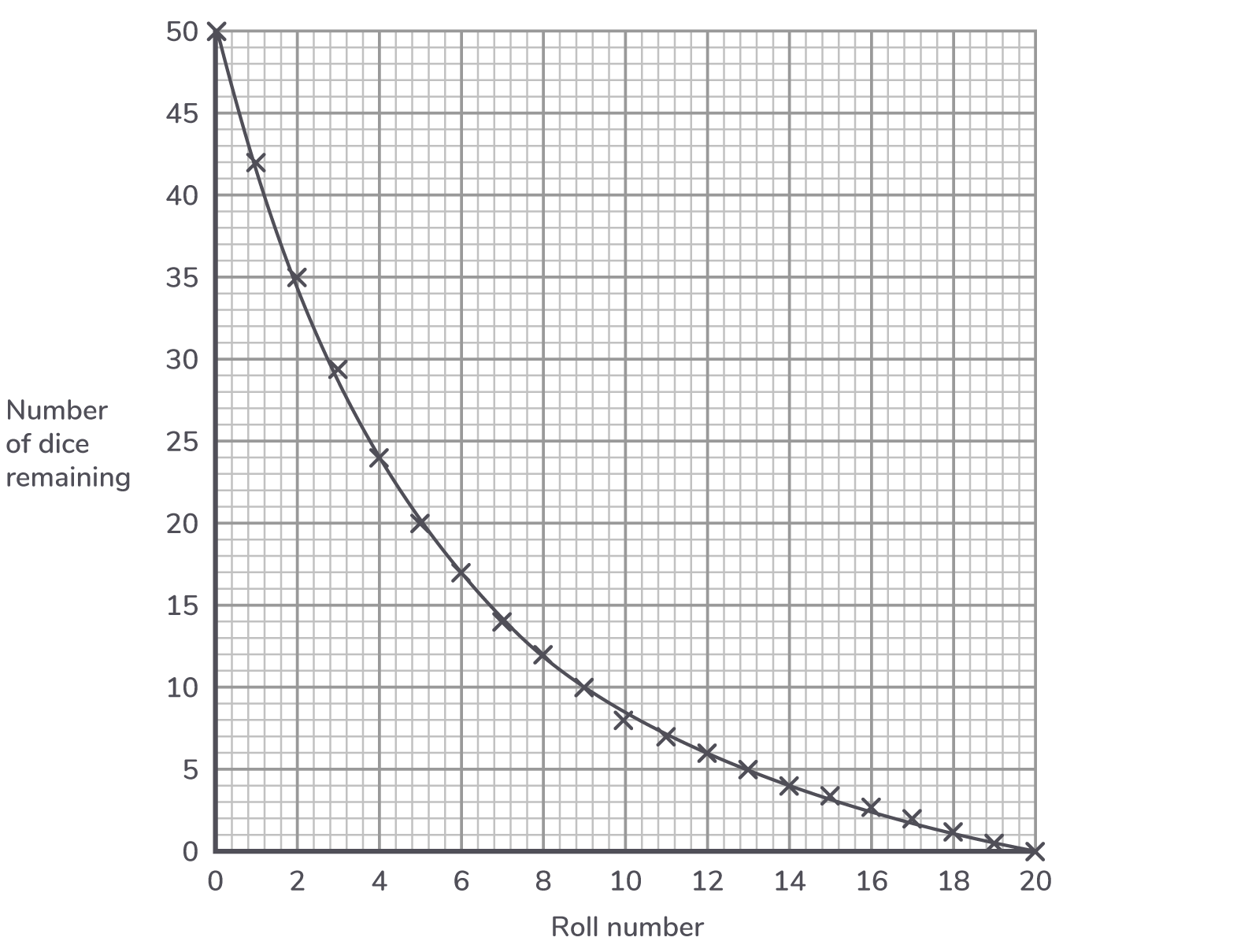
A student repeats the experiment with 200 dice.
Estimate how many dice they would expect to have remaining after 12 rolls.
Alpha, beta and gamma are types of nuclear radiation.
Draw a line from each type of radiation to what it is made from.
A teacher is demonstrating the penetration ability of alpha, beta and gamma radiation.
Complete the table below to show which materials absorb each type of radiation.
Describe how the teacher would know if the alpha, beta, or gamma radiation had been absorbed by the materials above.
Give two safety precautions the teacher should take when using radioactive sources.
Alpha, beta and gamma are all forms of ionising radiation.
This question is about the properties of alpha, beta and gamma.
Complete the diagram by putting one tick in each row.
Gamma radiation is used to irradiate fruit.
Explain why it is safe to eat fruit that has been irradiated with gamma rays.
Explain the hazards of ionising radiation entering the body.