Hazards & Uses of Radiactive Emissions - exam practice
Hazards & Uses of Radiactive Emissions
Question 1 of 10
This question is about the hazards of radioactive substances.
Describe the structure of the three main types of ionising radiation.
Describe the main health hazards associated with exposure to ionising radiation.
Explain the precautions that must be taken when handling radioactive materials.
A radioactive isotope, technetium-99m, is commonly used as a tracer in medical imaging. It has a half life of 6 hours.
Describe how radioactive tracers are used in medical imaging.
A patient is given a dose of technetium-99m with an initial activity of 296 MBq.
Calculate the activity of the tracer after 18 hours?
Describe how radioactive substances are used in radiotherapy for cancer treatment.
This question is about the use of radiation in smoke alarms.
A smoke alarm is a device that detects smoke, usually indicating a fire. It alerts people by creating a loud noise, giving them time to evacuate safely.
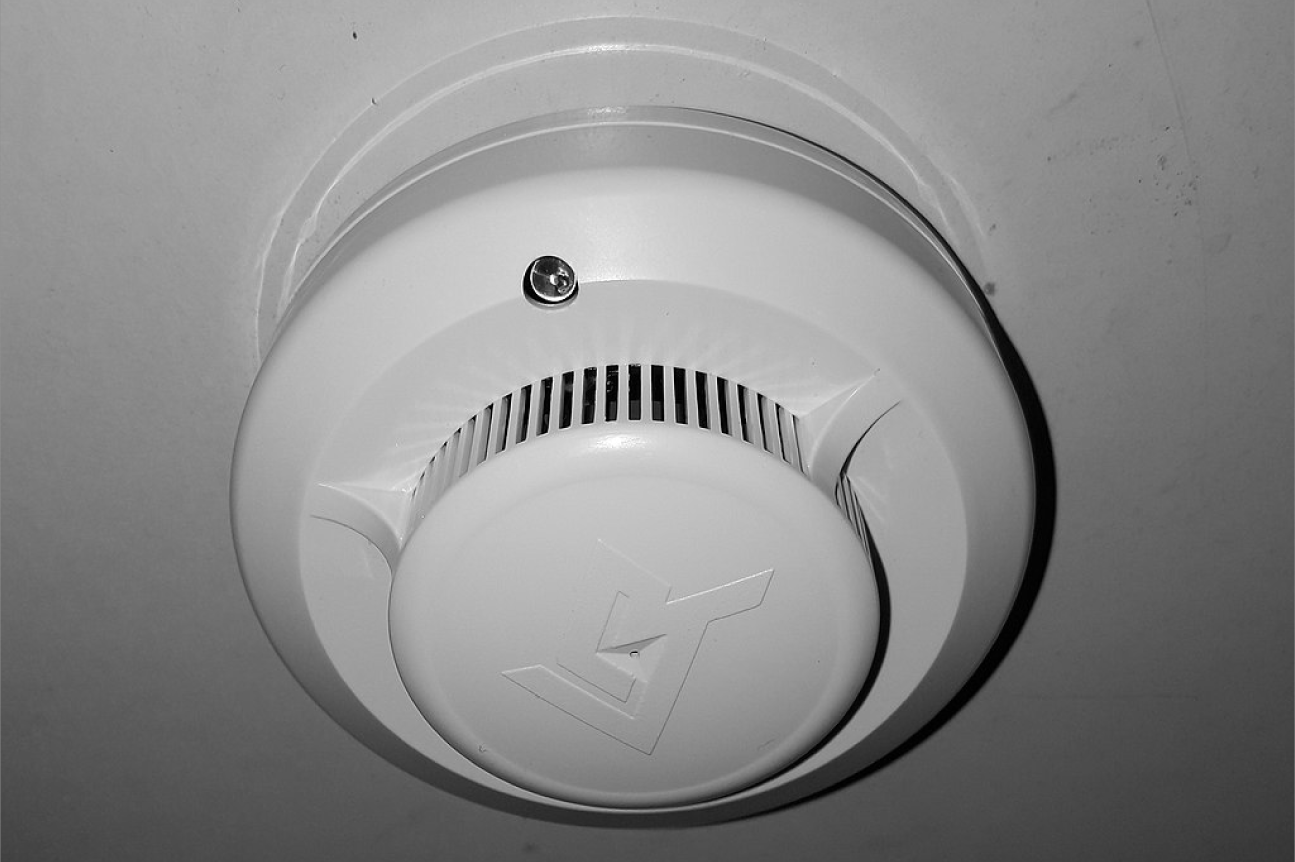
State which form of radiation is used in smoke detectors.
Describe how radioactive substances are used in smoke detectors.
Describe the potential safety concerns related to the use of alpha radiation in smoke detectors.
Describe the precautions and safety measures taken to minimise the risks associated with using alpha-emitting sources in smoke detectors.
A factory uses beta radiation to monitor the thickness of aluminium sheets. The table below shows the relationship between the counts detected by a Geiger-Muller tube and the thickness of the aluminium sheets.
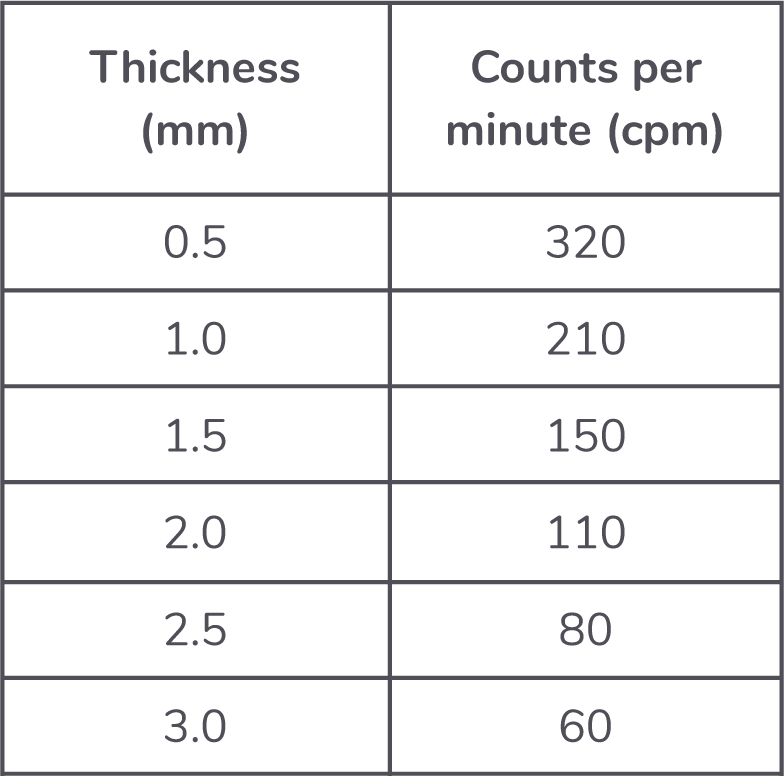
Plot a graph of thickness against counts per minute.
Describe the relationship between the counts detected and the thickness of the aluminium sheets.
Explain how beta radiation is used to measure the thickness of materials in this application.
Using your graph, estimate the thickness of an aluminium sheet if the Geiger-Muller tube detects 180 counts per minute.
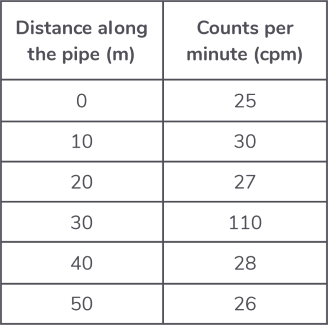
A gamma-emitting radioactive tracer is placed inside a pipeline to detect leaks.
The table below shows the radiation levels at various points along the pipeline.
Explain how radioactive tracers are used to detect leaks in pipelines.
Use data from the table to identify the location of a leak in the pipeline. Explain how you came to your answer.
Describe the advantages and safety precautions of using radioactive tracers for leak detection in pipelines.
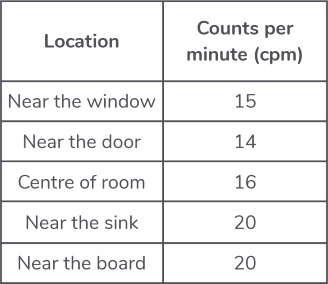
A student is conducting an experiment to measure the background radiation in their classroom. They use a Geiger-Muller tube to take measurements of the counts per minute (cpm) at various locations in the room.
The data collected is shown in the table below.
Explain what is meant by background radiation and give one source of background radiation.
Calculate the average background radiation count in the classroom based on the data provided.
A student places an alpha source near a Geiger-Muller tube and records a count of 185 in 30 s.
Calculate the corrected count rate (in counts per minute).
A factory uses radiation to monitor the thickness of plastic sheets.
The table below shows how the recorded count per minute varies with thickness for 3 different sources of radiation.
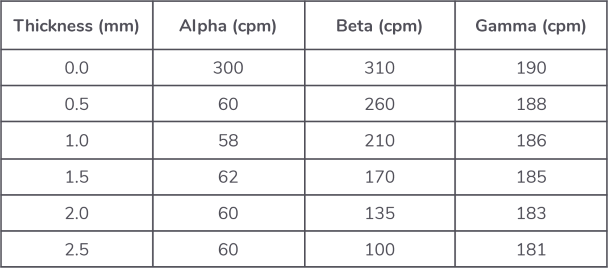
Describe the suitability of alpha, beta, and gamma radiation for thickness monitoring of plastic sheets. You should use data from the table in your answer.
The data in the table has not been corrected for background radiation.
Describe how the workers at the factory could correct their recorded value to account for background radiation.
The factory records the background radiation to be 1 count per second.
The factory wants to maintain a plastic sheet thickness of 1.5 mm.
Calculate the corrected count for beta radiation to ensure the desired thickness is maintained.
Radioactive tracers are a useful tool in the treatment of thyroid problems.
Iodine-123 is an example of a radioactive tracer used in these procedures.
Which of the following is a suitable half-life for a radioactive tracer?
Radium-223 can be put inside the body to treat cancers.
Radium has a half-life of 11.4 days and emits alpha radiation.
Explain why radium-223 is suitable for use inside the body to treat cancers.
Sources that emit alpha can be harmful because..
A radioactive tracer has an initial activity of 150 MBq. The half life of the radioactive tracer is 4 hours.
Calculate the activity of the same after 16 hours.
Which of the following would be most suitable for monitoring the thickness of metal sheets.
This question is about radioactive tracers used in medical procedures.
Technetium-99m has a half life of 6 hours.
Explain what is meant by a half-life of 6 hours.
The radiographer wants the activity of the tracer to be less than 1 MBq after one day.
Calculate the maximum initial activity of the tracer if it is to have an activity of less than 1 MBq after one day.
Technetium-99m is a gamma emitter.
Explain why alpha emitters are not used as tracers for medical imaging.