Electrical Circuits - exam practice
Electrical Circuits
Question 1 of 10
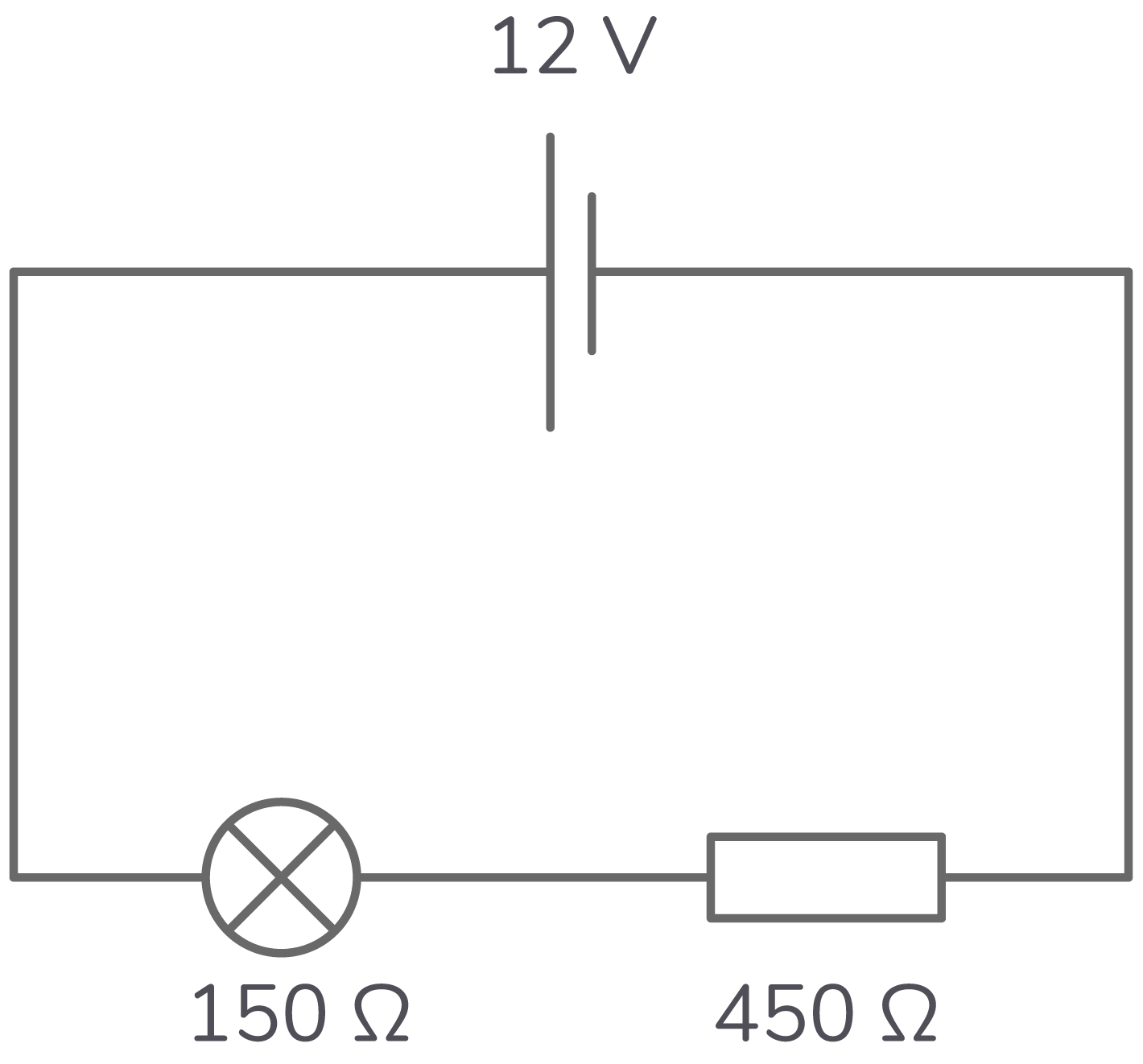
A student builds a series circuit consisting of a 12 V cell, a 150 Ω lamp, and a 450 Ω resistor.
Sketch the circuit diagram for the student's circuit.
Calculate the total resistance of the lamp and resistor.
State the equation linking potential difference, current and resistance.
Calculate the current in the circuit.
Calculate the potential difference across the lamp.
Calculate the potential difference across the resistor.
The circuit below is a parallel circuit consisting of two resistors and a cell.
Draw a voltmeter to measure the potential difference across the 200 Ω resistor.
State the reading on the voltmeter.
V
State the voltage across the 300 resistor.
V
Calculate the current through the 200 resistor.
The 300 Ω resistor has a current of 33.3 mA flowing through it.
Calculate the total circuit current.
A student is investigating the current-voltage characteristic of a filament lamp.
The student hasn't added an ammeter to measure the circuit current.
Draw an ammeter on the circuit to measure the current through the lamp.
Explain why the student uses a variable resistor and not a fixed resistor.
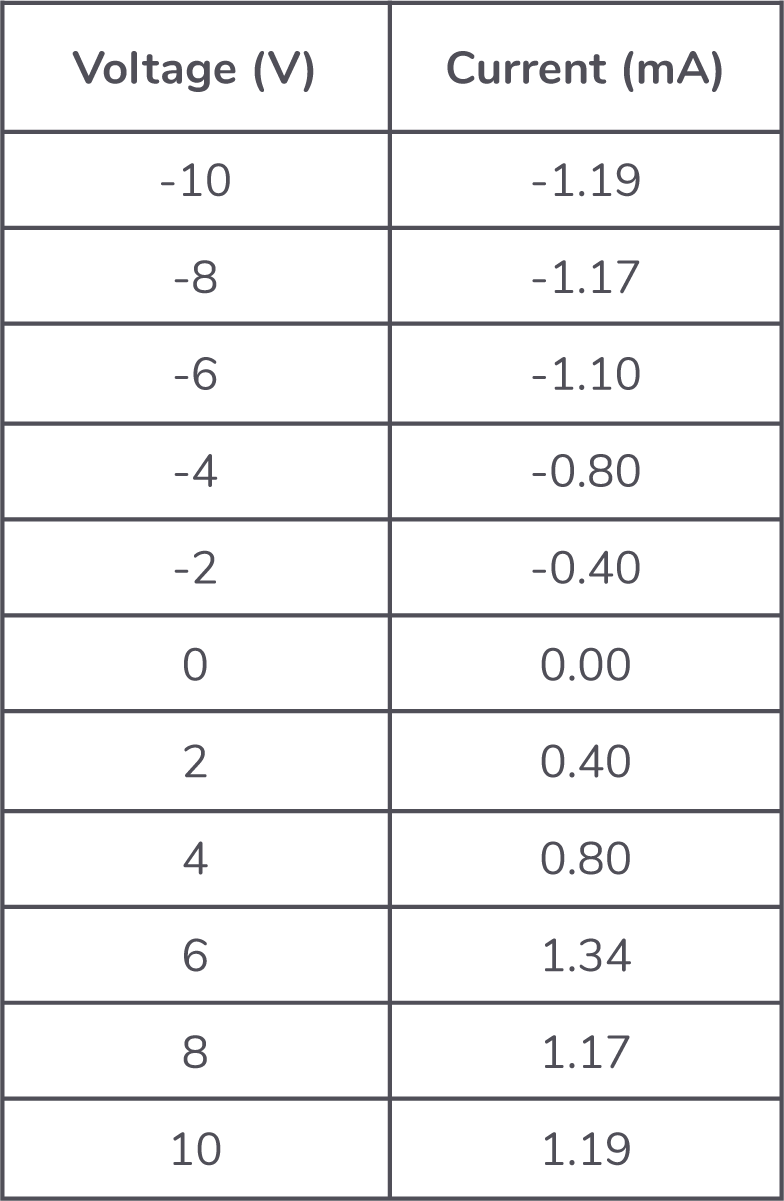
The student collects the following results.
The student collects the following results.
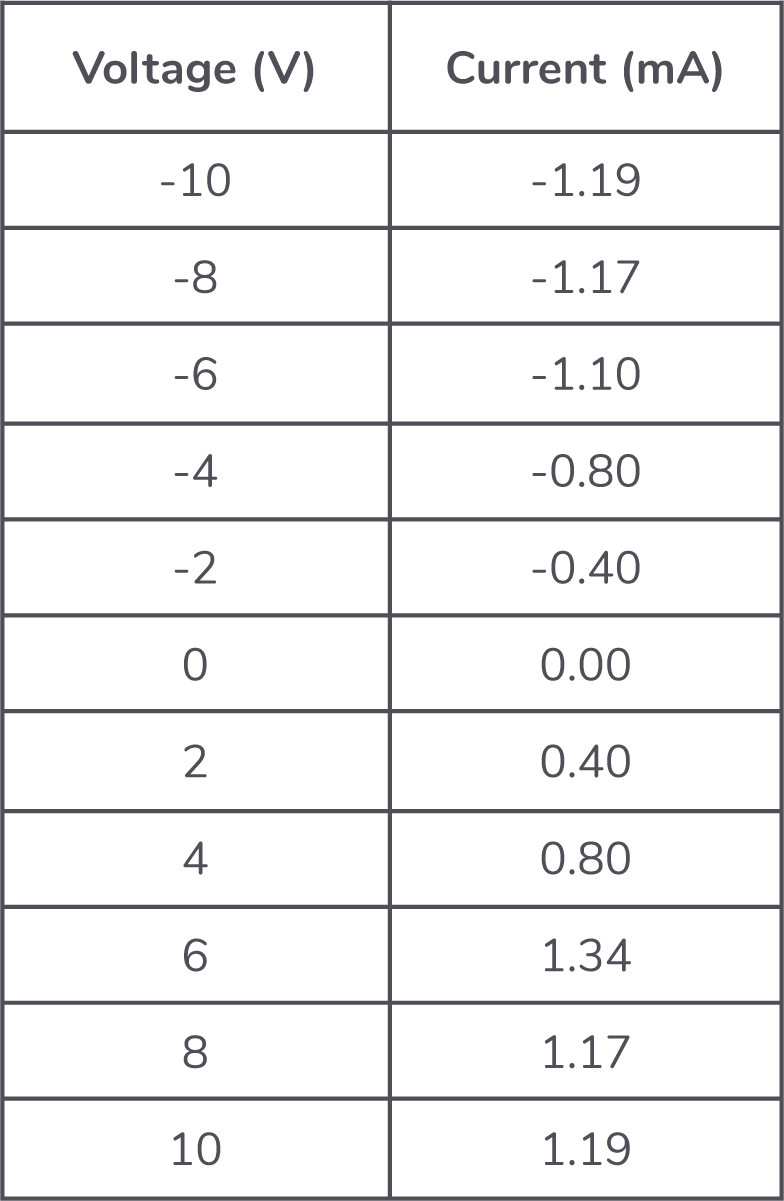
Plot the students results.
The student's results contain an anomalous result.
Which result is anomalous?
Describe what happens to the resistance of the lamp as the voltage is increased from 0 V to 10 V.
A student builds a temperature sensitive circuit with a 12 V cell in series with a lamp and a thermistor.
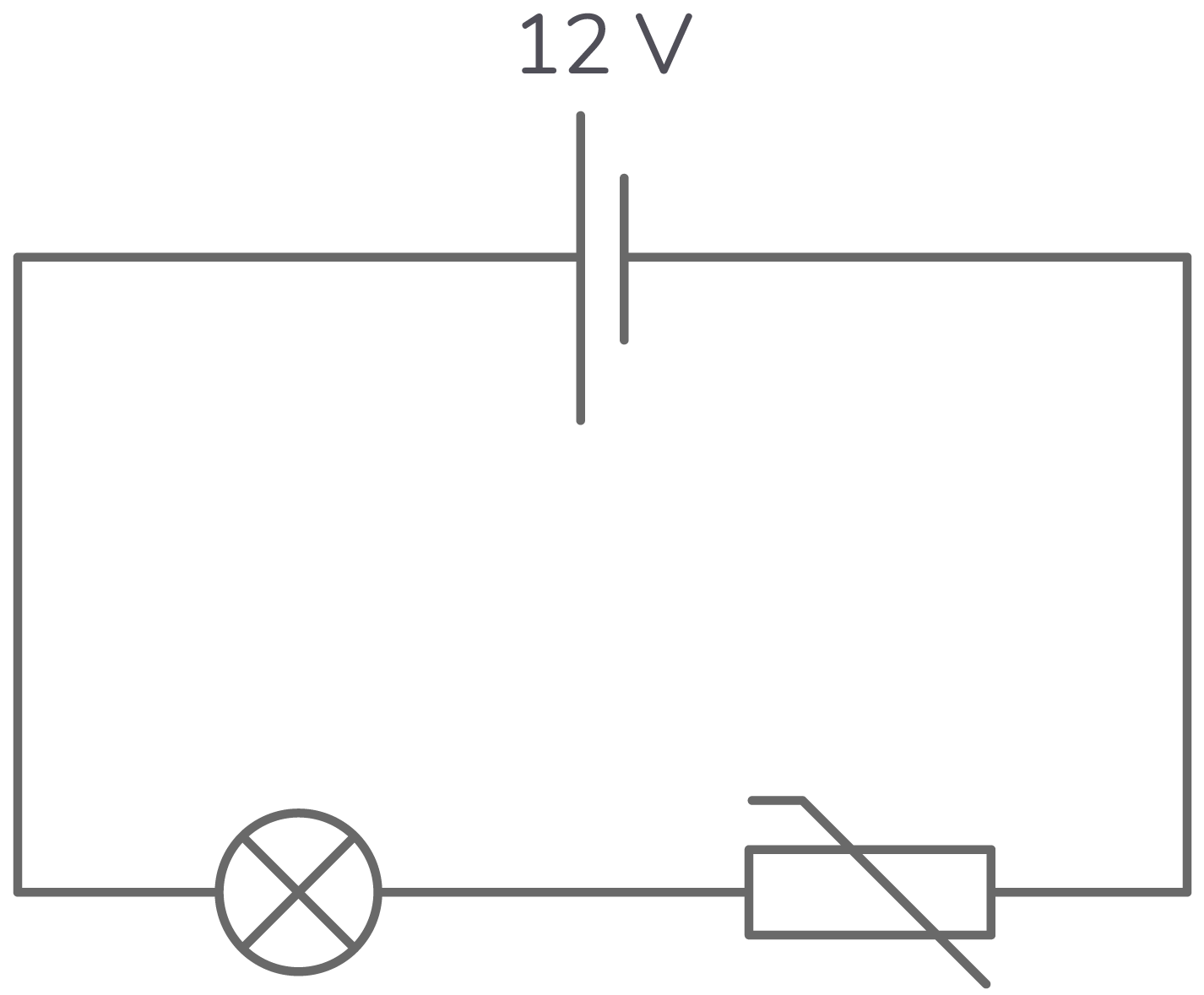
At room temperature the thermistor has a resistance of 350 Ω. The potential difference across the lamp is 5 V.
Calculate the current flowing through the thermistor.
The student moves the circuit into a warmer room.
Describe what happens to the voltage across the lamp. You may assume the resistance of the lamp stays constant.
Calculate the power dissipated in the lamp when the voltage across it is 10 V. The resistance of the lamp is 350 Ω.
Give your answer to 3 significant figures.
A student is investigating how the resistance of a wire varies with length.
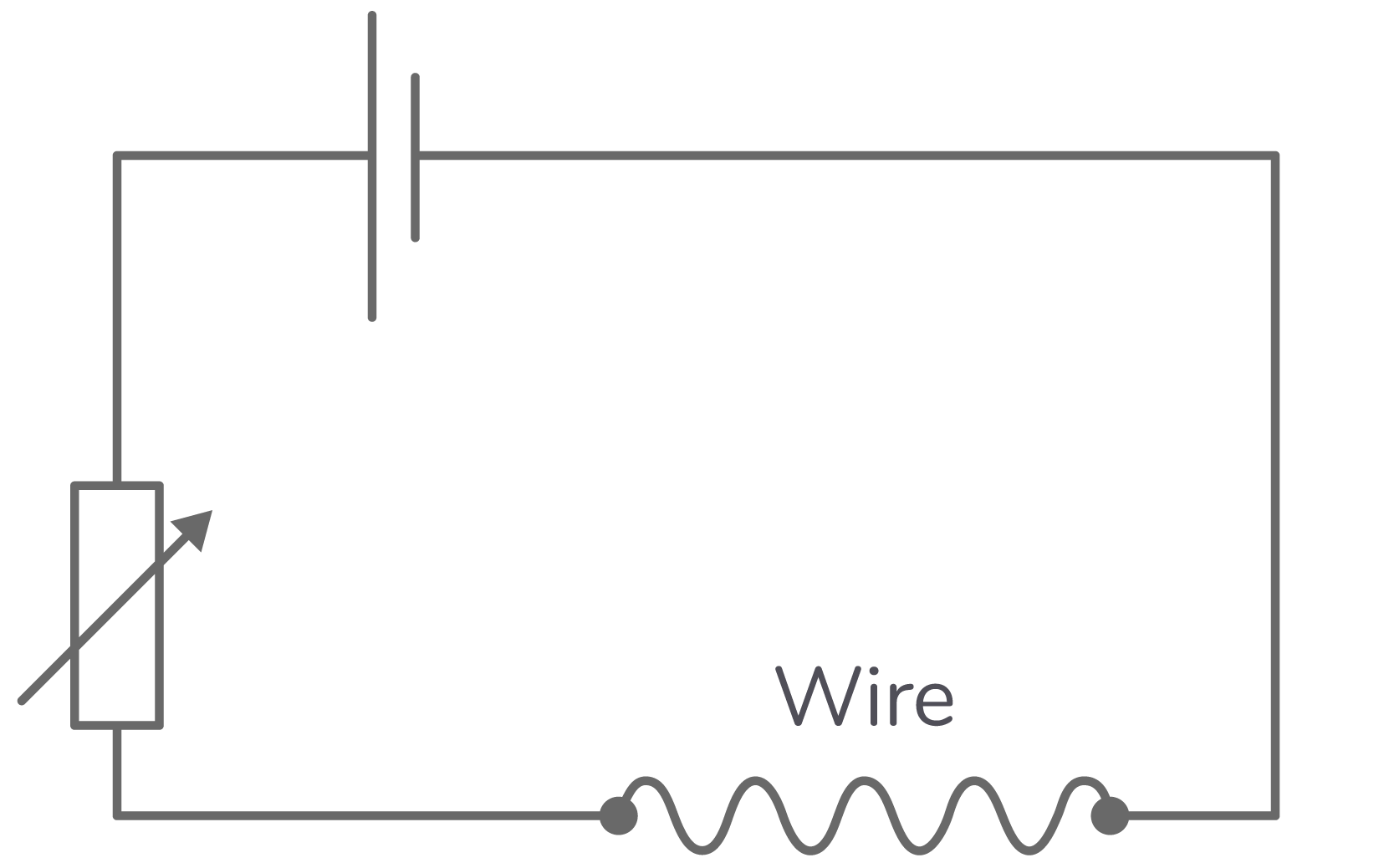
Add a voltmeter and ammeter to the circuit to measure the potential difference across the wire and the current through the wire.
The student uses a D.C. power supply.
Explain what is meant by a D.C. power supply.
The student turns off the power supply between readings.
Explain why the student must turn the power supply off between readings.
Describe how the student could use the circuit to identify the relationship between length and resistance.
The student draws a graph of length against resistance.
Draw a line of best fit on the student's graph.
The student concludes that resistance is directly proportional to the length of the wire.
Using data from the graph, show that resistance is directly proportional to length.
A student is investigating the properties of series and parallel circuits.
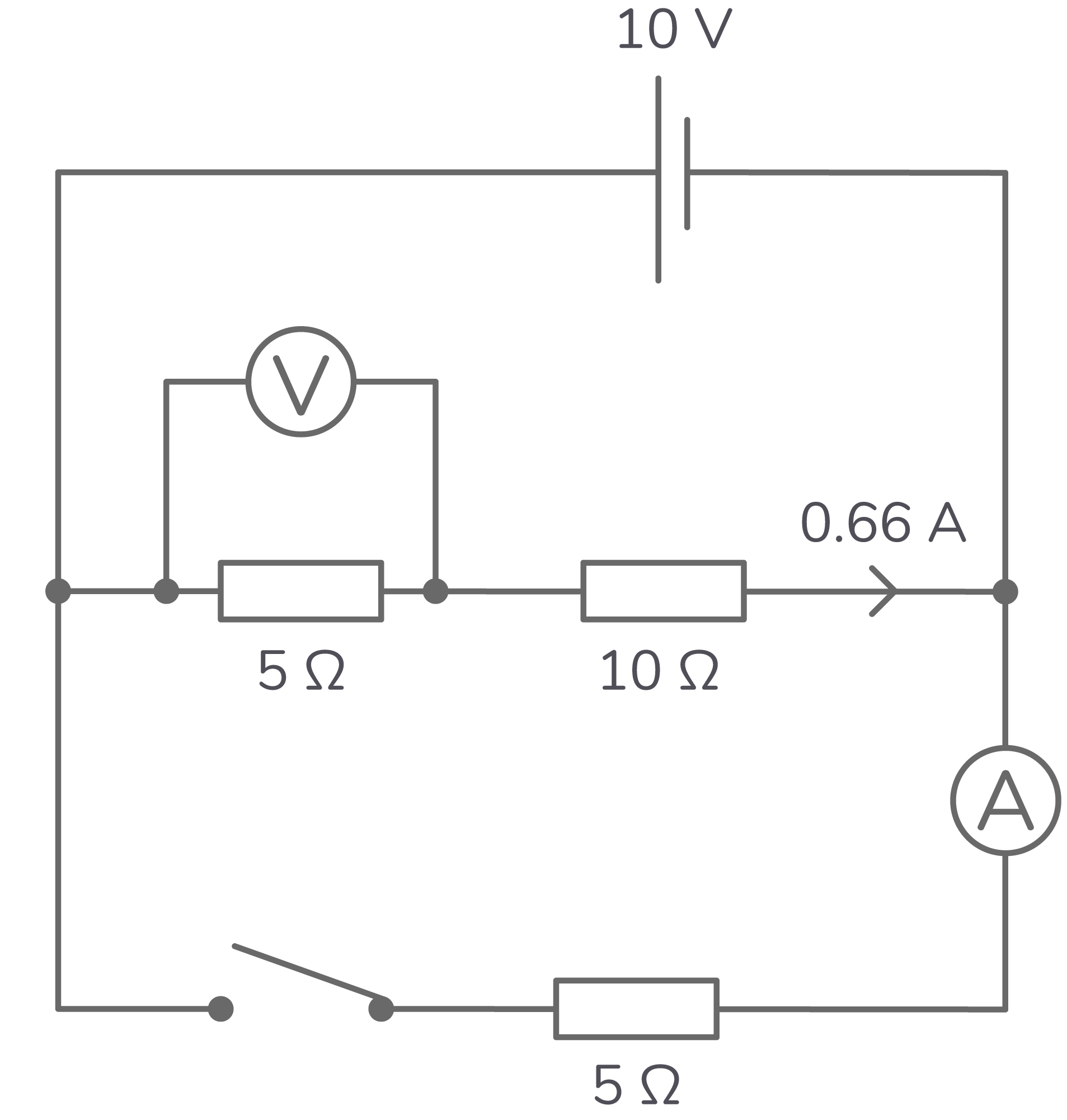
When the student closes the switch, the total circuit current is 2.66 A.
Calculate the current shown on the ammeter.
The student opens the switch.
Describe what happens to the reading on the ammeter and the voltmeter.
Calculate the reading on the voltmeter.
The 10 Ω resistor is replaced with a thermistor.
The student places the circuit in a cold room.
Describe how the voltmeter and ammeter reading will change.
This question is about the relationship between charge, current, and time.
Define current.
A filament lamp has a current of 275 mA flowing through it for 2 hours.
Calculate the charge that flows through the filament lamp.
The filament lamp is connected to a 10 V cell.
Calculate the energy transferred to the filament lamp in 2 hours.
This question is about electric circuits.
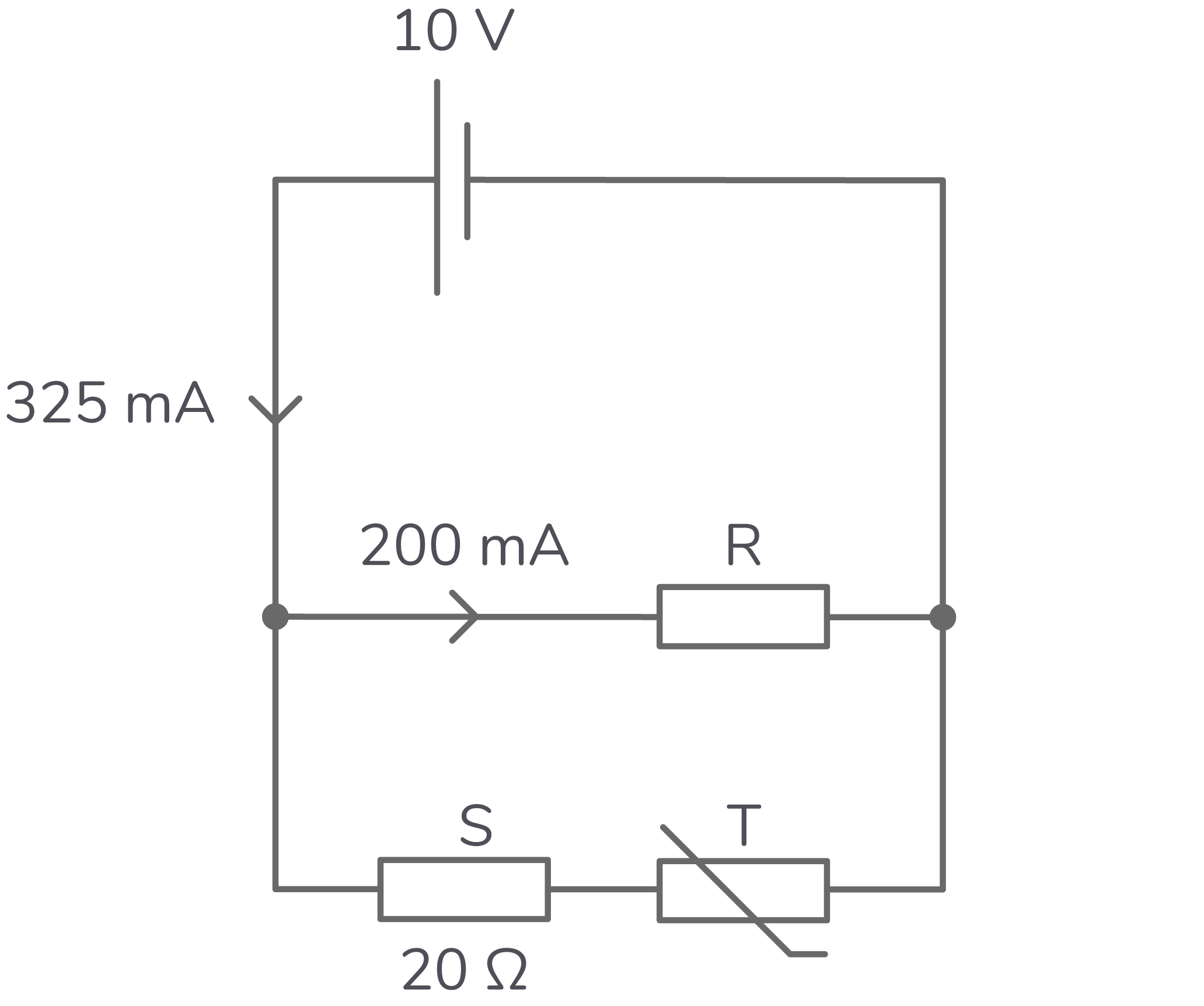
Calculate the current flowing through S.
State the potential difference across the resistor R.
V
Calculate the potential difference across S.
Calculate the potential difference across T.
Calculate the resistance of T at this temperature.
The student moves the circuit into a warm room.
Describe what happens to the potential difference across T.
This question is about LEDs.
The student builds a simple circuit consisting of an LED, cell, resistor, voltmeter and ammeter.
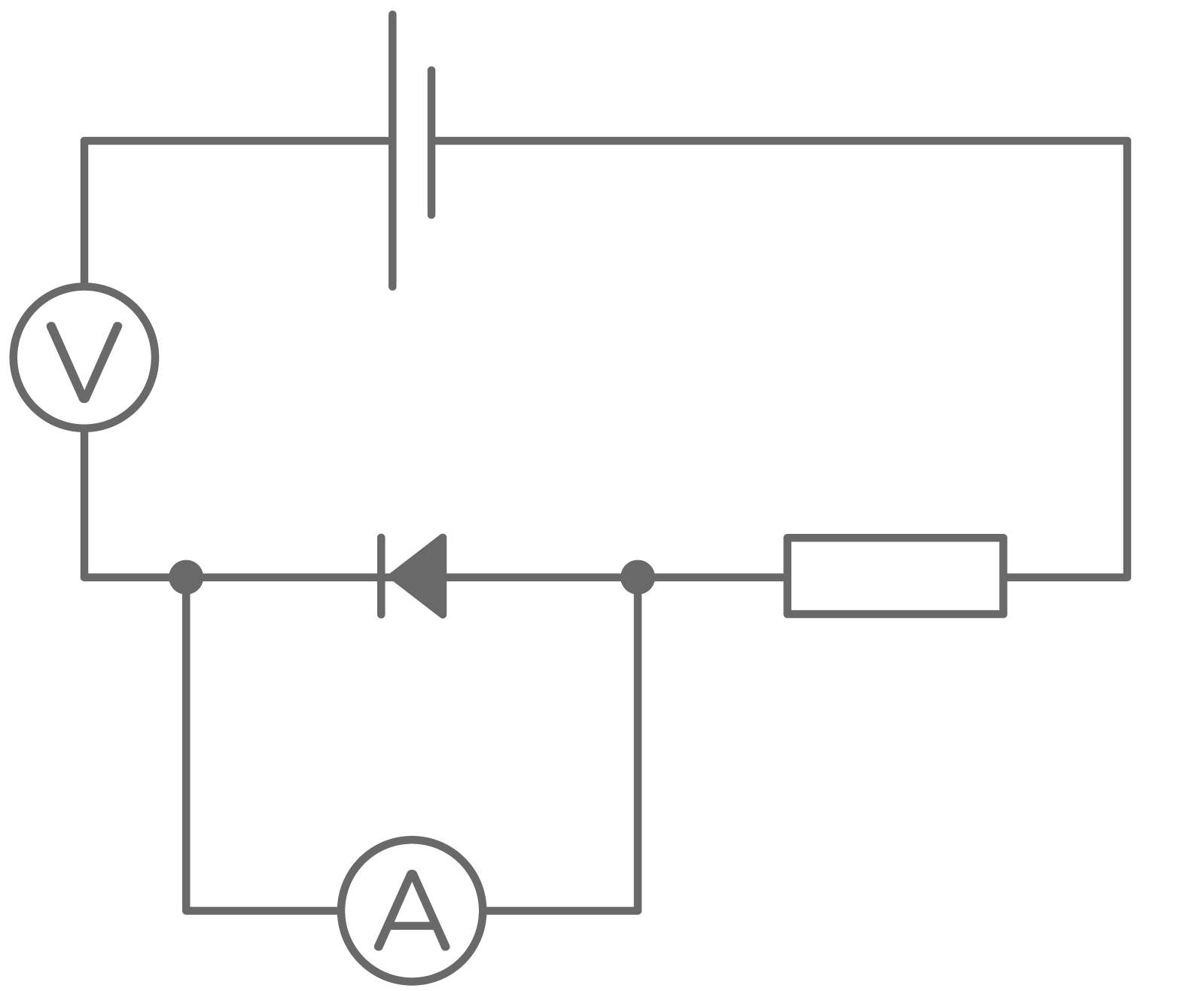
The student has made mistakes setting up the circuit.
Redraw the student's circuit to correct the mistakes.
The current-voltage characteristic for the diode is below.
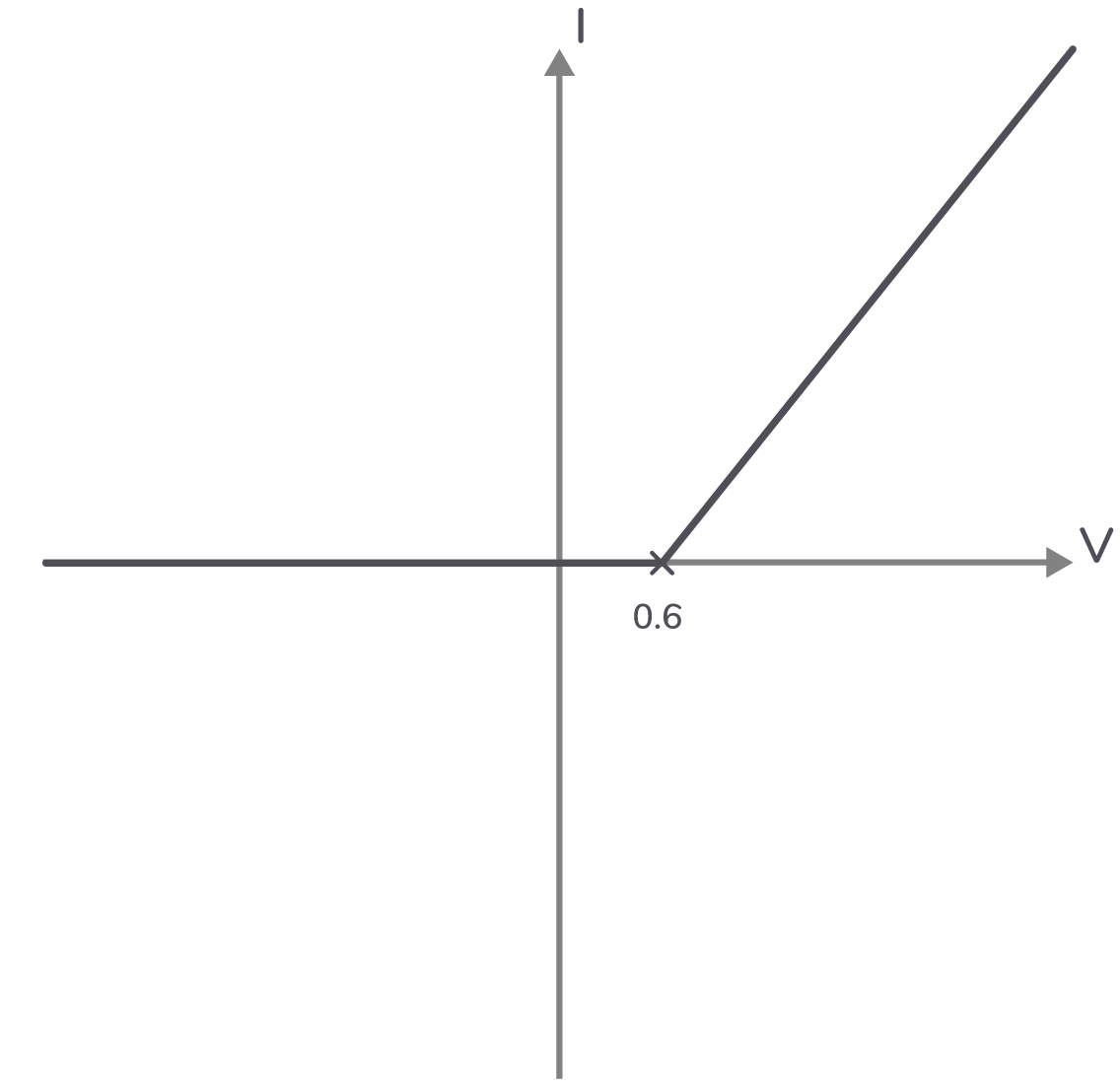
Describe the shape of the I-V graph.
When the voltage across the diode is 1.2 V, the current flowing through it is 17.6 mA. The cell has a voltage of 10 V.
Calculate the resistance of the resistor.
The diagram below shows the wiring for a lighting system in a house.
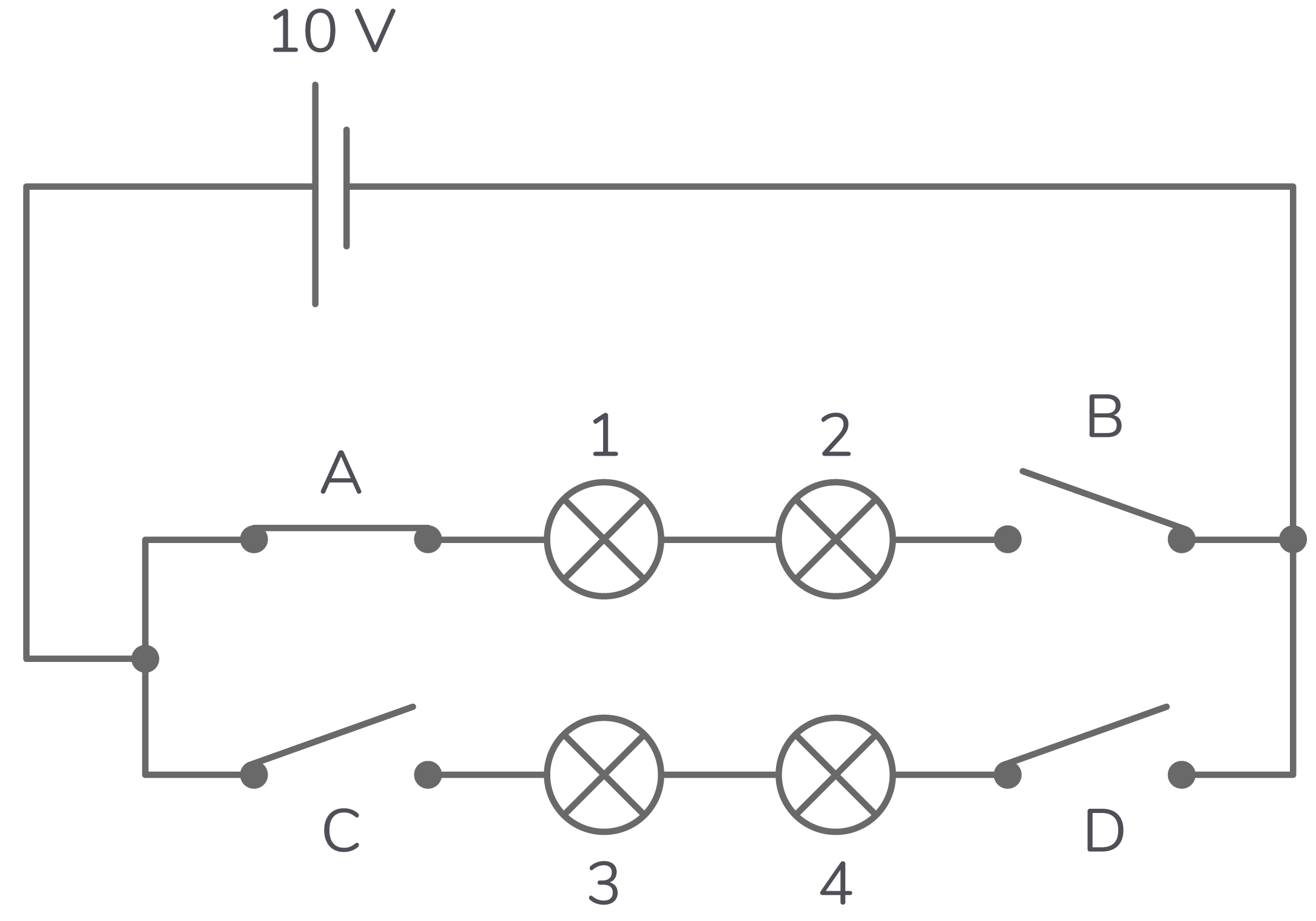
State which light bulbs will be turned on with the switches in their current positions.
Describe the changes the student would need to make to the switches to turn on bulbs 3 and 4.
Explain the advantage of using parallel circuits for lighting control.
The student closes switch A and B.
After a short period of time the bulbs stop working.
The student suspects that only one of the bulbs has blown.
Describe how the student could identify which bulb has blown.