Sound - exam practice
Sound
Question 1 of 5
A student is investigating the speed of sound in air.
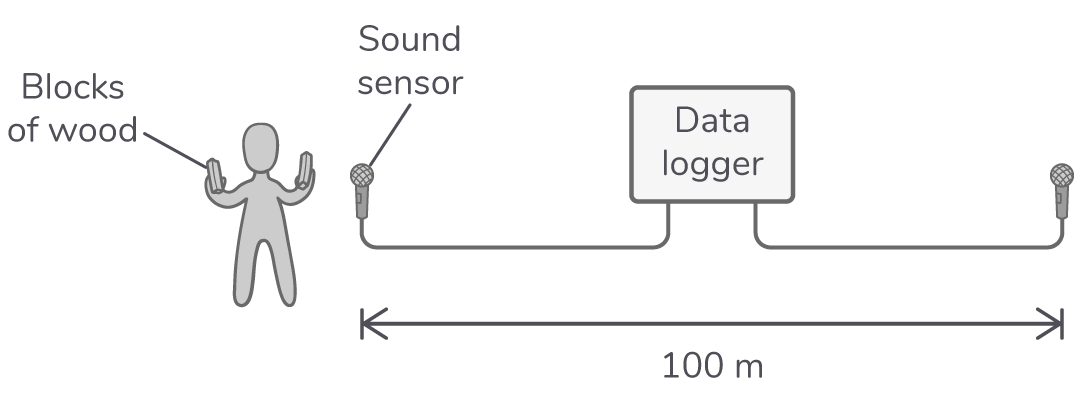
The student's method is below.
- Measure a distance of 100 m using a trundle wheel or measuring tape.
- Place two wooden blocks at one end of the 100 m.
- Place one sound sensor next to the wooden blocks and another at the 100 m mark.
- Connect sound sensors to a data logger to record time.
- Make loud sound by banging two wooden blocks together.
- Record time taken for sound to travel between the two sound sensors.
- Increase distance in 20 m increments up to 300 m.
- Plot a graph of distance vs time.
State the name of the sound sensor used to convert the sound wave into an electrical signal.
State the independent variable in the student's investigation.
Plot a graph of the distance vs time for the student's results.
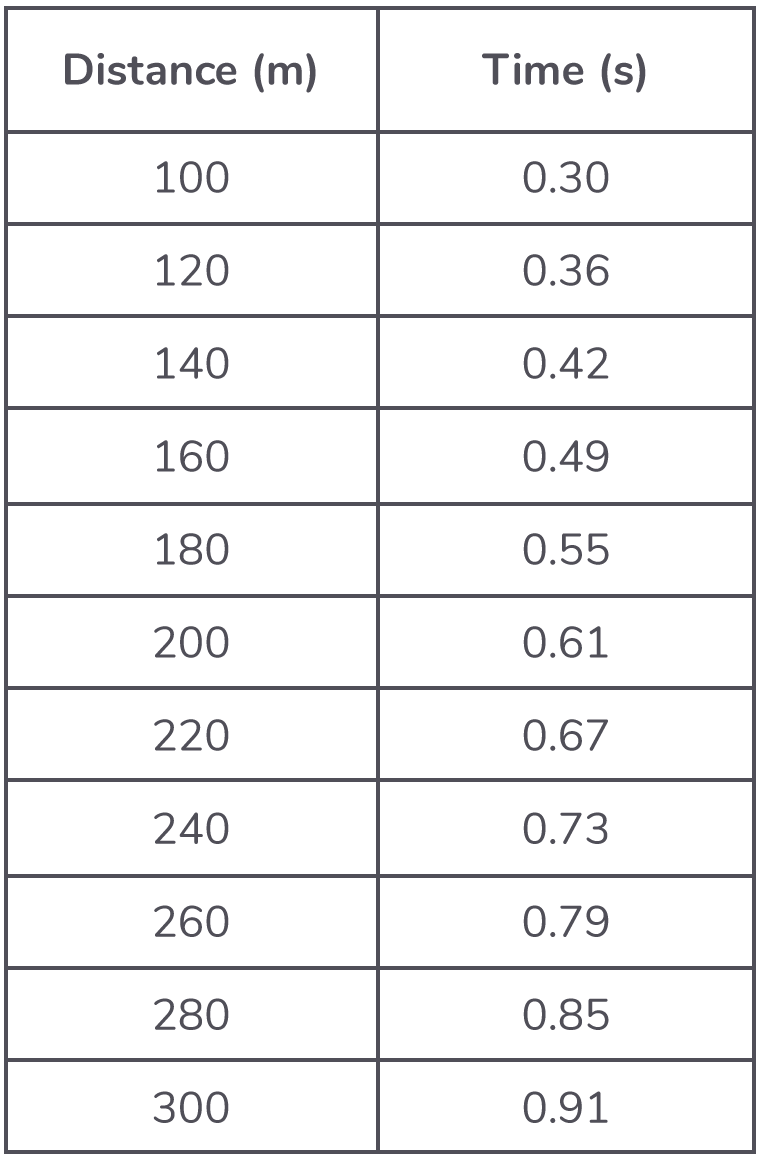
The gradient of the graph can be used to find the speed of sound.
Calculate the gradient of the graph.
The speed of sound is equal to 1 divided by the gradient.
Calculate the speed of sound in air using the gradient calculated in part d). Give your answer in m/s to the nearest whole number.
The accepted value for the speed of sound in air is 340 m/s.
Describe one way the student could improve the accuracy of their results without changing the equipment used.
The student used data logging equipment to record their values for time.
Explain why the student used data logging equipment instead of a handheld stopwatch.
This question is about sound waves.
The range of human hearing is 20 Hz - 20 kHz.
Which of the following would a human not be able to hear?
which of the following is a correct property of sound waves?
State one use of ultrasound.
State one use of infrasound.
This question is about the sound emitted by tuning forks.
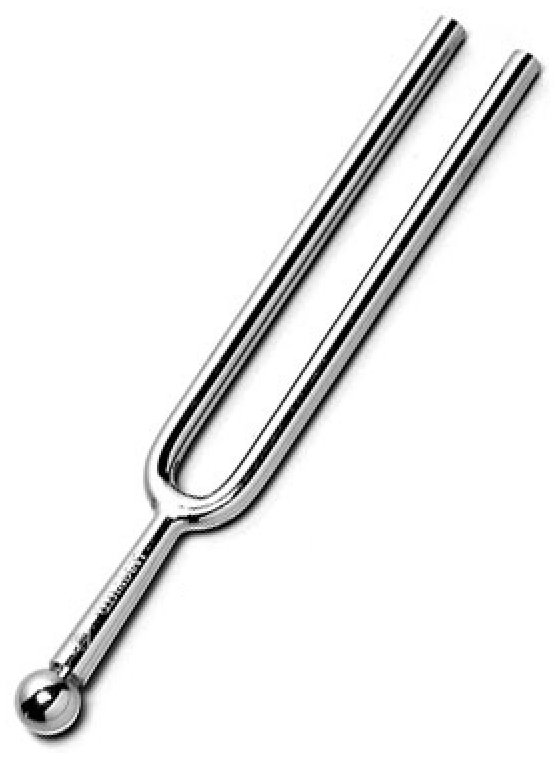
When the tuning fork is struck, a sound wave is produced.
Describe how the vibrating fork causes a sound wave to travel through the air.
A student has a selection of tuning forks of varying lengths.
They strike the tuning fork on the edge of the bench and hold it near the microphone.
The student recorded the length and frequency in the table below.
Plot a graph of length against frequency.
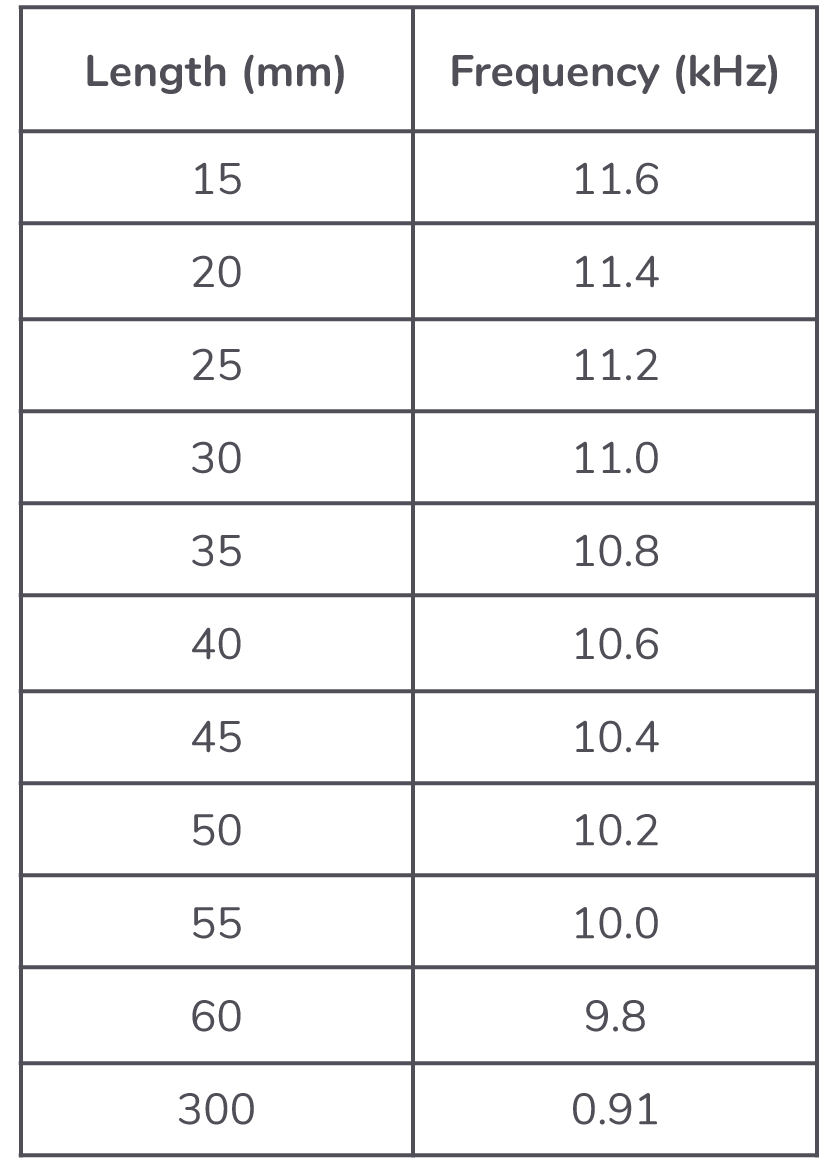
Describe the relationship between the length of the tuning fork and the frequency of the sound wave produced.
The frequencies of the tuning forks being tested were all audible to humans.
State the frequency range of human hearing.
This question is about sound waves.
Describe a similarity and a difference between sound waves and visible light.
Match the frequency to the correct use.
This question is about the use of sound waves to determine the depth of the sea.
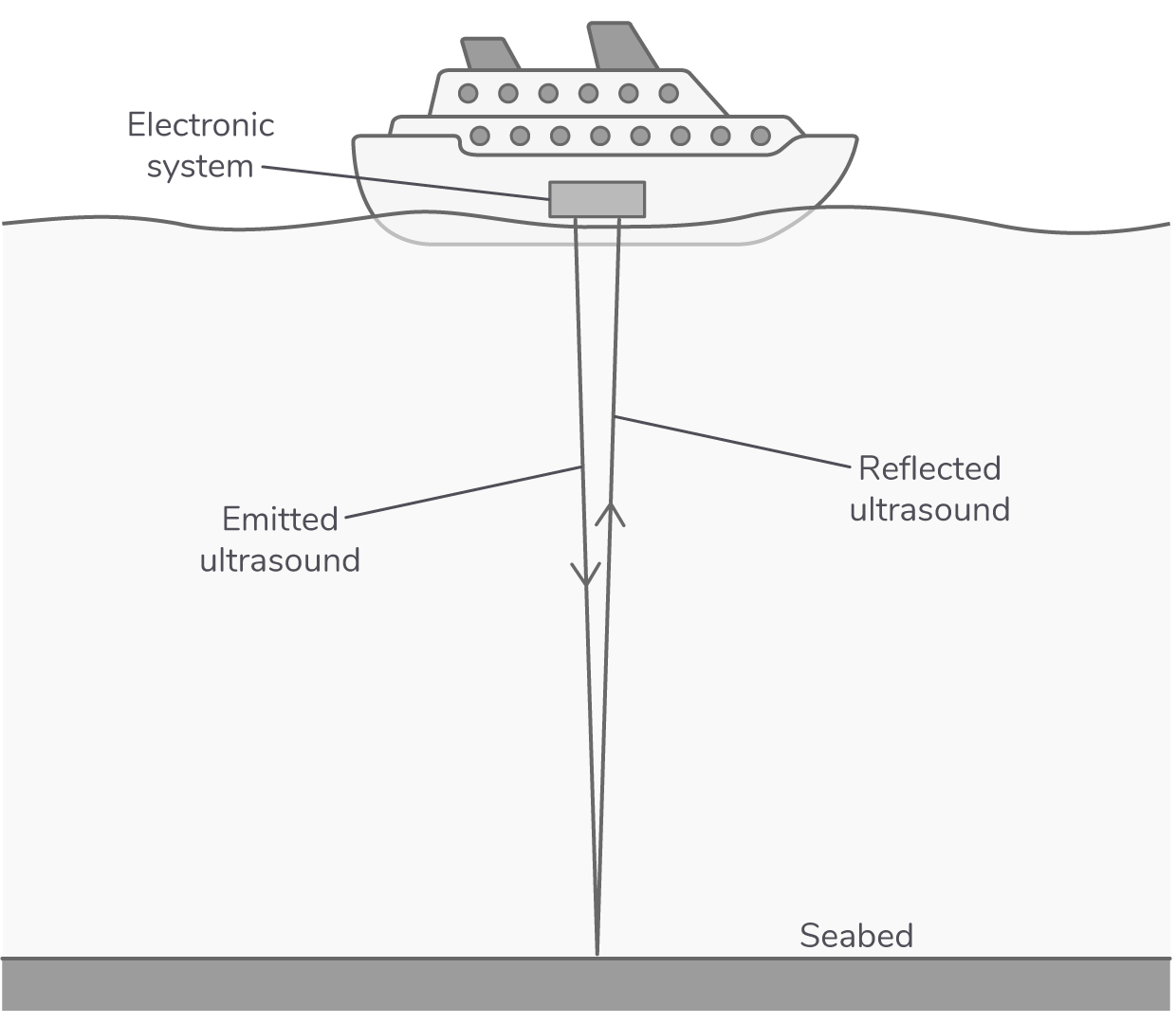
Which of the following is a possible frequency for the ultrasound emitted from the boat?
Describe how ultrasound is used to determine the depth of the sea.
An ultrasound pulse is emitted from the boat at A, and detected a short period later at B.
Use the diagram below to determine the time between the ultrasound being emitted and detected by the boat.
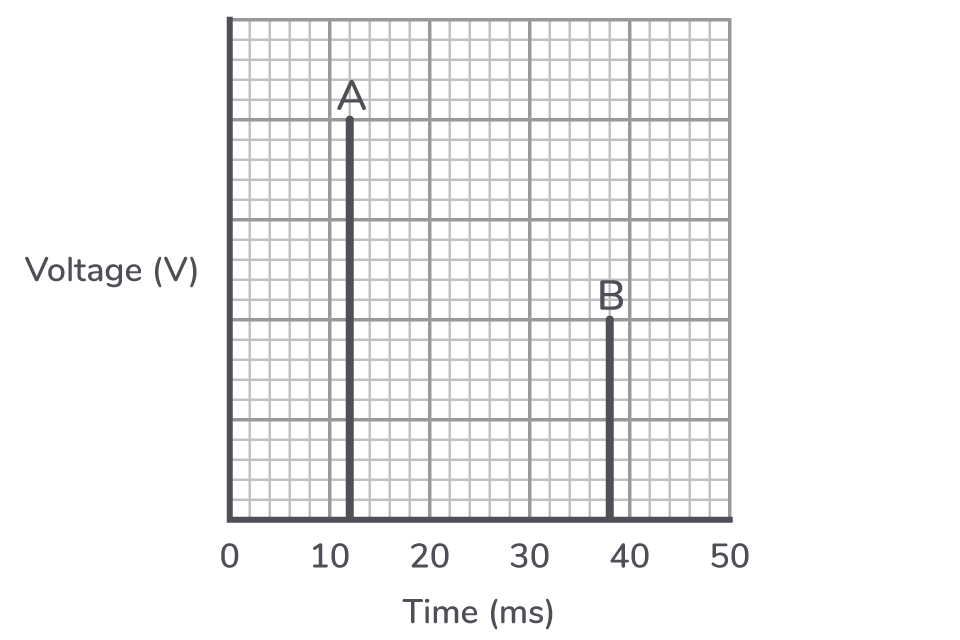
The speed of ultrasound in water is 1.5 km/s.
Calculate the current depth of water under the boat.