2.4 - Reducing Unwanted Energy Transfers
Reducing the energy wasted by friction
- When an object moves, a frictional force usually acts against it.
- Work is done against friction, transferring energy to the thermal energy stores of the moving parts and surroundings, where it spreads out.
Lubrication
- A lubricant (usually a liquid such as oil) is placed between surfaces that rub together.
- It coats the surfaces, keeping them apart so they slide past each other with less friction, wasting less energy as thermal energy.
Streamlining
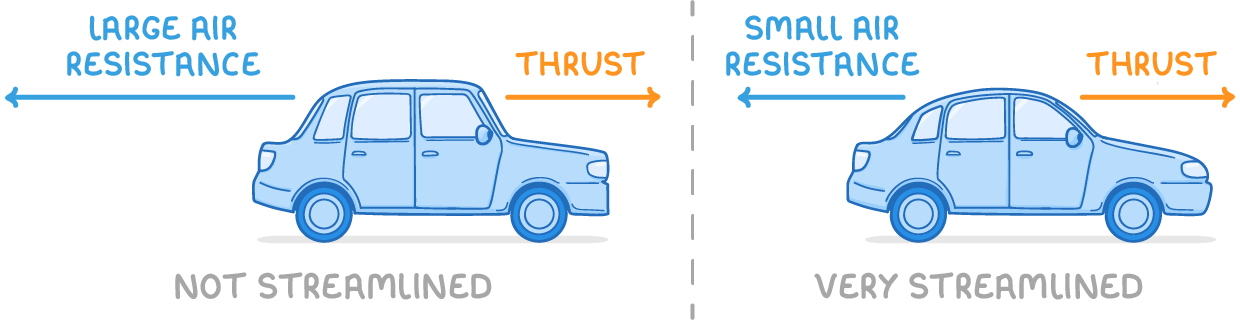
- When an object moves through air or water, fluid resistance (drag, or air resistance in air) transfers energy to thermal energy stores.
- Giving the object a smooth, streamlined shape lets the fluid flow past more easily, reducing drag.
Thermal insulation in buildings
- A building loses energy to its cooler surroundings by conduction, convection, and radiation:
- Conduction through walls and windows
- Convection via moving warm air
- Radiation emitted from warm surfaces
- The bigger the temperature difference between the building and its surroundings, the faster energy is transferred.
- Thermal insulation slows these transfers, keeping the building warm for longer and reducing heating needs.
- Most insulation works by trapping a layer of air: air has a very low thermal conductivity, so it conducts poorly, and trapped air can't circulate to form convection currents.
Common methods of insulating a home
- Loft insulation - Fibreglass or mineral wool traps air, reducing heat loss through the roof by conduction and convection.
- Cavity wall insulation - Foam or mineral wool fills the gap between outer and inner walls, trapping air to reduce conduction and convection.
- Double glazing - Two glass panes with an air gap between them reduce conduction and convection through windows.
- Draught excluders - Strips around doors and windows stop warm air escaping and cold air entering, reducing convection.
- Hot water tank jacket - An insulating layer reduces conduction from the tank.
- Thick curtains - Fabric layers over windows reduce conduction and convection.
Wall thickness and thermal conductivity
The thicker the walls and the lower their thermal conductivity, the slower energy transfers through them, so the building cools more slowly.
TermDefinition
LubricantA substance, such as oil or grease, placed between surfaces to reduce friction.
Thermal insulationMaterial that slows the transfer of heat by conduction, convection, and radiation.
Key points to remember
How were these notes?