3.8 - Dangers of Electromagnetic Radiation
Why high-frequency EM radiation can harm the body
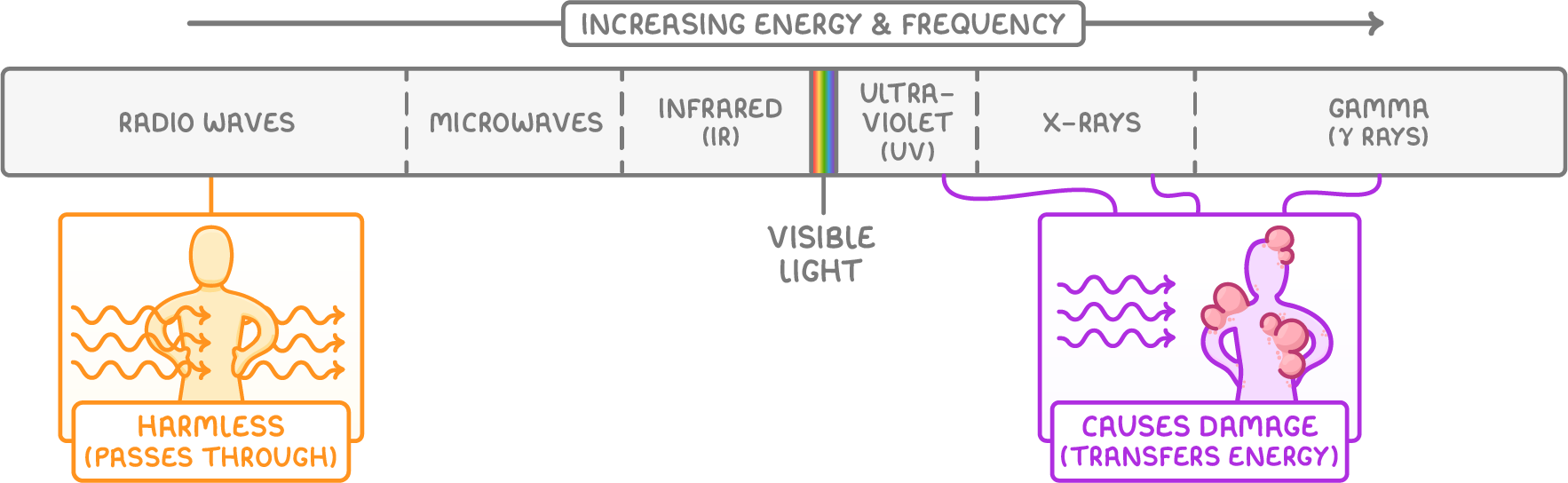
- Whether EM radiation is harmful depends on how much energy it transfers to living tissue.
- The higher the frequency, the more energy the radiation carries, and generally the more harmful it is.
- Low-frequency radiation (e.g. radio waves) passes straight through soft tissue without being absorbed.
- High-frequency radiation (e.g. ultraviolet, X-rays, gamma rays) transfers large amounts of energy and can cause severe damage.
Ultraviolet, X-rays and gamma rays are ionising
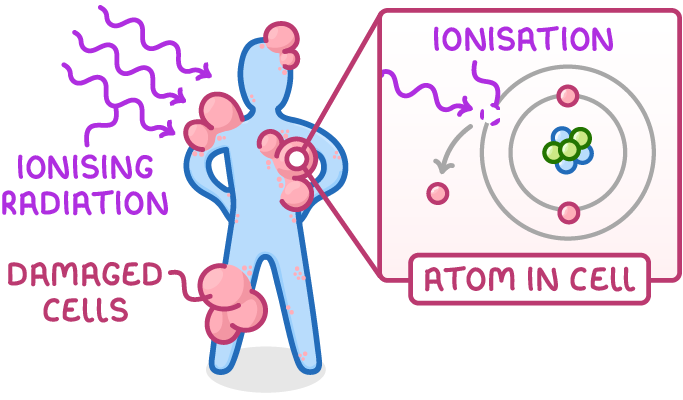
- These are types of ionising radiation: they carry enough energy to knock electrons off atoms, damaging living cells.
- Ultraviolet (UV) - Absorbed by the skin, where it damages surface cells. It can cause premature ageing of the skin, skin cancer, and eye damage including blindness.
- X-rays and gamma rays - Carry even more energy than UV. They pass through the skin and are absorbed by deeper tissues, damaging cells throughout the body and leading to mutations and cancer.
Lower-frequency hazards - Microwave and infrared
- Radiation doesn't have to be ionising to be harmful. Microwaves and infrared can damage the body by heating it.
- Microwaves - Have a similar frequency to the vibrations of many molecules, causing internal heating of body cells.
- Infrared (IR) - Absorbed by the surface of the skin, where high exposure causes skin burns.
Protecting yourself from harmful EM radiation
- Microwaves - Metal shielding in microwave ovens stops microwaves escaping and reaching the user.
- Infrared - Insulating materials reduce the amount of infrared reaching the skin to prevent burns.
- Ultraviolet - Wearing sunscreen with UV filters and staying out of strong sunlight protects the skin from UV damage.
- Gamma rays - Radioactive sources are stored in lead-lined boxes. During medical exposure, the exposure time is kept as short as possible.
TermDefinition
Ionising radiationRadiation that has enough energy to knock electrons out of atoms, turning them into ions.