1.12 - Reaction Times
Reaction time and the factors that affect it
- Reaction time is how long a person takes to respond to an event - for example, seeing a hazard and braking.
- A typical human reaction time is between 0.2 s and 0.9 s.

The reaction time is the delay between spotting the lion and starting to run.
Factors that increase reaction time
- Tiredness
- Drugs
- Alcohol
- Distractions (such as using a mobile phone or talking to passengers)
Reaction time and driving
- An alert driver's reaction time in a real driving situation is around 1 s.
- The longer the reaction time, the further the vehicle travels before the driver reacts, which increases the thinking distance.
Measuring reaction times with the ruler drop test
- Reaction times are so short that a stopwatch can't measure them accurately.
- Two common methods:
- A computer-based test (e.g. clicking a mouse when a screen changes colour).
- The ruler drop test.
Method - Ruler drop test
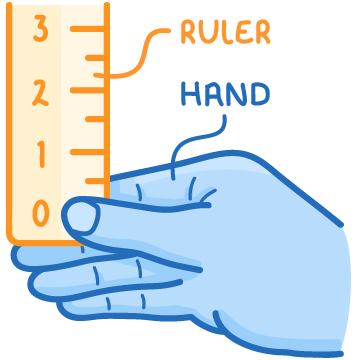
- Sit with your forearm resting on the edge of a table. Another person holds a ruler vertically between your thumb and forefinger, lined up with the zero mark.
- Without warning, the person drops the ruler. You catch it between your thumb and finger as quickly as possible.
- Read the distance on the ruler at the top of the thumb. The greater this catch distance, the longer the reaction time.
Improving the quality of the results
- Repeat the test multiple times, discard anomalies, and calculate a mean catch distance.
- Keep control variables the same each time (same ruler, same drop height, same person dropping it).
TermDefinition
Reaction timeHow long a person takes to respond to an event.
Key points to remember
How were these notes?