Heat Transfers - exam practice
Heat Transfers
Question 1 of 3
A student is investigating the properties of 4 different metals.
A metal drawing pin is attached to one end of the rods using a small amount of Vaseline.
The rods are placed on a tripod and heated at one end using a Bunsen burner.
The students starts a timer when the Bunsen burner is placed under the rods and records how long it takes for each pin to drop.
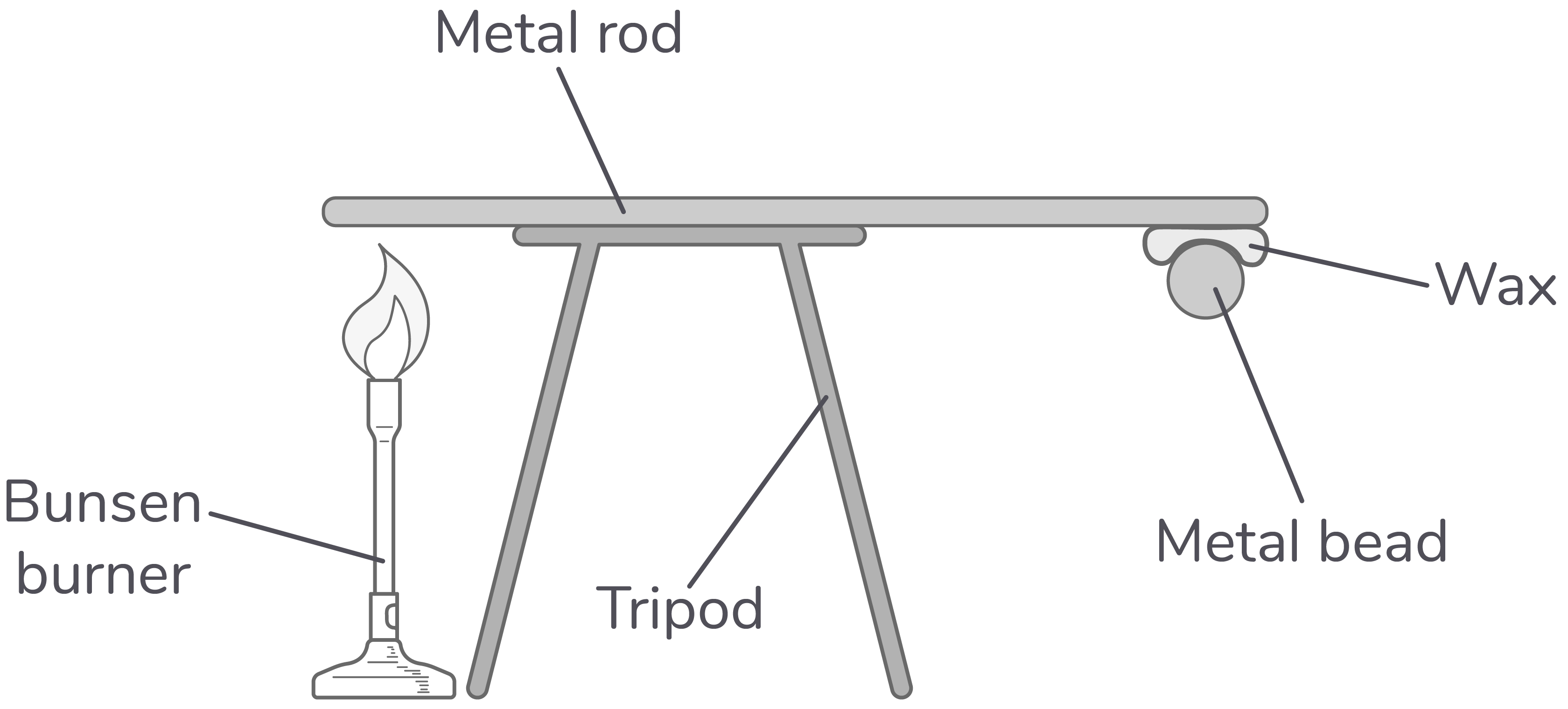
What is the independent variable in the student's investigation?
What is the dependent variable in the student's investigation?
The table below shows the student's results.
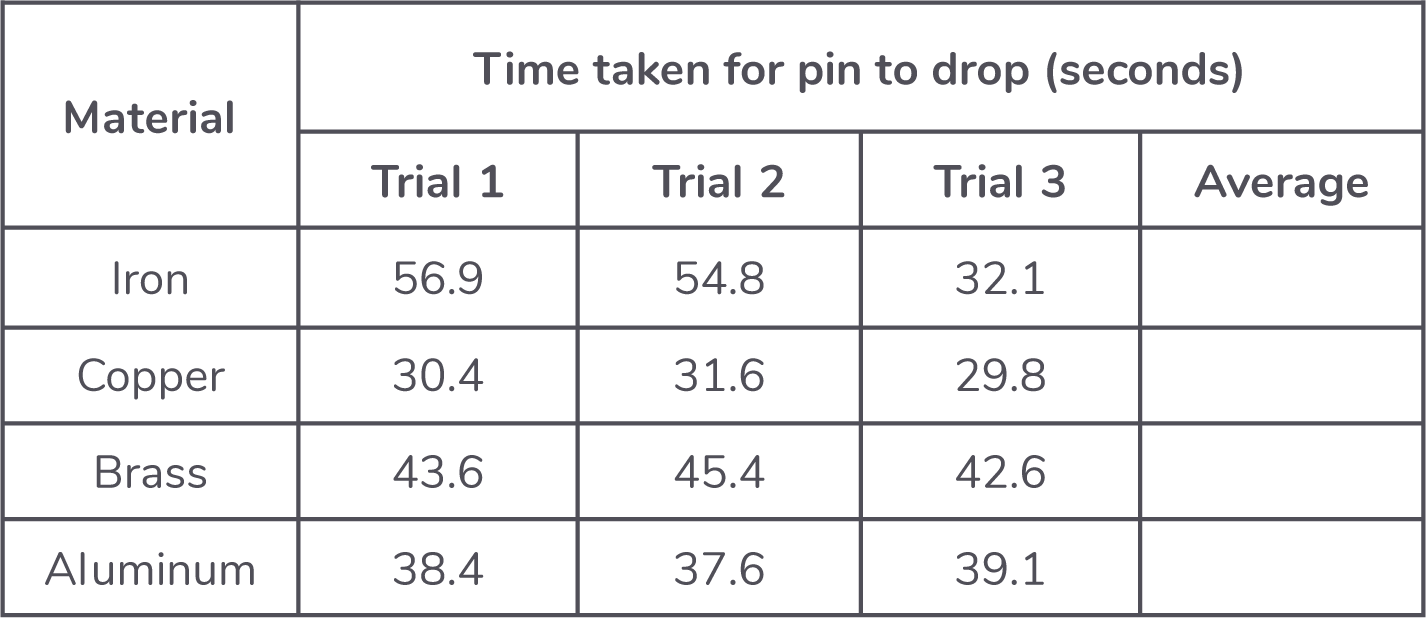
The student's data contains an anomalous result. Which result is an anomaly?
Calculate the average time taken for the pin to drop for each material.
Plot a bar chart of the student's results.
The student concludes that iron is the best conductor of heat because it has the highest time for the pin to drop.
Is the student correct?
Describe how heat travels along the metal rods to cause the pins to drop.
A factory chimney is used to expel hot gases from an industrial process. The base of the chimney is hotter than the top.
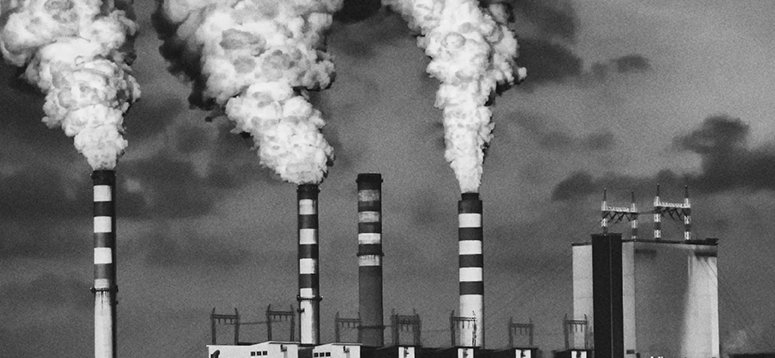
Describe how a convection current forms because of the temperature difference.
When the chimney is not in use, a safety inspector climbs the outside of the chimney to check it isn't damaged.
The inspector notices that the black rings are warmer to the touch than the white rings.
Explain why the black rings are warmer to the touch than the white rings.
This question is about decorative lava lamps.
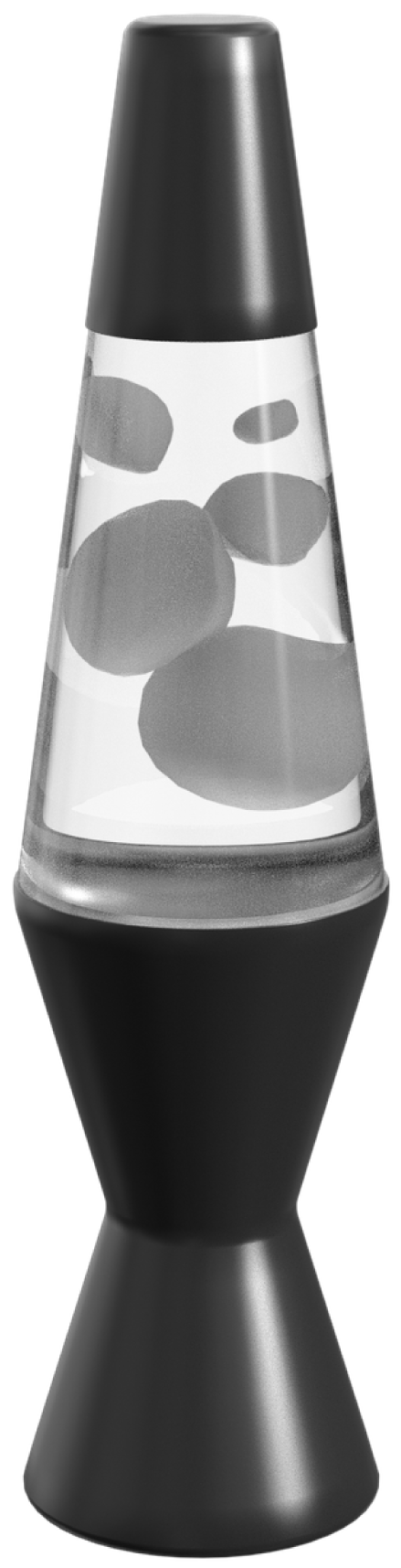
At the base of the lava lamp there is a heater which heats the contents of the lava lamp.
Describe how the arrangement and movement of the wax particles changes as it is heated.
The wax moves up and down in the lava lamp. Using ideas about heat transfer explain why the wax moves up and down in the column.