Motion - exam practice
Motion
Question 1 of 4
This question is about a skydiver.
The graph below shows how the distance fallen by the skydiver varies with time.
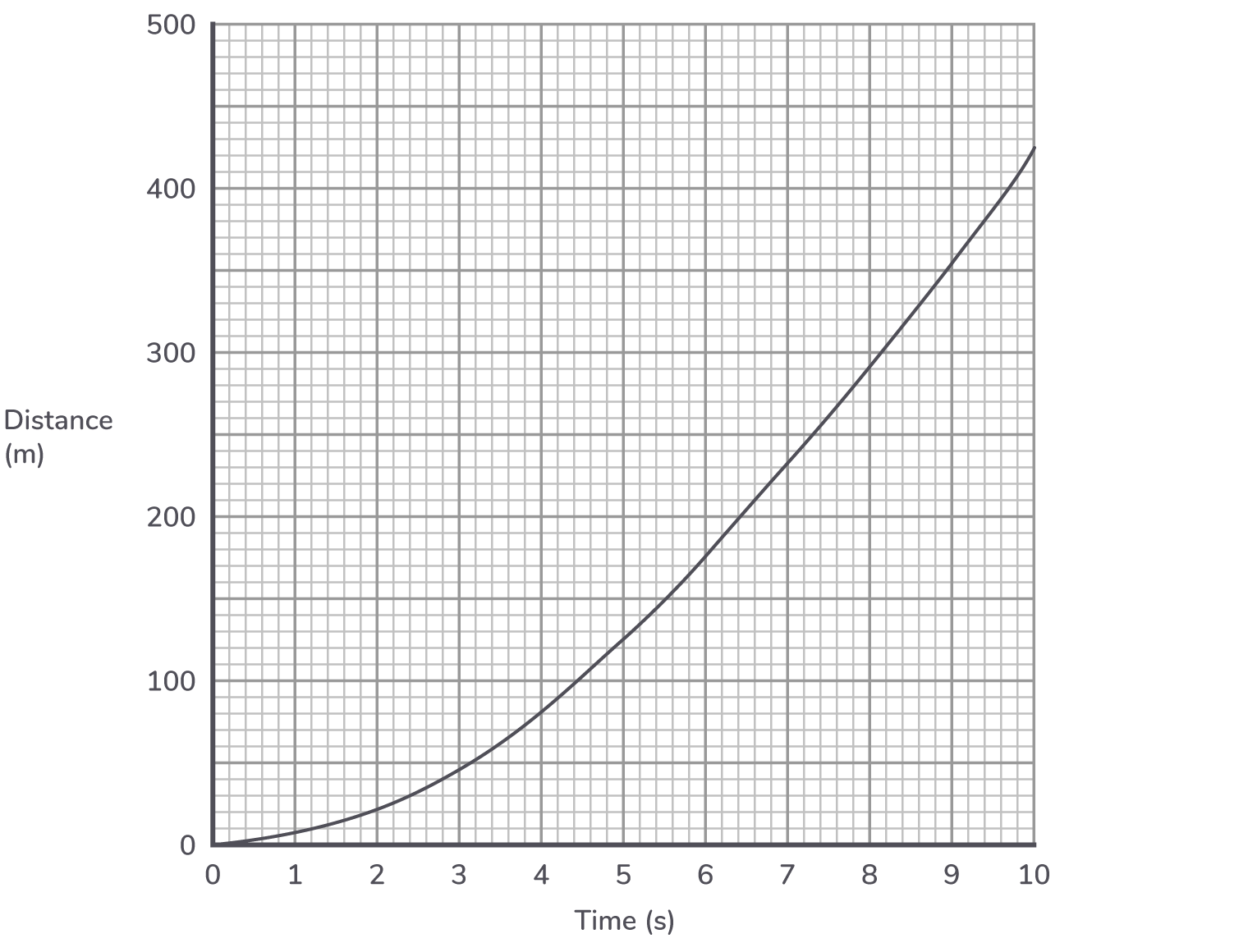
State when the skydiver reach terminal velocity.
Describe how the forces acting on the skydiver vary as they fall.
The skydiver uses a parachute to land safely.
Explain how a parachute allows the skydiver to land safely. Use ideas about forces in your answer.
Calculate the speed of the skydiver between 6 and 10s.
Jack drives to his friends house from home. He stops at the shop for a snack on the way.
The table below shows the details of Jack's journey.
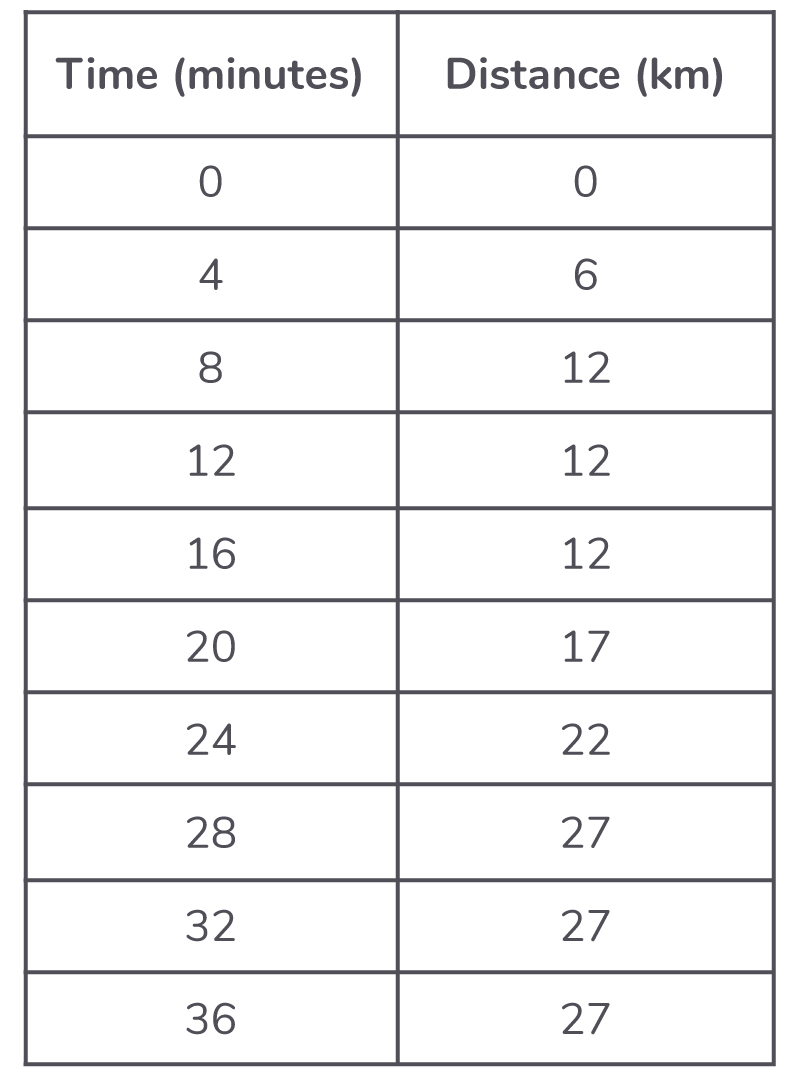
Plot a graph to show Jack's journey to his friends house.
State how long Jack stopped at the shop.
Calculate Jack's speed between 16 and 28 minutes.
Give your answer to 1 decimal place in m/s.
This question is about the bloodhound land speed record jet car.
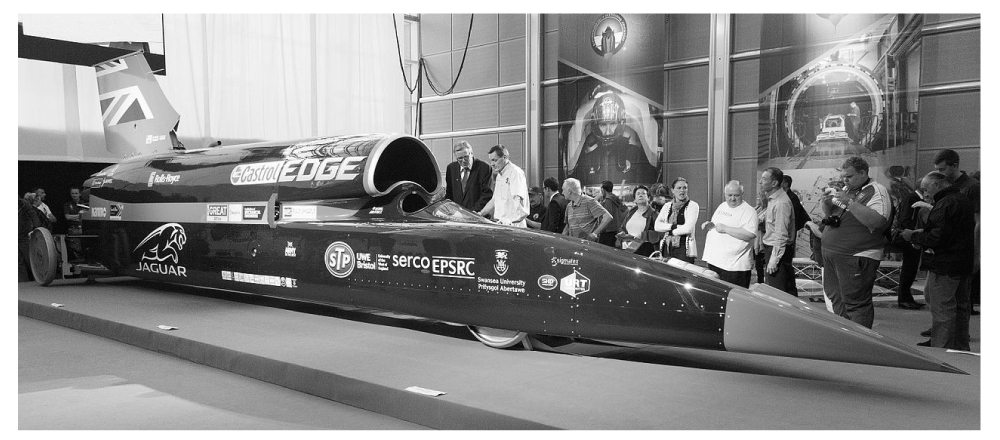
During a test of the car it reached a top speed of 1,300 km/h.
Convert 1,300 km/h to m/s.
The car reached the top speed of 1,300 km/h in 38 s.
Calculate the average acceleration of the car, in m/s2.
Assume the thrust from the engine is constant.
Explain why the car reaches a top speed.
A student is investigating how the motion of a trolley changes as the steepness of the ramp is varied.
The diagram below shows the set up of the equipment.
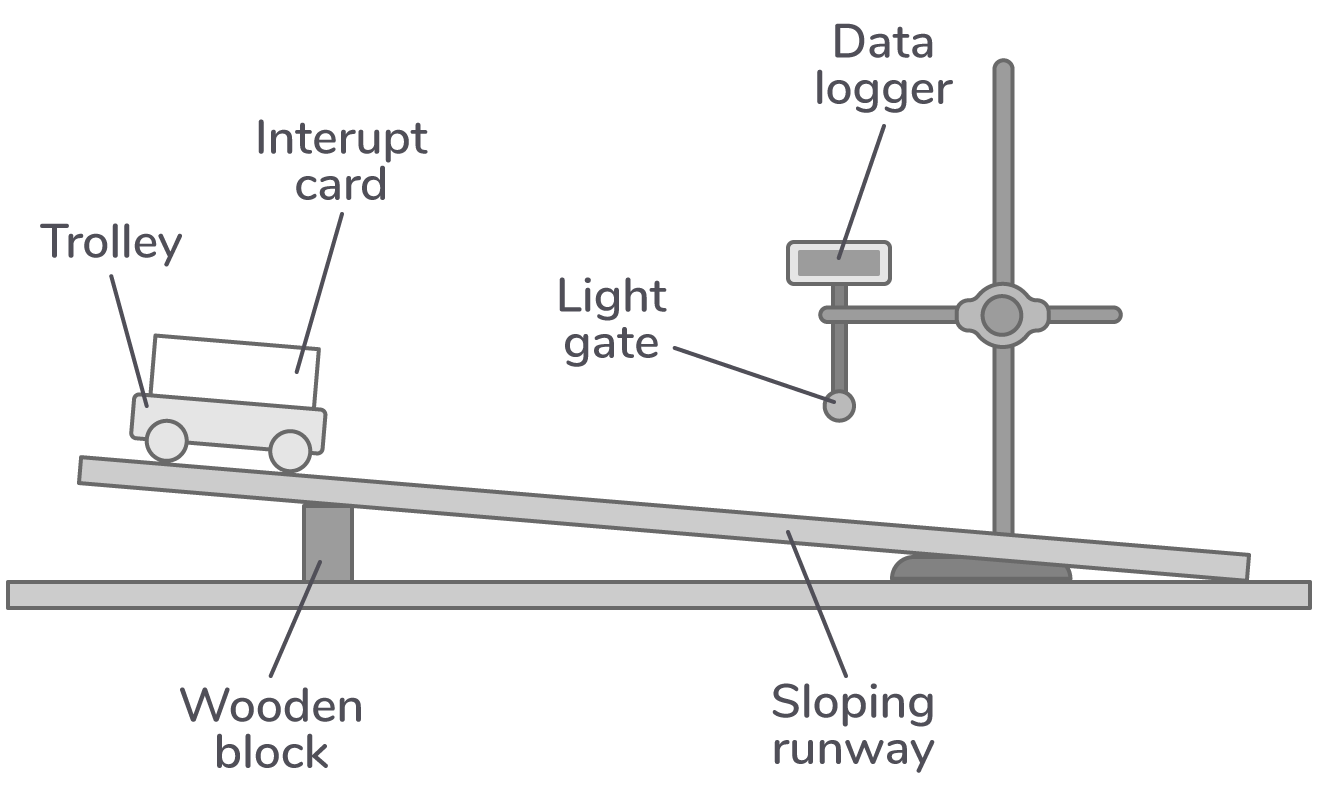
State the independent variable in the student's investigation.
List two control variables for the student's investigation.
The student plotted a graph of starting height against final speed.
Describe the relationship between starting height and final speed.
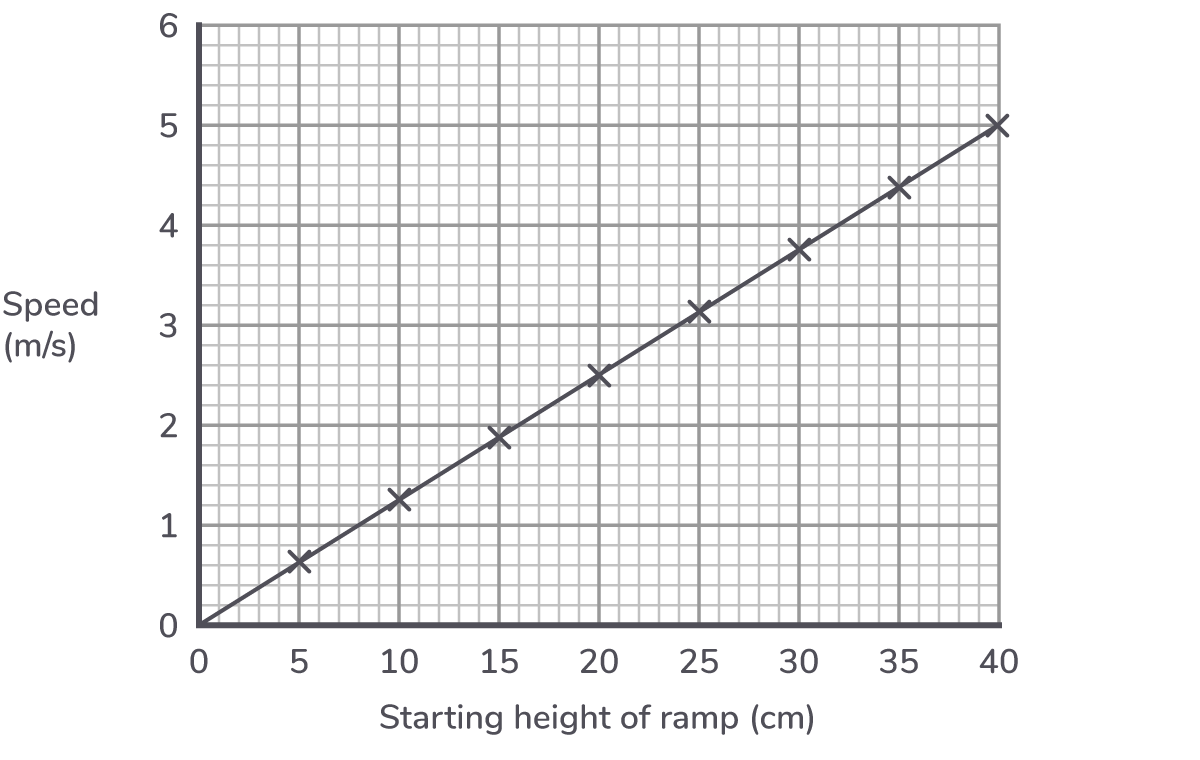
The length of the ramp was 2 m.
Calculate the acceleration of the trolley when the starting height of the ramp was 20 cm.