5.5 - Personality, Motivation & Aggression
Motivation and its role in sports performance
Motivation refers to the level of eagerness or drive a person has to engage in an activity, particularly in sport. It acts as the internal force that pushes individuals to persist, especially during challenging moments, and stems from a desire to achieve success.
Key aspects of motivation in sport
- Drive during difficulties - Motivation helps maintain effort when tasks become tough
- Desire for success - It fuels the ambition to achieve success
Types of motivation: intrinsic and extrinsic
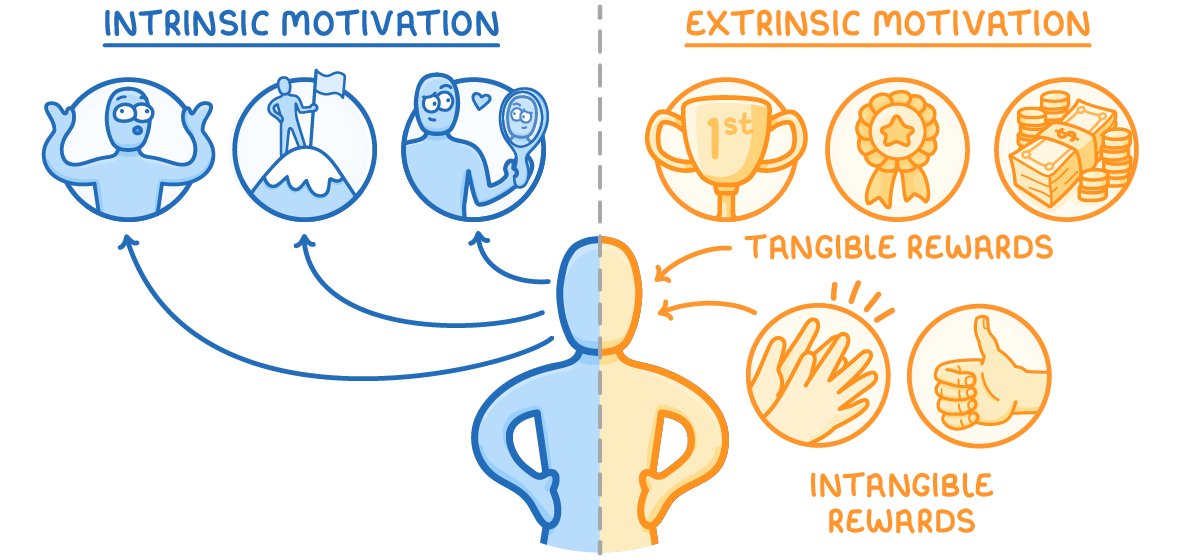
Motivation can be categorised into two main types based on its source: intrinsic, which comes from within the individual, and extrinsic, which originates from external factors.
Intrinsic motivation
Intrinsic motivation arises from personal satisfaction and positive emotions gained directly from participating in physical activity or sport. It includes feelings of enjoyment, pride, and increased self-esteem that come from the activity itself. An athlete might feel a sense of accomplishment from mastering a new skill, like perfecting a tennis serve, without needing external rewards.
Extrinsic motivation
Extrinsic motivation is driven by external rewards or recognition provided by others or outside sources. These rewards can be divided into tangible and intangible forms.
Types of extrinsic rewards:
- Tangible rewards - Items that can be physically touched, such as trophies, medals, or money won in a competition
- Intangible rewards - Non-physical forms of recognition, including applause from spectators or praise from a coach
A footballer might be motivated by the prospect of earning a team award or hearing cheers from the crowd after scoring a goal.
Effectiveness of different types of motivation
Different types of motivation vary in their long-term impact on sports participation and performance. Intrinsic motivation is generally considered more powerful for sustained engagement, while extrinsic motivation can provide additional boosts but has limitations when used alone.
Why intrinsic motivation is often more effective
- Long-term commitment - People are more likely to persist in a sport and exert maximum effort if they genuinely enjoy it, leading to continued participation even without rewards
Role and limitations of extrinsic motivation
- Positive effects - External rewards can enhance self-confidence and encourage repeated strong performances by making individuals feel valued
- When it works best - Extrinsic motivation is most effective when combined with existing intrinsic motivation, as it builds on personal enjoyment
- Potential drawbacks - If someone dislikes a sport, external rewards alone are unlikely to inspire hard work or regular involvement; additionally, over-reliance on extrinsic rewards may diminish intrinsic motivation, causing people to depend solely on outside incentives to feel driven
Aggression in sport and enhancing performance
Aggression in sport is not always about violence; when channelled appropriately, it involves assertive behaviour that can boost performance by providing a competitive edge. It represents a focused release of energy aimed at achieving a goal, such as gaining an advantage over opponents.
Benefits of aggression in sport
- Performance improvement - Controlled aggression can increase intensity and determination, helping athletes overcome obstacles during competition
- Non-violent nature - It focuses on strategic assertiveness rather than harm, making it a positive tool for success in various sports
Forms of aggression: direct and indirect
Aggression can manifest in two primary forms depending on whether it involves physical contact: direct aggression, which includes interaction with others, and indirect aggression, which targets an object instead. Both forms can be used constructively to gain advantages in sport.
Direct aggression
Direct aggression involves physical contact with another person to achieve a sporting objective. It requires bodily interaction, often in team or contact sports. In rugby, players might push against opponents in a scrum to secure possession of the ball, using strength and force directly against the opposing team.
Indirect aggression
Indirect aggression avoids physical contact with others and instead directs energy towards an object to gain an edge. It focuses on power and precision applied to equipment or the playing item. A golfer might use indirect aggression when driving the ball with maximum force towards the green, channeling intensity into the swing without contacting other players.
Personality types: introverts and extroverts
Personality influences sport preferences, with individuals often falling into categories of introverts or extroverts, though most people exhibit traits from both. Introverts tend to be reserved and prefer solitary activities, while extroverts are outgoing and thrive in social settings. These traits affect the types of sports that suit different personalities.
Introverts
Introverts are typically shy, quiet, and thoughtful individuals who enjoy solitude.
Characteristics of introverts in sport:
- Preferred sports - They often choose individual activities that can be performed alone
- Suitable features - Sports requiring fine skills (precise, controlled movements), high concentration, and low arousal (calm states) align well with their traits
- Examples - Archery, snooker, and athletics, where focus and independent practice are key
Extroverts
Extroverts are sociable, talkative people who prefer being around others and may become bored when alone.
Characteristics of extroverts in sport:
- Preferred sports - They typically enjoy team-based activities that involve interaction
- Suitable features - Sports that are fast-paced, require gross skills (broad, powerful movements), and involve low concentration (allowing for quick decisions) match their energy
- Examples - Hockey, rugby, and football, which offer group dynamics and rapid action
How personality influences sport preferences
Personality traits guide the selection of sports that best match an individual's natural inclinations, leading to greater enjoyment and success. Introverts and extroverts gravitate towards activities that align with their social preferences and required levels of arousal, concentration, and skill type.
This alignment helps individuals stay motivated and perform better, as the sport complements their inherent traits rather than conflicting with them.