6.2 - Sport & Money
Definition and key elements of commercialisation
Commercialisation refers to the process of managing and promoting sport primarily to generate profit.
Key elements of commercialisation
- Profit-oriented management - Sports are organised and run in ways that prioritise financial gains, often through partnerships with businesses and broadcasters
- Global reach - Advances in technology have expanded audiences worldwide, a process known as globalisation of sport, making sports more accessible and valuable for commercial purposes
- Revenue sources - Main income streams include ticket sales, merchandise, and broadcasting rights, which attract large audiences and create opportunities for further monetisation
Roles of sponsorship and media
Sponsorship and media are central to commercialisation, providing the financial and promotional support that drives profit in sport. They work together to increase visibility and generate income, but each has distinct functions.
Sponsorship
Sponsorship is when companies provide funds, equipment, clothing, footwear, or facilities to athletes, teams, or events in exchange for promotional benefits. This could include logo placement on kits or advertising during events, helping sponsors reach target audiences effectively.
Media
Media includes television, radio, newspapers, and online platforms that pay for rights to cover sports. They broadcast events to wide audiences, often through subscription services or free-to-air channels. Social media platforms allow fans to follow athletes in real-time, boosting engagement and providing additional advertising spaces for sponsors.
The golden triangle
Sport, media, and sponsorship form a mutually dependent relationship, often called the "golden triangle." Each element supports the others, creating a network that boosts commercial success but also introduces complexities.
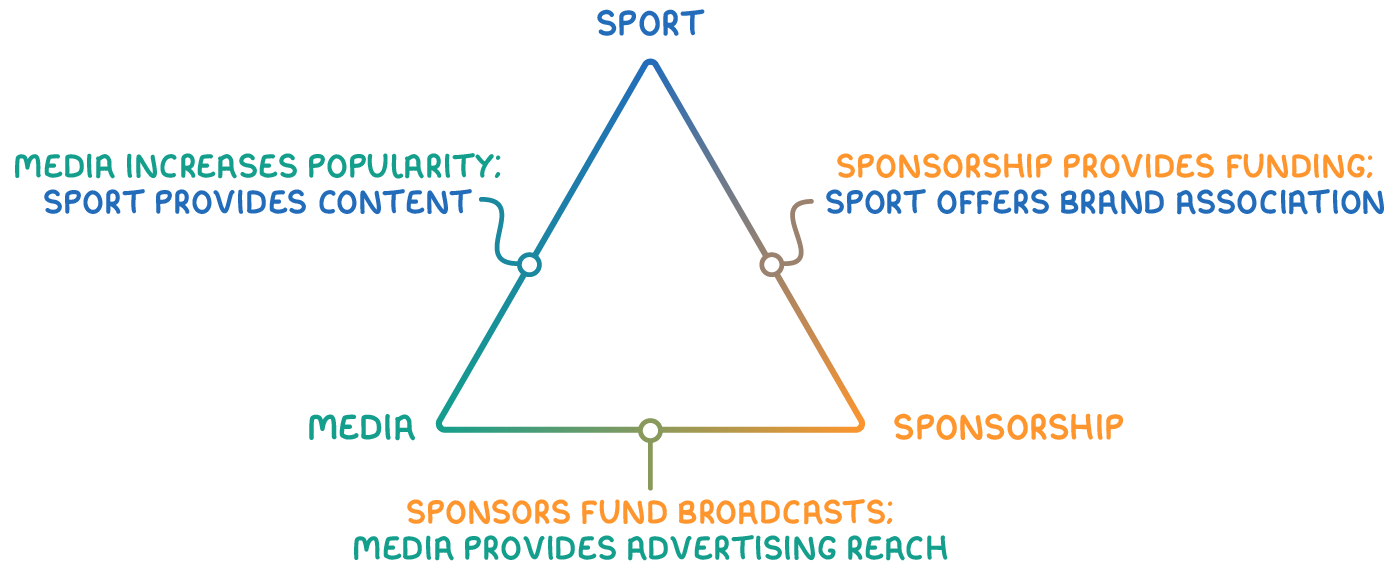
How the elements depend on each other
- Sport benefits from media and sponsorship - Media coverage increases popularity, while sponsorship provides funding for improvements
- Media relies on sport and sponsorship - Compelling sports content attracts viewers, and sponsors fund high-quality broadcasts
- Sponsorship gains from sport and media - Association with popular sports and wide media reach enhances brand visibility
Advantages of commercialisation
Commercialisation brings numerous benefits to different groups involved in sport, enhancing development and enjoyment. These positives stem from increased funding and exposure.
Benefits for sponsors
- Brand association - Linking with successful athletes or teams builds prestige and serves as effective advertising, potentially increasing company profits
Benefits for sports
- Financial investment - Money from media rights and sponsorship supports development at all levels, including grassroots programmes
- Increased participation - Greater awareness through media encourages more people to play or watch, growing the sport's base
Benefits for players
- Professional opportunities - Sponsorship enables full-time training and competitive wages, improving performance
- Role model status - Media coverage can turn athletes into inspirations, motivating others to participate
Benefits for spectators
- Accessibility - Broadcasting on TV, internet, and social media allows global viewing at lower costs than attending live
- Educational value - Media analysis helps fans understand rules and strategies better
Benefits for officials
- Technological support - Funds from commercial deals provide tools like video review systems to aid decision-making
- Professional compensation - Higher wages allow officials to focus on their roles full-time
Disadvantages of commercialisation
While commercialisation offers benefits, it also creates challenges that can affect the integrity and enjoyment of sport. These drawbacks impact various stakeholders and highlight the need for regulation.
Negative effects on sports and players
- Elite focus - Funding often goes to top performers, leaving lower levels under-resourced
- Schedule changes - Media demands can alter match timings or increase game frequency, risking player fatigue and injury
- Rule modifications - Changes like shorter formats (e.g., tennis tiebreakers) prioritise TV appeal over traditional play
Negative effects on spectators
- Reduced live atmosphere - More home viewing decreases ticket sales and stadium energy
- Interruptions during events - Ad breaks in sports with pauses can delay restarts, frustrating those at the venue
Negative effects on officials
- Increased scrutiny - Media analysis of decisions adds pressure, potentially affecting performance
Additional challenges for players and sponsors
- Privacy invasion - Intense media coverage exposes personal lives, turning athletes into celebrities under constant watch
- Contractual obligations - Athletes may need to attend sponsor events or avoid rival products, limiting freedom
- Reputation risks - Poor behaviour or injury can lead to lost deals, damaging both athlete and sponsor images
- Power imbalances - Teams dependent on sponsors might face interference in selections or playing styles
Issues with inappropriate sponsorships
Not all sponsorships align with sport's values, particularly when they promote unhealthy products. This is especially concerning in youth sports, where impressions can influence long-term habits.
Examples of problematic sponsorships
- Tobacco products - Banned in the UK due to health risks, as they contradict sport's healthy image
- Alcohol brands - Permitted but problematic, as they link drinking with fitness, potentially misleading viewers
- Unhealthy food companies - Sponsorship by fast-food firms can encourage poor eating habits, particularly among children who watch sports
Why these are concerning
- Influence on youth - Children exposed to such ads may develop unhealthy associations with sport
- Image conflict - Promoting harmful products undermines sport's role in promoting wellbeing