1.2 - Law Enforcement & Punishment
Key facts and dates
Law enforcement and punishment in medieval England evolved from community-driven systems to more centralised approaches under Norman influence, emphasising deterrence and royal authority. Key developments included the shift from victim compensation to crown penalties and the expansion of harsh physical punishments to maintain social order.
Key facts to remember
- Tithing system – Groups of ten adult men held mutual responsibility for behaviour and law-breaking.
- Hue and cry – Community obligation to pursue suspects after a crime was witnessed.
- Parish constable – Unpaid local official who coordinated peace-keeping efforts from the late medieval period.
- Wergild – Anglo-Saxon compensation payments to victims or families for injuries or deaths.
- 1066 onwards – Norman Conquest leads to harsher punishments, with more capital offenses.
- William I's reform – Abolished wergild, redirecting fines to the king's officials instead of victims.
- Corporal punishments – Included whipping or mutilation for theft or other crimes.
- Capital punishments – Hanging or beheading for serious offenses, aimed at deterrence and retribution.
Community-based law enforcement
In medieval England, maintaining order depended heavily on local communities and authorities working together, as there was no formal police force. This system relied on collective responsibility and loyalty among villagers to prevent and respond to crimes, ensuring that everyone played a role in upholding the law.
Features of community involvement in law enforcement
- Absence of professional policing – Without a dedicated force, communities handled most enforcement through shared duties and immediate action.
- Reliance on local loyalty – Villagers were expected to report crimes and assist in captures, fostering a sense of mutual accountability.
- Integration with authorities – Local officials coordinated efforts, but the system's success hinged on community participation to maintain peace.
The tithing system and hue and cry
Image 1 of 2: The men of a tithing were fined together when one of them committed a crime and escaped
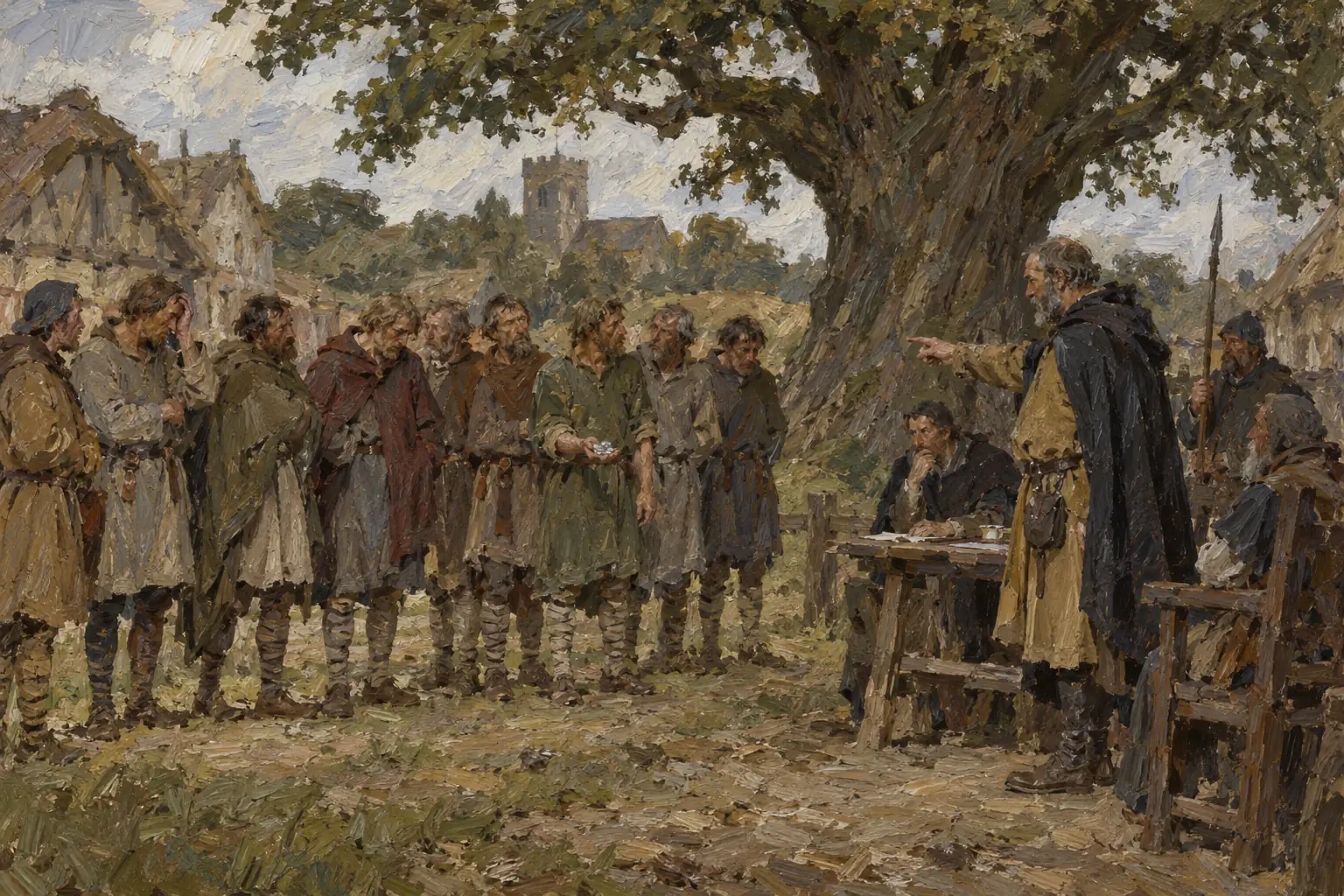
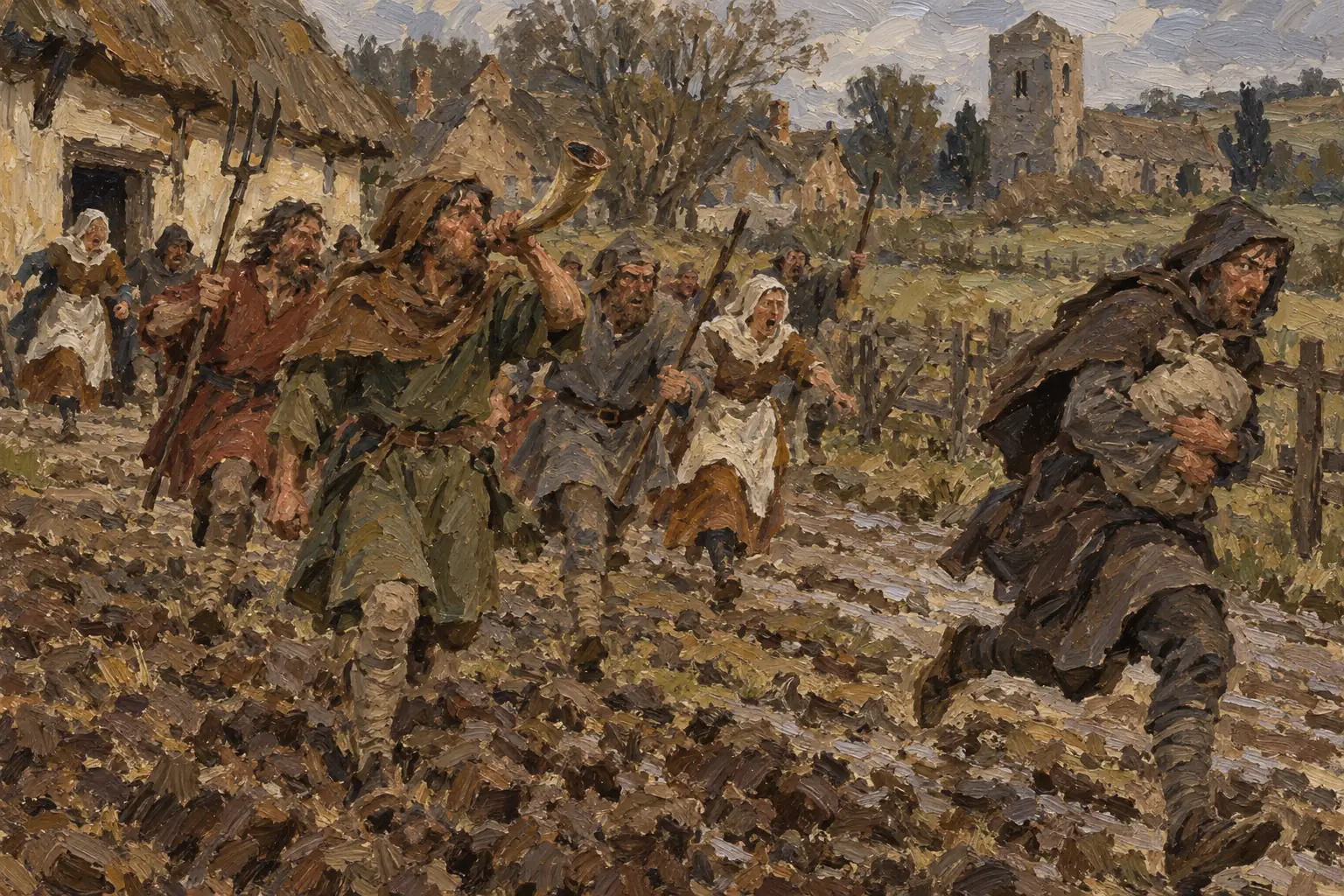
Two key mechanisms underpinned medieval law enforcement: the tithing system and the hue and cry. These approaches ensured that groups of people were accountable for each other and that crimes triggered swift communal responses.
How the tithing system operated
- Group responsibility – Every ten adult men formed a tithing, where members were collectively responsible for each other's conduct and any law-breaking.
- Consequences of failure – If one member committed a crime and escaped, the entire group could face fines or punishment, encouraging vigilance.
- Broader application – This system applied to free men over a certain age, promoting self-regulation within communities.
Process of the hue and cry
- Raising the alarm – Witnesses to a crime would shout for help, alerting the community to join the pursuit.
- Community obligation – All nearby residents were required to chase the suspect, stopping only if the pursuit crossed parish boundaries.
- Purpose and effectiveness – This method aimed to capture offenders quickly, relying on collective effort to compensate for the lack of organised policing.
Role of the parish constable
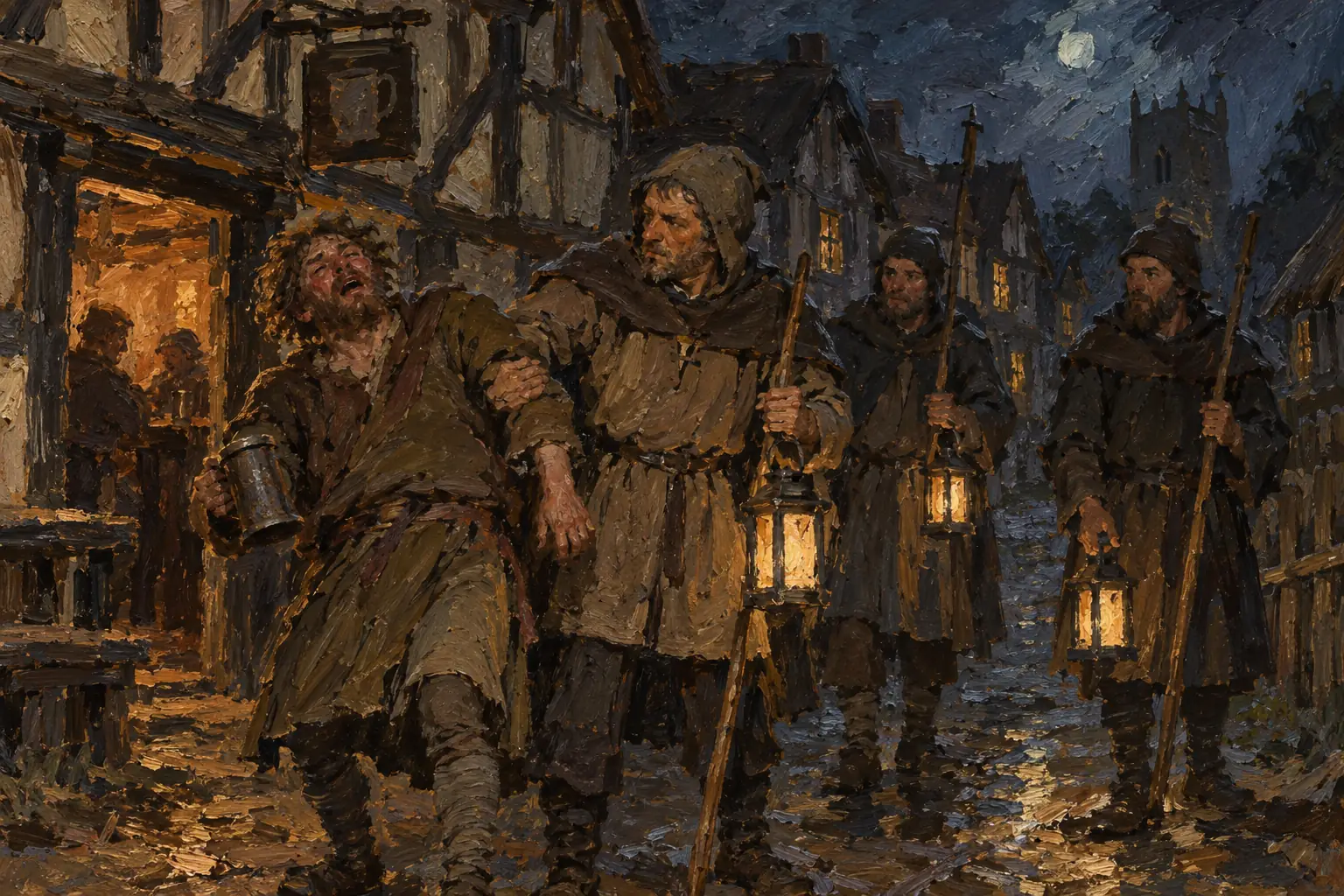
From the later medieval period, the unpaid parish constable emerged as a key figure in local law enforcement. Appointed annually from the community, this role involved organising efforts to maintain order without formal training or payment.
Responsibilities of the parish constable
- Coordinating peace-keeping – The constable directed community responses to disturbances, such as organising watches or resolving minor disputes.
- Enforcing local laws – Duties included arresting suspects, collecting fines, and ensuring compliance with royal or church regulations.
- Limitations of the role – As an unpaid position held by ordinary villagers, it depended on personal initiative and community support, with no professional resources.
Purposes and types of medieval punishments
Image 1 of 2: Public whipping for petty theft
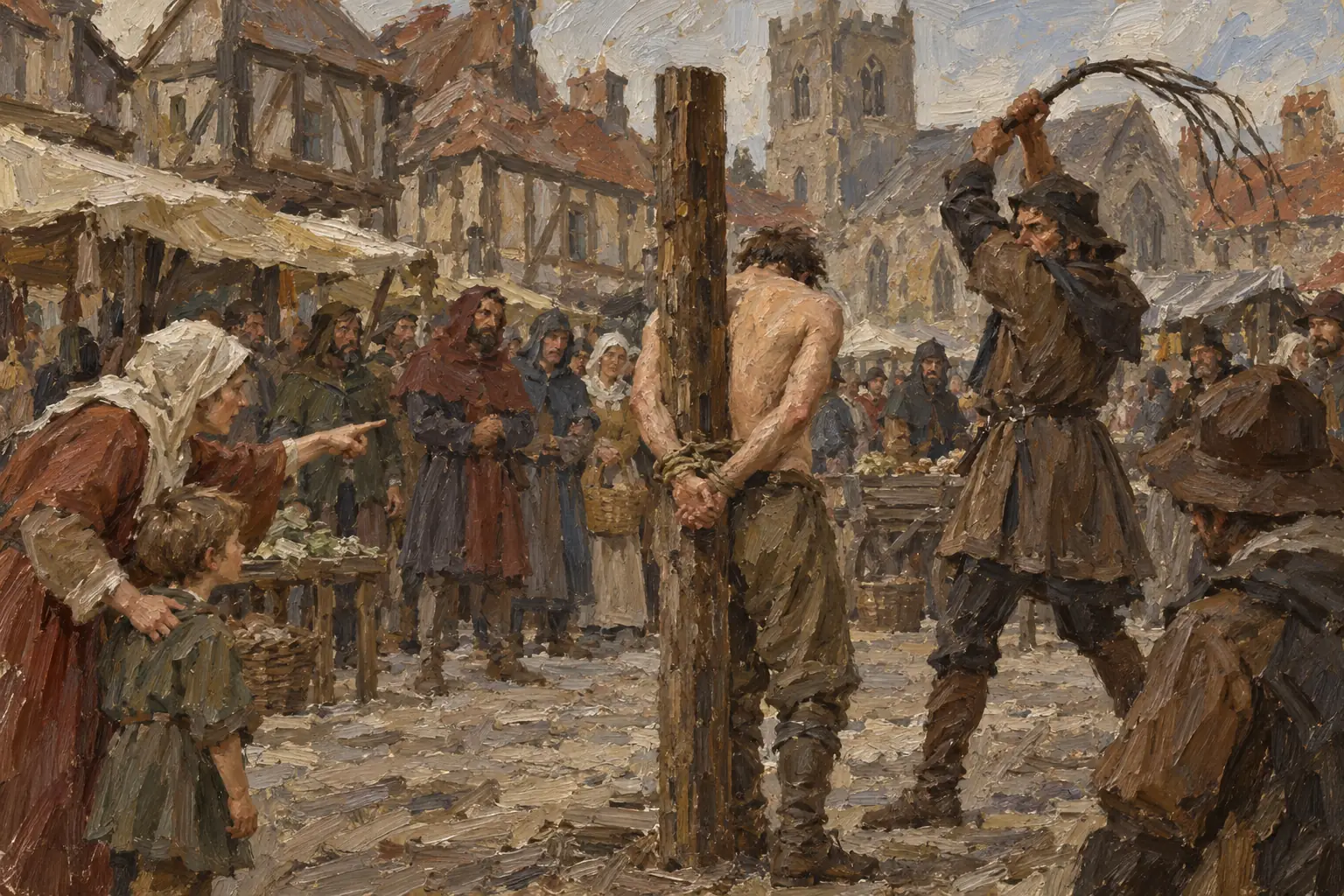
Medieval punishments focused on deterrence, to discourage others from committing crimes, and retribution, to avenge wrongs done to victims or society. Methods varied by offense severity, with physical and financial penalties common to reinforce social order.
Main types of punishments
- Fines for minor offenses – Monetary payments were frequent, such as the Anglo-Saxon wergild system, where compensation went to victims or their families for injuries or deaths.
- Corporal punishments – Physical penalties like whipping for minor theft or mutilation, such as severing a hand for repeated stealing, served as visible warnings.
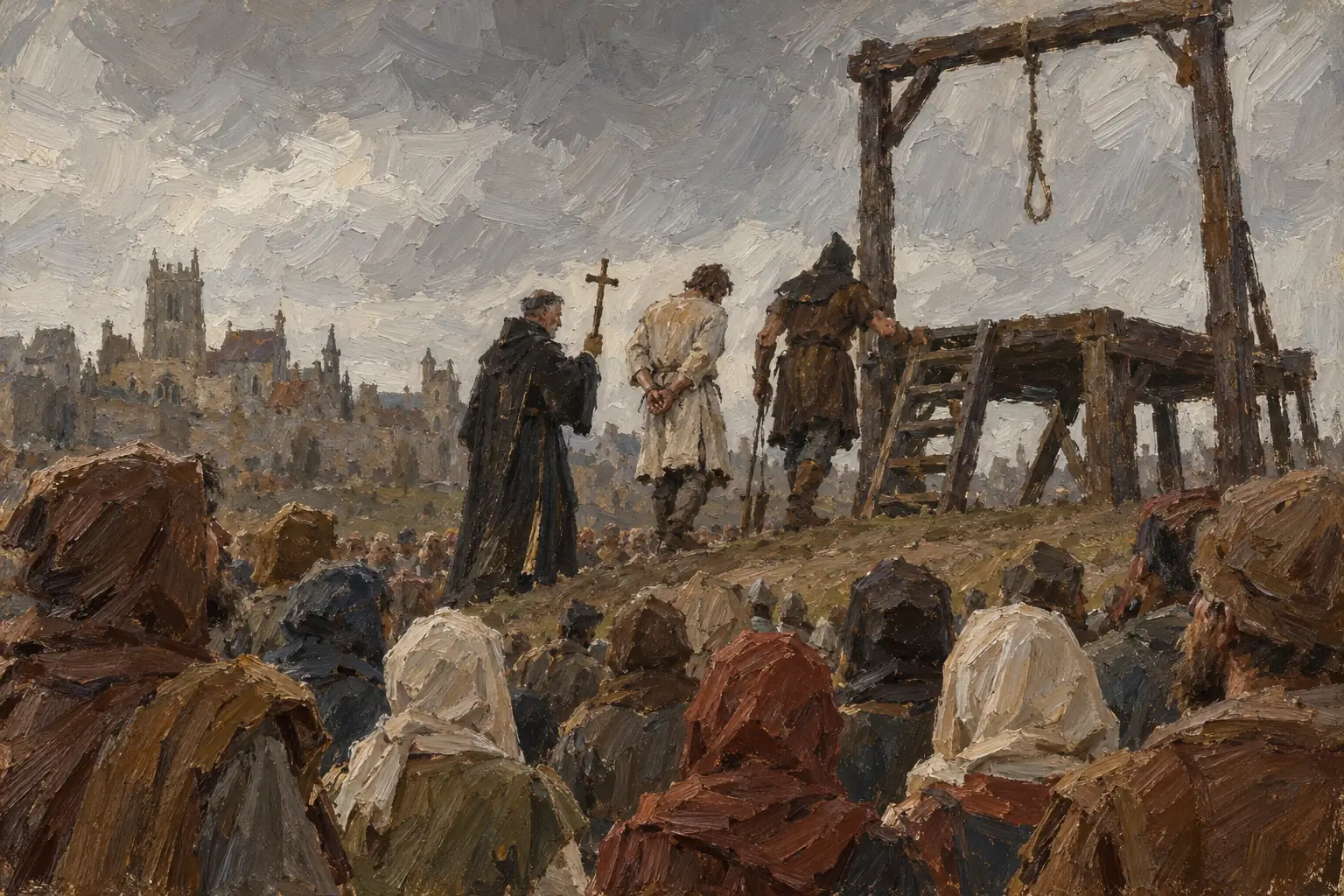
- Capital punishments – Executions by hanging, beheading, or other means were used for serious crimes like murder or treason, often carried out publicly to maximise deterrent effect.
Changes to punishments under Norman rule
Following the Norman Conquest in 1066, punishments became harsher and more centralised under rulers like William I. This shift reflected a focus on royal authority and using severe measures to control the population.
Key reforms and their impacts
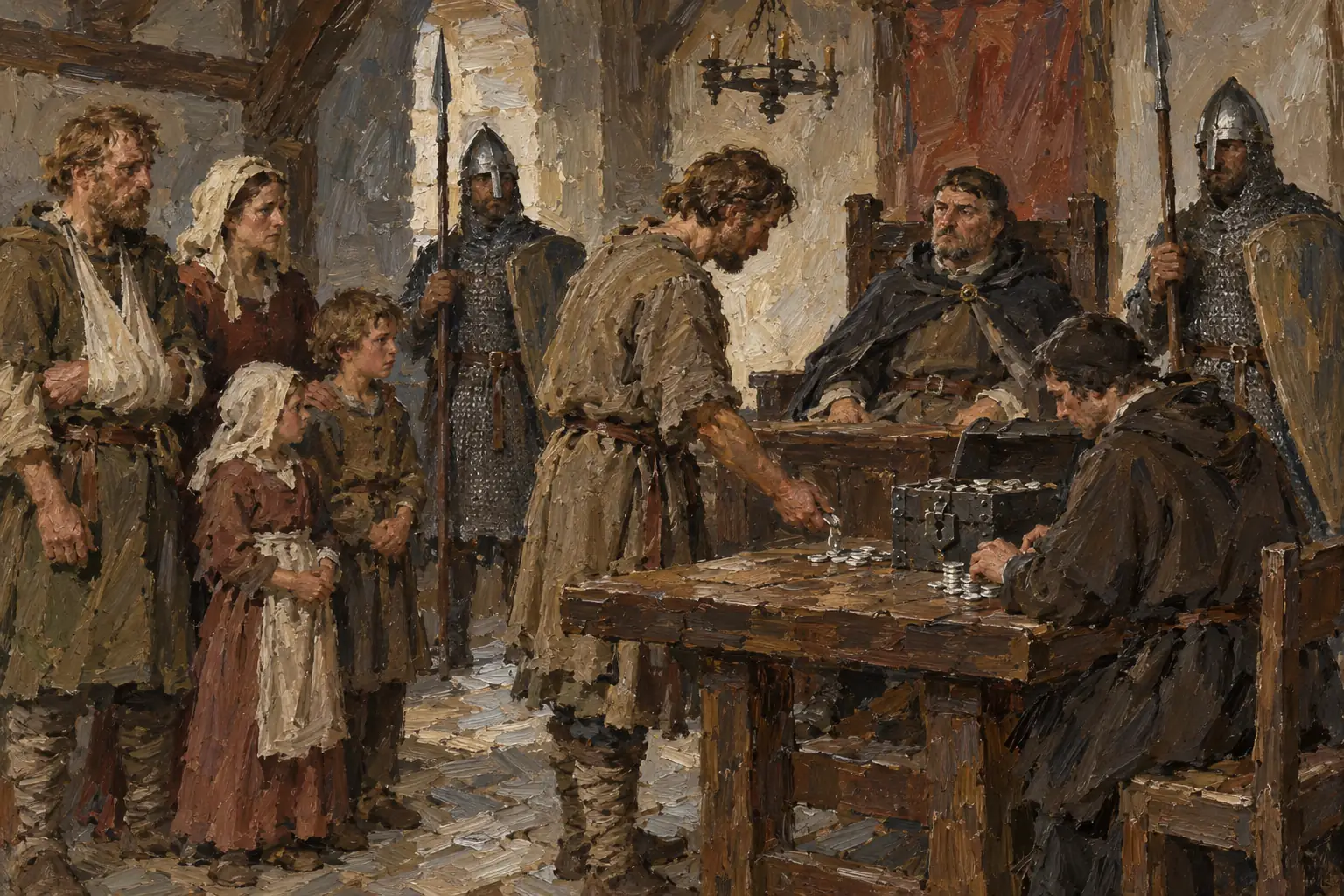
- Abolition of wergild – William I ended this system, requiring fines for serious crimes to be paid to the king's officials rather than victims' families, strengthening crown finances.
- Expansion of capital offenses – More crimes, including various felonies, were made punishable by death, increasing the use of executions.
- Emphasis on public deterrence – Harsh, visible punishments like public hangings were intended to instil fear and maintain order in a society under new Norman governance.