4.3 - Fleming, Florey, Chain & Penicillin
Key facts and dates
The development of penicillin marked a major breakthrough in medicine, transforming the treatment of bacterial infections through scientific collaboration and innovation. This timeline outlines the key milestones in its discovery and production, highlighting the roles of Alexander Fleming, Howard Florey, and Ernst Chain.
Timeline of key events
- 1928 – Alexander Fleming accidentally discovers that Penicillium mould kills bacteria in a petri dish.
- 1929 – Fleming publishes his findings on penicillin, noting its potential as an antibiotic.
- Late 1930s – Howard Florey and Ernst Chain begin research at Oxford University to purify and produce penicillin.
- 1940 – Florey and Chain's team successfully treats infected mice with penicillin.
- 1941 – First human trial treats a patient with septicaemia, showing dramatic improvement.
- Early 1940s – US companies develop industrial-scale production using deep-fermentation techniques.
- 1944 – Mass-produced penicillin treats Allied soldiers after D-Day, earning it the nickname "wonder drug".
- 1945 – Fleming, Florey, and Chain awarded the Nobel Prize for their work on penicillin.
Alexander Fleming's discovery of penicillin
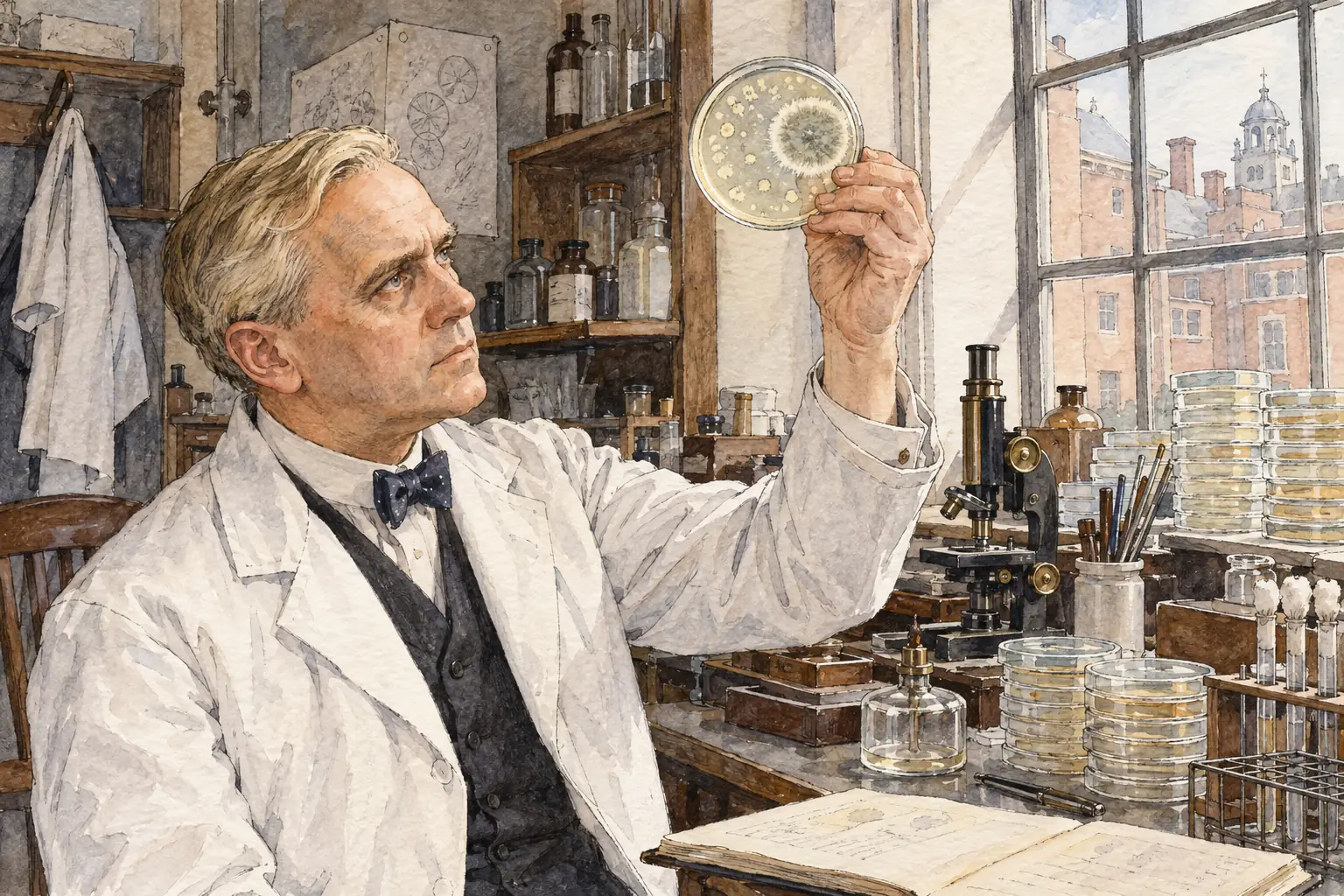
Alexander Fleming, a British bacteriologist, made a groundbreaking accidental discovery in 1928 that laid the foundation for the world's first antibiotic. While working in his laboratory, he observed an unexpected effect that had the potential to revolutionise medicine.
Circumstances and significance of the discovery
- Accidental observation - Fleming noticed that a mould called Penicillium, which had grown unintentionally on a petri dish, had destroyed the surrounding staphylococcal bacteria.
- Identification of the substance - He extracted a compound from the mould that could kill harmful bacteria and named it penicillin, recognising its possible use as an antiseptic or antibiotic.
- Publication and limitations - In 1929, Fleming shared his results in a scientific paper, highlighting penicillin's promise, but he struggled to purify it due to a lack of chemical expertise and the belief that large-scale production would be impractical.
- Challenges faced - Without sufficient support from chemists, Fleming did not advance the work further, leaving the discovery largely unexplored for nearly a decade.
Florey and Chain's purification and production
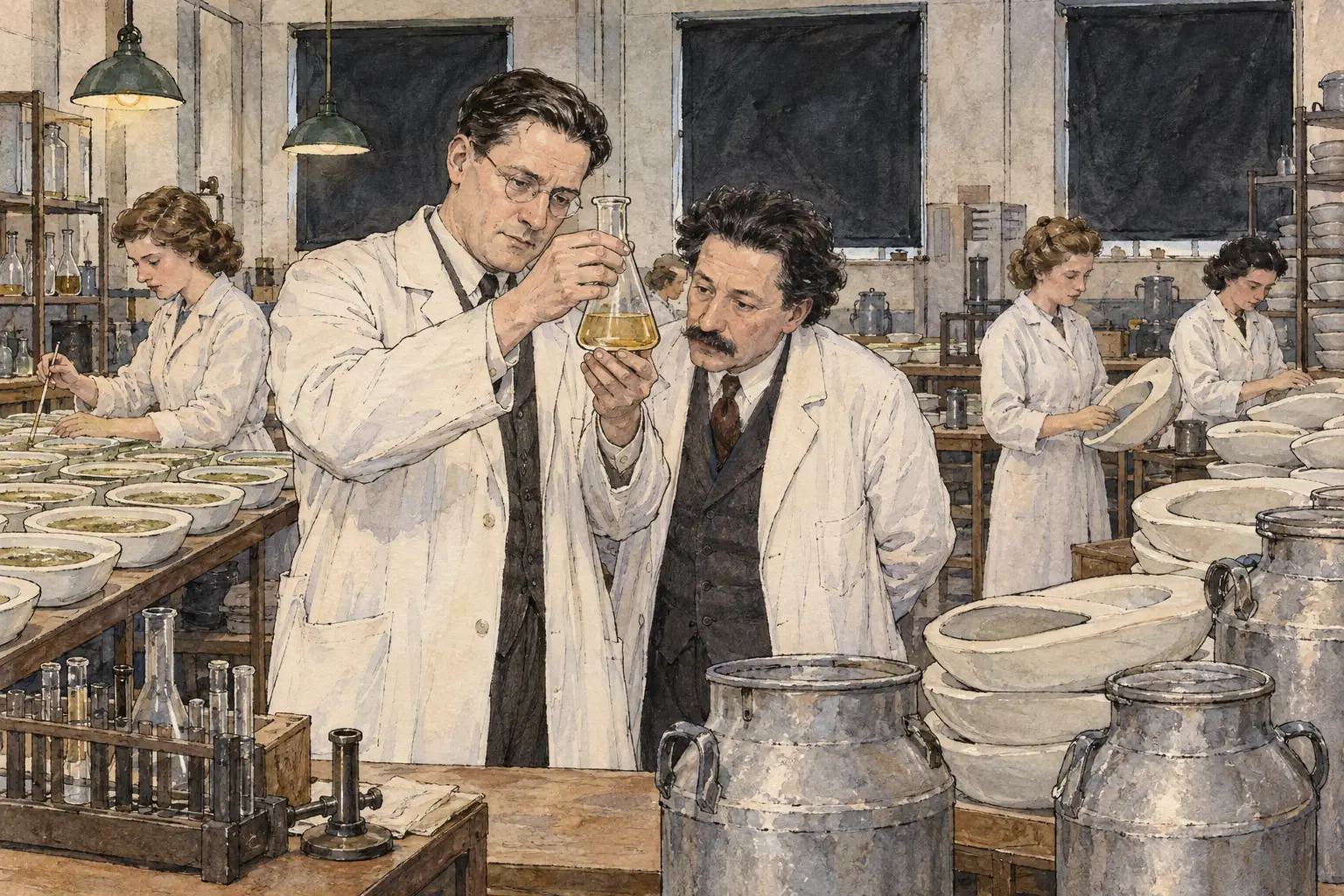
In the late 1930s, Howard Florey and Ernst Chain, researchers at Oxford University, revisited Fleming's work and made crucial advancements. Their team, which included Norman Heatley, focused on overcoming the purification and production hurdles to make penicillin viable for medical use.
Key breakthroughs in development
- Inspiration from Fleming's paper - Florey and Chain recognised penicillin's potential after reading the 1929 publication and assembled a team to refine it.
- Purification techniques - They developed methods to extract the active antibiotic from the Penicillium mould, improving its purity for testing.
- Early production approaches - The team grew the mould in large quantities using improvised containers, such as bedpans and milk churns, to produce enough for experiments.
- Animal testing success - In 1940, they tested penicillin on mice infected with bacteria, demonstrating that it could effectively cure infections without harming the animals.
Human trials and mass production during WWII
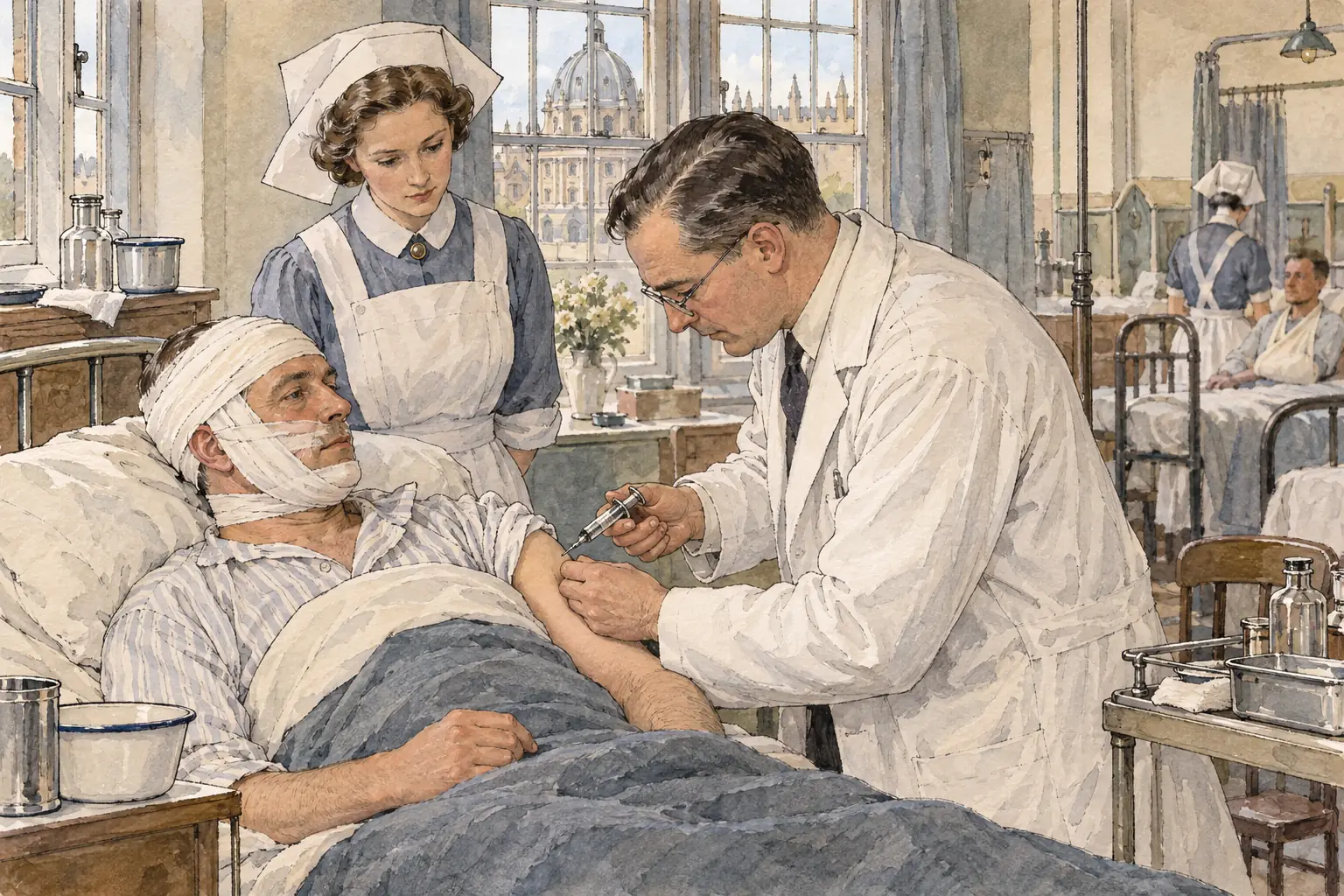
Image 1 of 2: In 1941 a policeman, Albert Alexander, began to recover on penicillin but died when the supply ran out
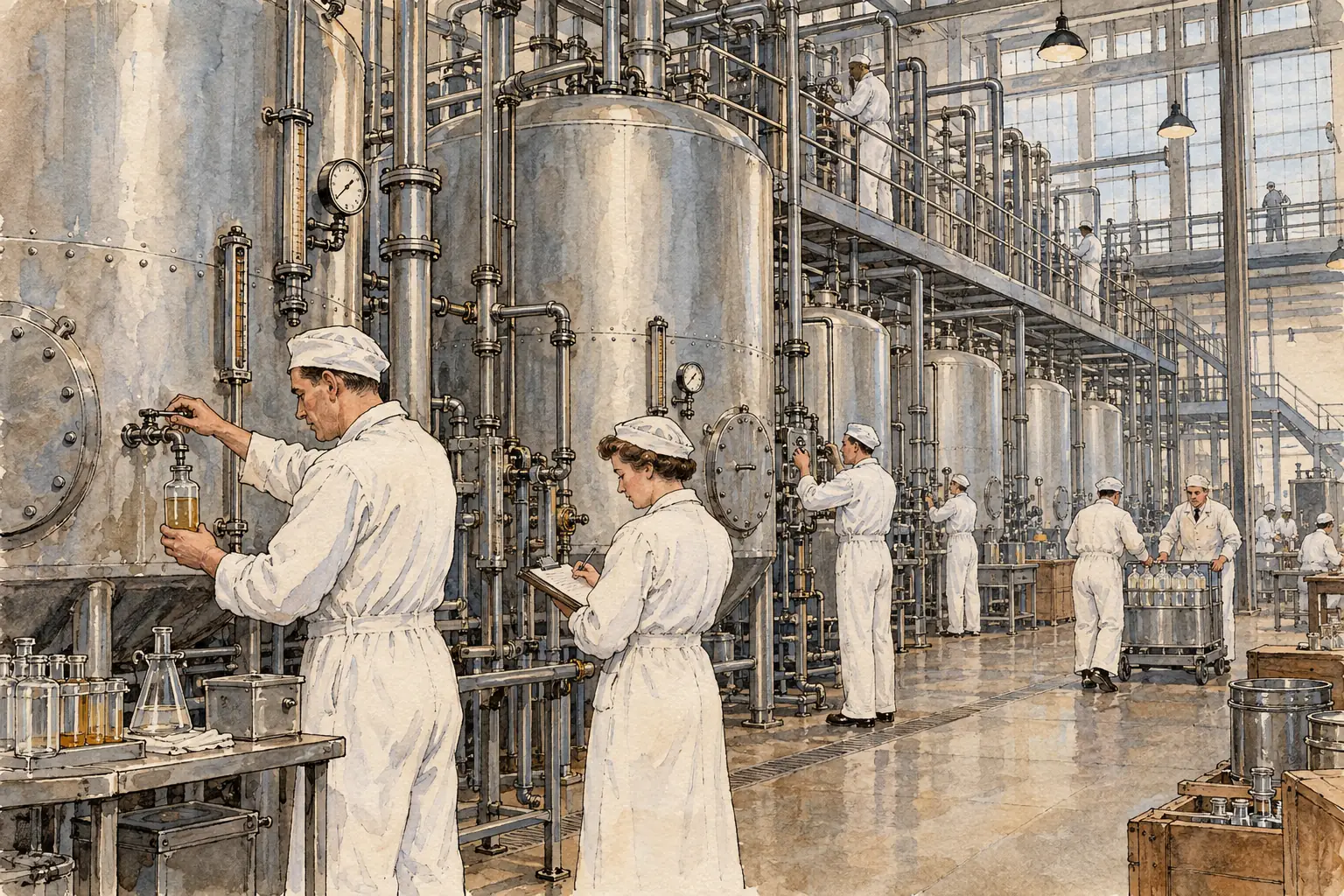
The transition from laboratory success to practical application involved initial human trials and a push for large-scale manufacturing. With World War II intensifying the need for effective treatments, collaboration with industry became essential.
Steps towards widespread use
- First human trial - In 1941, Florey and Chain's team treated a policeman suffering from severe septicaemia; the patient's health improved significantly, though he later died when supplies ran out, proving penicillin's effectiveness in humans.
- Scaling up production - Facing wartime constraints in Britain, Florey approached US pharmaceutical companies for assistance, leading to government-funded efforts in the early 1940s.
- Industrial innovations - American firms introduced deep-fermentation methods, allowing penicillin to be produced in vast quantities using large tanks.
- Wartime application - By 1944, sufficient penicillin was available to treat injured Allied troops following the D-Day landings, dramatically reducing deaths from infections like gangrene.
Impact and legacy of penicillin
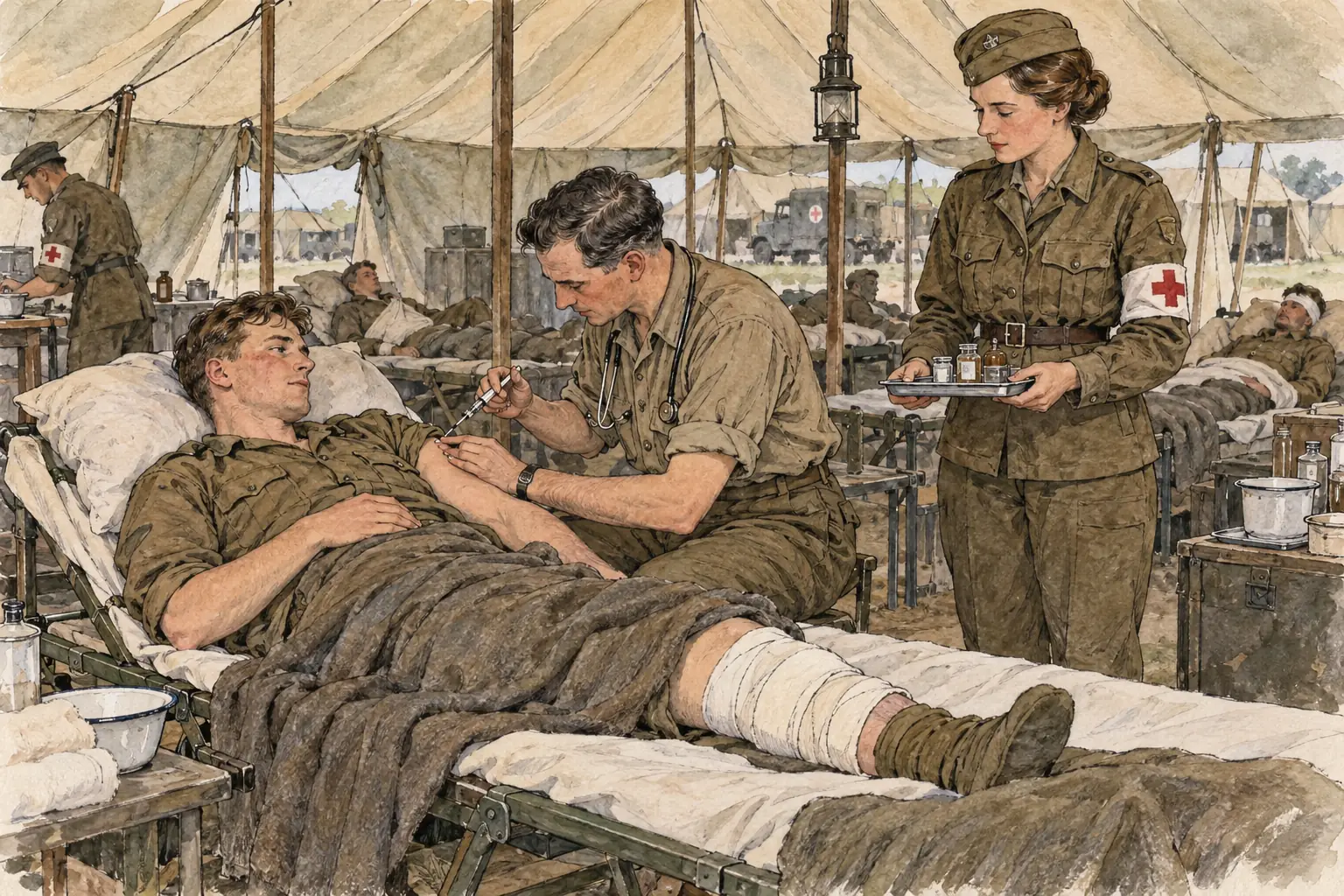
Penicillin's development represented a pivotal moment in medical history, saving countless lives and inspiring further innovations. Fleming, Florey, and Chain's collaborative efforts, supported by government and industry, turned a chance finding into a global game-changer.
Long-term effects and broader influence
- Recognition and awards - In 1945, Fleming, Florey, and Chain received the Nobel Prize jointly for their contributions, acknowledging the teamwork involved.
- Public availability - After the war, penicillin became widely accessible, curing previously fatal conditions such as pneumonia and blood poisoning.
- Antibiotic revolution - It sparked a surge in research, leading to the discovery of other antibiotics like streptomycin and tetracycline, which treated diseases including tuberculosis.
- Role of collaboration - This story illustrates how scientific partnerships, combined with industrial and governmental support, can drive medical progress and transform infection treatment.