1.6 - Plains Conflict & Treaties to 1851
Key facts and dates
During the early to mid-19th century, US policies towards indigenous peoples shifted from separation to greater control, driven by westward expansion and settler migration. These measures aimed to manage conflicts but often led to tensions over land and resources. The following timeline highlights the major developments in this period.
Timeline of key events
| Date | Event |
|---|---|
| 1830s | Establishment of the Permanent Indian Frontier to separate indigenous territories from US states. |
| 1834 | Formalisation of the Permanent Indian Frontier, designating lands west of the Mississippi River as Indian Territory. |
| 1840s | Increased migrant traffic on trails like the Oregon Trail begins to erode the frontier's effectiveness. |
| 1851 | Signing of the First Fort Laramie Treaty, granting safe passage for settlers and defining tribal lands. |
| 1851 | Passage of the Indian Appropriations Act, allocating funds for reservations and agencies. |
The Permanent Indian Frontier and its erosion
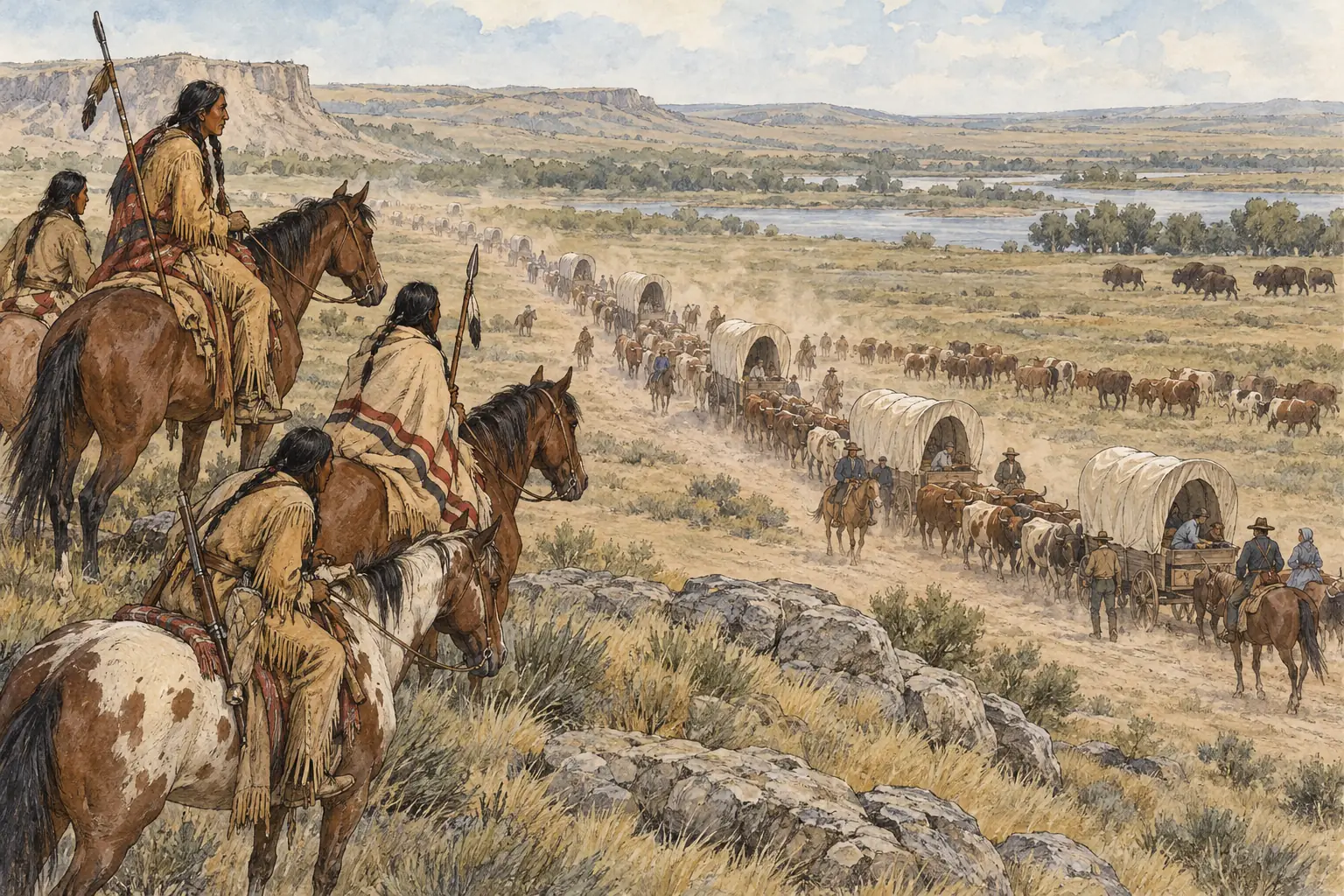
In the 1830s, the US government introduced a policy to create a clear boundary between indigenous lands and expanding American settlements. This approach aimed to reduce conflicts by isolating indigenous groups, but growing westward migration gradually undermined its purpose.
Establishment of the Permanent Indian Frontier
- Creation in the 1830s - The frontier was set up as a dividing line along the eastern edge of the Great Plains, with lands to the west designated as Indian Territory for relocated tribes.
- Formalisation in 1834 - Legislation officially recognised this boundary, separating Indian Territory from US states and territories east of the Mississippi River, intending to provide permanent homes for indigenous peoples displaced by policies like the Indian Removal Act.
Factors leading to the erosion of the frontier
- Impact of migrant traffic - Trails such as the Oregon Trail brought thousands of settlers through indigenous lands, disrupting hunting grounds and introducing diseases.
- Resource competition - Migrants' livestock grazed on grasslands vital for buffalo herds, which were essential to indigenous survival, leading to scarcity and clashes.
- Government inaction - Despite the frontier's intent, the US failed to enforce protections, allowing illegal encroachments and weakening the policy's effectiveness by the late 1840s.
The First Fort Laramie Treaty of 1851
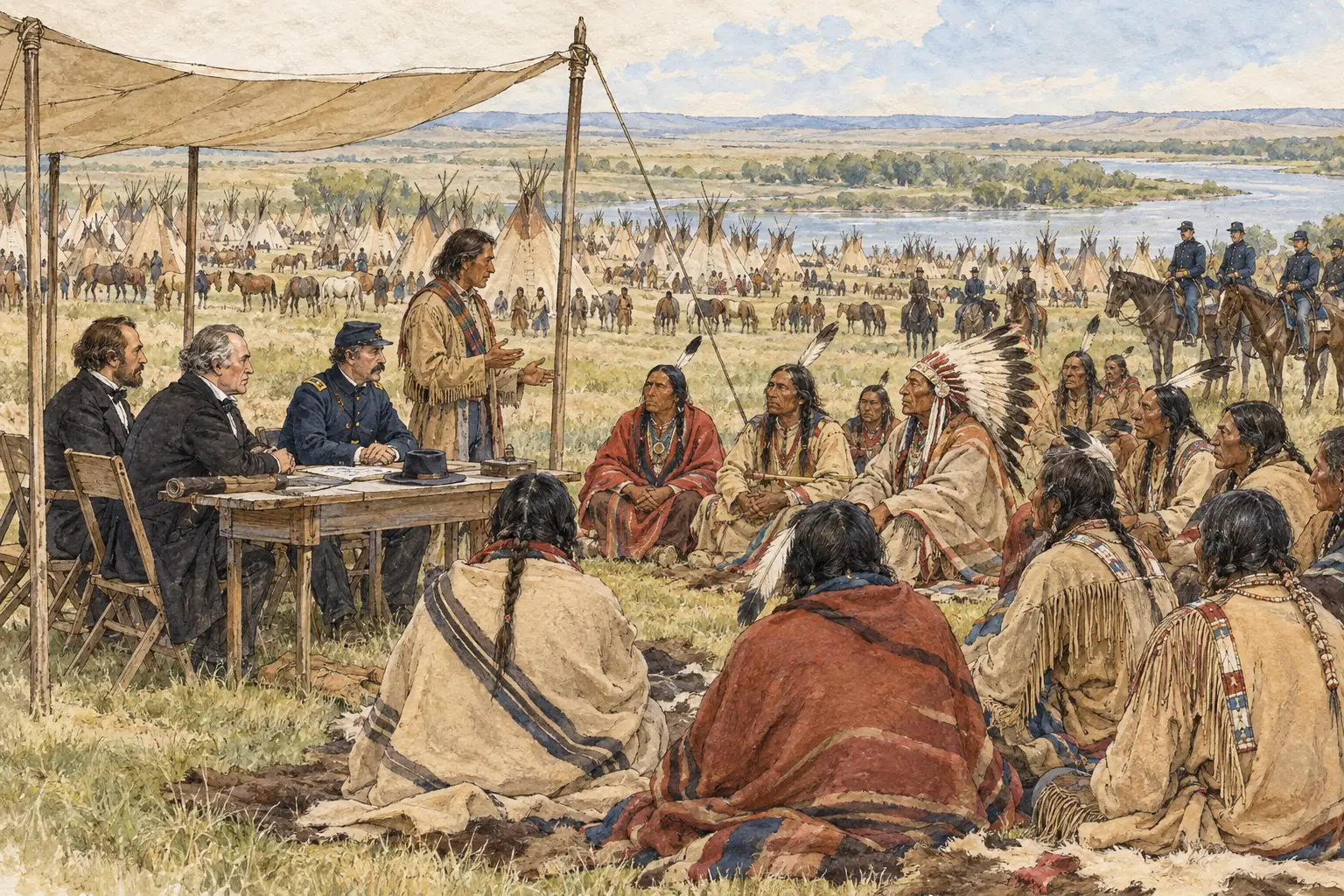
As tensions rose from increased migration, the US sought formal agreements with Plains tribes to facilitate safe travel for settlers. The First Fort Laramie Treaty represented an early attempt at negotiation, held at Fort Laramie in present-day Wyoming.
Key provisions of the treaty
- Safe passage for settlers - Tribes agreed to allow migrants to cross their lands without interference, particularly along major trails.
- Defined tribal territories - The treaty outlined specific boundaries for different tribes, aiming to prevent intertribal conflicts and clarify land claims.
- US annuities - In exchange, the US promised annual payments of goods and supplies to tribes, valued at around $50,000 per year for 50 years (later reduced).
- Right to build infrastructure - The US gained permission to construct roads and forts within tribal areas to support migration and military presence.
Problems with the First Fort Laramie Treaty
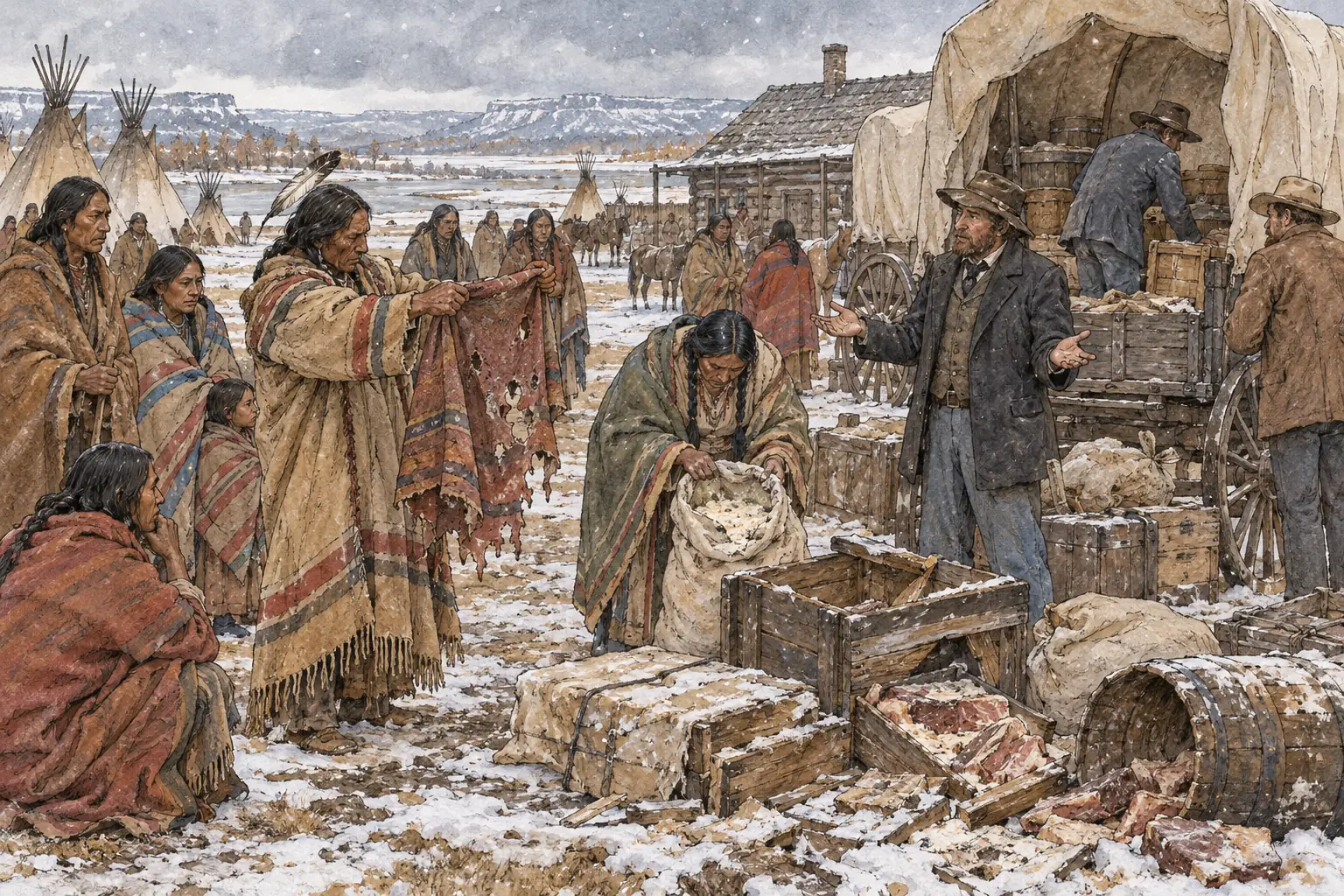
Although the treaty involved representatives from several tribes, its implementation faced significant hurdles. These issues stemmed from logistical, cultural, and enforcement challenges, contributing to ongoing conflicts.
Main issues with the treaty
- Incomplete representation - Not all bands or subgroups of tribes attended the negotiations, leading to disputes over agreements made without full consensus.
- Differing understandings of territory - Indigenous views of land as communal and fluid clashed with US concepts of fixed boundaries, causing misunderstandings about ownership and use.
- Poor enforcement - The US struggled to prevent settler violations, such as hunting on tribal lands, which eroded trust.
- Delays in annuities - Promised goods often arrived late or in poor condition, fostering resentment and economic hardship among tribes.
The Indian Appropriations Act of 1851
Building on the Fort Laramie Treaty, the US Congress passed legislation to fund new systems of managing indigenous affairs. This act marked a pivotal change in policy, moving towards more direct control over tribal life.
Provisions of the Indian Appropriations Act
- Funding for reservations - The act allocated money to establish smaller, defined areas of land for tribes, concentrating them away from migration routes.
- Support for Indian agencies - It provided resources for government agents to oversee reservations, distribute supplies, and enforce policies.
Implications for indigenous peoples
- Shift from autonomy to dependence - Tribes increasingly relied on US rations and goods, reducing their self-sufficiency and traditional hunting practices.
- Increased US oversight - Agencies expanded government influence, often imposing American cultural norms and limiting tribal governance.
- Long-term effects - This policy accelerated the loss of indigenous lands and heightened tensions, setting the stage for further conflicts in the following decades.