1.1 - Mass Production & the Motor Industry
Key facts and dates
The rise of mass production in the motor industry during the early 20th century, exemplified by Henry Ford's innovations, transformed manufacturing and contributed to America's economic boom in the 1920s. This timeline highlights pivotal developments that enabled affordable cars and spurred broader industrial growth.
Timeline of key events
- 1903 – Founding of the Ford Motor Company, marking the start of large-scale automobile production.
- 1908 – Launch of the Model T, designed for simplicity and affordability through standardisation.
- 1913 – Introduction of the moving assembly line at Ford's Highland Park plant, revolutionising production efficiency.
- 1914 – Implementation of the $5 daily wage for Ford workers, boosting productivity and consumer spending power.
- 1927 – End of Model T production after 15 million units, symbolising the peak of early mass production success.
Mass production and standardisation at Ford
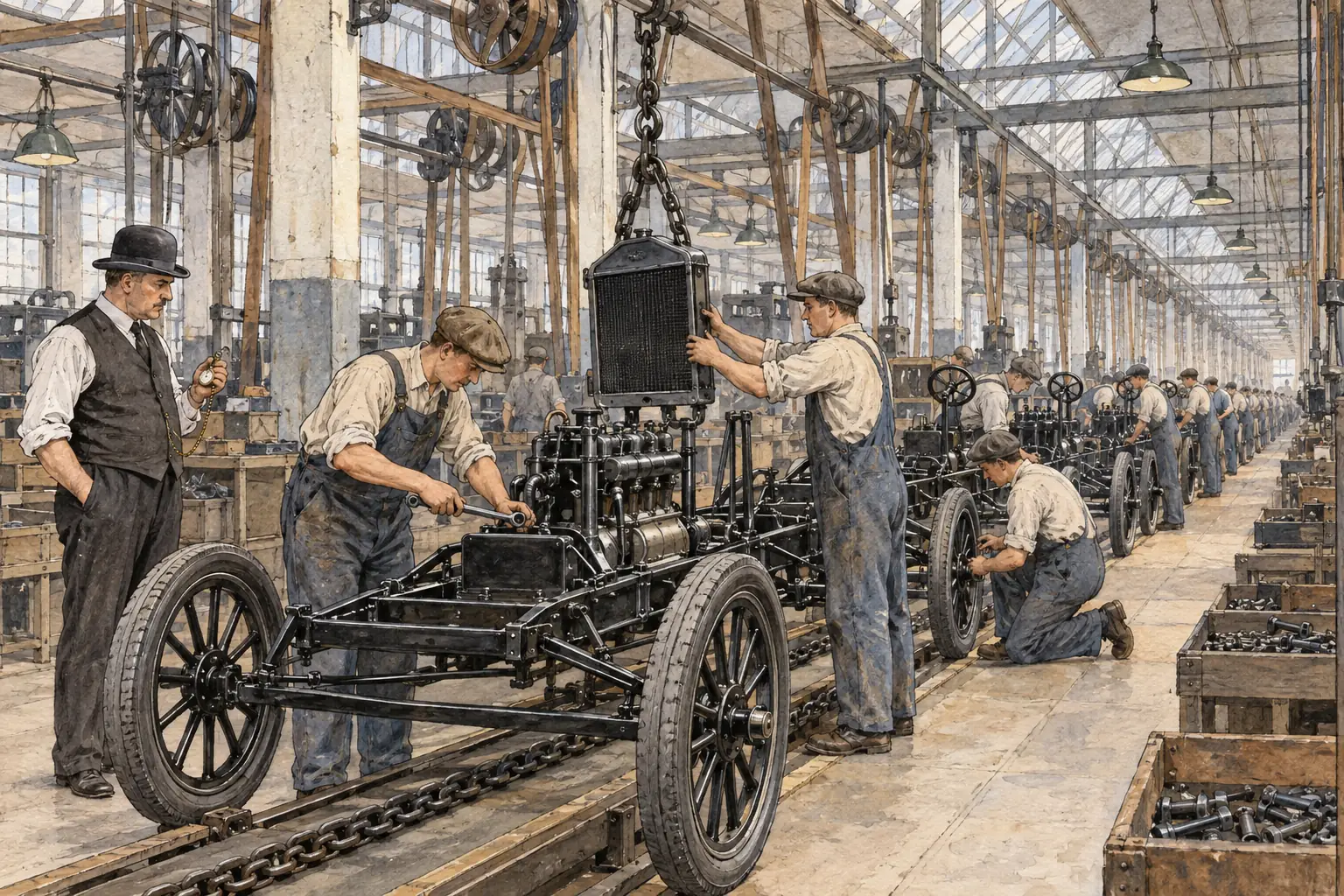
Mass production involves manufacturing large quantities of identical goods using efficient, mechanised processes to achieve economies of scale. Standardisation complements this by ensuring all components and products are uniform, simplifying assembly and reducing variations.
The Ford Motor Company provides a prime example of these concepts in action. Henry Ford applied mass production to automobile manufacturing, producing vehicles like the Model T on a grand scale. Standardisation meant every Model T was built to the same specifications, with identical parts that could be easily replaced, eliminating the need for custom craftsmanship.
Techniques reducing costs and expanding markets
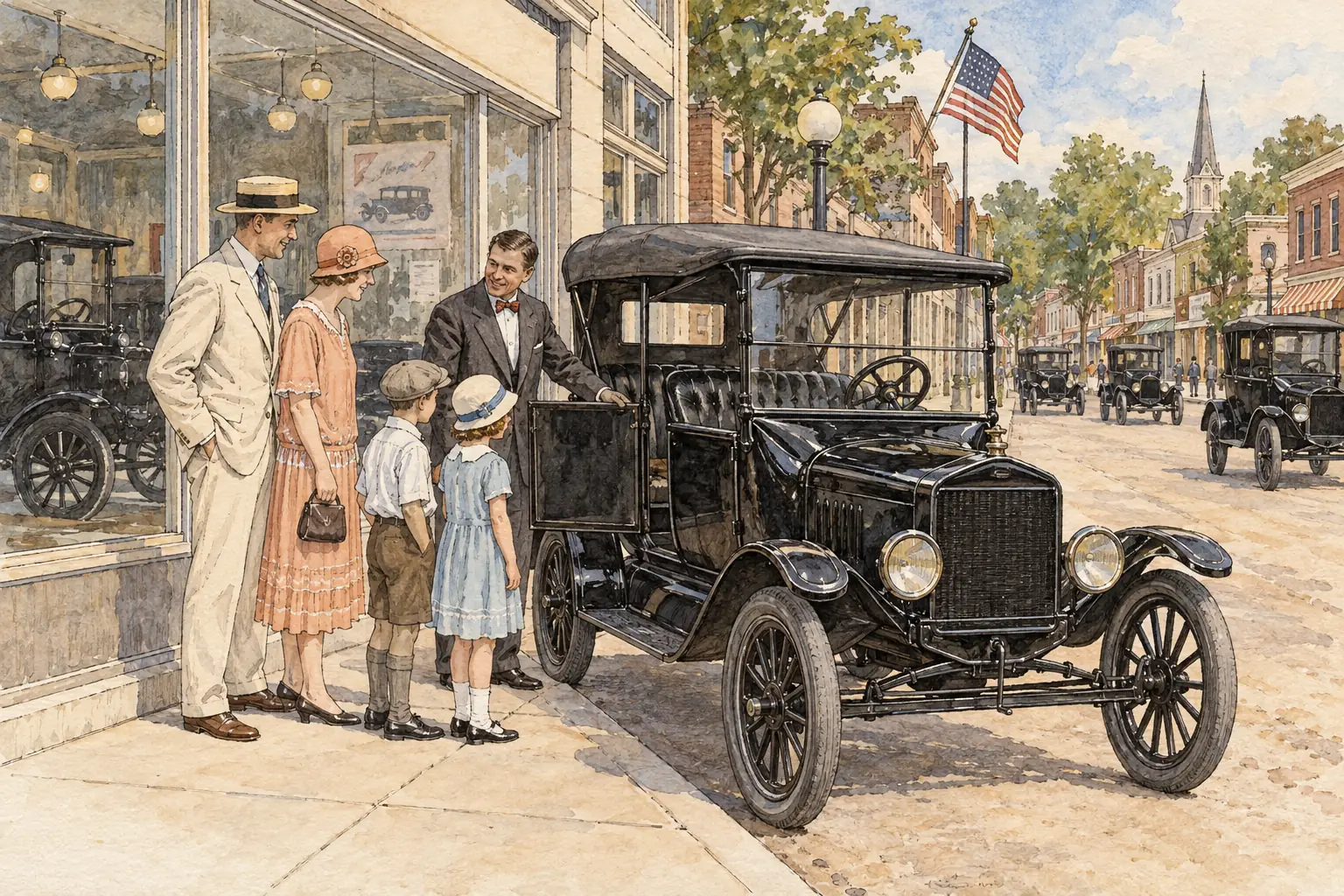
Ford pioneered several methods to streamline production, dramatically lowering unit costs and making cars accessible to a wider audience. These innovations not only cut prices but also stimulated demand by creating an affordable mass market for automobiles.
Key production techniques at Ford
| Technique | Description |
|---|---|
| Moving assembly line | Workers remained stationary while vehicles moved along a conveyor belt, allowing specialised tasks to be completed sequentially and reducing production time from 12 hours to under 2 hours per car. |
| Interchangeable parts | Components were manufactured to precise standards, enabling quick assembly without fitting adjustments, which minimised waste and labour needs. |
| Time-motion studies | Detailed analysis of workers' movements eliminated inefficiencies, optimising every action to boost speed and output. |
These techniques slashed the price of the Model T from $850 in 1908 to around $300 by the mid-1920s, expanding the consumer market from wealthy buyers to middle-class families and increasing overall car ownership.
Knock-on effects on industries and society
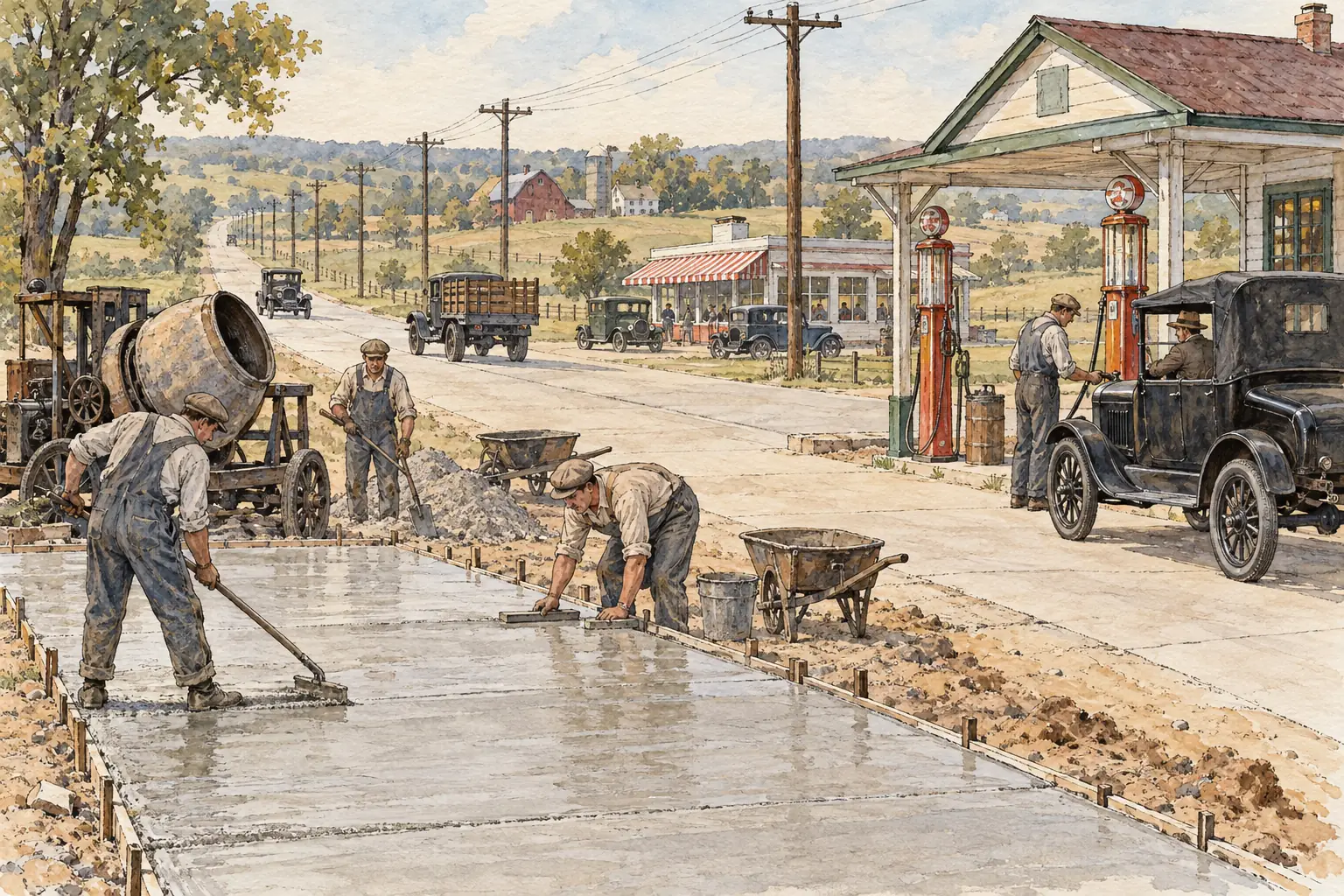
The growth of mass production in the motor industry created ripple effects, stimulating related sectors and reshaping American society. Increased car ownership drove demand for supporting infrastructure and services, fostering economic expansion.
Impacts on related industries
- Raw materials and manufacturing - Surging demand for steel, rubber, glass, and oil boosted these industries, with suppliers scaling up to meet Ford's needs.
- Infrastructure development - Road building expanded rapidly to accommodate more vehicles, creating jobs in construction and engineering.
Societal changes
- Urban and suburban growth - Affordable cars enabled people to live further from city centres, leading to suburban expansion and new housing developments.
- Leisure and mobility - Greater access to transport promoted travel for holidays and outings, while roadside services like petrol stations and motels emerged to serve motorists.
Impacts on different social groups
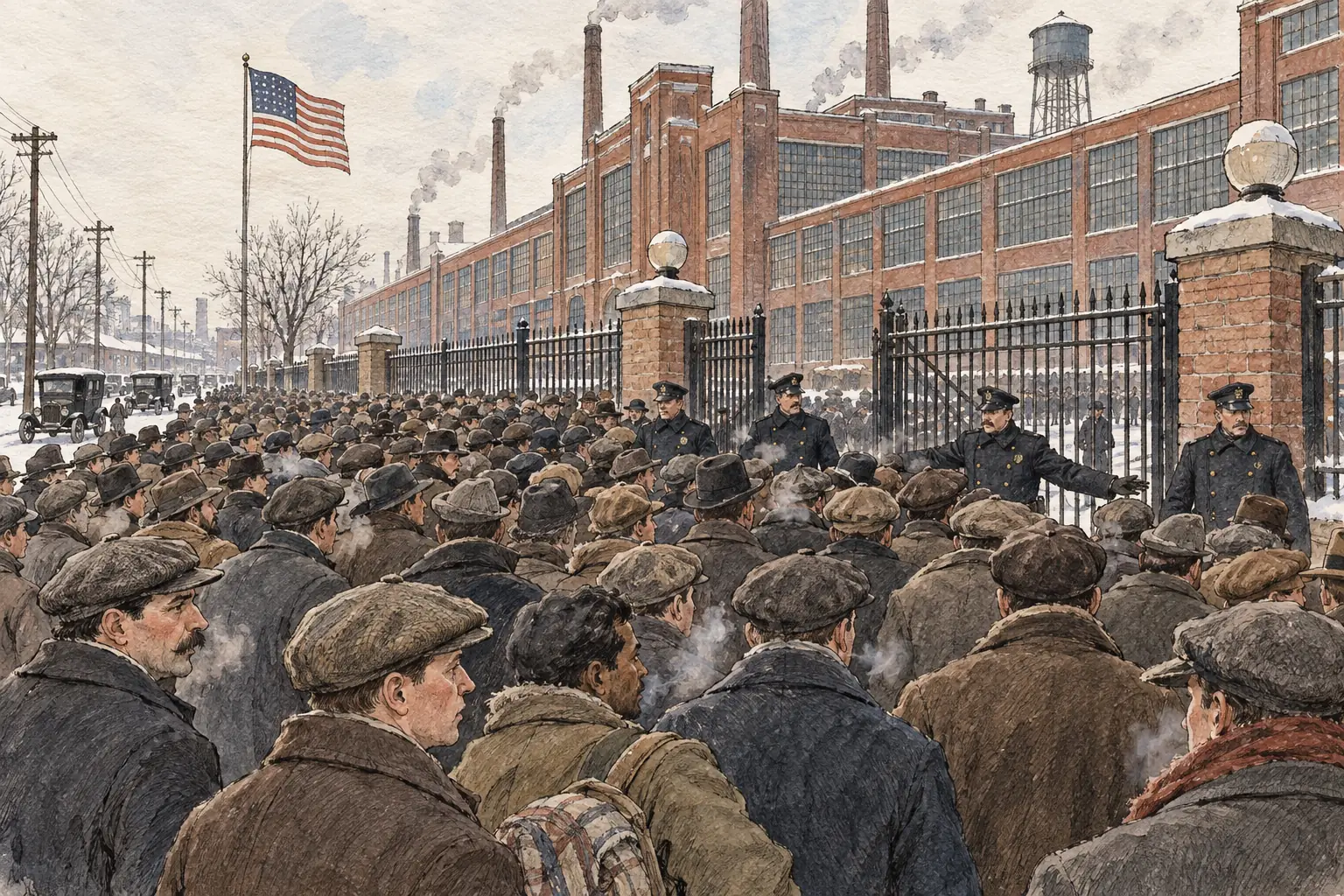
Mass production brought mixed outcomes for various groups, offering opportunities alongside challenges. While it generated employment and mobility, it also intensified inequalities and altered traditional ways of life.
Effects on factory workers
- Wages and conditions - Higher pay, such as Ford's $5 daily rate, improved living standards, but the fast-paced assembly line caused monotony and physical strain.
- Bargaining power - Limited union influence restricted workers' ability to negotiate, often leading to high turnover and dissatisfaction.
Effects on small businesses
- Competitive pressure - Large firms like Ford undercut prices, forcing smaller manufacturers to adapt or close, consolidating market power in big corporations.
Effects on farmers
- Market opportunities - New demand for agricultural products like rubber and increased mobility opened urban markets, though benefits were uneven, with some regions gaining more than others.
Effects on women
- Increased independence - Cars provided greater mobility for shopping and social activities, enhancing consumer roles and personal freedom.
Effects on African Americans
- Industrial opportunities - Factory jobs offered employment in northern cities, aiding migration from the South, but persistent discrimination limited advancement and equal pay.
Economic significance in the 1920s
Mass production in the motor industry played a central role in the economic prosperity of the 1920s, driving growth through cause and consequence chains. It exemplified how innovation could spark widespread affluence.
Cause and consequence in economic growth
- Causal factors - Techniques like the assembly line reduced costs, enabling mass consumption and reinvestment in industry.
- Consequential impacts - This created a cycle of job creation, higher wages, and increased spending, fuelling the decade's boom and shaping a consumer-driven economy.
The significance lies in how these developments laid the foundation for modern industrial practices, though they also highlighted vulnerabilities, such as over-reliance on key sectors, that contributed to later economic downturns.