2.2 - Hoover's Policies, Philosophy & Unpopularity
Key facts and dates
Herbert Hoover's response to the Great Depression emphasised self-reliance and limited government intervention, which proved increasingly unpopular as economic conditions worsened. His cautious policies and handling of protests contributed to his electoral defeat in 1932, setting the stage for more aggressive federal action under Franklin D. Roosevelt.
Timeline of key events
- 1929 – Stock market crash marks the start of the Great Depression, prompting Hoover's initial calls for voluntary cooperation.
- 1930 – Smoot-Hawley Tariff Act raises import duties, worsening global trade relations.
- 1932 – Reconstruction Finance Corporation established to provide loans to banks and businesses.
- June 1932 – Bonus March sees war veterans protest in Washington for early pension payments.
- July 1932 – U.S. Army disperses Bonus Marchers, severely damaging Hoover's public image.
- November 1932 – Hoover loses presidential election to Roosevelt amid widespread discontent.
Hoover's philosophy of rugged individualism
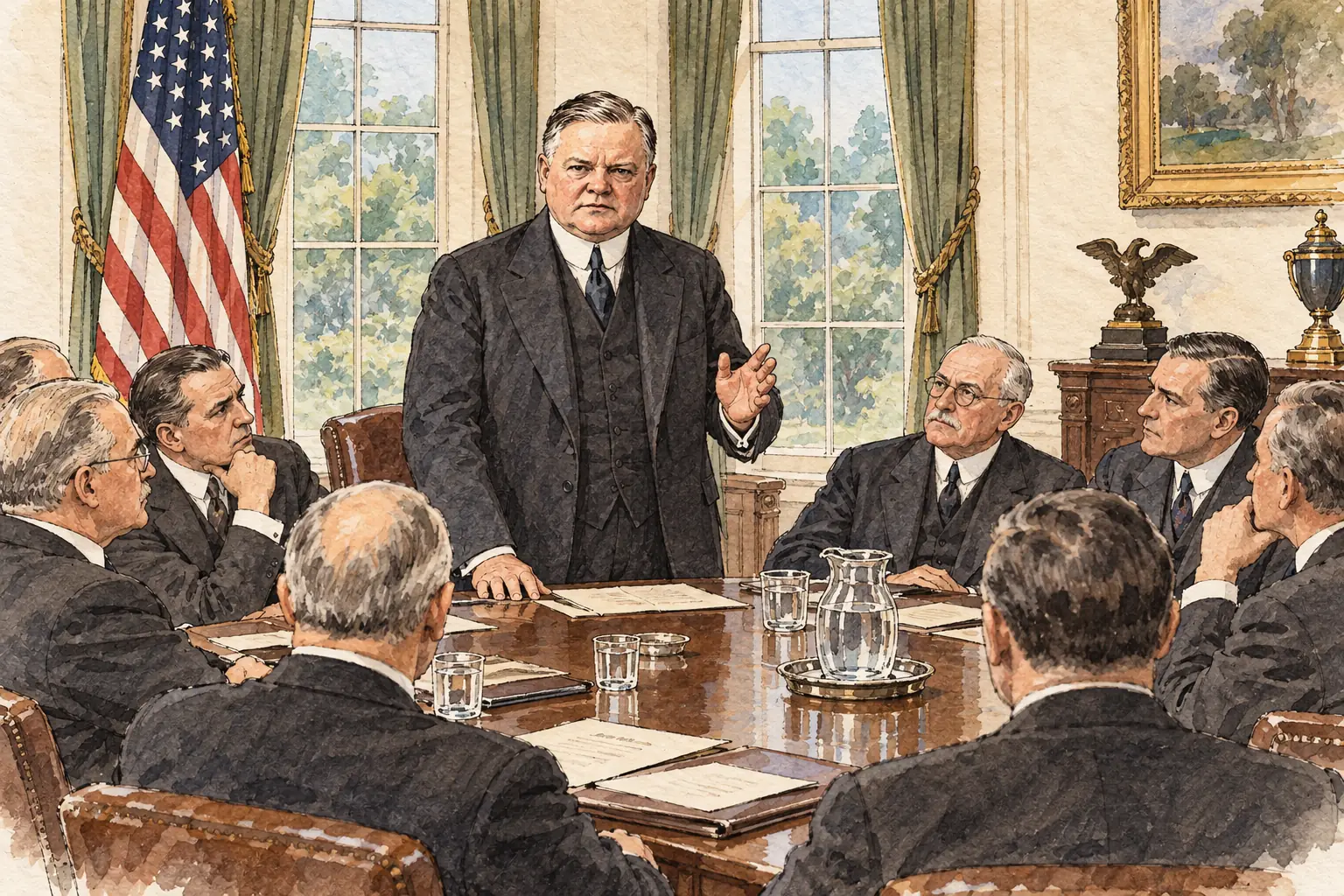
Herbert Hoover, president from 1929 to 1933, adhered to a philosophy known as rugged individualism, which promoted self-reliance and minimal government interference in the economy. This belief stemmed from traditional American values of personal responsibility and free enterprise, influencing his approach to the Great Depression.
Core elements of rugged individualism
- Self-reliance over state aid - Hoover believed individuals and communities should solve economic problems through their own efforts, rather than depending on direct federal assistance, which he saw as undermining personal initiative.
- Preference for voluntary cooperation - He encouraged businesses, charities, and local governments to collaborate voluntarily to address unemployment and hardship, avoiding what he viewed as excessive central control.
- Opposition to direct relief - Hoover resisted widespread federal handouts, arguing they would create dependency and weaken the nation's character, instead favouring measures that supported economic recovery indirectly.
Key policies during Hoover's presidency
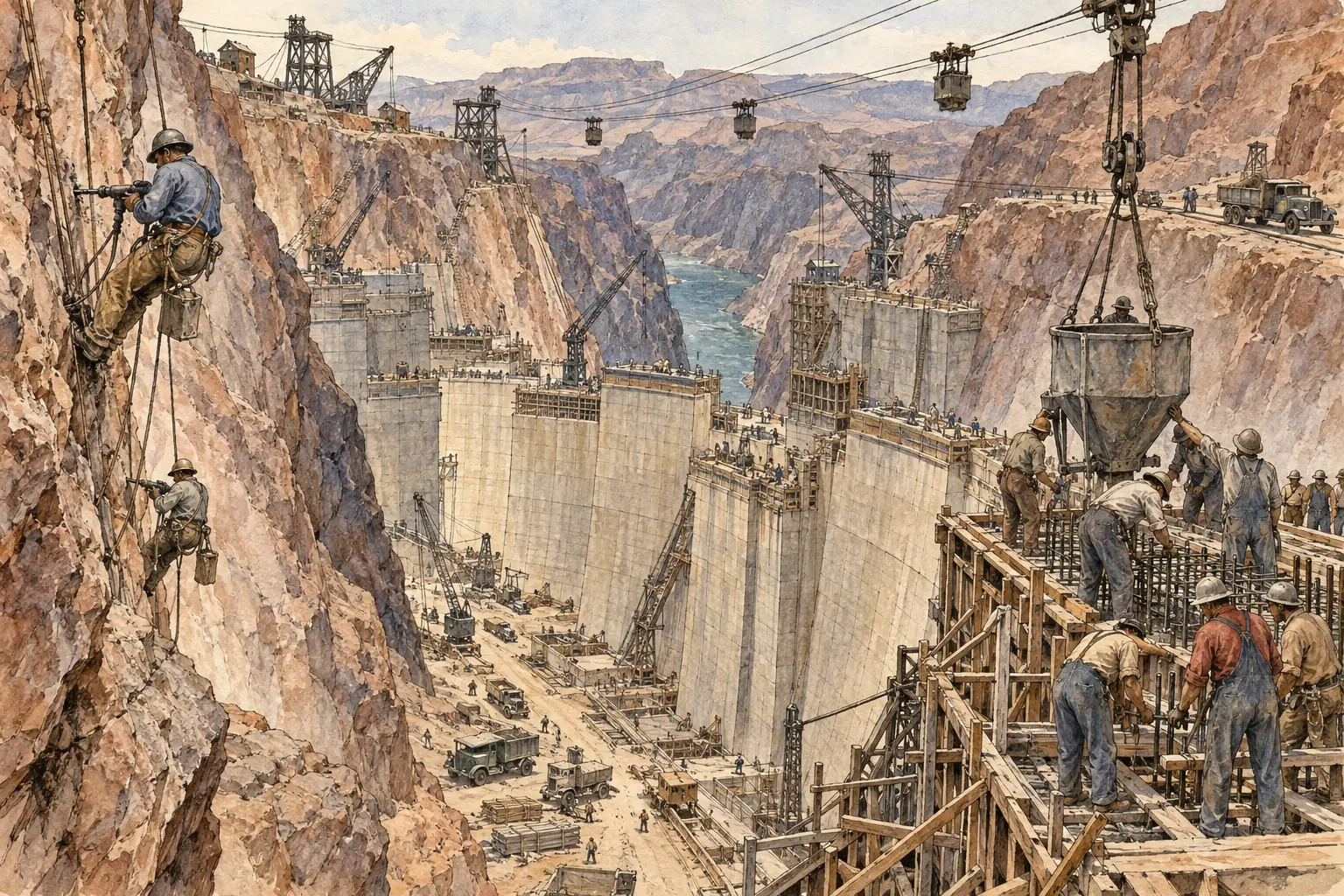
In response to the deepening Depression, Hoover introduced several policies aimed at stabilising the economy without expanding federal power excessively. These included infrastructure projects, financial support mechanisms, trade protections, and fiscal discipline.
Main policies under Hoover
- Limited public works - Initiatives like the Boulder Dam project (later renamed Hoover Dam) were funded to create jobs and stimulate economic activity, though these were restricted in scale to avoid large budget deficits.
- Reconstruction Finance Corporation (RFC) - Established in 1932, this agency provided loans to struggling banks, railways, and industries to prevent further collapses and encourage lending.
- Tariff protection - The Smoot-Hawley Tariff Act of 1930 increased duties on imported goods to protect American farmers and manufacturers, but it provoked retaliatory tariffs from other countries, harming international trade.
- Attempts to balance the budget - Hoover prioritised fiscal responsibility by cutting government spending and raising taxes, aiming to maintain confidence in the federal government's financial stability.
Why Hoover's measures were seen as inadequate

Hoover's policies were often criticised for being too conservative and slow to address the scale of the crisis, failing to provide immediate relief to millions suffering from unemployment and poverty. This perception contributed to growing public frustration.
Factors contributing to perceptions of inadequacy
- Too cautious in scope - Measures like public works and the RFC were limited, helping businesses more than individuals, and did not sufficiently tackle widespread joblessness or hunger.
- Delayed implementation - Many policies, such as the RFC, were introduced late in the Depression (after 1931), allowing conditions to deteriorate further before action was taken.
- Adverse economic effects - Efforts to balance the budget through tax increases and spending cuts reduced consumer spending power, while the Smoot-Hawley Tariff exacerbated global economic downturns.
- Lack of direct relief - By refusing federal aid to individuals, Hoover's approach was viewed as out of touch with the desperate needs of ordinary Americans, contrasting with calls for more interventionist strategies.
Impact of the Bonus March on Hoover's reputation
Image 1 of 2: About 20,000 First World War veterans camped in Washington in the summer of 1932 to demand early payment of their bonus
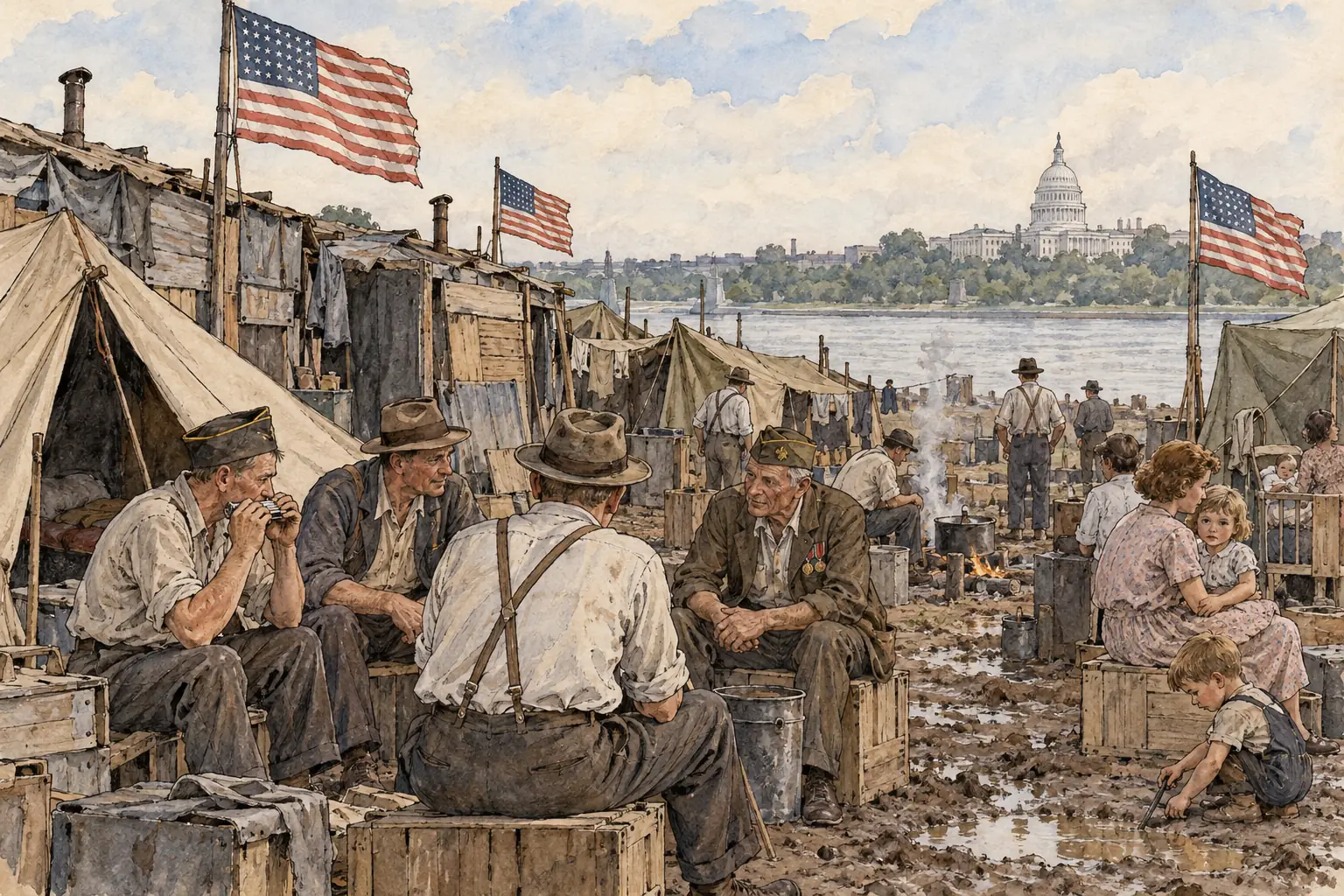
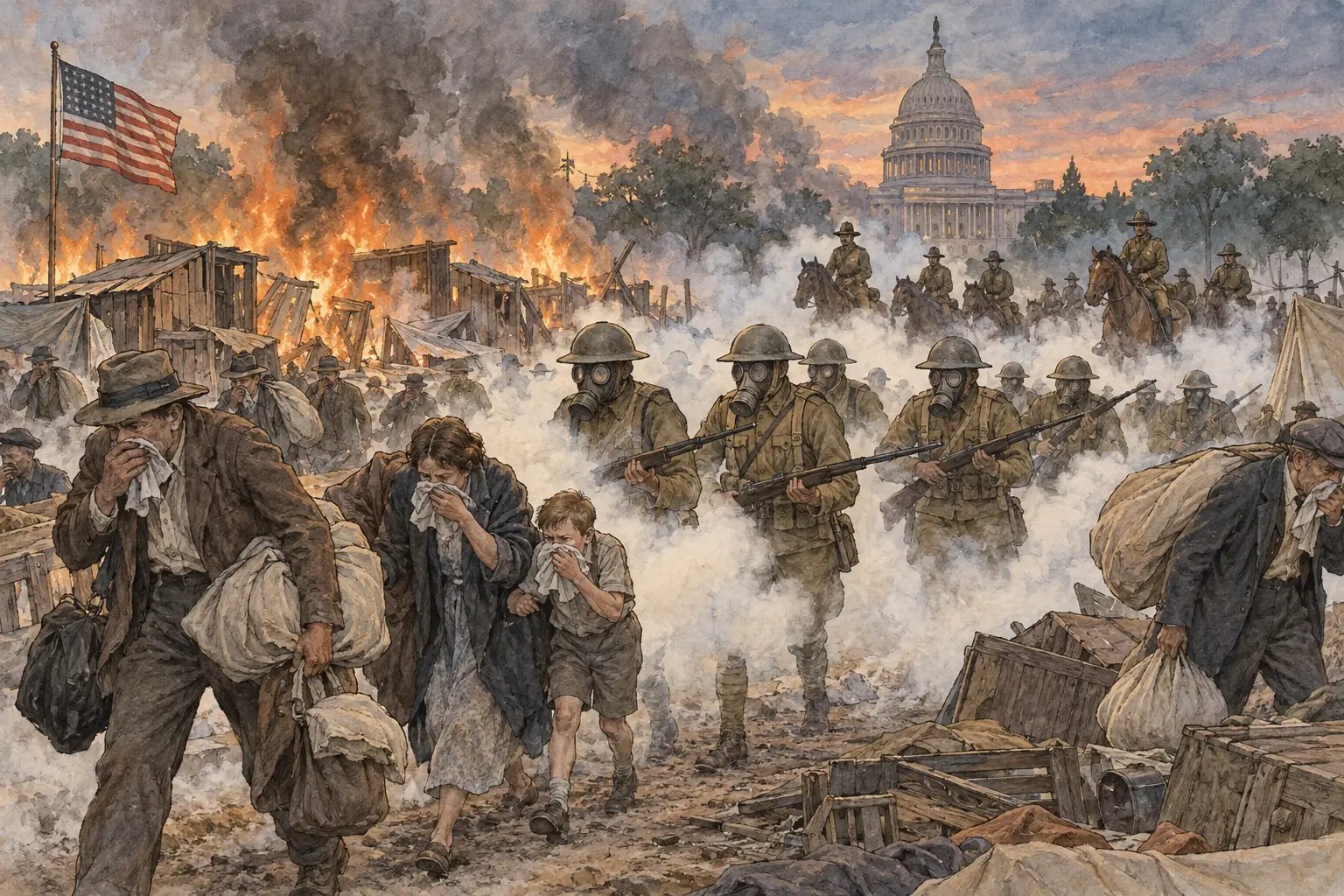
The Bonus March of 1932 exemplified the growing unrest during Hoover's presidency and significantly tarnished his image. This event involved World War I veterans demanding early payment of promised bonuses, highlighting the human cost of the Depression.
Details and consequences of the Bonus March
- The protest - Thousands of unemployed veterans marched to Washington in June 1932, setting up camps to lobby Congress for immediate cash payments of military bonuses due in 1945.
- Government response - After Congress rejected the demands, Hoover ordered the U.S. Army, led by General Douglas MacArthur, to evict the marchers in July 1932, resulting in violent clashes and the destruction of their encampments.
- Damage to reputation - The forceful dispersal was seen as harsh and insensitive, portraying Hoover as uncaring towards veterans and the poor, which alienated voters and reinforced perceptions of his administration's failure.
- Broader implications - Media coverage amplified public outrage, contributing to Hoover's landslide defeat in the 1932 election and symbolising the limits of his rugged individualism philosophy.
Comparative analysis with Roosevelt's approach
Comparing Hoover's strategies with those of his successor, Franklin D. Roosevelt, reveals stark differences in philosophy and action, highlighting why Roosevelt's New Deal was more popular and effective in addressing the Depression.
Key differences between Hoover and Roosevelt
- Government role - Hoover favoured limited intervention and voluntary efforts, while Roosevelt embraced expansive federal programmes, such as the Civilian Conservation Corps, to provide direct employment and relief.
- Relief measures - Under Hoover, aid focused on businesses via loans; Roosevelt introduced widespread social security and welfare initiatives to support individuals directly.
- Economic philosophy - Hoover's commitment to balancing the budget contrasted with Roosevelt's willingness to run deficits for stimulus, reflecting a shift towards Keynesian economics.
- Public perception - Hoover's cautious policies were seen as insufficient, leading to unpopularity, whereas Roosevelt's bold actions restored confidence and won strong electoral support..