1.12 - Tectonic Hazards: Responses
Predicting earthquakes and volcanic eruptions
Tectonic hazards, such as earthquakes and volcanic eruptions, pose significant risks to communities. While precise prediction remains challenging, scientists employ various techniques to monitor warning signs and assess the likelihood of these events.
Techniques for predicting earthquakes
Earthquakes are notoriously difficult to predict with accuracy, but certain indicators can provide clues about potential activity.
Indicators of earthquakes include:
- Plate movement - Lasers are used to measure subtle shifts in tectonic plates, which may precede an earthquake.
- Crustal vibrations - Seismometers detect increasing vibrations within the Earth's crust, often a sign of building stress that could lead to an earthquake.
- Gas emissions - Scientists monitor gases like radon that seep from cracks in the Earth's crust as pressure mounts before a seismic event.
- Rock deformation - Rocks under stress may crack or expand due to rising pressure, serving as a warning of an imminent earthquake.
Techniques for predicting volcanic eruptions
Volcanic eruptions are somewhat easier to anticipate than earthquakes, especially when a volcano is under close observation, as there are distinct physical and chemical changes leading up to an event.
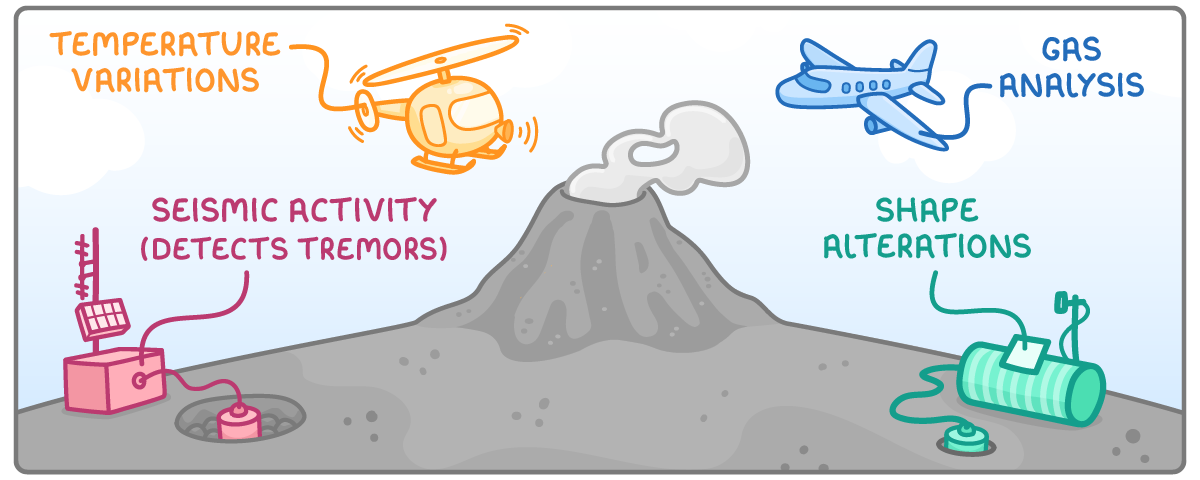
Indicators of volcanic eruptions include:
- Seismic activity - Tiny earthquakes or tremors often occur as magma moves beneath the volcano, detectable through sensitive equipment.
- Shape alterations - Changes in the volcano's structure, such as bulging, indicate magma accumulation and can be measured with precision instruments.
- Temperature variations - Thermal imaging cameras reveal rising temperatures around the volcano, a common precursor to an eruption.
- Gas analysis - Monitoring escaping gases, particularly sulphurous ones, provides evidence of volcanic activity as their composition and volume often change before an eruption.
Long-term planning to mitigate tectonic hazards
Effective preparation over the long term can significantly reduce the impact of tectonic hazards. Wealthier and more developed countries often have greater resources to implement such strategies, which focus on infrastructure, education, and emergency readiness to protect populations.
Approaches to long-term planning
- Training emergency services - Teams are regularly trained in disaster response, including techniques for rescuing individuals from collapsed structures.
- Earthquake-resistant buildings - Structures are designed with robust materials like reinforced concrete to endure seismic forces, alongside special foundations that absorb earthquake energy.
- Public awareness campaigns - Educating communities ensures people understand safety protocols during earthquakes or volcanic eruptions, such as evacuation procedures or safe sheltering.
- Evacuation route planning - Governments map out and maintain clear routes to enable swift and safe escapes from hazard zones.
- Stockpiling emergency supplies - Essential items like blankets, clean water, and food are stored in strategic locations, ready for rapid distribution when hazards are anticipated.
Planning also aims to lessen casualties from secondary effects, such as fires after earthquakes, pyroclastic flows, or mudflows following volcanic eruptions.
Short-term relief following tectonic disasters
In the immediate aftermath of a tectonic hazard, rapid response is vital to address urgent needs, save lives, and prevent further harm. The effectiveness of short-term relief often depends on a country's level of development and preparedness.
Immediate actions after a disaster
- Provision of basic needs - Food, clean water, and temporary shelter are supplied to those evacuated or displaced by the hazard.
- Medical assistance - Injured individuals receive prompt treatment to reduce fatalities and prevent worsening conditions.
- Body recovery - Deceased individuals are recovered quickly to limit the spread of disease in affected areas.
- Rescue operations - Teams work to free people trapped in rubble or collapsed buildings, prioritising life-saving efforts.
- Access restoration - Assistance is provided to communities isolated by damaged infrastructure, such as destroyed roads or bridges.
- Temporary utilities - Emergency supplies of gas, electricity, and communication services are set up to replace disrupted systems, ensuring basic functionality during recovery.
The capacity for both long-term planning and short-term relief is often greater in wealthier, more developed nations, where resources and infrastructure are more readily available to support such efforts.