1.2 - Natural Causes of Climate Change
Climate change and the Quaternary period
Climate change refers to significant alterations in the Earth's climate over extended periods. This phenomenon is not recent; the Earth's climate has been in a state of flux for millions of years, influenced by natural processes.
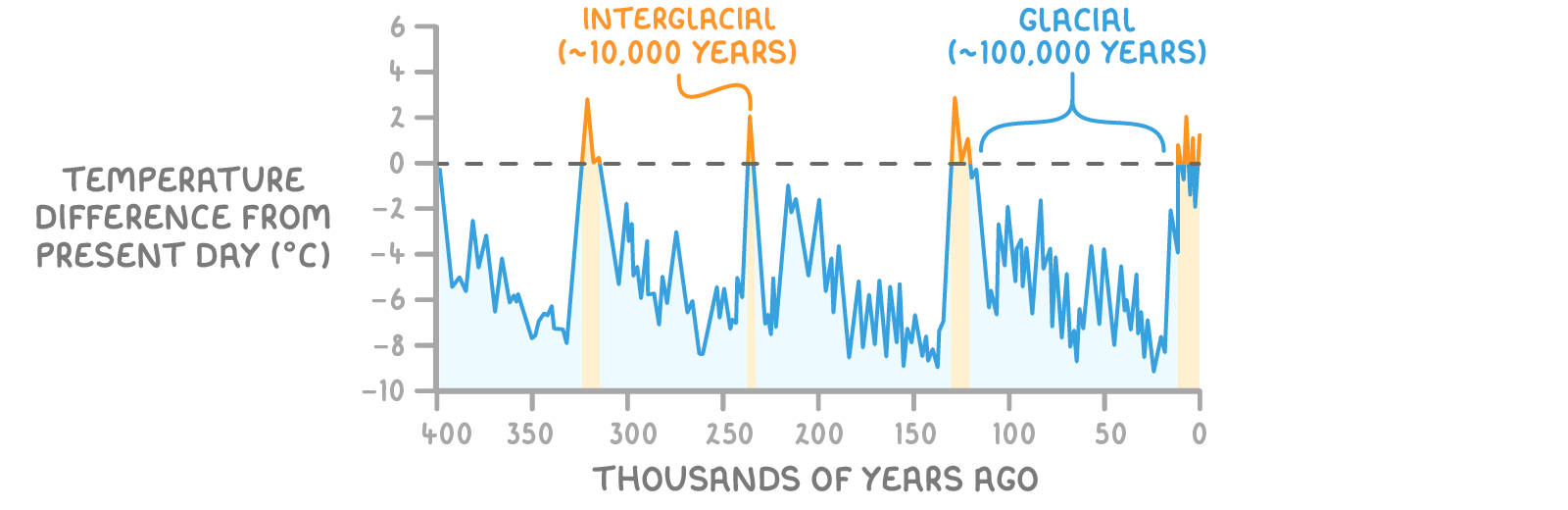
Understanding climate fluctuations
- Long-term shifts - Climate change involves substantial changes in temperature, precipitation, and other atmospheric conditions over decades or centuries.
- Quaternary period - This is the most recent geological era, beginning around 2.6 million years ago and continuing to the present. It is marked by dramatic climate shifts.
- Pre-Quaternary climate - Prior to this period, the Earth's climate was generally warmer and more stable compared to the fluctuations seen in the Quaternary.
- Glacial and interglacial cycles - During the Quaternary, the Earth has experienced cold glacial periods, lasting approximately 100,000 years, and warmer interglacial periods, typically lasting about 10,000 years.
- Current interglacial phase - The last glacial period concluded around 15,000 years ago, and the Earth has been in a warming phase since then.
Natural causes of climate change
Several natural factors contribute to changes in the Earth's climate over time. These factors vary in their impact and duration, influencing both short-term and long-term climate patterns.
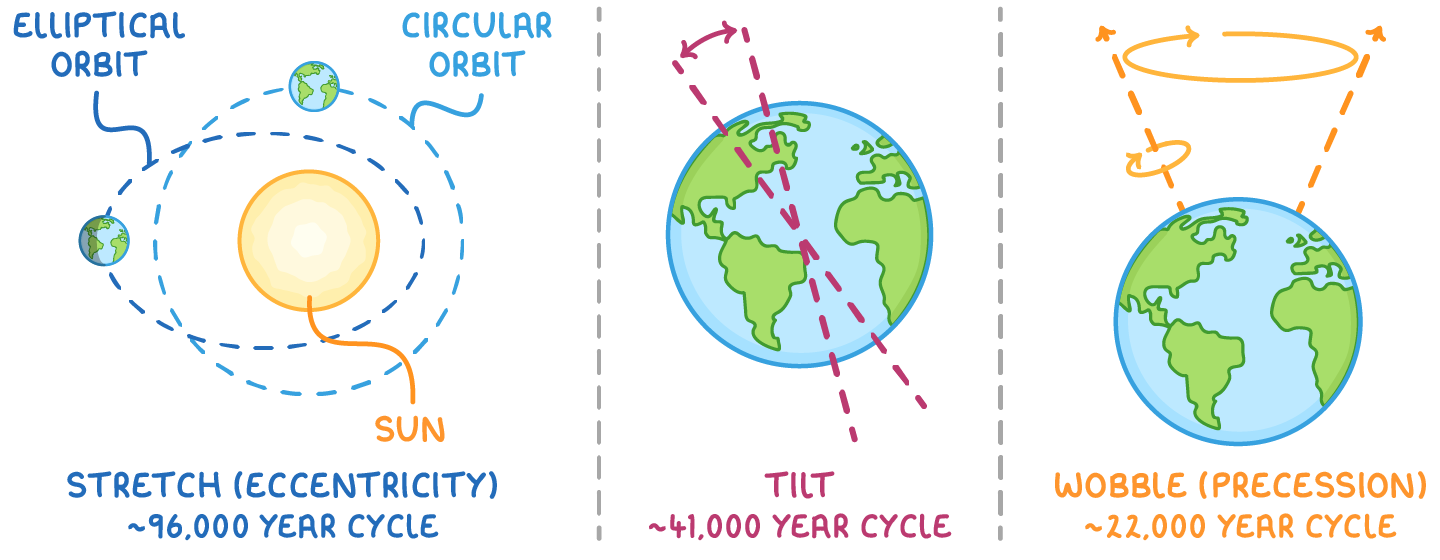
Orbital changes and their effects
- Stretch (eccentricity) - The shape of the Earth's orbit around the Sun shifts from nearly circular to elliptical and back over a cycle of roughly 96,000 years, altering the distance from the Sun and the amount of solar energy received.
- Tilt - The angle of the Earth's axis changes over a 41,000-year cycle, affecting the distribution of sunlight across the planet's surface.
- Wobble (precession) - The Earth's axis wobbles like a spinning top over a cycle of about 22,000 years, influencing seasonal intensity.
These orbital variations affect the solar radiation reaching Earth, potentially triggering the glacial and interglacial cycles observed in the Quaternary period.
Volcanic activity and atmospheric cooling
- Eruption effects - Large volcanic eruptions release vast amounts of particles and gases into the atmosphere, some of which reflect sunlight back into space, cooling the Earth's surface.
- Short-term climate impact - Such events can cause temporary global cooling. For instance, a significant eruption in the 19th century led to a temperature drop of over 1°C globally, impacting agriculture worldwide.
Variations in solar output
- Solar energy fluctuations - The Sun's energy output varies in cycles of about 11 years, with possible longer cycles spanning centuries.
- Cooling periods - Reduced solar activity can lead to cooler climates on Earth. A notable example is the period from 1645 to 1715, known as the Maunder Minimum, which aligned with a colder climate phase in Europe.
Asteroid collisions and global cooling
- Dust and debris - When asteroids strike the Earth, they can eject massive quantities of dust into the atmosphere, blocking sunlight and causing global temperatures to plummet for years.
- Historical evidence - Some researchers suggest that an asteroid impact around 12,000 years ago may have initiated a cooling event known as the Younger Dryas.
Evidence for past climate change
Scientists rely on multiple sources to reconstruct the Earth's climate history. These records provide insights into temperature changes and atmospheric conditions over thousands to millions of years.
Tree rings as climate indicators
- Annual growth patterns - Most trees form a new ring in their trunk each year, with the ring's thickness reflecting the climate conditions of that year—thicker rings indicate warmer, wetter conditions.
- Dating and analysis - By taking core samples from tree trunks and counting rings backwards from the sampling date, scientists can determine past climate trends based on ring thickness.
Ice cores and trapped gases
- Layered ice records - Ice sheets consist of annual layers of ice, preserving historical climate data.
- Temperature reconstruction - Scientists drill deep into ice sheets to extract cores, analysing trapped gases like carbon dioxide to estimate past temperatures. Ice cores from regions like Greenland can reveal climate data spanning hundreds of thousands of years.
Historical records of climate
- Modern measurements - Since the mid-19th century, thermometers have provided accurate global temperature records, though these cover a relatively short timeframe.
- Older documentation - Diaries, paintings, and other historical artefacts extend climate records further back. For instance, records of harvest dates or depictions of frozen rivers in Northern Europe from centuries ago indicate colder winters than those experienced today.
Reconstructed past climate periods
Historical climate periods have been reconstructed using the evidence above, revealing distinct warm and cool phases in the Earth's recent past.
Medieval Warm Period
- Timeframe and conditions - Spanning approximately from 900 to 1300, this period was characterised by relatively high temperatures.
- Agricultural evidence - Records show that crops like wheat were grown in areas of Finland much further north than is feasible today, suggesting temperatures were nearly 1.0°C warmer than current averages.
- Supporting data - Tree ring analyses corroborate these warmer conditions during this and earlier warm periods.
Little Ice Age
- Cooling phase - Following the Medieval Warm Period, this cooler period occurred roughly between the 16th and 19th centuries.
- Visual and historical evidence - Paintings from the 17th century depict winter events on frozen waterways in Europe that no longer freeze today, while records note sea ice extending to unusually southern coastal regions, indicating harsher winters.