9.3 - Why Energy Access Varies Globally
Factors affecting a country's energy access
Access to energy resources varies widely across the globe due to a combination of natural distribution and technological capabilities. Some nations have abundant resources, while others struggle to harness what they have due to various limitations.
Key influences on energy access
- Technological limitations - The ability to exploit energy resources often depends on available technology. Some landlocked African countries possess significant uranium reserves but lack the technology to develop nuclear power plants.
- Industrialisation levels - Highly industrialised nations tend to invest in renewable energy sources, whereas developing countries often depend heavily on fossil fuels due to cost and infrastructure constraints.
How geology and climate impact energy availability
The natural environment plays a critical role in determining which energy sources a country can utilise. Geological formations and climatic conditions create opportunities and barriers for energy production.
Geological factors in energy resource availability
- Fossil fuel formation - Fossil fuels such as coal, oil, and gas are typically located in sedimentary rock layers. impermeable rock caps trap these resources beneath permeable layers.
- Geothermal potential - Nations situated near tectonic plate boundaries can tap into geothermal energy, harnessing the Earth's internal heat to produce power.
Climatic influences on energy production
- Solar energy suitability - Countries with consistently sunny climates, such as Mediterranean nations, can generate significant solar power, unlike regions with frequent cloud cover, like parts of Northern Europe.
- Landscape and renewable energy - Wind turbines thrive in locations with consistent winds, such as elevated terrains or coastal regions. Hydroelectric power requires areas with plentiful water resources and steep valleys to create effective reservoirs for dams.
Challenges in exploiting energy resources
Even when energy resources are present, various barriers can prevent their exploitation. These challenges often stem from environmental or regulatory constraints that make extraction difficult or impossible.
Barriers to accessing energy resources
- Harsh environmental conditions - In some regions, permafrost—ground that remains frozen year-round—hinders access to underlying fossil fuel deposits.
- Protected areas - Resources located in environmentally sensitive or protected zones, such as certain polar ecosystems, are often off-limits to exploitation due to conservation policies.
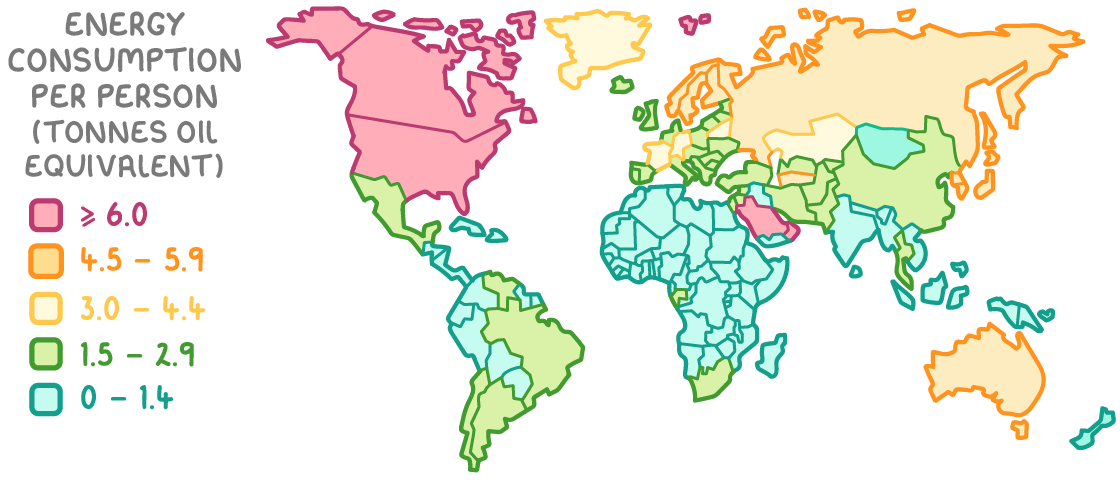
Global patterns of energy consumption per person
Energy consumption varies dramatically across the world, reflecting differences in lifestyle, economic status, and access to resources. These patterns highlight disparities between regions and nations at different stages of development.
Variations in energy use worldwide
- Developed nations - Countries in regions like Scandinavia and North America consume high levels of energy per person due to widespread access to electricity, heating, and energy-intensive appliances.
- Emerging economies - Rapidly industrialising Asian economies show increasing energy use as wealth rises and citizens purchase more energy-consuming goods like vehicles and household appliances.
- Developing countries - Nations in parts of Central Africa often have lower per-person energy consumption due to limited affordability, with many relying on basic energy sources for daily needs.
Regional energy source differences
- Traditional fuel reliance - In areas with poorly developed energy networks, such as parts of sub-Saharan regions, biomass like wood remains a primary source for cooking and heating.
- Industrial energy demands - Manufacturing-heavy economies in developed and emerging regions require substantial energy for machinery and transport, unlike developing areas where agriculture, a low-energy sector, dominates.
Relationship between development and energy use
There is a strong link between a country's level of economic development and its energy consumption. Access to energy often drives development, while a lack of it can hinder progress.
How development influences energy consumption
- Wealth and energy access - As countries develop economically, their populations gain access to more energy-intensive technologies, increasing overall consumption. For example, emerging economies see rising demand for cars and electronics as incomes grow.
- Development barriers - Limited energy access in developing nations restricts industrial growth and infrastructure improvements, creating a cycle where low energy availability impedes economic progress.
- Economic structure - Developed and emerging economies with significant industrial sectors consume vast amounts of energy, while developing countries with agriculture-based economies use far less due to the lower energy demands of primary industries.