9.7 - Future Energy Use
Contrasting views on global energy futures
The future of global energy use remains uncertain, with debates centring on how humanity should approach energy production and consumption. Two primary scenarios dominate this discussion, each with distinct implications for the environment, economy, and society.
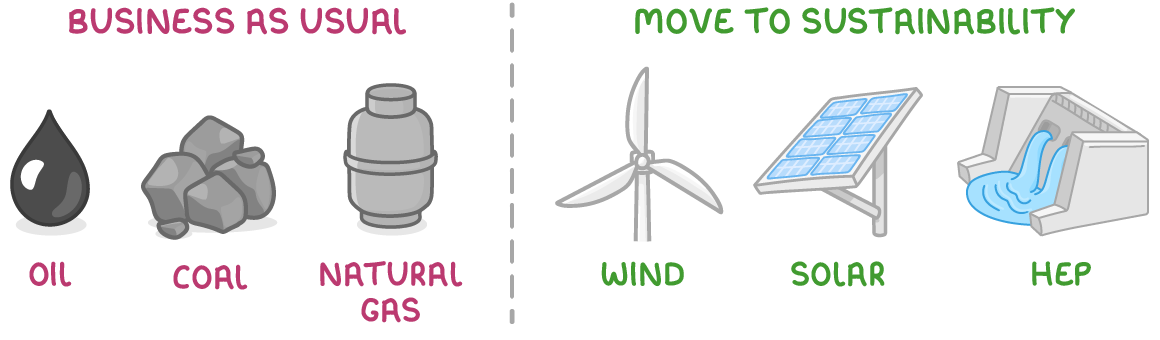
Two main energy future scenarios
- Business as usual - This scenario involves continuing reliance on fossil fuels such as oil, coal, and natural gas. It prioritises short-term cost savings and existing infrastructure but risks long-term environmental damage and energy insecurity as reserves deplete.
- Move to sustainability - This approach focuses on reducing fossil fuel use and increasing investment in renewable energy sources like wind, solar, and hydroelectric power (HEP). While it aims to mitigate environmental harm, it often requires significant upfront costs and long-term commitment.
Attitudes of different groups towards energy futures
Various stakeholders hold differing views on energy futures, influenced by their priorities, roles, and responsibilities. These perspectives shape policies, investments, and public opinion on how energy should be managed.
Perspectives of key stakeholders
- Consumers:
- Generally seek secure and affordable energy supplies to avoid disruptions.
- While fossil fuel depletion raises concerns about shortages and energy security, the higher costs of sustainable energy can be a barrier.
- However, growing environmental awareness is leading some consumers to support sustainability.
- Transnational Corporations (TNCs):
- Many energy-focused TNCs profit from fossil fuel extraction and refining, gaining wealth and influence through control of oil reserves.
- A shift to renewables could result in financial losses for them due to the high investment required.
- Non-energy TNCs often prefer the business-as-usual scenario as sustainable energy may increase operational costs.
- Governments:
- Face the challenge of balancing short-term energy needs with long-term sustainability.
- Fossil fuels provide cheap, reliable energy in the immediate term, but a sustainable approach is essential for future stability.
- Developed nations are under pressure to prioritise environmental protection, while emerging economies worry whether sustainable energy can support their development goals.
- Climate scientists:
- Focus on the impact of human activities on the climate.
- Reports from the Intergovernmental Panel on Climate Change (IPCC) predict severe temperature rises of up to 4.8°C by the end of the century under high-emission scenarios, alongside consequences like rising sea levels.
- They strongly advocate for reducing fossil fuel reliance to limit climate change effects.
- Environmental groups:
- Oppose fossil fuel use due to its environmental damage, pushing for a rapid transition to renewable energy sources.
- They firmly support the move to sustainability scenario to protect ecosystems and reduce pollution.
Changing perspectives on sustainable energy
Attitudes towards energy futures are evolving, driven by increased awareness of environmental issues and the need to reduce carbon emissions. This shift is particularly noticeable in certain regions and demographics.
Drivers of changing attitudes
- Growing awareness - There is an increasing understanding of the importance of sustainable energy and the need to lower carbon footprints across the globe.
- Influence in developed countries - Several factors contribute to this shift in developed nations:
- Rising affluence, enabling choices like fuel-efficient vehicles or solar panel installations.
- Improved education on the consequences of unsustainable energy practices.
- Heightened environmental concerns, prompting more individuals to advocate for greener policies and practices.
Challenges in developing countries
- Economic priorities - In developing nations, economic growth often takes precedence over environmental concerns, leading to continued reliance on cheaper fossil fuels.
- Future shifts - As these countries progress economically, environmental protection is likely to become a higher priority, potentially aligning their policies with sustainability goals.
Understanding carbon and ecological footprints
Footprints are tools used to measure the environmental impact of individuals, organisations, or products. They help highlight areas where changes can reduce harm to the planet.
Definitions of key footprint concepts
- Carbon footprint - A measure of the greenhouse gases, such as carbon dioxide, produced by the activities of an individual, organisation, or product. It reflects the contribution to climate change.
- Ecological footprint - A measure of the amount of land required to sustain a particular lifestyle or activity. It can be applied at individual, community, or national levels to assess resource demands.
Factors influencing footprint calculations
Calculating carbon and ecological footprints involves assessing various aspects of daily life. These calculations reveal how lifestyle choices impact the environment and identify opportunities for reduction.
Key components in footprint assessments
| Component | Impact on footprint |
|---|---|
| Food choices | High meat consumption increases greenhouse gas emissions and land use due to livestock farming. Food wastage adds to the footprint, while locally produced food can reduce transport-related emissions. |
| Home characteristics | The size of a home and the number of occupants affect energy use. The type of energy (e.g., renewable vs. fossil fuel) and energy-saving features like insulation also play a significant role. |
| Travel habits | Frequent air travel and reliance on personal vehicles for commuting contribute heavily to emissions. Choosing public transport or eco-friendly options can lower this impact. |
| Lifestyle patterns | High consumption of goods like clothing and electronics increases resource use. Recycling habits and reducing unnecessary purchases can help minimise the footprint. |