7.1 - Biomes: Global Distribution & Features
Characteristics of biomes and ecosystems
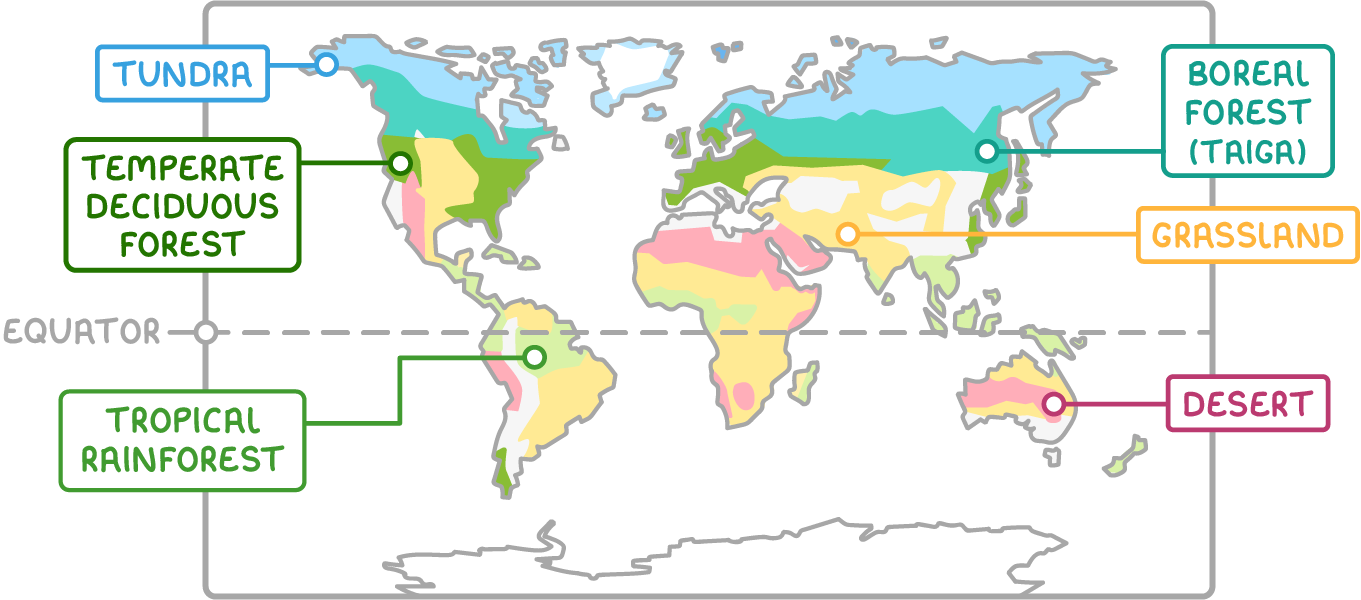
Biomes are vast, global-scale ecosystems defined by their unique vegetation and influenced by climate patterns. They represent large regions with distinct plant and animal communities shaped by environmental conditions.
Key features of biomes:
- Scale - Biomes cover extensive areas, often spanning continents, and are identified by dominant vegetation types such as tropical forests or deserts.
- Climate's role - Temperature, rainfall, and sunlight hours are critical in shaping the type of biome, as they influence which plants and animals can thrive.
- Global variation - Different climates around the world result in a variety of biomes, each adapted to local environmental conditions.
Ecosystems include all biotic elements (living organisms like plants and animals) and abiotic elements (non-living elements like soil and water) within a defined space, interacting as a cohesive unit.
The climate and features of major global biomes
Biomes across the globe exhibit unique climatic conditions and characteristics, influencing the plants, animals, and soils found within them.
| Biome | Climate conditions | Vegetation | Wildlife | Soil |
|---|---|---|---|---|
| Tropical forests | Near-constant climate with no distinct seasons; high temperatures (20-28°C annually); very high rainfall (~2,000 mm/year); consistent 12-hour days with abundant sunshine | Evergreen trees growing rapidly to capture maximum sunlight year-round | Dense plant life supports diverse species including primates, large cats, snakes, vibrant frogs, and tree-dwelling mammals | Rapid plant growth and leaf shedding provide steady nutrients; quick decomposition maintains fertile soil |
| Temperate forests | Four distinct seasons with warm summers and cool winters; high rainfall (up to 1,500 mm annually); variable daylight hours | Broad-leaved trees like oak that shed leaves in autumn, plus shrubs and ferns | Moderate species range including mammals like deer, birds like thrushes, and various insects | Leaf litter decomposes swiftly in mild, wet conditions, creating thick, nutrient-rich soils |
| Boreal forests | Short summers and long, harsh winters; winter temperatures below -20°C, summer averages ~10°C; low precipitation (<500 mm yearly, mostly snow); extreme daylight variation | Mainly evergreen coniferous trees like pine, alongside mosses and lichens | Fewer species due to limited food and cold; inhabitants like bears, lynx, and hawks adapted to harsh climate | Slow decomposition in cool, dry conditions creates thin, acidic, nutrient-poor soils; frozen ground for most of the year |
| Tropical grasslands | Moderate rainfall (800-900 mm/year) with distinct wet and dry seasons; temperatures peak at 35°C before wet season, drop to 15°C after; ample year-round sunshine | Dominated by grasses, scrub, and occasional trees like umbrella thorn | Numerous insects and large mammals such as cheetahs, rhinoceros, and wildebeest | Grass dieback in dry seasons forms thin, nutrient-rich soil, but heavy rains wash nutrients away in wet seasons |
| Temperate grasslands | Hot summers (up to 40°C) and cold winters (down to -40°C); precipitation 250-500 mm annually, mostly late spring/early summer; variable sunlight | Primarily grasses with few trees | Supports mammals like pronghorn and small rodents | Fast decomposition in warm summers creates relatively thick, fertile soils |
| Deserts | Extremely low rainfall (<250 mm/year, sometimes only every few years); daytime temperatures up to 45°C, dropping below freezing at night; minimal cloud cover with high sunshine | Sparse vegetation due to water scarcity; drought-tolerant plants like succulents and shrubs | Limited species adapted to harsh conditions, including geckos, vipers, and beetles | Thin and nutrient-poor due to minimal vegetation and slow decomposition in dry conditions |
| Tundra | Cold temperatures (5-10°C summer, below -30°C winter); low precipitation (<250 mm annually, mostly snow); near-constant daylight in summer, almost none in winter | Very limited vegetation with mosses, grasses, and low shrubs; almost no trees | Few species such as lemmings, snowy owls, and migratory birds due to cold and scarce food | Thin and nutrient-poor due to slow decomposition; often has permafrost layer hindering drainage |
Factors influencing biome distribution
The distribution of biomes worldwide is primarily driven by climate, but other environmental factors also play a significant role at a local level, affecting the specific characteristics within a biome.
Key influences on biome distribution
- Climate dominance - Temperature, rainfall, and sunlight hours are the primary determinants of biome type, as they dictate which species can survive.
- Altitude effects - Higher elevations are colder, reducing plant growth and animal diversity, leading to thinner soils with less organic matter.
- Rock type variations - Some rocks weather easily into soil, and their mineral content affects soil fertility; permeability also influences water availability.
- Soil characteristics - Nutrient-rich soils support more vegetation, while soil acidity and drainage impact plant types, such as acidic peat soils favouring conifers.
- Drainage conditions - Poor drainage leads to waterlogged soils, restricting growth to water-adapted species and sometimes supporting aquatic life.
Biotic and abiotic interactions in biomes
Biomes are dynamic systems where living (biotic) and non-living (abiotic) components continuously interact, shaping the environment and influencing each other in complex ways.
Biotic and abiotic components defined
- Biotic components - The living elements, including flora (plants) and fauna (animals), which contribute to the ecosystem's biodiversity.
- Abiotic components - The non-living elements, such as soil, water, rocks, and atmospheric conditions, which provide the physical environment for life.
Examples of interactions within biomes
- Water availability and vegetation - Soil moisture levels determine plant types; for instance, arid soils support only succulents, while plants release water into the atmosphere, aiding rainfall.
- Vegetation and soil relationship - Dense plant cover contributes nutrients to soil through leaf fall, enhancing fertility, while soil type influences which plants can grow.
- Biological weathering by organisms - Living things like tree roots break down rocks into smaller fragments, contributing to soil formation and altering the landscape over time..