8.2 - Tropical Rainforests: Threats
The definition and scale of deforestation
Deforestation refers to the deliberate clearing of trees from forested areas. Deforestation is considered a direct threat to tropical rainforests because it involves the intentional removal of trees, directly impacting the forest's structure and biodiversity.
This process is happening on a massive scale across many regions, leading to the loss of vast areas of these vital ecosystems. Tropical rainforests, which are among the most biodiverse regions on Earth, are experiencing rapid tree loss due to human activities, affecting global environmental health.
The primary reasons behind deforestation
Several human activities drive the extensive clearing of tropical rainforests. These activities are often motivated by economic needs, resource extraction, and agricultural demands, contributing to the ongoing reduction of forest cover.
Major causes of deforestation
- Local need for fuel wood - In many communities near tropical rainforests, trees are cut down to provide wood for cooking fires or to produce charcoal for heating and other uses.
- Commercial timber extraction - Large-scale logging operations target valuable hardwoods for furniture production and building materials, often necessitating additional clearance for access roads.
- Exploitation of mineral resources - Tropical rainforests often sit atop rich deposits of minerals such as gold, iron ore, and copper. Clearing land for mining involves digging extensive pits and sometimes using explosives to access these resources.
- Hydroelectric power development - Large rivers in tropical regions are dammed to generate hydroelectric power (HEP), resulting in the flooding of extensive forest areas upstream of the dams.
- Commercial agriculture - Vast tracts of forest are removed to create space for livestock ranching or to establish large plantations for crops like palm oil and soya beans.
- Subsistence agriculture - Small-scale farmers clear forest patches to cultivate crops for their own consumption and to support their families.
- Biofuel production demands - The growing need for biofuels, which are derived from plant materials, requires significant land areas for crop cultivation, leading to further tree felling to accommodate these agricultural activities.
The environmental impacts of deforestation
The removal of trees from tropical rainforests triggers a range of detrimental environmental effects. These consequences disrupt the delicate balance of these ecosystems, affecting both local and global environmental conditions.
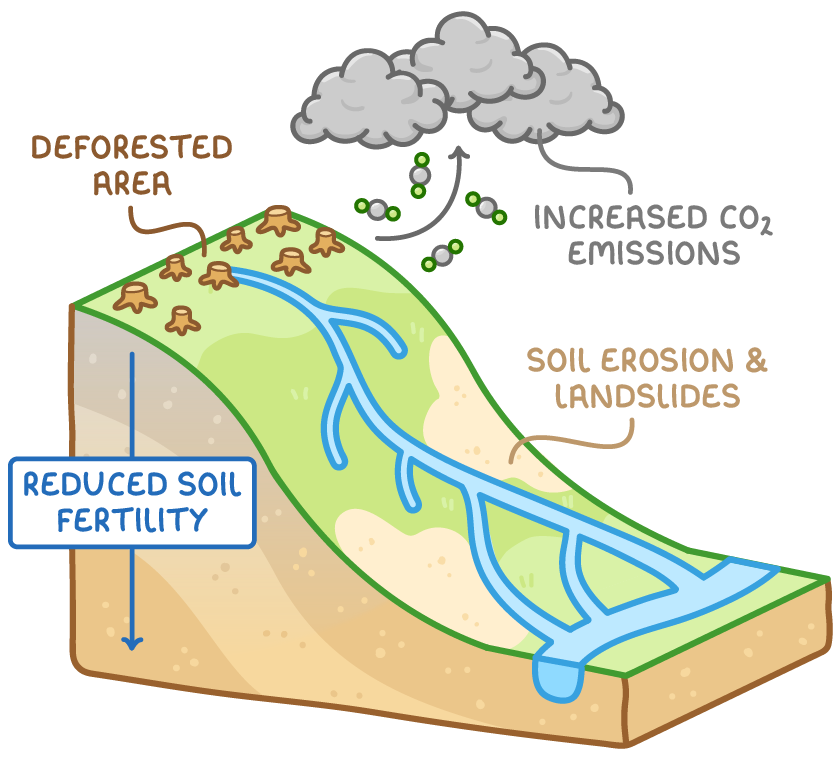
Key environmental consequences of deforestation
- Soil erosion and related hazards - Without tree roots to anchor the soil, heavy rainfall washes it away, leading to soil erosion. This can cause landslides and increase the risk of flooding in surrounding areas.
- Reduced soil fertility - The absence of a tree canopy to slow down rainfall, combined with a lack of roots to absorb water, results in more water reaching the ground. This washes away essential nutrients, making the soil less fertile and less capable of supporting plant life.
- Increased greenhouse gas emissions - Trees play a crucial role in absorbing carbon dioxide (CO2) from the atmosphere. When forests are burned or cleared, not only is this absorption capacity lost, but CO2 is also released into the atmosphere, contributing to the greenhouse effect and global warming.
Climate change as an indirect threat
Unlike deforestation, which directly targets trees, climate change represents an indirect threat to tropical rainforests. It affects these ecosystems through broader environmental shifts rather than intentional human actions aimed at forest removal.
How climate change impacts tropical rainforests
- Rising temperatures and reduced rainfall - In certain tropical regions, climate change is causing temperatures to increase while rainfall decreases, leading to prolonged periods of drought.
- Ecosystem stress from drought - Tropical rainforest species are adapted to wet, humid conditions. Droughts cause significant stress, resulting in the death of many plants and animals unable to cope with drier conditions.
- Risk of species extinction - Frequent or extended droughts can push some species towards extinction, as they struggle to survive in an environment that no longer suits their needs.
- Increased forest fires - Dry conditions heighten the likelihood of forest fires, which can devastate large areas of rainforest, further reducing biodiversity and releasing stored carbon into the atmosphere.