6.2 - Adaptations to Tropical Rainforests
Plant adaptations to physical conditions
Tropical rainforests present challenging conditions with heavy rainfall, intense heat, and fierce competition for sunlight. Plants have developed remarkable features to thrive in this environment.
Key adaptations of rainforest plants
- Height for sunlight - Trees grow exceptionally tall to reach above the canopy and capture sunlight, outcompeting shorter plants for light.
- Specialised leaves - Leaves are often thick and waxy with pointed drip-tips that funnel rainwater off the plant. This prevents damage from water weight and stops fungi or bacteria from growing in standing water.
- Climbing strategies - Plants like lianas wrap around tree trunks to climb upwards, accessing sunlight without expending energy on growing their own sturdy stems.
- Efficient bark - Many trees have thin, smooth bark since there's no need for protection against cold. This smooth texture aids in shedding water quickly during heavy rains.
- Support structures - Tall trees are stabilised by wide, buttress roots that spread out at the base, providing a strong foundation in shallow, nutrient-poor soil.
- Continuous growth - Unlike seasonal plants, rainforest species shed leaves gradually throughout the year, allowing constant growth and photosynthesis in the warm, wet climate.
Structural layers and their adaptations
Tropical rainforests are organised into distinct vertical layers, each with unique conditions and plant adaptations.
Layers of the rainforest and associated adaptations
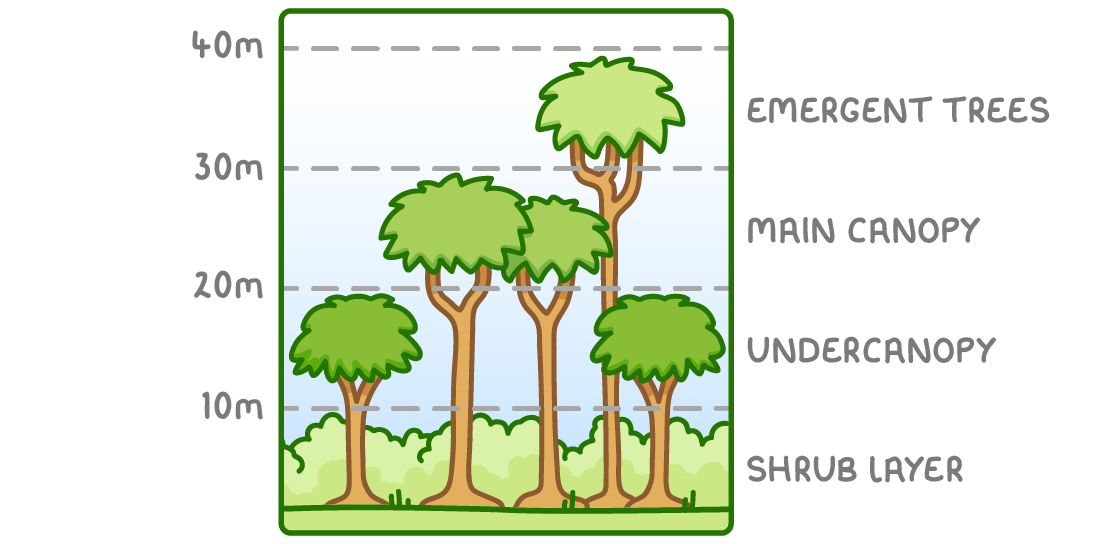
| Layer | Approximate height | Characteristics and adaptations |
|---|---|---|
| Emergent trees | 40-50 m | Tower above other trees with branches only at the top to maximise sunlight exposure. |
| Main canopy | 30-40 m | Dense layer of tree crowns forming a continuous cover, competing fiercely for light. |
| Undercanopy | 20-30 m | Receives filtered light; plants often have broad leaves to capture limited sunlight. |
| Shrub layer | 5-10 m | Closest to the ground with sparse light; small plants and saplings adapted to shade. |
Animal adaptations for survival and movement
Animals in tropical rainforests face challenges such as dense vegetation, height differences, and the need for efficient movement.
Physical traits for movement and survival
- Strong limbs for climbing - Many canopy-dwelling animals, like spider monkeys, possess powerful limbs to swing and leap between branches with ease.
- Specialised wings - Birds such as macaws have short, agile wings that allow them to dart through the dense tangle of trees.
- Climbing aids - Creatures like red-eyed tree frogs have sticky pads on their feet, enabling them to cling to vertical surfaces and climb effortlessly.
- Gliding mechanisms - Some animals, such as gliding lemurs, have skin flaps that act like wings, allowing them to glide from tree to tree.
- Swimming ability - Predators like jaguars are adept swimmers, crossing rivers within the rainforest.
Finding food and avoiding predators
Securing food and evading danger are critical for survival in the competitive rainforest environment.
Survival strategies in the rainforest
- Camouflage for protection - Species like leaf-tailed geckos blend into their surroundings, resembling leaves to avoid detection by predators.
- Enhanced senses in low light - Ground-dwelling animals, such as anteaters, rely on a heightened sense of smell to detect threats in the dim forest floor.
- Nocturnal lifestyles - Many animals, including sloths, are active at night to avoid the heat of the day, conserving energy in cooler temperatures.
- Strategic positioning - Canopy animals often stay high in the trees to access abundant fruits and leaves, while also keeping a safe distance from ground-based predators..
TermDefinition
CanopyThe continuous layer of branches and leaves formed by the crowns of closely spaced trees.
Emergent layerThe tallest layer of the rainforest, where individual trees tower above the main canopy.
Drip-tipA pointed end on a leaf that allows rainwater to run off quickly, preventing damage and fungal growth.
LianasThick, woody vines that root in the soil and climb up tree trunks to reach the sunlight.
Buttress rootsLarge, wide roots that sit above the soil, providing stability for tall trees in shallow, nutrient-poor ground.