17.1 - Global Patterns in Water Demand
The concept of water security and insecurity
Water is a vital resource, but its availability differs greatly across the globe. Water security and insecurity are terms used to describe whether regions have enough water to meet the needs of their populations, industries, and agriculture.
Understanding water security and deficit
- Water security - Achieved when a region has a reliable and sustainable supply of good-quality water to meet all demands, including personal health, farming, and industrial needs.
- Water surplus - Occurs in areas with an excess of water, ensuring security as there is more than enough to meet everyone's requirements.
- Water deficit - Happens when there is too little water available, leading to water insecurity where clean water is insufficient for drinking, crop irrigation, or energy production.
- Water stress - Arises when the demand for water outstrips the supply during specific periods or when the water quality is too poor to be usable.
Factors influencing water security
- Availability of water - Determined by natural sources such as rainfall, rivers, and groundwater reserves.
- Population size - A larger number of people increases the demand for water, straining resources in densely populated areas.
- Access to water - Limited in poorer regions due to inadequate infrastructure or economic barriers, worsening insecurity even when water is physically present.
Global patterns of water availability and stress
The distribution of water security and insecurity worldwide is influenced by environmental and human factors. Some regions enjoy abundant supplies, while others face significant challenges due to scarcity or overuse.
Characteristics of water security and insecurity
- Water security regions - Typically found in areas with high rainfall and/or low population density, ensuring ample water per person.
- Water insecurity regions - Often located in areas with low rainfall and/or high population density, where water resources are stretched thin.
- Vulnerability to stress - Using a high percentage of available water supplies increases the risk of stress, especially during droughts or peak demand periods.
Categorisation of water use intensity
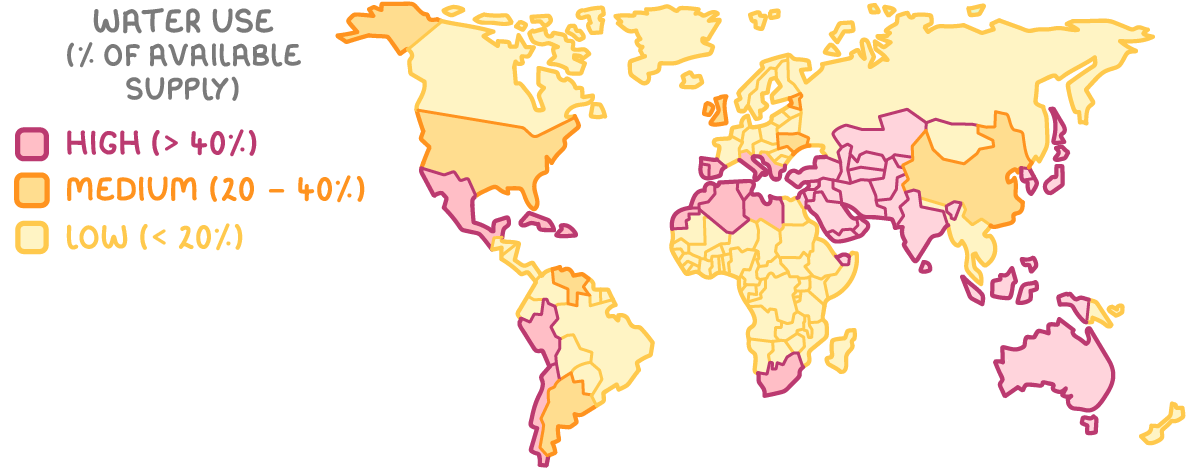
Water use is measured as a percentage of the available supply, indicating the level of strain on resources:
- High - >40% of available supply used
- Medium - 20-40% of available supply used
- Low - <20% of available supply used
Factors contributing to rising water demand
The demand for water globally is increasing at a rapid pace, driven by various social and economic changes. This growing need poses challenges to maintaining water security in many regions.
Main drivers of increased water demand
- Population growth - As the global population rises, each individual requires water for basic needs like drinking, cooking, and hygiene. Additionally, more people mean a greater need for food, which relies heavily on water for irrigation.
- Economic development - As countries develop, water consumption increases due to industrial activities, energy production, and higher living standards that include water-intensive amenities like showers and household appliances.
Population and economic impacts on water use
Both population growth and economic progress have specific and significant effects on how water is consumed, often intensifying the pressure on limited resources.
Effects of population growth on water consumption
- Basic human needs - Every person requires a daily supply of water for survival and hygiene, increasing overall demand as numbers grow.
- Agricultural demands - Around 70% of the world's freshwater is used in agriculture, and a larger population necessitates more food production, further boosting water use through irrigation.
Effects of economic development on water consumption
- Industrial expansion - Manufacturing processes for goods consume substantial amounts of water, especially in rapidly industrialising nations.
- Energy production - Generating energy in developed regions uses vast quantities of freshwater, with annual global usage exceeding 40 billion m³ for this purpose.
- Rising living standards - Wealthier populations adopt lifestyles that use more water, such as frequent use of flushing toilets, dishwashers, and other modern conveniences.
Global energy production and consumption
Energy production and consumption patterns vary significantly across the globe due to differences in resources, wealth, and development levels.
Disparities in energy production
- Resource-rich nations - Countries with vast reserves of fossil fuels like oil, coal, or natural gas often become leading energy producers due to their natural endowments.
- Financial and technical capacity - Nations with the economic strength and technology to exploit resources produce more energy, while others with limited means or political instability struggle to develop their reserves.
Variations in energy consumption
- Wealth and development link - Developed, wealthier countries consume more energy per person due to higher living standards, widespread access to electricity, and use of energy-intensive technologies like personal cars.
- Lower consumption in developing nations - In less developed countries, energy use per person is lower as populations often cannot afford high-energy lifestyles, and access to energy services is limited.