18.1 - Global Patterns in Energy Supply & Demand
The concept of energy security
Energy security refers to the assurance of a consistent, uninterrupted, and affordable energy supply for a country. It is a critical aspect of national stability and economic well-being, influenced by several key elements.
Key determinants of energy security
- Available supplies - A country's energy security hinges on the energy it can produce domestically or import from other nations.
- Population size - Larger populations generally require more energy to meet basic needs, affecting overall demand.
- Per-person energy use - The average energy consumption per individual impacts the total energy required, often linked to lifestyle and economic status.
- Energy surplus vs. deficit - A surplus occurs when production exceeds demand, allowing for exports, while a deficit means a country has less energy than needed, leading to potential insecurity.
Uneven distribution of global energy
Energy production and consumption patterns vary significantly across the globe due to differences in resources, wealth, and development levels.
Disparities in energy production
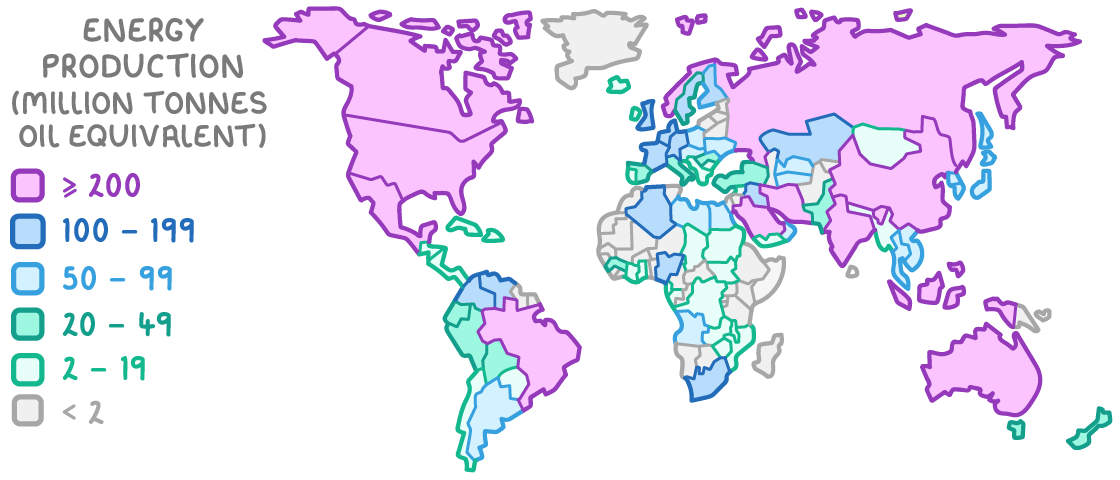
- Resource-rich nations - Countries with vast reserves of fossil fuels like oil, coal, or natural gas often become leading energy producers due to their natural endowments.
- Financial and technical capacity - Nations with the economic strength and technology to exploit resources produce more energy, while others with limited means or political instability struggle to develop their reserves.
Variations in energy consumption
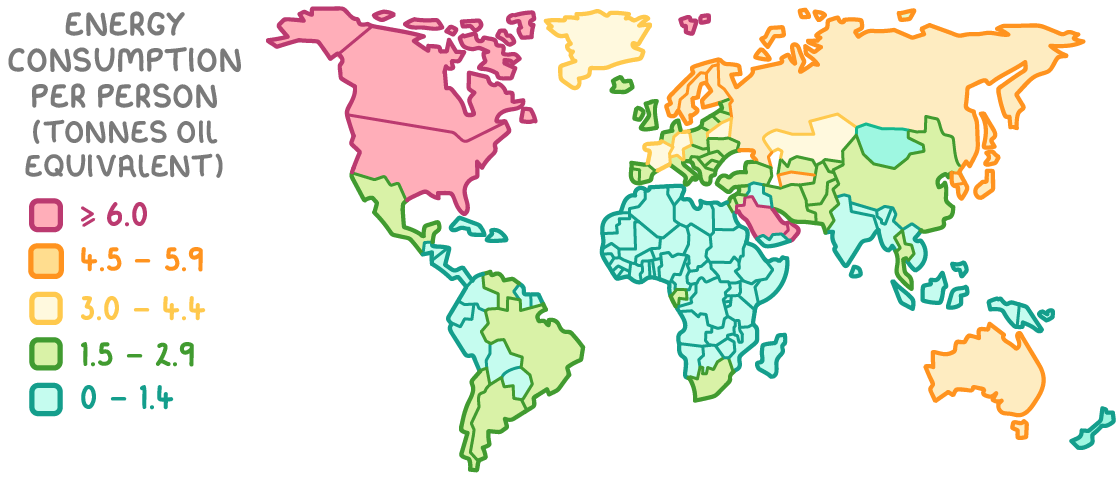
- Wealth and development link - Developed, wealthier countries consume more energy per person due to higher living standards, widespread access to electricity, and use of energy-intensive technologies like personal cars.
- Lower consumption in developing nations - In less developed countries, energy use per person is lower as populations often cannot afford high-energy lifestyles, and access to energy services is limited.
Reasons for increasing global energy demand
The demand for energy worldwide is on an upward trend, driven by several interconnected factors related to population growth, economic progress, and technological changes.
Drivers of rising energy demand
- Population growth - With the global population expected to reach over 9 billion by 2040, the sheer number of people increases the need for energy to cover essentials like heating, lighting, and cooking.
- Economic progress - As developing countries grow wealthier, individuals purchase more energy-consuming goods, and industrial activities expand, significantly boosting energy requirements.
- Technological developments - New gadgets and electronics increase energy needs, while advancements making energy cheaper lead to higher usage as affordability improves.
Factors affecting energy supply
A variety of influences impact the availability of energy, ranging from natural conditions to human-driven factors.
Influences on energy supply
- Physical constraints - Fossil fuel reserves are unevenly spread globally and are non-renewable, meaning they will deplete over time. Extraction costs vary with location, while climate and terrain influence renewable energy potential. Natural disasters can also disrupt infrastructure.
- Technological barriers and advances - Innovations like fracking unlock previously unreachable reserves, and automated systems allow operation in harsh conditions. However, some nations lack access to such technologies due to high costs or developmental gaps.
- Economic challenges - Extracting non-renewable resources is becoming more expensive as easy reserves dwindle. Volatile fossil fuel prices, reliance on imports, and the high cost of infrastructure development pose issues, especially for less developed economies with untapped resources but limited funds.
- Political influences - Instability in a region can hinder energy exports, while international agreements on climate change push for reduced emissions. Concerns over nuclear safety have also led to tighter regulations affecting energy production.
Impacts of energy insecurity on various sectors
When energy demand outstrips supply, the resulting insecurity has wide-ranging consequences across environmental, economic, and social spheres.
Consequences of energy insecurity
- Environmental and economic strain - Exploitation of hard-to-reach or environmentally fragile areas increases, raising production costs and risks from extreme extraction techniques.
- Industrial challenges - Energy shortages lower factory output, leading to reduced production, potential closures, or relocations. This threatens jobs and raises costs for consumers as energy prices climb.
- Agricultural and food production issues - Limited energy hampers mechanised farming. The push for biofuels as an alternative competes with food crops for land, potentially causing shortages and higher food prices.
- Risk of conflict - Energy deficits can spark political unrest, fuel tensions between energy-rich and energy-poor areas, and lead to disputes over resource-rich territories.