3.11 - Kingship
The right to rule and the duty to govern well
Kingship in Macbeth concerns both a ruler's claim to the throne and the responsibilities that come with it. Duncan's generosity, Macbeth's tyranny, and Malcolm's promises allow Shakespeare to explore whether royal power serves the country or its holder.
Malcolm is Duncan's son and named successor, but the play also tests his fitness to govern. Macbeth gains the crown through murder and uses it to protect his own position. Possessing the title does not make him worthy of loyalty.
Duncan's generosity and misplaced trust
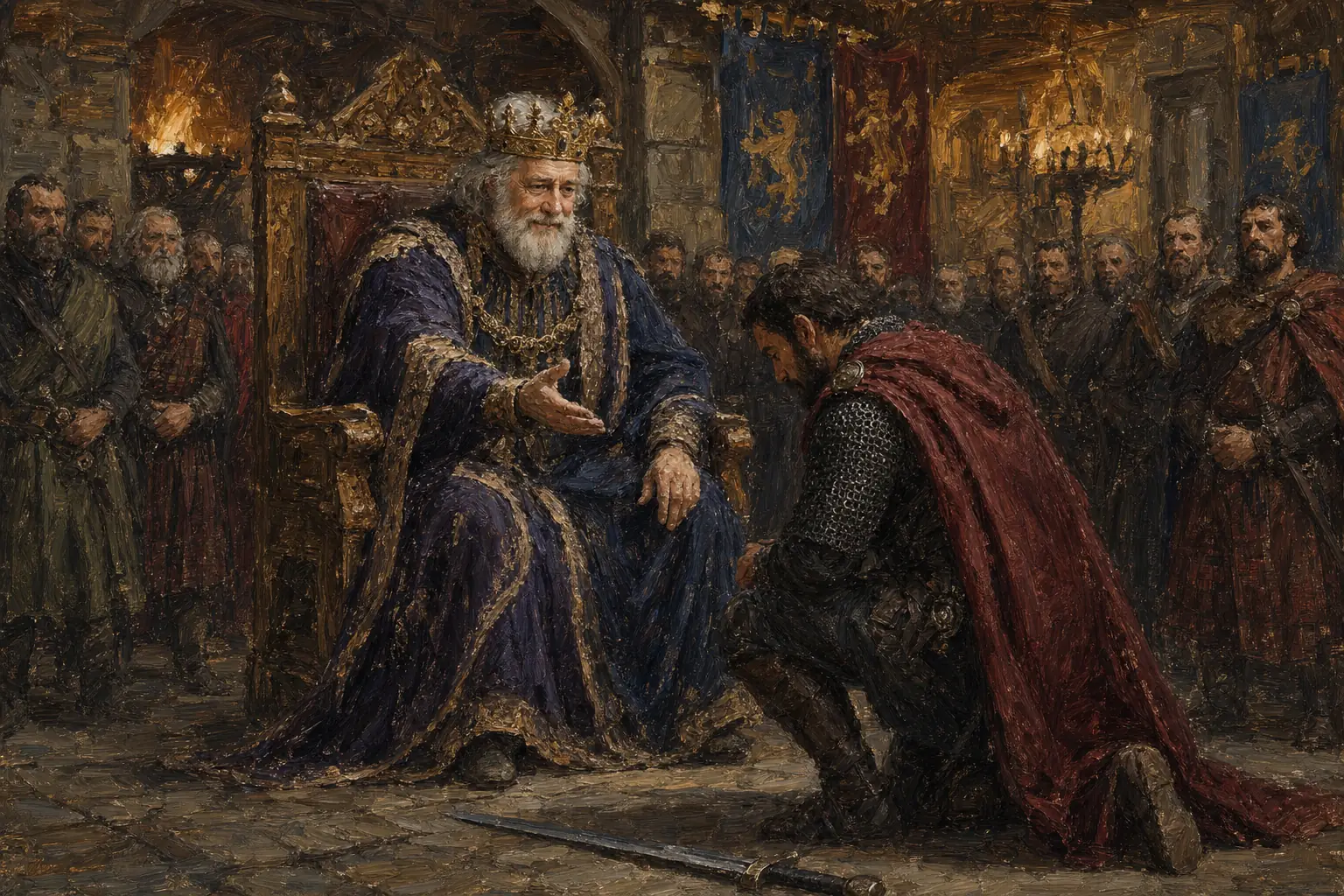
Duncan rewards Macbeth for defending Scotland by awarding him the traitorous Thane of Cawdor's title. In Act 1, Scene 4, he describes his support for Macbeth through an image of cultivation: "I have begun to plant thee and will labour / To make thee full of growing." A good ruler helps those who serve the kingdom flourish.
Macbeth recognises Duncan's virtues
Considering murder in Act 1, Scene 7, Macbeth acknowledges that Duncan has exercised his authority gently and been "So clear in his great office", meaning free from corruption. His victim's goodness leaves him without a public justification for taking the throne.
Macbeth also recognises his obligations. As Duncan's relative and subject, he owes him loyalty, and as his host, he has a duty to protect him. The murder knowingly violates both political allegiance and personal trust.
Generosity does not prevent misjudgement
Duncan admits that he placed "An absolute trust" in the former Cawdor. Macbeth enters after this admission, and Duncan greets him warmly. The audience already knows that Macbeth has imagined murder, creating dramatic irony: Duncan's confidence is again misplaced.
Shakespeare presents a benevolent king whose inability to identify treachery leaves him vulnerable. Malcolm's later caution develops a different response to that danger.
Sacred kingship and disorder in nature
On discovering Duncan's body, Macduff speaks of "Most sacrilegious murder" and calls the king's body "The Lord's anointed temple" (Act 2, Scene 3). Divine right is the belief that a monarch's authority comes from God. Anointing with holy oil forms part of a coronation, marking the sacred character of the office. Macduff's language makes the murder an offence against God as well as a political betrayal.
Nature reflects broken human order
Ross and an Old Man discuss disturbing events in Act 2, Scene 4. Their accounts extend the sense that the murder has violated the proper relations between ruler, subjects, and country.
Examples from the play:
- Daylight is suppressed - Ross says "dark night strangles the travelling lamp". The lamp is the sun, and the violent verb makes darkness seem to attack daylight, echoing the attack on Duncan.
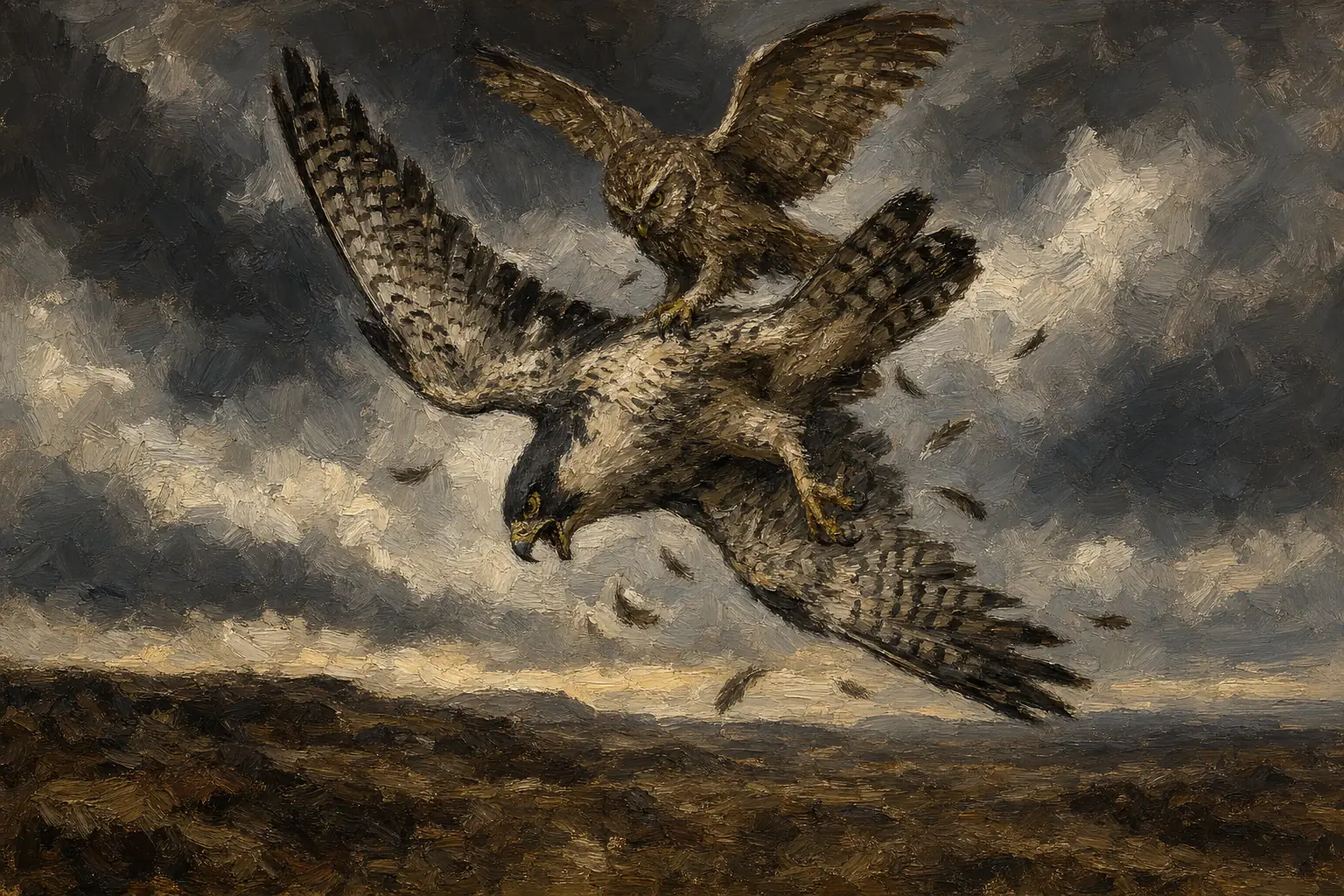
- An owl kills a falcon - The Old Man describes a mousing owl killing a high-flying falcon. This reverses the expected natural hierarchy and parallels a subject killing his king. The Old Man explicitly compares the unnatural event with the murder.
- The king's horses turn destructive - Ross reports that Duncan's horses broke free and turned wild. The Old Man adds the hearsay that they ate each other, and Ross confirms that he saw it. Their account presents creatures destroying the order they once belonged to.
The disturbances are reported in dialogue. Shakespeare uses these reports to connect political violence with a wider disorder.
Malcolm tests what a king should be
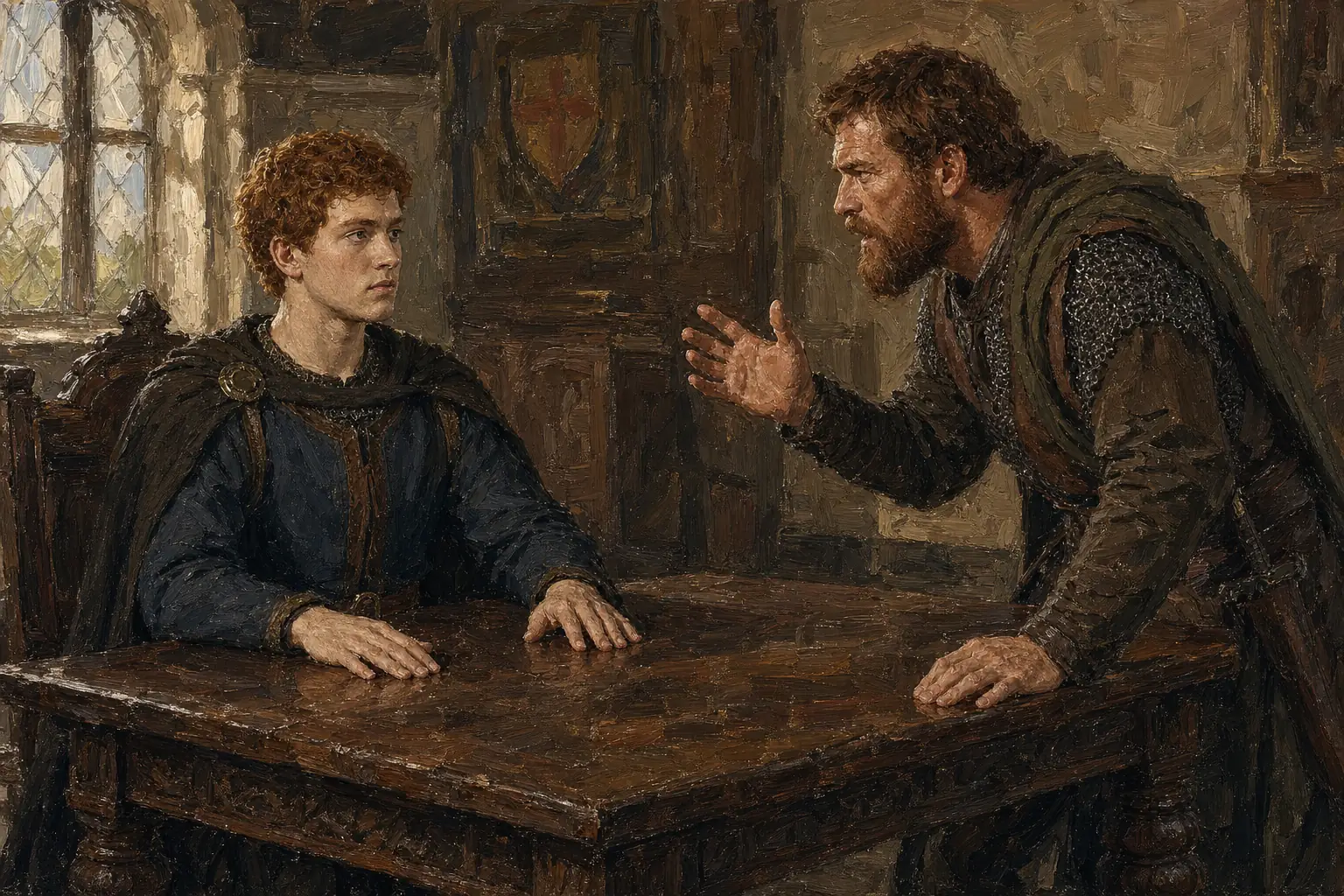
After fleeing Duncan's murder, Malcolm lives in England. When Macduff seeks his help against Macbeth in Act 4, Scene 3, Malcolm fears a trap. Macbeth has previously tried to lure him into danger, so he needs to establish whether Macduff can be trusted.
Inherited right is not enough
Malcolm falsely claims that he would be uncontrollably lustful, greedy, and without any "king-becoming graces". These are qualities fit for a king, including justice, truthfulness, generosity, mercy, patience, and courage.
Macduff initially excuses the claimed lust and greed, hoping other virtues will outweigh them. When Malcolm denies having any, Macduff rejects him as unfit to govern and despairs for Scotland. His loyalty to the country eventually outweighs his support for Duncan's heir. This convinces Malcolm to reveal the test.
The scene makes conduct part of rightful government. It also contrasts Malcolm's tested trust with Duncan's readiness to trust appearances: Malcolm uses deception to identify a dependable ally against a deceptive tyrant.
Edward provides an image of healing
In the same scene, a Doctor and Malcolm describe the English king Edward healing sick people. This draws on the historical belief that a monarch's touch could cure scrofula, a disease known as the King's Evil. The Doctor attributes the power to heaven, connecting sacred authority with care for sufferers.
The contrast with Macbeth is direct: Edward heals, while Macbeth's Scotland is described through images of wounds and death. Royal power is judged by what it does for other people.
Resisting tyranny and restoring rightful rule
Macduff's opposition shows that loyalty to Scotland can require resistance to its king. He seeks help before learning that Macbeth has murdered his family, so his cause includes the country's suffering as well as personal revenge. Macbeth's opponents challenge both his violent seizure of the crown and his abuse of it.
By Act 5, Angus says Macbeth's followers "move only in command, / Nothing in love". Malcolm, by contrast, attracts Scottish support alongside the English army. After Macduff kills Macbeth, the assembled company hails Malcolm as king.